

Loading, please wait...
Loading, please wait...
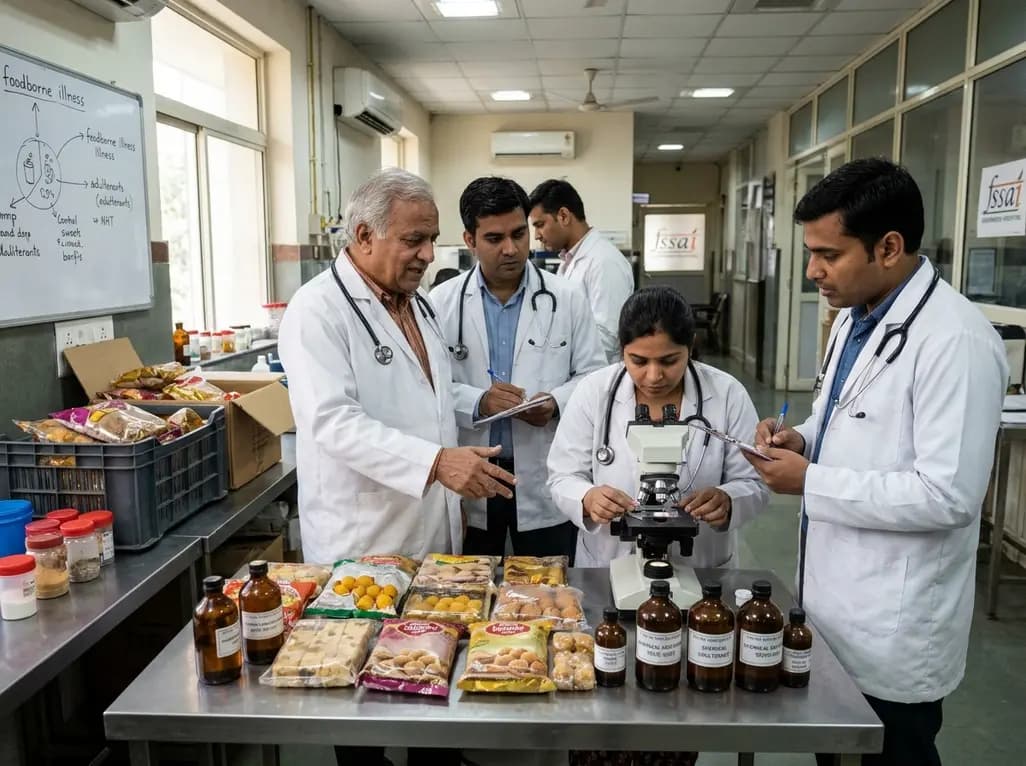
The Food Safety and Standards Authority of India recently concluded a massive enforcement operation enforcing strict food safety standards. Between September 1 and November 5, regulatory authorities surveyed commercial vendors across the nation. Consequently, officials impounded massive quantities of adulterated dairy, confectionery, and edible oils. For healthcare practitioners, these regulatory discoveries highlight severe public health vulnerabilities. Ingestion of contaminated and substandard food poses major toxicological and metabolic hazards to vulnerable patient populations.
During this extensive two-month operation, regulatory teams inspected 56,431 commercial facilities across several states and union territories. Furthermore, the agency collaborated closely with regional food safety authorities to execute synchronized market inspections. As a result, officials seized approximately 3,279.57 metric tonnes of substandard foodstuffs with an estimated market value exceeding Rs 81.80 crore. The regulatory body also suspended 1,133 commercial food licences due to egregious compliance failures. Moreover, authorities permanently cancelled 52 licences and sealed 314 processing facilities. Enforcement personnel initiated 410 formal prosecutions against persistent offenders who compromised consumer wellness. In addition, inspectors issued 10,047 improvement notices to compel businesses to rectify sanitary deficiencies. Laboratory technicians collected 43,939 food samples for detailed chemical and microbiological examination. Out of 23,648 samples evaluated by November, analysts identified 2,273 non-compliant products. Therefore, roughly one in every ten tested samples failed national quality benchmarks. Additionally, state surveillance teams deployed mobile testing units, known as Food Safety on Wheels, to evaluate perishable supplies in open marketplaces. These rapid screening laboratories allowed field officers to identify chemical adulteration immediately. Consequently, regulators intercepted tons of spoiled festive hampers, unpackaged savouries, and misbranded items before public distribution.
The confiscated goods spanned high-turnover consumer categories, notably dairy staples, sweets, edible fats, chocolates, bakery goods, and festive gift hampers. Unfortunately, commercial food safety standards frequently collapse when market demand outpaces agricultural production. During festive spikes, unscrupulous manufacturers intentionally manipulate products like paneer, khoya, milk, and ghee to maximize profits. For instance, producers often dilute genuine dairy with synthetic milk formulations composed of urea, liquid detergents, and cheap starches. Additionally, low-grade palm oil and hydrogenated fats regularly replace authentic milk fat in premium clarified butter. In traditional confectionery, illicit vendors frequently incorporate industrial non-permitted dyes such as Metanil Yellow and Rhodamine B. These chemical additives produce vibrant hues but present severe toxicological dangers to human tissue. Furthermore, processors stretch ground spices with chalk powder, pulverized brick dust, and sawdust. Contaminated sweets also harbor pathogenic bacteria due to inadequate cold-chain storage and unsanitary processing environments. Therefore, clinical professionals must recognize that adulteration extends far beyond harmless economic dilution. Moreover, packaged snacks and namkeen often contain highly oxidized, repeatedly heated cooking oils. Consequently, unsuspecting consumers face simultaneous exposure to chemical poisons, polar compounds, and pathogenic microbes.
Healthcare providers regularly observe a noticeable surge in gastrointestinal distress following festive celebrations. First, synthetic milk additives like detergent and urea produce rapid caustic irritation across the mucosal lining of the stomach. Consequently, patients present with severe epigastric burning, persistent nausea, and profuse vomiting. In severe cases, chemical ingestion leads to acute chemical gastritis, hematemesis, or corrosive mucosal injury. Additionally, contaminated dairy items containing excessive bacterial loads of Salmonella, Staphylococcus aureus, or Escherichia coli trigger abrupt foodborne toxico-infections. Patients typically develop dehydrating watery diarrhea, high fevers, and painful abdominal cramping. Furthermore, non-permitted industrial colorants provoke acute hypersensitivity reactions, bronchospasms, and sudden angioedema in atopic individuals. Children and elderly adults experience these clinical toxicities with heightened intensity due to smaller distribution volumes and diminished renal clearance. Therefore, physicians working in emergency departments and outpatient clinics must maintain high suspicion for toxic food exposure during seasonal spikes. Clinicians should carefully distinguish benign infectious gastroenteritis from chemical poisoning when patients report consuming festive sweets. As a result, prompt symptomatic stabilization and targeted fluid resuscitation remain vital to prevent hypovolemic shock. Moreover, clinicians must monitor serum electrolytes and renal function diligently in severe presentations.
While acute presentations attract immediate medical attention, the chronic ingestion of adulterated food causes profound systemic organ damage. For example, industrial chemical dyes like Metanil Yellow and Rhodamine B demonstrate proven mutagenic and carcinogenic properties. Consequently, chronic biological exposure damages hepatic parenchyma, disrupts testicular architecture, and promotes cellular dysplasia. Furthermore, toxic dyes impose tremendous detoxification burdens on the hepatic cytochrome system, frequently precipitating insidious transaminitis. Heavy metals, particularly lead chromate used to brighten turmeric powder, accumulate insidiously within bones, the central nervous system, and renal tubules. Chronic lead exposure induces peripheral neuropathy, microcytic anemia, cognitive impairment, and refractory hypertension. Additionally, the regular consumption of repeatedly reused cooking oils delivers massive loads of advanced lipid peroxidation products into the circulation. These oxidized free radicals accelerate systemic endothelial dysfunction, worsen atherogenesis, and provoke dyslipidemia. Thus, long-term exposure to adulterated culinary products directly accelerates the rising prevalence of cardiometabolic illnesses and chronic kidney diseases. Moreover, vulnerable cohorts such as pregnant women face elevated risks of spontaneous abortion and intrauterine growth restriction from toxic chemical exposure. In summary, cumulative physiological damage from illegal food adulteration demands urgent public health intervention. Therefore, clinical vigilance must extend beyond immediate symptoms to recognize progressive environmental toxicities.
Primary care clinicians and clinical dietitians occupy a crucial frontline position in mitigating foodborne illness risks. During clinical encounters, physicians should actively elicit dietary histories from patients presenting with unexplained abdominal distress or systemic malaise. Specifically, medical practitioners should inquire about the consumption of loose milk, unbranded festive sweets, and unpackaged edible oils. Furthermore, dietitians should guide families toward credible vendors who strictly comply with statutory certification standards. Patients must learn to avoid extraordinarily inexpensive sweets and unsealed confectionery items during holiday periods. Additionally, healthcare educators should teach families simple domestic screening tests to verify basic kitchen staples. For example, the addition of a few drops of iodine tincture quickly reveals starch adulteration in milk or paneer. Similarly, patients can easily test ghee purity using hydrochloric acid and sugar to detect adulterating hydrogenated fats. Moreover, clinicians should encourage patients to download regulatory digital applications to verify business licences and report non-compliant vendors. By fostering proactive consumer awareness, medical professionals help shield vulnerable households from dangerous edible commodities. Consequently, preventive nutritional counseling becomes an indispensable component of holistic primary clinical practice. Furthermore, clinicians should emphasize that packaged items must always display clear regulatory approval numbers, batch codes, and expiration dates.
Q1: Why does food adulteration increase dramatically during Indian festive seasons?
Market demand for festive staples like milk, paneer, khoya, and cooking oil surges exponentially during holiday seasons. Consequently, conventional supply chains struggle to satisfy massive consumer requirements. Unscrupulous operators exploit these supply deficits by manufacturing synthetic alternatives and diluting authentic ingredients with cheap, toxic chemicals. Therefore, profit-driven adulteration peaks during festive months, prompting regulatory agencies to conduct intensive nationwide surveillance drives to protect public health.
Q2: How do non-permitted industrial dyes in sweets harm human health?
Unregulated manufacturers frequently incorporate non-permitted industrial dyes, such as Metanil Yellow and Rhodamine B, to produce bright confectionery colors. These synthetic chemicals pose severe toxicological risks, including acute mucosal ulceration, allergic bronchospasms, and severe hepatic inflammation. Furthermore, prolonged exposure causes chromosomal aberrations, cellular dysplasia, and systemic carcinogenesis. Consequently, statutory food authorities strictly ban these chemical colorants from all commercial human food preparations.
Q3: What rapid tests can patients perform at home to identify adulterated dairy?
Consumers can perform several straightforward domestic screening tests to evaluate dairy purity. To detect starch in paneer, khoya, or milk, patients can boil a small sample, cool it, and add a few drops of iodine solution; a blue coloration confirms starch presence. Additionally, placing a drop of milk on a slanted polished surface reveals synthetic formulations; pure milk leaves a distinct white trail, whereas adulterated synthetic milk flows immediately without marking.
Disclaimer: This content is for informational and educational purposes only. It does not constitute medical advice or replace professional judgment. Refer to the latest local and national guidelines for clinical practice.
References

Read summarized clinical updates, watch expert medical content, and earn CME certifications right from your smartphone.
Open your smartphone camera to scan and install.





FSSAI launched a nationwide enforcement drive seizing over 3,279 tonnes of substandard food items worth Rs 81.8 crore. With over 1,100 licences suspended, the massive sweep highlights significant public health vulnerabilities, chemical adulterants in festive foods, and the urgent need for clinical vigilance.
Today

CT-derived volumetric bone mineral density centile curves offer an accurate method for opportunistic osteoporosis screening. This approach identifies high-risk patients who missed routine DXA scans and reliably predicts major osteoporotic fractures, addressing significant diagnostic gaps in clinical practice.
Today

Assam reduced maternal sepsis deaths from 21% to 8% through rigorous infection prevention protocols and digital monitoring. Explore the clinical strategies, sterilization quality checks, early recognition pathways, and antimicrobial stewardship lessons essential for obstetric teams across India.
Today

At the Cardiological Society of India Kerala conference, specialists called for a calibrated review of DGHS curbs on reusing single-use items. Regulated reprocessing of catheters and guidewires could bridge the gap between rising cardiac intervention costs and government health insurance reimbursement limits.
Today

A nationwide real-world cohort study reveals that sequential antiresorptive therapy following teriparatide reduces hip fracture risk by over 50%. Immediate initiation within 90 days and high treatment adherence are critical to preserve skeletal gains in severe osteoporosis.
Today

A case report details how reusing single-use insulin cartridges caused device failure and diabetic ketoacidosis in a type 1 diabetes patient using an advanced hybrid closed-loop system. The report highlights technological blindspots, mechanical degradation, and safety protocols during supply shortages.
Today
