.webp&w=384&q=75)

Loading, please wait...
Loading, please wait...

Researchers are constantly seeking ways to optimize fetal spina bifida repair to reduce long-term complications. A recent retrospective cohort review investigated the use of paraspinal myofascial flaps and acellular dermal matrix (ADM) patches during open fetal surgery. These adjuncts aim to improve the watertight nature of the closure. Consequently, they may reduce the pressure-related brain changes that necessitate postnatal cerebrospinal fluid (CSF) diversion.
The study reviewed 53 neonates who underwent open fetal surgery for open spina bifida (OSB). Specifically, the authors compared standard closure techniques against those incorporating myofascial flaps or ADM patches. Notably, the univariate analysis showed that both interventions were associated with reduced odds of CSF diversion. However, the ADM patch emerged as the strongest predictor in multivariate models.
The multivariate analysis revealed that using an ADM patch significantly reduced the need for diversion, with an adjusted odds ratio of 0.24. This finding is critical because reducing hydrocephalus and the need for shunting remains a primary goal of prenatal intervention. Furthermore, the paraspinal myofascial flaps showed a favorable trend toward similar benefits, though it did not reach the same level of statistical significance in the larger model.
Crucially, the researchers also evaluated the safety of these surgical adjuncts. The addition of these materials did not compromise pregnancy stability. Rates of prelabor premature rupture of membranes (PPROM) and the average gestational age at delivery remained consistent across all groups. Therefore, surgeons can consider these adjuncts as safe enhancements for the mother and the fetus. In summary, incorporating ADM patches appears to be a robust strategy to improve neurosurgical outcomes in affected infants.
No, the study found no significant difference in the incidence of PPROM or the mean gestational age at delivery between infants repaired with or without ADM patches.
According to the multivariate analysis, the use of an ADM patch was associated with a 76% reduction in the odds of requiring CSF diversion by one year of age.
Disclaimer: This content is for informational and educational purposes only. It does not constitute medical advice or establish a doctor-patient relationship. Always seek the advice of a qualified healthcare provider for medical concerns. Refer to the latest local and national guidelines for clinical practice.
References
Kunpalin Y et al. Enhancing fetal spina bifida repair: do paraspinal myofascial flaps and acellular dermal patches improve postnatal outcomes? A retrospective cohort review. J Neurosurg Pediatr. 2026 Apr 17. doi: 10.3171/2025.12.PEDS25197. PMID: 41996711.
Adzick NS, et al. A Randomized Trial of Prenatal versus Postnatal Repair of Myelomeningocele. N Engl J Med. 2011;364:993-1004.
Moldenhauer JS, et al. Fetal Surgery for Myelomeningocele: The MOMS Trial and Beyond. Semin Fetal Neonatal Med. 2017;22(6):360-366.
"
Read summarized clinical updates, watch expert medical content, and earn CME certifications right from your smartphone.
Open your smartphone camera to scan and install.





A retrospective review finds that ADM patches in fetal spina bifida repair significantly reduce the need for postnatal CSF diversion without increasing risk...
6 months ago

A retrospective cohort study of 7,716 ICU patients from the MIMIC-IV database demonstrates that Gradient Boosting Decision Trees significantly outperform traditional SOFA scores in predicting in-hospital mortality among patients with sepsis and diabetes, with SHAP analysis providing clinical interpretability.
Today
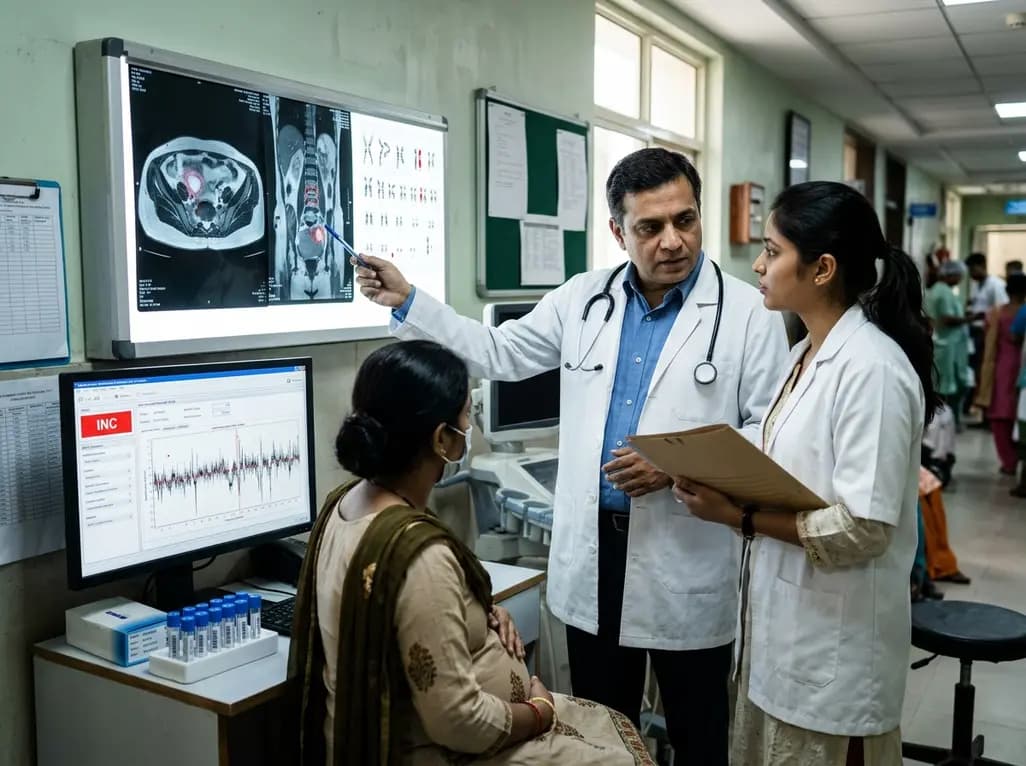
Occult maternal malignancy accounts for 3.82% of persistent unreportable NIPT results with genomic noise. Multiple chromosomal aberrations, notably on chromosome 18, warrant thorough oncological evaluation and whole-body MRI to ensure timely maternal diagnosis while preserving fetal care.
Today
This article reviews the forensic and clinical complexities of acute myocarditis arising on left ventricular hypertrophy in children, highlighting early diagnostic red flags and multidisciplinary postmortem autopsy protocols.
Today

This comparative study evaluates posterior labral tears with and without glenohumeral instability, highlighting distinct demographic patterns, MRI underestimation in stable shoulders, and successful arthroscopic repair outcomes.
Yesterday

A clinical study demonstrates that early intervention with tocilizumab, either as monotherapy or bridged with corticosteroids, achieves significant proptosis reduction and resolves active inflammation in treatment-naive thyroid eye disease.
Yesterday
