.webp&w=384&q=75)

Loading, please wait...
Loading, please wait...

Clinicians are witnessing a startling shift in reproductive health trends across India. Today, fertility issues in women are increasingly appearing in their 20s rather than their late 30s. This change concerns medical professionals who link it to biological shifts and modern lifestyle pressures. Furthermore, experts suggest that early awareness and intervention remain critical for long-term health. Consequently, the clinical focus is shifting toward preventative care and education.
Notably, a primary driver for this shift is the earlier onset of puberty. Many girls now attain menarche as young as eight or nine years old. This biological acceleration can lead to a relatively earlier decline in ovarian reserve. Moreover, research in The Lancet Child and Adolescent Health documents a steady decline in puberty onset ages. These studies link the trend to improved nutrition but also to rising obesity. Therefore, biology and environment create a complex challenge for young women today.
Modern lifestyle choices significantly disrupt delicate hormonal balances. Young women often grow up in high-stress, high-performance environments. Additionally, erratic sleep cycles and excessive screen time contribute to metabolic disturbances. Specifically, chronic stress disrupts the hypothalamic-pituitary-ovarian axis. In addition, poor dietary habits and limited physical activity increase rates of PCOS. Consequently, these factors lead to irregular ovulation and hormonal imbalance in the early 20s.
Furthermore, environmental exposure to hormone-like substances through food and pollution represents an emerging concern. Behavioral factors such as contraceptive use without medical supervision also play a role. Clinicians at AIIMS Delhi now observe diminished ovarian reserve in women under 30. However, most of these factors remain modifiable through dedicated lifestyle interventions. Therefore, prioritizing balanced nutrition and regular exercise can help maintain reproductive health. Adequate sleep also remains a vital, yet often overlooked, pillar of hormonal stability.
Q1: Why are fertility issues appearing earlier in Indian women?
The earlier onset of puberty, combined with high stress and poor lifestyle habits, causes hormonal shifts much sooner than in previous generations.
Q2: Can diminished ovarian reserve be prevented or delayed?
While biological aging is natural, modifiable lifestyle factors like diet and sleep can help maintain ovarian health and support reproductive potential.
Disclaimer: This content is for informational and educational purposes only. It does not constitute medical advice or replace professional judgment. Refer to the latest local and national guidelines for clinical practice.
References

Read summarized clinical updates, watch expert medical content, and earn CME certifications right from your smartphone.
Open your smartphone camera to scan and install.





Experts highlight a concerning trend of hormonal imbalance and fertility issues affecting women in their 20s, driven by lifestyle factors and earlier pubert...
6 months ago
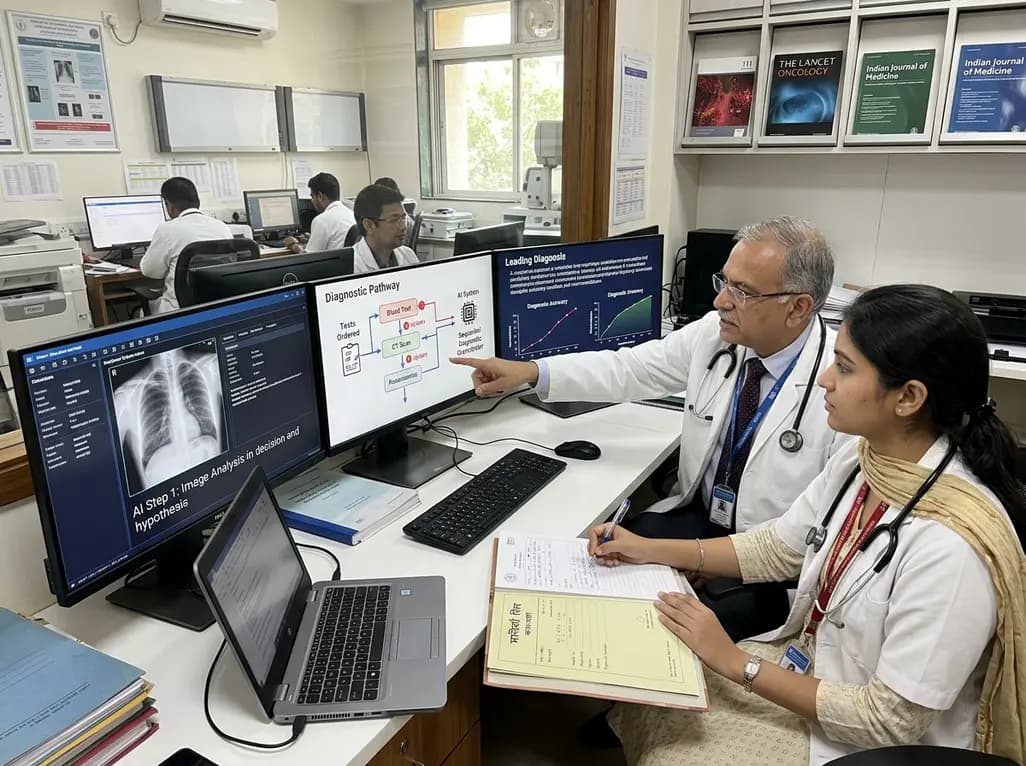
A breakthrough peer-reviewed study demonstrates that a sequential AI diagnosis system can mirror real-world clinical reasoning. By ordering stepwise tests and updating hypotheses dynamically, this multi-agent orchestrator achieved superior diagnostic accuracy while reducing investigative costs.
Today

A prenatal case highlights severe glutaric acidemia type II presenting as bilateral hyperechoic cystic kidneys at 18 weeks. Whole-exome sequencing revealed a novel homozygous ETFDH frameshift variant, demonstrating the power of rapid genetic testing in fetal renal anomalies.
Today

Review how tailored exercise programs benefit frail older patients with heart failure. Explore pathophysiological mechanisms, individualized training prescriptions, and strategies to overcome adherence barriers in clinical practice.
Yesterday

This comparative study evaluates posterior labral tears with and without glenohumeral instability, highlighting distinct demographic patterns, MRI underestimation in stable shoulders, and successful arthroscopic repair outcomes.
Yesterday

A clinical study demonstrates that early intervention with tocilizumab, either as monotherapy or bridged with corticosteroids, achieves significant proptosis reduction and resolves active inflammation in treatment-naive thyroid eye disease.
Yesterday
