.webp&w=384&q=75)

Loading, please wait...
Loading, please wait...
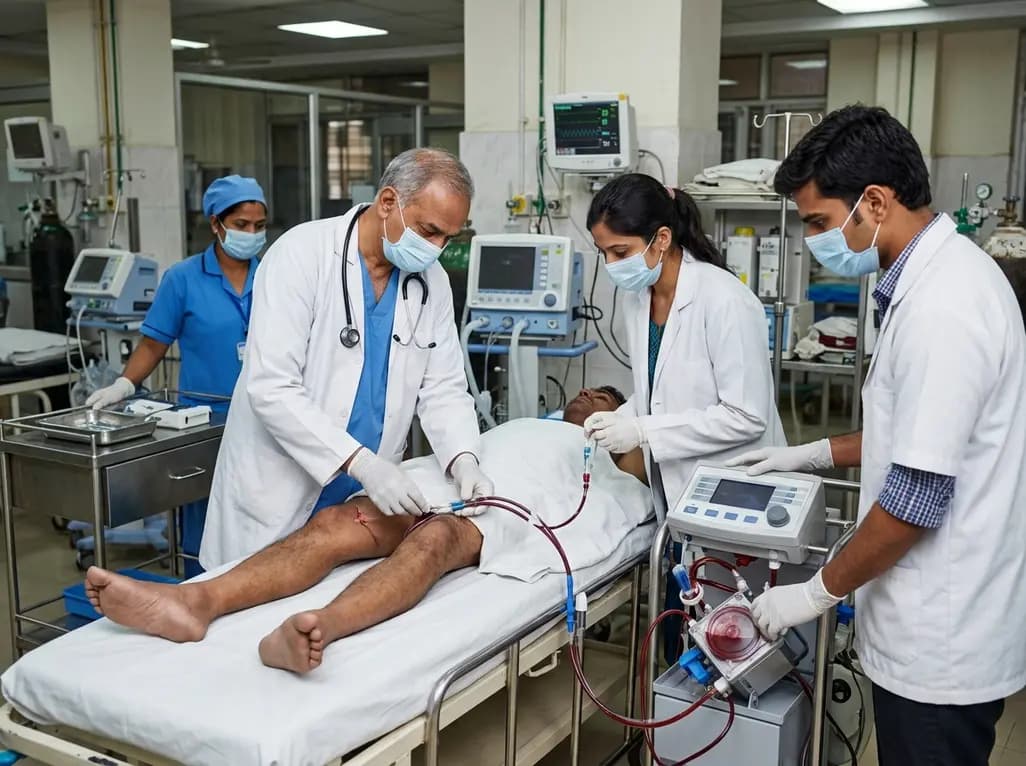
Extracorporeal life support (ECLS) remains the most advanced intervention for patients with acute cardiac or pulmonary failure. However, traditional initiation methods are often complex and require significant imaging support. Researchers have recently proposed the development of a femoral dual-lumen cannula to simplify this process. This innovation specifically targets far-forward military settings and transport environments where resources are extremely limited.
Current ECLS initiation often depends on adjunctive imaging to prevent injury to the heart and great vessels. Furthermore, confirming correct placement usually requires extensive personnel experience. By modifying a cannula for femoral vein placement, a single clinician might soon perform the procedure independently. This approach significantly reduces the logistical burden of large imaging adjuncts in the field.
The primary goal of this design is to deliver faster and more reliable life support to critically ill patients. During simulations with mannequins, the femoral placement proved feasible and efficient. Additionally, interviews with academic and military personnel highlighted that this design overcomes the constraints of limited field experience. Consequently, it offers a safer alternative for rapid deployment.
Moreover, the femoral site provides a stable and accessible route for cannulation during transport. While internal jugular access is common, the femoral route may offer more flexibility in restricted spaces. Therefore, this advancement could revolutionize how emergency teams manage severe respiratory failure outside traditional hospital settings.
It is preferred because it simplifies the cannulation process, allowing a single provider to initiate ECLS without needing large imaging equipment or extensive specialized support.
The design minimizes the risk of damaging vital structures by streamlining the placement process and ensuring more reliable positioning even in high-stress environments.
Disclaimer: This content is for informational and educational purposes only and does not constitute medical advice or a professional relationship between the reader and the author. Always seek the advice of a qualified healthcare provider for any medical condition or treatment. Refer to the latest local and national guidelines for clinical practice.
References
1. Sousse L et al. Development of a Militarily Relevant Femoral Dual-Lumen Cannula for Veno-Venous Extracorporeal Life Support. J Spec Oper Med. 2026 Jun 10. doi: undefined. PMID: 42268365.
2. Ngai CW, Ng PY, Sin WC. Bicaval dual lumen cannula in adult veno-venous extracorporeal membrane oxygenation—clinical pearls for safe cannulation. J Thorac Dis. 2018 Mar;10(3):1381-1391.
3. Schmidt M, Brechot N, Combes A. The use of double lumen cannula for veno-venous ECMO in trauma patients with ARDS. PMC. 2015.

Read summarized clinical updates, watch expert medical content, and earn CME certifications right from your smartphone.
Open your smartphone camera to scan and install.





New research introduces a modified femoral dual-lumen cannula (DLC) designed for easier ECLS initiation. This innovation addresses the challenges of imaging requirements and limited personnel experience, potentially revolutionizing critical care in remote and transport environments.
4 months ago

Novel diimide and hydrazone scaffolds, particularly compound #C4, synergistically reactivate latent HIV-1 when combined with JQ1 or PKC activators. Demonstrating donor-matched proviral transcription ex vivo and non-canonical signaling, these findings advance shock and kill strategies toward reservoir eradication.
Today

A comparative cohort study evaluates vNOTES vs TLH hysterectomy for benign conditions, demonstrating shorter operative duration, faster return to daily activities, and equivalent female sexual function scores without increased dyspareunia.
Today

Review how tailored exercise programs benefit frail older patients with heart failure. Explore pathophysiological mechanisms, individualized training prescriptions, and strategies to overcome adherence barriers in clinical practice.
Yesterday

This comparative study evaluates posterior labral tears with and without glenohumeral instability, highlighting distinct demographic patterns, MRI underestimation in stable shoulders, and successful arthroscopic repair outcomes.
Yesterday

A clinical study demonstrates that early intervention with tocilizumab, either as monotherapy or bridged with corticosteroids, achieves significant proptosis reduction and resolves active inflammation in treatment-naive thyroid eye disease.
Today
