

Loading, please wait...
Loading, please wait...

Urinary and sexual functional changes represent consequential yet underreported morbidities in female spine surgery. Historically, surgical teams evaluated complications through aggregate datasets that overlooked critical sex-disaggregated differences. Consequently, surgeons often lacked precise estimates when advising female candidates about elective lumbar spine surgery. A systematic review conducted by Bekelman and colleagues evaluated sex-stratified outcomes in female patients. The authors synthesized evidence from seventeen urinary retention studies and twelve sexual dysfunction studies. Their findings show that urinary retention affects roughly 14% of females undergoing lumbar fusion or disc replacement. Meanwhile, post-intervention sexual impairment impacts approximately 23% of women. Furthermore, surgical approach significantly alters these risk profiles and procedural safety. Understanding these distinct complications helps surgical teams optimize perioperative care and risk stratification.
Postoperative urinary retention causes considerable distress and prolongs hospital recovery. In addition, it increases the risk of secondary catheter-associated infections. However, clinical teams frequently underestimate its frequency in female cohorts. This occurs because retrospective studies often emphasize male bladder outlet obstruction. In this meta-analysis, investigators analyzed seven cohorts comprising 1,758 female patients undergoing elective lumbar fusion or disc replacement. The pooled incidence of postoperative urinary retention reached 14%, showing substantial heterogeneity across centers. Furthermore, when researchers expanded their sensitivity analysis to include 13 cohorts encompassing 15,741 patients, the rate remained 12%. Male patients exhibited higher retention odds in multivariable comparisons, with odds ratios between 1.04 and 3.05. Nevertheless, an incidence exceeding one in eight women remains clinically significant. Urinary retention in women frequently stems from anesthesia, fluid shifts, nerve root retraction, and systemic opioids. Consequently, perioperative care teams must maintain strict bladder monitoring protocols regardless of patient sex. Routine postoperative catheter removal protocols should incorporate standardized voiding trials. Implementing timely ultrasound bladder scans facilitates early recognition and prevents permanent detrusor injury.
Surgical approach strongly dictates the vulnerability of autonomic pathways in elective lumbar spine surgery. In their meta-regression analysis, the researchers discovered that approach accounted for 60% of between-study variance in retention. Specifically, female cohorts undergoing posterior lumbar interbody fusion experienced a pooled urinary retention rate of 12%. In contrast, the single analyzed cohort undergoing anterior or lateral interventions reported an alarming retention rate of 41%. Although that anterior stratum lacked sufficient studies for pooling, the stark divergence highlights substantial anatomical hazards. Anterior retroperitoneal exposure places the superior hypogastric plexus and sympathetic chain in direct danger of traction or thermal injury. Similarly, lateral transpsoas trajectories risk damaging lumbosacral plexus components or sympathetic nerves traversing the retroperitoneum. Furthermore, extensive mechanical retraction around lower lumbar disc spaces can induce transient autonomic neuropraxia. Posterior approaches present different risks, including direct thecal sac manipulation and cauda equina traction during canal clearance. Therefore, spine specialists must appreciate that anterior exposure does not eliminate pelvic visceral morbidity. Careful identification of prevertebral autonomic fibers can substantially mitigate pelvic denervation. As a result, meticulous retroperitoneal dissection remains essential during all anterior lumbar procedures.
Female sexual well-being represents one of the most neglected topics in spine surgery literature. Clinicians regularly discuss retrograde ejaculation with male candidates, yet they rarely address orgasmic or sensory changes with females. In this systematic review, researchers identified an exploratory pooled incidence of postoperative sexual impairment of 23% across six cohorts. The evaluated studies defined sexual dysfunction as a pathological decline on validated instruments or a patient-reported reduction in satisfaction. However, significant methodological limitations weaken this evidence base. Specifically, most included investigations utilized non-validated survey questionnaires and failed to capture baseline preoperative function. Because pre-existing lumbar radiculopathy and chronic axial pain frequently diminish sexual intimacy before intervention, separating surgical injury from pre-existing disability remains difficult. Furthermore, none of the included investigations observed significant temporal trends over recent decades, demonstrating persistent neglect. Consequently, the authors characterized this 23% estimate as exploratory rather than definitive. Clinicians must acknowledge that female sexual morbidity is common rather than rare. Furthermore, open patient-provider communication can alleviate anxiety surrounding postoperative intimacy. Therefore, surgical teams should pursue rigorous assessment through validated questionnaires during follow-up evaluations.
Pelvic functional integrity depends on an intricate coordination of somatic, parasympathetic, and sympathetic neural circuits. Somatic sensation across the perineum, vulva, and clitoris travels through the pudendal nerve, originating from sacral roots S2 through S4. Concurrently, parasympathetic fibers from the pelvic splanchnic nerves govern clitoral tumescence, vaginal lubrication, and detrusor contraction during micturition. Conversely, sympathetic outflow from the hypogastric plexus controls internal urethral sphincter tone and contributes to orgasmic contractions. During lumbar spine reconstruction, surgical interventions can disrupt these circuits through multiple distinct mechanisms. Direct mechanical traction on the cauda equina or individual sacral roots during posterior canal clearance may induce transient conduction blocks. Similarly, anterior exposures around the L5-S1 disc junction risk stretching delicate fibers of the superior hypogastric plexus. In addition, postoperative epidural hematomas or localized inflammatory swelling can compromise microvascular perfusion to pelvic nerve roots. Furthermore, central neuroplastic remodeling driven by chronic nociceptive input can alter pelvic sensory thresholds. In addition, persistent local muscular spasm in the pelvic diaphragm further compounds dyspareunia. Thus, mechanical, ischemic, and neurochemical factors combine to induce postoperative pelvic floor and sexual dysfunction in susceptible females.
The systematic review findings provide actionable insights for orthopedic surgeons, neurosurgeons, and allied healthcare professionals. Above all, surgical teams must incorporate sex-specific risk discussions into routine preoperative informed consent protocols. Female patients preparing for lumbar fusion deserve clear information regarding possible postoperative voiding difficulties and sexual changes. Moreover, clinical teams should establish standardized preoperative baseline scores using validated instruments like the Female Sexual Function Index. In the immediate postoperative setting, nurse navigators and floor teams should implement nurse-driven bladder scan algorithms. Such protocols avoid prolonged urethral catheterization while preventing painful acute bladder distension. Additionally, anesthesiologists should emphasize multimodal, opioid-sparing analgesia and regional techniques to minimize autonomic bladder suppression. If urinary retention persists beyond the immediate surgical admission, clinicians should promptly obtain urological consultations to prevent upper tract damage. Similarly, when women report persistent dyspareunia, pelvic numbness, or loss of arousal, teams should facilitate referrals to pelvic floor physical therapists and sexual medicine specialists. Multidisciplinary collaboration between spine surgeons, urologists, and gynecologists optimizes long-term functional recovery. Ultimately, comprehensive perioperative vigilance ensures that reconstructive spine interventions optimize overall functional quality of life without leaving pelvic complications unaddressed.
Postoperative urinary retention occurs in approximately 14% of female patients undergoing elective lumbar fusion or disc replacement. When including decompression-only procedures, the incidence remains notable at approximately 12%. Although male patients demonstrate higher relative odds of retention, urinary dysfunction remains a prevalent postoperative complication in women that requires vigilant monitoring.
Different surgical trajectories expose distinct neural pathways to potential injury. Anterior retroperitoneal and lateral approaches place the superior hypogastric plexus and sympathetic trunks at risk of traction or thermal injury. Conversely, posterior approaches involve thecal sac manipulation and direct cauda equina nerve root traction, altering somatic and parasympathetic bladder innervation.
Clinicians should proactively integrate validated assessment tools, such as the Female Sexual Function Index, into both preoperative evaluations and postoperative follow-up appointments. Establishing baseline sexual health allows surgical teams to distinguish pre-existing radicular limitations from true postoperative neurogenic impairment, ensuring timely referral to pelvic floor physical therapy and specialized care.
Disclaimer: This content is for informational and educational purposes only and does not constitute formal medical advice. Clinical decisions should be tailored to individual patient presentations. Refer to the latest local and national guidelines for clinical practice.
References

Read summarized clinical updates, watch expert medical content, and earn CME certifications right from your smartphone.
Open your smartphone camera to scan and install.





A meta-analysis reveals that postoperative urinary retention affects 14% and sexual dysfunction impacts 23% of females following elective lumbar spine surgery. Surgical approach significantly influences autonomic risk, highlighting the urgent need for sex-disaggregated preoperative counseling and monitoring.
Today

A retrospective CAHAL study comparing Amplatzer and Occlutech devices in 413 patients found no significant difference in moderate-to-large residual shunt rates at 6 months follow-up after percutaneous PFO closure, supporting clinical equivalence between both platforms.
Today

AIIMS researchers suggest yoga may alleviate gut dysbiosis in Polyendocrine Metabolic Ovarian Syndrome (PMOS) by modulating the gut-brain axis, lowering chronic inflammation, and enhancing parasympathetic tone to support metabolic and hormonal equilibrium.
Today
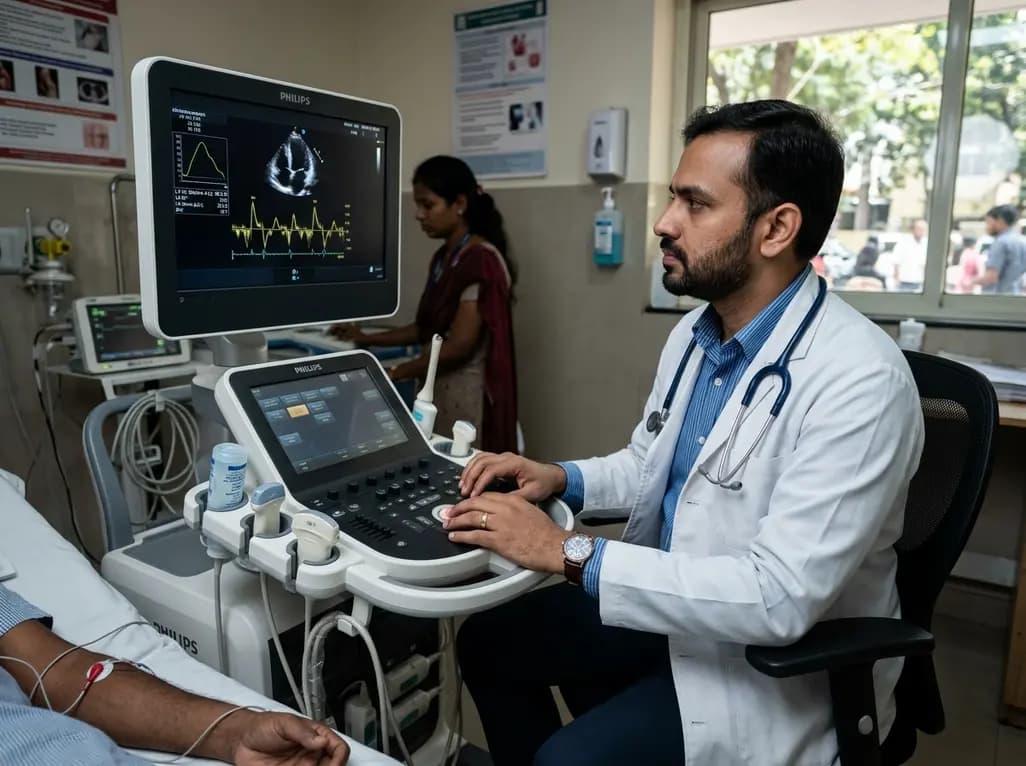
A structured practical guide to left atrial echocardiographic assessment covering biplane volumetry, phasic physiology, speckle-tracking strain, and hemodynamic filling pressure estimation for routine cardiovascular practice.
Today

Age-related spinal kyphosis is driven by vertebral fragility, disc degeneration, and paraspinal muscle dysfunction. Coexisting with locomotive syndrome and frailty, its management requires combined anti-osteoporotic therapy, spinal extensor rehabilitation, and comprehensive nutritional optimization.
Today

A longitudinal feasibility pilot study highlights that combining polygenic risk score disclosure with in-person lifestyle counseling significantly enhances genomic literacy in individuals at risk for type 2 diabetes, overcoming educational disparities and reinforcing patient motivation.
Today
