.webp&w=384&q=75)

Loading, please wait...
Loading, please wait...

Coronary artery disease remains a major global health concern, but new advancements in federated machine learning CAD prediction are offering secure solutions. This innovative framework allows for collaborative training across multiple clinical institutions. Crucially, it does so without ever sharing raw patient data between sites. As a result, hospitals can improve diagnostic accuracy while adhering to strict privacy regulations and ethical standards.
The study evaluated several algorithms, including Random Forest, Adaptive Boosting, and XGBoost. Among these, the Random Forest model emerged as the top performer in this distributed environment. Specifically, it reached an accuracy of 83.21% while using privacy-preserving techniques. Although accuracy was slightly higher without privacy filters, the difference remains marginal. Therefore, the FMLCA approach proves that security does not have to compromise clinical utility.
Medical professionals often require clear reasons for a machine-generated diagnosis before applying it to patient care. To meet this need, researchers integrated the SHapley Additive exPlanations (SHAP) technique into the federated machine learning CAD framework. SHAP helps clinicians identify which specific clinical features, such as cholesterol or blood pressure, drive the model's predictions. This level of transparency is vital for clinical adoption. Consequently, doctors can confidently use these tools to support their decision-making process for cardiovascular patients.
Furthermore, the integration of k-anonymity ensures that patient identities remain protected throughout the training process. This multi-layered security approach makes the cloud-based platform both efficient and safe for large-scale data analysis. By focusing on both privacy and performance, this research sets a new standard for predictive healthcare tools in distributed environments.
Federated learning keeps raw medical records on local hospital servers instead of a central database. Only encrypted model parameters are sent to the cloud for aggregation. This architecture ensures that sensitive information never leaves its original secure location.
SHAP provides explainability by ranking feature importance for every prediction. It allows doctors to see exactly why a patient was flagged for coronary artery disease. This builds trust by transforming complex algorithms into transparent clinical aids.
Disclaimer: This content is for informational and educational purposes only. It does not constitute medical advice or a substitute for professional healthcare consultation. Refer to the latest local and national guidelines for clinical practice.
References

Read summarized clinical updates, watch expert medical content, and earn CME certifications right from your smartphone.
Open your smartphone camera to scan and install.





FMLCA is a new federated learning framework that predicts CAD with 83.21% accuracy using privacy-preserving techniques and SHAP for model transparency....
8 months ago

The 2026 KASID guidelines outline evidence-based recommendations for Crohn's disease medical management. Covering advanced biologics, small molecules, biosimilars, and individualized therapeutic strategies, the update helps clinicians optimize long-term remission and mucosal healing in adult patients.
Today
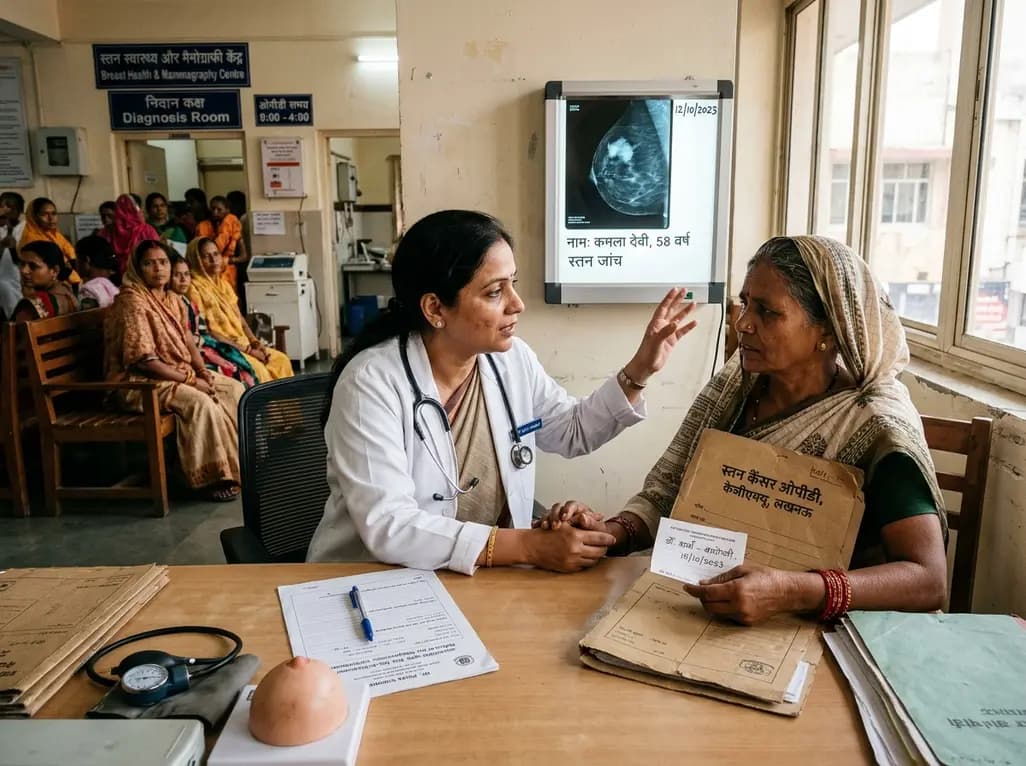
A KGMU study reveals over half of women with breast abnormalities fail to undergo diagnostic confirmation, leading to advanced-stage detection. Discover the socio-cultural barriers, clinical risks of incomplete resection, and community-level solutions needed to bridge the critical screening-to-diagnosis gap in India.
Today
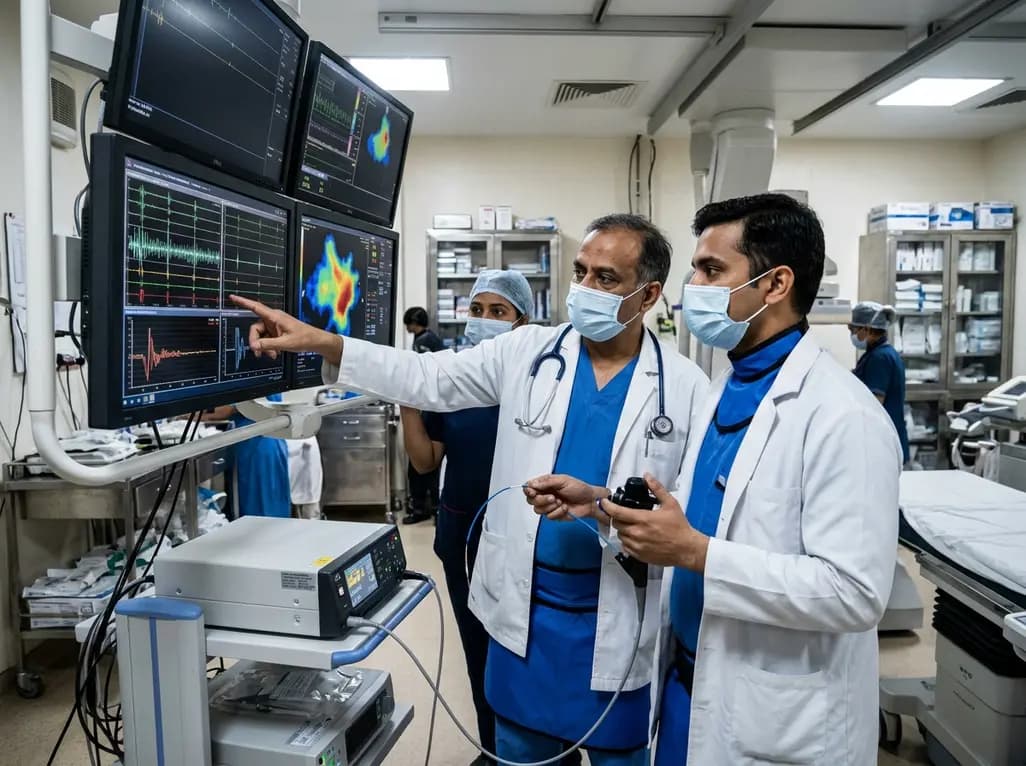
A comparative non-contact study reveals that high-power radiofrequency delivery with the QDOT MICRO catheter induces an artifactual contact force rise. Electrophysiologists must understand this power-dependent thermal and electrical phenomenon to avoid inadvertent catheter withdrawal and ineffective ablation.
Today
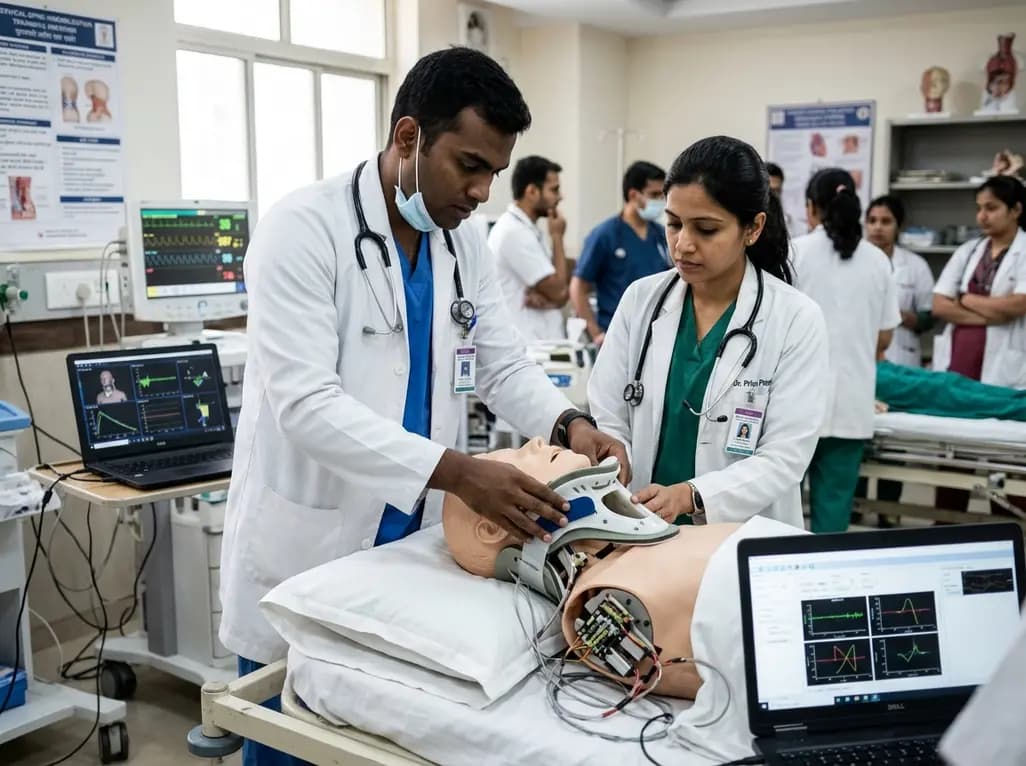
A novel proof-of-concept study presents a six-degree-of-freedom articulated manikin neck equipped with linear potentiometers. The system provides real-time kinematic motion feedback during cervical immobilisation, delivering sub-degree tracking accuracy to improve pre-hospital trauma training and patient safety.
Today

Caffeoylquinic acids, such as chlorogenic acid, offer broad antioxidant, antidiabetic, and anti-inflammatory properties. Advanced plant cell and organ culture methods now enable scalable, sustainable, and pure production of these high-value therapeutic metabolites for pharmaceutical and clinical applications.
Today
