.webp&w=384&q=75)

Loading, please wait...
Loading, please wait...

Fluorescent covalent organic frameworks, or FCOF gas sensors, are emerging as a transformative technology in material science and clinical diagnostics. These crystalline materials use organic building blocks to create architectures with high surface areas and tunable porosity. Unlike traditional materials, FCOFs provide exceptional thermal and chemical stability. This makes them ideal for detecting trace amounts of gases in diverse clinical and industrial environments.
The fundamental design of these frameworks involves precise dimensional control and specific linkage chemistry. By engineering the framework at a molecular level, researchers can tailor the selectivity of FCOF gas sensors to identify specific target analytes. Consequently, these materials outperform conventional fluorescent substances in both sensitivity and selectivity. Furthermore, their structural regularity allows for predictable fluorescence responses, which is critical for accurate patient monitoring.
Recent advances focus on the detection mechanisms for various gases, including volatile organic compounds (VOCs). In the medical field, these sensors could potentially analyze breath samples to detect biomarkers for diseases like lung cancer or diabetes. Therefore, FCOFs represent a significant leap forward in the development of non-invasive diagnostic tools. Additionally, they offer potential solutions for environmental monitoring and industrial safety, ensuring a healthier workplace for medical professionals.
While challenges such as large-scale production remain, the future of FCOF gas sensors looks promising. Research is currently addressing environmental stability hurdles to facilitate the transition from laboratory prototypes to commercial medical devices. As these technologies mature, they will likely become a staple in high-performance sensing applications across the global healthcare sector.
They offer ultra-high sensitivity for volatile organic compounds in human breath. These compounds often serve as early biomarkers for metabolic and respiratory conditions.
Yes, FCOFs possess exceptional thermal and chemical stability. Current engineering efforts are further enhancing their environmental robustness for long-term use in various medical settings.
Disclaimer: This content is for informational and educational purposes only. It does not constitute medical advice or professional diagnostic services. Refer to the latest local and national guidelines for clinical practice.
References

Read summarized clinical updates, watch expert medical content, and earn CME certifications right from your smartphone.
Open your smartphone camera to scan and install.





Explore how fluorescent covalent organic frameworks (FCOFs) are revolutionizing gas sensors for medical diagnostics and industrial safety applications....
8 months ago
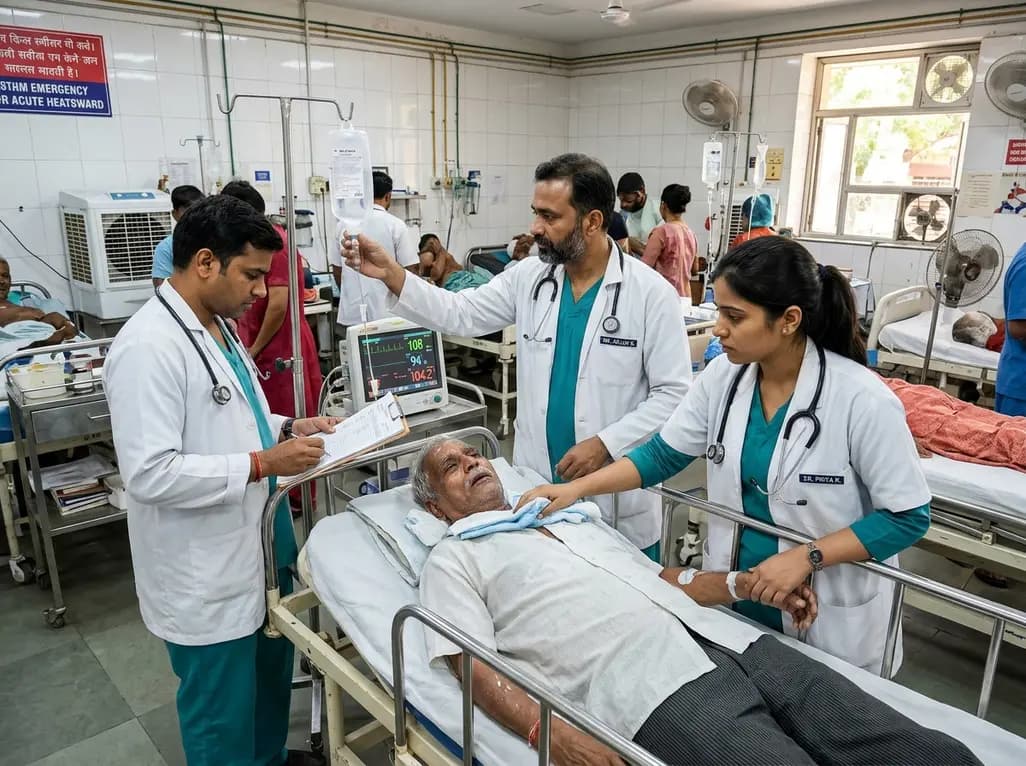
Recent epidemiological data reveals a dramatic surge in summer heat mortality driven by human-induced climate warming. This analysis explores the pathophysiological impacts on cardiac and renal systems, diagnostic dilemmas in death certification, and essential emergency cooling protocols for acute clinical care.
Today

Odisha has established India's first state-level clinical protocol specifically tailored for pregnant women with sickle cell disease. Developed with NHM and UNICEF, the framework provides structured antenatal screening, crisis mitigation, standardized referral pathways, and specialized interdisciplinary care.
Today

India is advancing preventive healthcare by integrating genomics, artificial intelligence, and quantum technologies. With the SANGAM programme sequencing one million Indian genomes, clinicians can unlock personalized therapies, detect cardiometabolic risks early, and curb the burden of diabetes and heart disease.
Today

A randomized controlled trial demonstrates that an eight-week dual-task training intervention significantly improves static and dynamic postural control over standard balance exercises in individuals with chronic ankle instability, addressing critical neurocognitive deficits during athletic and daily activities.
Today

A retrospective cohort study of 7,716 ICU patients from the MIMIC-IV database demonstrates that Gradient Boosting Decision Trees significantly outperform traditional SOFA scores in predicting in-hospital mortality among patients with sepsis and diabetes, with SHAP analysis providing clinical interpretability.
Today
