.webp&w=384&q=75)

Loading, please wait...
Loading, please wait...
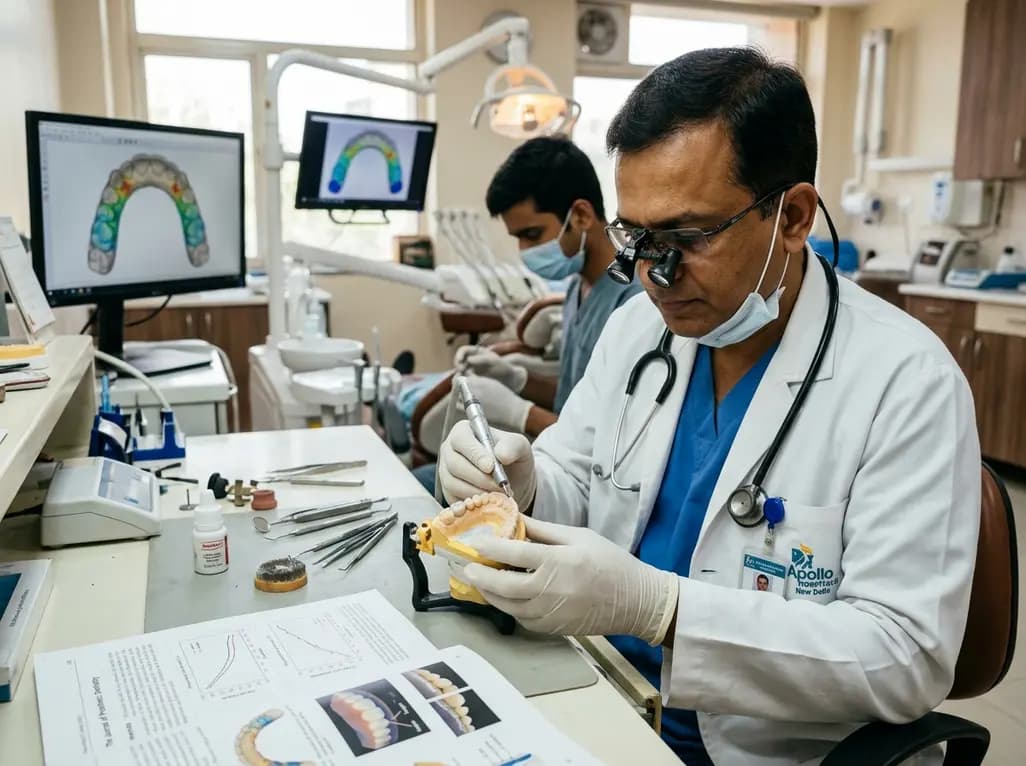
Modern restorative dentistry relies heavily on monolithic ceramic systems to combine superior aesthetics with functional durability. Consequently, multilayered zirconia polishing has become a crucial clinical step during final crown insertion and occlusal equilibration. Dental clinicians routinely adjust occlusal contacts, marginal contours, and interproximal embrasures chairside using specialized rotary instruments. However, unpolished grinding creates microscopic surface flaws and localized microcracks. These surface defects act as critical stress concentrators during repetitive mastication. Therefore, clinicians must understand how surface manipulation impacts cyclic fatigue resistance. Over the past decade, manufacturers developed polychromatic and multi-compositional materials that blend high strength with lifelike optical translucency. These systems feature distinct layers ranging from tough tetragonal structures to aesthetic cubic-rich phases. Because these crystallographic phases respond differently to mechanical instrumentation, standardized post-adjustment protocols are essential. Furthermore, clinicians often question whether sequential rubber polishing alone suffices or whether reglazing remains mandatory. Improper mechanical finishing compromises restoration longevity and increases opposing enamel wear. Therefore, establishing evidence-based surface finishing routines protects both the prosthesis and adjacent dentition.
Understanding the microstructural diversity among contemporary zirconia generations explains their varying mechanical responses. Traditional 3Y-TZP ceramics contain predominantly tetragonal grains capable of transformation toughening. In this mechanism, stress triggers a phase transformation from tetragonal to monoclinic geometry, creating volumetric expansion that actively halts crack propagation. In contrast, newer ultra-translucent materials integrate higher yttria concentrations, such as 4Y-PSZ and 5Y-PSZ, producing substantial cubic phase fractions. Although cubic grains offer superior optical clarity by minimizing light scattering, they do not undergo stress-induced phase transformation. Consequently, cubic-rich zones display inherently lower fracture toughness and greater vulnerability to surface damage. Multilayered gradient blanks intentionally position tough 3Y-TZP or 4Y-PSZ dentin cores beneath aesthetic 5Y-PSZ incisal layers. When clinicians grind the outer occlusal surface, they directly abrade the most delicate cubic-rich layer. Grinding without proper polishing creates sharp flaws that initiate subcritical crack growth under repetitive chewing loads. Thus, microstructural composition determines whether an adjustment causes benign surface alteration or precipitates premature catastrophic failure.
Recent rigorous in vitro investigations provide crucial insights into how surface protocols modulate cyclic loading survival. Investigators tested three distinct generations: ultra-translucent monolithic zirconia, a 3Y-TZP/5Y-PSZ strength-gradient ceramic, and a 4Y-PSZ/5Y-PSZ multilayered material. They subjected standardized specimens to progressive mechanical fatigue using stepwise cyclic loading reaching 100,000 cycles at 5 Hz. The results revealed striking differences across material types and finishing techniques. Unsurprisingly, 3Y-TZP hybrid formulations demonstrated markedly higher baseline fatigue failure loads than purely cubic materials. However, surface intervention fundamentally modified these outcomes. Coarse diamond rotary instruments substantially lowered the fatigue failure load and accelerated cycle-dependent failure when applied without adequate secondary polishing. Conversely, completing sequential rubber point polishing restored fatigue resistance near control levels. Interestingly, adding a final surface glaze over diamond-ground surfaces did not reliably prevent fatigue failure. Glaze layers often wear off rapidly during clinical function, exposing subsurface microcracks beneath the glass veneer. Thus, mechanical polishing with diamond-impregnated polishers delivers far superior structural integrity compared to superficial glazing alone.
Surface roughness holds major implications that extend beyond structural fracture into opposing dentition health and biological biocompatibility. Rough ceramic surfaces act as abrasive rasps that accelerate wear against opposing natural enamel during regular masticatory cycles. Scanning electron microscopy and profilometry confirm that aggressive grinding generates deep grooving and microstructural chipping. If clinicians leave these striations unpolished, antagonistic enamel experiences significant volumetric loss. In addition, elevated surface roughness promotes greater bacterial plaque accumulation and facilitates biofilm maturation. Pathogenic bacteria readily adhere to microscopic crevices, creating risks for peri-implant mucositis or secondary marginal inflammation. Sequential rubber polishing smoothens these irregular micro-fissures, yielding an ultra-smooth finish with low Ra roughness values. Notably, glazed surfaces initially appear smooth, but masticatory forces abrade the fragile glaze within months. Once the glaze layer dissolves, rough unpolished zirconia underneath aggressively abrades opposing teeth. Consequently, meticulous mechanical polishing remains the safest standard for preserving opposing occlusal anatomy while preventing microbial colonisation.
To maximize restoration longevity, dental practitioners must adopt standardized instrumentation sequences during crown delivery. Whenever occlusal refinement is necessary, clinicians should use fine-grit red-band diamond rotary instruments with continuous copious water irrigation. Water cooling prevents localized thermal elevation, which can induce phase transformations and thermal microfractures within the ceramic matrix. Furthermore, practitioners must apply gentle, feather-light pressure and avoid heavy force that creates deep mechanical notches. Following initial reduction, clinicians should systematically transition through a multi-step polishing sequence. First, use medium-grit diamond-impregnated rubber polishers at low speeds, typically between 10,000 and 12,000 revolutions per minute. Second, proceed to fine-grit rubber polishers to eliminate all residual grinding scratches. Finally, apply high-shine diamond polishing paste with a soft Robinson brush or felt wheel to produce a mirror glaze finish. Clinicians should never rely on oven reglazing as an alternative to mechanical polishing. Meticulous chairside mechanical polishing guarantees superior fracture resistance, protects opposing enamel, and ensures predictable clinical success.
Mechanical polishing using diamond-impregnated points removes critical microcracks and creates a stable, lasting smooth surface. In contrast, superficial glazing merely masks underlying surface flaws without relieving localized stress concentrations. Furthermore, the thin glass glaze layer rapidly wears away during routine mastication, eventually exposing the rough, unpolished ceramic beneath. This exposure accelerates opposing tooth abrasion and invites bacterial adhesion. Consequently, sequential mechanical polishing provides superior long-term fracture resistance and clinical safety compared to reglazing.
Conventional tetragonal zirconia contains three mole percent yttria and utilizes transformation toughening to arrest propagating fractures under mechanical stress. Conversely, cubic zirconia contains four to five mole percent yttria to optimize optical translucency for aesthetic zones. However, cubic grains lack the ability to undergo stress-induced phase transformation. As a result, cubic-rich formulations exhibit lower fracture toughness and higher brittleness, making them particularly susceptible to damage from aggressive rotary grinding without adequate sequential polishing.
Clinicians should operate fine-grit diamond rotary instruments at moderate speeds between 10,000 and 15,000 revolutions per minute under continuous, generous water cooling. Water irrigation prevents rapid localized temperature spikes that could otherwise induce destabilizing phase transformations or crack development. Subsequently, clinicians must perform multi-step polishing using specialized rubber polishers with gentle contact pressure. This controlled approach prevents structural micro-fractures, preserves structural fatigue strength, and creates an enamel-friendly, wear-resistant restoration surface.
Disclaimer: This content is for informational and educational purposes only, and does not substitute for professional medical advice, diagnosis, or treatment. Always seek the advice of your physician or other qualified health provider with any questions you may have regarding a medical condition. Refer to the latest local and national guidelines for clinical practice.
References

Read summarized clinical updates, watch expert medical content, and earn CME certifications right from your smartphone.
Open your smartphone camera to scan and install.





A study in The Journal of Prosthetic Dentistry evaluates how finishing and polishing protocols affect the fatigue failure load and cyclic survival of multilayered zirconias. Learn why meticulous mechanical polishing outperforms glazing in preventing structural fractures and protecting opposing enamel.
Today
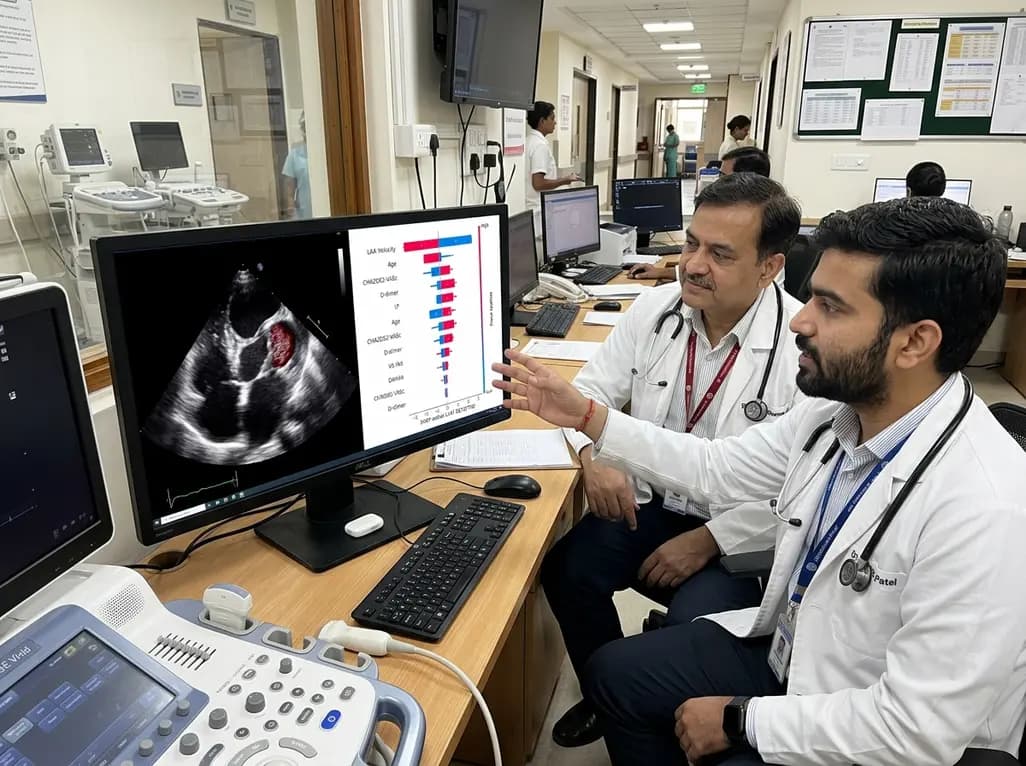
A study demonstrates an explainable machine learning framework integrating clinical and echocardiographic metrics to predict left atrial appendage thrombus in non-valvular atrial fibrillation, utilizing SHAP analysis for clinical interpretability.
Today

Maternal anaemia contributes to nearly half of pregnancy-related fatalities across India. To prevent complications, Uttar Pradesh has added single-dose parenteral iron to its essential medicines list. This clinical transition aims to restore haemoglobin rapidly and protect high-risk mothers across rural facilities.
Today

A landmark systematic review and meta-analysis establishes age-specific normative reference values for pediatric pulse wave velocity, revealing a nonlinear trajectory of arterial stiffness from early childhood through adolescence.
Today

A new systematic review evaluates lumbar facet arthroplasty, predominantly the Total Posterior Spine System (TOPS). Evidence shows significant reductions in back and leg pain and preserved segmental mobility, though revision rates and outcome heterogeneity highlight the need for careful patient selection.
Today

A landmark cross-sectional study in Asian adults with type 2 diabetes identifies novel urinary metabolites linked to mild cognitive impairment. Elevated urinary sucrose and altered metabolites highlight non-invasive pathways for early cognitive risk stratification and targeted metabolic management.
Today
