.webp&w=384&q=75)

Loading, please wait...
Loading, please wait...

The landscape of drug discovery is rapidly changing due to advanced computational tools. Researchers recently introduced the FastMDAnalysis software, a unified framework designed to automate the complex analysis of molecular dynamics (MD) trajectories. This development addresses a long-standing challenge in computational biology where fragmented methods often hindered the reproducibility of results. Consequently, this tool provides a significant methodological advance for the broader scientific community.
Traditionally, analyzing molecular trajectories required scientists to write bespoke scripts for every new study. This process was time-consuming and prone to errors. However, the FastMDAnalysis software orchestrates a comprehensive suite of analysis modules within a single environment. For instance, it handles tasks like root-mean-square deviation, hydrogen bonding, and secondary structure assignment automatically. Moreover, the system supports all major trajectory formats, including GROMACS and AMBER, making it highly versatile for different research needs.
Why should medical professionals care about trajectory analysis? Molecular dynamics simulations provide essential insights into how drugs interact with their targets at an atomic level. By using the FastMDAnalysis software, researchers can identify transient binding sites and allosteric regulation mechanisms more quickly. Furthermore, the software demonstrates a 90% reduction in code volume for standard workflows. This efficiency allows scientists to focus more on interpreting data rather than managing code. Ultimately, faster analysis leads to quicker identification of potential therapeutic candidates.
Reproducibility remains a cornerstone of rigorous scientific inquiry. The creators of the FastMDAnalysis software built it upon robust foundations like MDTraj and scikit-learn to ensure numerical equivalence to reference implementations. Additionally, the software provides a consistent environment that allows different labs to validate each other's work easily. Because it is freely available under the MIT license, it democratizes access to high-level multi-analysis MD studies. Therefore, this tool is expected to become a staple in biophysics and pharmacology departments worldwide.
The primary benefit is the end-to-end automation of molecular dynamics trajectory analysis, which reduces manual scripting and improves research reproducibility.
Yes, it natively supports all major trajectory formats, including those from GROMACS, AMBER, and CHARMM, ensuring seamless integration into existing workflows.
It includes specialized modules for calculating the fraction of native contacts and performing dihedral angle analysis, which are critical for understanding protein folding dynamics.
Disclaimer: This content is for informational and educational purposes only and does not constitute medical advice or professional research consulting. Refer to the latest local and national guidelines for clinical practice.
References
Aina A et al. FastMDAnalysis: Software for Automated Analysis of Molecular Dynamics Trajectories. J Comput Chem. 2026 Mar 30. doi: 10.1002/jcc.70350. PMID: 41904781.
Hollingsworth SA, Dror RO. Molecular dynamics simulation for all. Neuron. 2018;99(6):1129-1143. doi:10.1016/j.neuron.2018.08.011.
De Vivo M, Masetti M, Bottegoni G, Cavalli A. Role of molecular dynamics and related methods in drug discovery. J Med Chem. 2016;59(9):4035-4061. doi:10.1021/acs.jmedchem.5b01684.

Read summarized clinical updates, watch expert medical content, and earn CME certifications right from your smartphone.
Open your smartphone camera to scan and install.





FastMDAnalysis is a new open-source tool that automates molecular dynamics trajectory analysis, potentially accelerating drug discovery and protein research...
6 months ago

A multicenter study from Southeastern Türkiye identified rare alpha-1 antitrypsin deficiency variants, including the homozygous Malton genotype, among COPD patients. Half were never-smokers, highlighting the critical need for comprehensive genetic screening beyond common S and Z alleles.
Today
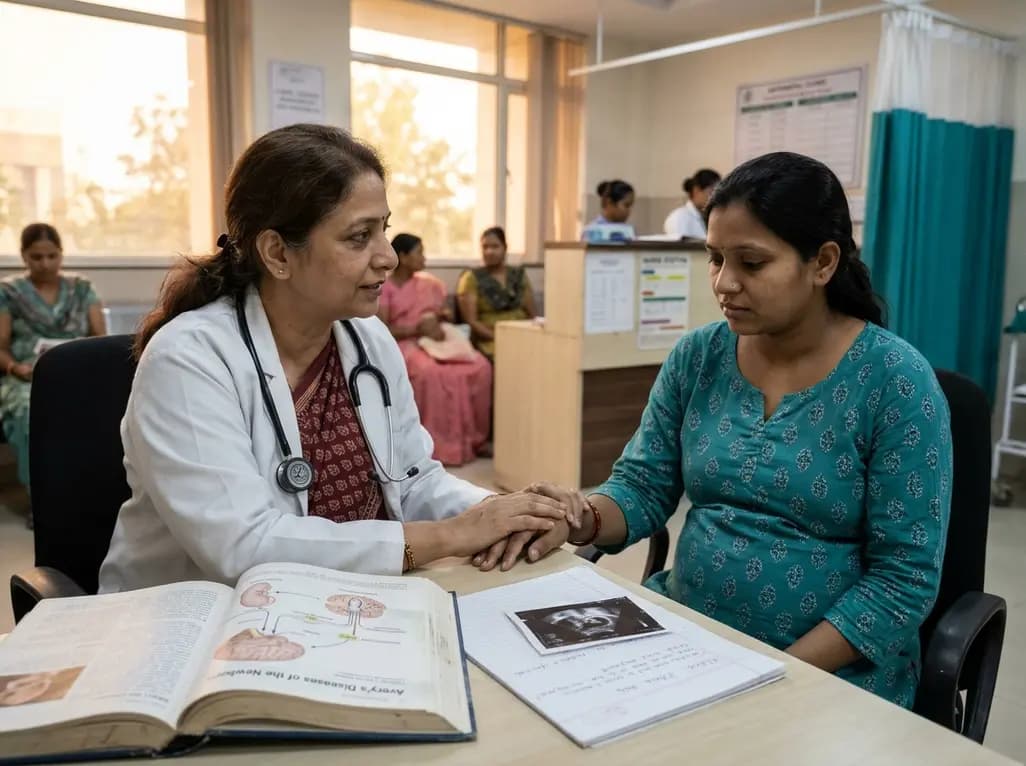
A comprehensive scoping review synthesises evidence linking prenatal maternal mental health to long-term offspring neurodevelopment, evaluating neuroendocrine, inflammatory, and epigenetic pathways while highlighting clinical screening and future research priorities.
Today

The Directorate General of Health Services directs Indian states to halt the hazardous reuse and reprocessing of single-use medical devices. Discover regulatory implications under the Drugs and Cosmetics Act, critical infection risks, legal liabilities, and operational changes required across clinical specialties.
Today
A 25-year multi-institutional cohort reveals high recurrence rates in pediatric giant cell tumor of bone, particularly in patients with open physes and bone marrow edema on preoperative MRI. Early surveillance and careful balance between growth plate preservation and tumor clearance are essential.
Today

India is advancing preventive healthcare by integrating genomics, artificial intelligence, and quantum technologies. With the SANGAM programme sequencing one million Indian genomes, clinicians can unlock personalized therapies, detect cardiometabolic risks early, and curb the burden of diabetes and heart disease.
Today
