.webp&w=384&q=75)

Loading, please wait...
Loading, please wait...

Major depressive disorder affects not only individual neurobiology but also systemic social relationships. Consequently, healthcare professionals must recognize the critical impact of family functioning in depression to optimize long-term clinical outcomes. Patients frequently struggle with social reintegration when interpersonal relationships deteriorate. Therefore, understanding systemic household dynamics offers crucial therapeutic value for clinicians treating depressive disorders.
Recent psychiatric investigations emphasize that emotional well-being depends heavily on domestic support structures. Specifically, a recent cross-sectional study evaluated 123 adult psychiatric outpatients to explore how household communication influences social adaptation. Clinicians gathered data using the Perceived Family Functioning Scale and the Social Adaptation Self-Evaluation Scale. The cohort exhibited a mean Perceived Family Functioning Scale score of 104.59 and a mean Social Adaptation Self-Evaluation Scale score of 37.80. Statistical evaluation demonstrated a significant positive correlation between healthy family dynamics and improved social adaptation. Therefore, higher satisfaction with domestic roles directly associates with superior social competence. In contrast, dysfunctional family environments consistently exacerbate feelings of alienation and self-doubt. When patients perceive chronic criticism or neglect at home, their capacity to maintain work performance and peer interactions steadily deteriorates. Moreover, persistent interpersonal conflict increases psychological distress, which further hampers daily functioning. Consequently, medical practitioners must appreciate that psychiatric symptoms reflect both personal biology and relational systems. Thus, assessing family relationships should represent an integral component of the initial psychiatric workup.
Why do familial relationships exert such a profound influence on external social interactions? First, the household environment functions as an ongoing practice arena for emotional expression and problem-solving. When a family communicates openly, patients develop robust psychological resilience and emotional regulation skills. In addition, healthy families provide practical assistance during acute depressive episodes, which reduces executive fatigue. Conversely, pathological family environments marked by excessive expressed emotion or cold detachment undermine self-efficacy. Patients who endure persistent domestic friction often internalize feelings of inadequacy and worthlessness. As a consequence, these individuals exhibit pronounced social avoidance, occupational withdrawal, and interpersonal friction outside the home. Furthermore, chronic stress from household hostility elevates systemic inflammatory markers and alters neuroendocrine feedback loops. These neurobiological alterations impair cognitive flexibility and heighten emotional sensitivity during standard social exchanges. Therefore, dysfunctional home dynamics create an enduring cycle of interpersonal insecurity and functional disability. Hence, supportive domestic interactions effectively build psychological resources that patients need to navigate demanding occupational and community settings.
Accurate measurement of domestic dynamics and functional capacity enables structured therapeutic monitoring. For instance, the Perceived Family Functioning Scale provides clinicians with a standardized method to quantify domestic problem-solving, communication clarity, and emotional responsiveness. Simultaneously, the Social Adaptation Self-Evaluation Scale measures a patient's motivation, occupational engagement, and social leisure activities. Incorporating these standardized scales into routine clinical documentation yields actionable diagnostic insights. Moreover, these assessment instruments help psychiatrists distinguish purely affective blunting from environmental stress. In many cases, patients achieve symptomatic remission on antidepressant therapy yet continue to experience severe functional impairment. By identifying impaired social adaptation, clinicians can intervene before complete vocational disability occurs. Additionally, administering these rating scales over time allows the treatment team to monitor non-pharmacological progress objectively. When clinicians detect low baseline scores, they can promptly recommend targeted social skills training or systemic psychotherapy. Consequently, adopting structured measurement protocols bridges the gap between symptom reduction and true holistic recovery.
Effective management of depressive disorders requires interventions that extend beyond standard pharmacotherapy. Although selective serotonin reuptake inhibitors alleviate biochemical imbalances, they do not resolve entrenched domestic disharmony. Therefore, psychiatric teams must integrate systemic family psychoeducation into outpatient treatment regimens. Clinicians should educate family members regarding the neurobiological nature of depressive symptoms. This educational process dispels common misconceptions that equate depressive lethargy with laziness or willful disobedience. Furthermore, structured family therapy sessions cultivate healthy conflict-resolution techniques and decrease expressed emotion. When relatives learn to offer constructive encouragement rather than punitive criticism, the patient experiences a safer recovery atmosphere. Similarly, family support groups provide caregivers with essential emotional coping strategies, reducing overall household caregiver burnout. As household stress diminishes, the patient gains greater emotional bandwidth to participate in social and vocational activities. Medical practitioners can also collaborate with clinical psychologists and psychiatric social workers to provide coordinated multidisciplinary care. Ultimately, transforming the home environment into a therapeutic asset optimizes patient adherence and markedly diminishes long-term relapse risk.
In India, the sociocultural fabric revolves around collectivist family structures and joint household living. Consequently, family members play an exceptionally dominant role in treatment seeking, financial management, and daily medication administration. However, this close involvement can sometimes introduce heightened emotional pressure, marital conflict, or cultural stigma regarding psychiatric illness. Therefore, Indian clinicians must actively engage the patient's family as collaborative partners throughout the recovery trajectory. When practitioners address parental or spousal anxieties directly, treatment adherence improves dramatically. In addition, culturally sensitive psychoeducation helps dismantle persistent local myths surrounding depression and psychotropic medication. Primary care physicians and psychiatrists across urban and rural centers should assess domestic dynamics during every clinical consultation. Inquiring about domestic friction, elder care burdens, or economic strain reveals vital psychosocial determinants of treatment resistance. Furthermore, clinicians can empower supportive relatives to reinforce behavioral activation and facilitate gradual community reintegration. By aligning systemic therapeutic strategies with traditional Indian family values, clinicians foster sustainable social adaptation.
Healthy family functioning provides emotional validation, constructive communication, and practical assistance during depressive episodes. Consequently, patients who experience reliable domestic support develop stronger self-esteem and greater psychological resilience. In contrast, households characterized by severe hostility, chronic criticism, or neglect undermine interpersonal confidence. As a result, these patients frequently withdraw from peer relationships, struggle with occupational responsibilities, and exhibit impaired social adaptation across community settings.
Clinicians frequently utilize the Perceived Family Functioning Scale to assess systemic problem-solving, behavioral control, and emotional responsiveness within the household. In addition, practitioners employ the Social Adaptation Self-Evaluation Scale to evaluate patient motivation, social engagement, and workplace functioning. Administering these standardized questionnaires during routine consultations provides objective psychosocial benchmarks. Consequently, healthcare providers can track functional recovery and identify environmental barriers that pharmacotherapy alone cannot resolve.
Healthcare professionals should actively incorporate family members through structured psychoeducation and regular therapeutic reviews. Specifically, educating relatives regarding depressive pathophysiology helps eliminate harmful accusations of laziness and reduces destructive emotional expressions. Furthermore, clinicians can teach practical communication techniques, encourage empathetic listening, and address caregiver fatigue. When family members become supportive allies, patients experience superior treatment adherence, accelerated functional rehabilitation, and substantially lower long-term relapse rates.
Disclaimer: This content is for informational and educational purposes only and does not constitute medical advice, diagnosis, or treatment recommendations. Healthcare professionals must exercise independent clinical judgment when evaluating and managing patients. Refer to the latest local and national guidelines for clinical practice.
References

Read summarized clinical updates, watch expert medical content, and earn CME certifications right from your smartphone.
Open your smartphone camera to scan and install.





A cross-sectional psychiatric outpatient study reveals a positive correlation between perceived family functioning and social adaptation in patients with depression. Clinicians should assess domestic dynamics and integrate systemic family psychoeducation to optimize long-term rehabilitation and clinical outcomes.
Today

A Mayo Clinic study reveals that applying lower extremity elastic bandages in acute decompensated heart failure significantly improves diuretic efficiency by 340 mL per 40-mg furosemide equivalent. This mechanical therapy reduces required diuretic doses while safely maintaining necessary overall daily fluid clearance.
Today
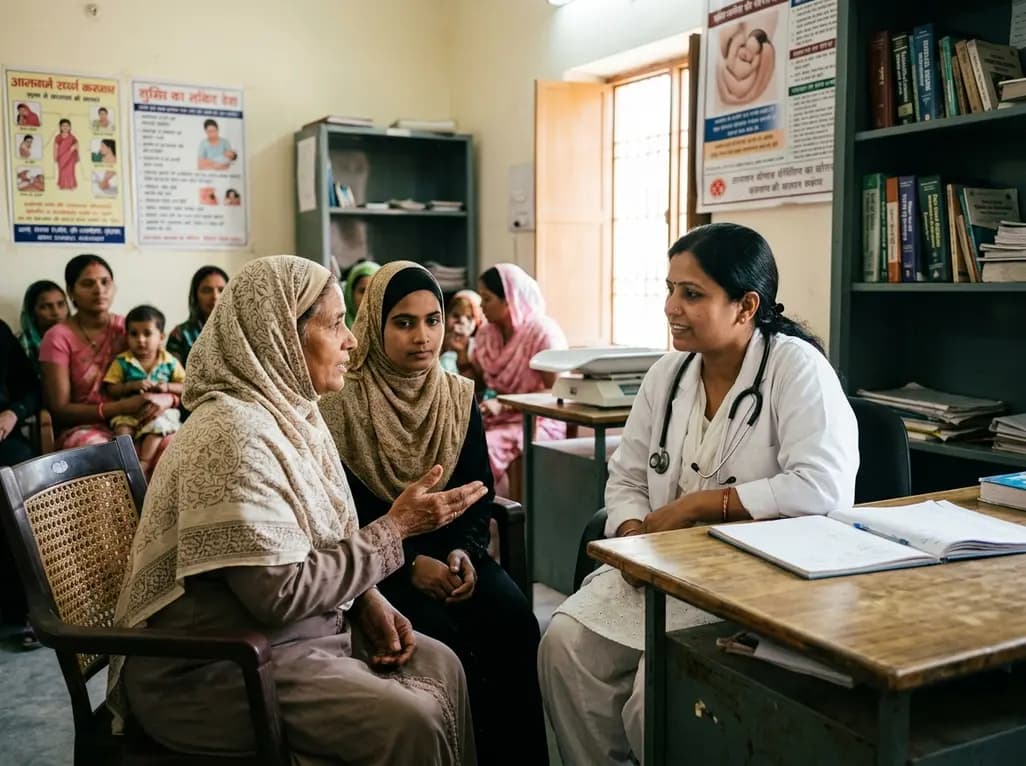
A qualitative study examines reproductive autonomy and family planning among rural Muslim women, identifying cultural barriers, administrative obstacles, and covert coercion. Healthcare providers must adopt culturally sensitive counseling models to foster equitable maternal and reproductive health outcomes.
Today

A study shows that the aggregate index of systemic inflammation (AISI) significantly associates with elevated myocardial injury markers, including cardiac troponin T and CK-MB, in patients with coronary heart disease, highlighting its potential utility for cardiovascular risk stratification.
Today
A recent study evaluates the impact of concomitant hip osteoarthritis on patient-reported outcomes following lumbar fusion. Findings confirm hip OA is not an independent predictor of inferior recovery, demonstrating that spinal arthrodesis remains effective regardless of baseline coxofemoral degeneration.
Today

Calcimimetic therapy for primary hyperparathyroidism can induce profound tumor fibrosis, necrosis, and reduced vascularity. These changes alter ultrasound and 4D-CT imaging and cause dense recurrent laryngeal nerve adhesions, requiring heightened surgical vigilance during definitive parathyroidectomy.
Today
