.webp&w=384&q=75)

Loading, please wait...
Loading, please wait...

As medical schools worldwide work to address health disparities, the integration of social justice in medical education has become a core requirement. However, a recent institutional ethnography reveals that faculty resistance to these changes is often not just personal. Instead, it is a product of deep-seated institutional structures and professional norms.
The study suggests that faculty discomfort with health equity content stems from a professional identity rooted heavily in biomedicine. Many educators view themselves as authoritative experts in clinical science. Consequently, they may perceive social justice topics as ideological or peripheral to \"real\" medicine.
Furthermore, the research highlights how regulatory frameworks function as \"boss texts.\" Licensing examination objectives often prioritize biomedical facts over social determinants of health. Therefore, faculty naturally focus on content that helps students pass these exams, effectively sidelining equity-focused curricula.
Addressing these barriers requires more than just training workshops for staff. Institutions must align their governance and regulatory frameworks to reflect the importance of social accountability. In India, the National Medical Commission (NMC) has introduced the Competency-Based Medical Education (CBME) curriculum. This framework includes modules on ethics and communication. However, for these modules to succeed, the broader institutional culture must value them as much as clinical skills.
Ultimately, faculty resistance is a structural issue. By repositioning health equity as a central tenet of medical practice, schools can overcome these hurdles.
Resistance often arises because educators feel that social justice topics conflict with their biomedical professional identities. Additionally, institutional priorities like licensing exams often focus on clinical data, making equity-focused content seem less important.
Schools should align their regulatory frameworks and evaluation methods with social accountability goals. This means valuing social justice as a core competency rather than an elective or peripheral subject.
Yes, the challenges in India are similar. While the NMC has introduced modules like AETCOM, faculty may still prioritize clinical subjects due to the pressure of competitive postgraduate exams and traditional teaching norms.
Disclaimer: This content is for informational and educational purposes only. It does not constitute medical or legal advice. Refer to the latest local and national guidelines for clinical practice.
References
Brown A et al. The roots of resistance: An institutional ethnography of faculty opposition to social justice curricula in undergraduate medical education. Med Educ. 2026 Apr 29. doi: 10.1111/medu.70227. PMID: 42056736.
Kearney GP et al. Why institutional ethnography? Why now? Institutional ethnography in health professions education. PMC. 2019 Feb 11.
Bhattacharya S. The Impact of Social Determinants of Health in India: The Non-Medical Factors Influencing Health Outcomes. Medix Global. 2024.

Read summarized clinical updates, watch expert medical content, and earn CME certifications right from your smartphone.
Open your smartphone camera to scan and install.





A study explores how institutional structures and professional identities create faculty resistance to social justice curricula in medical education....
5 months ago
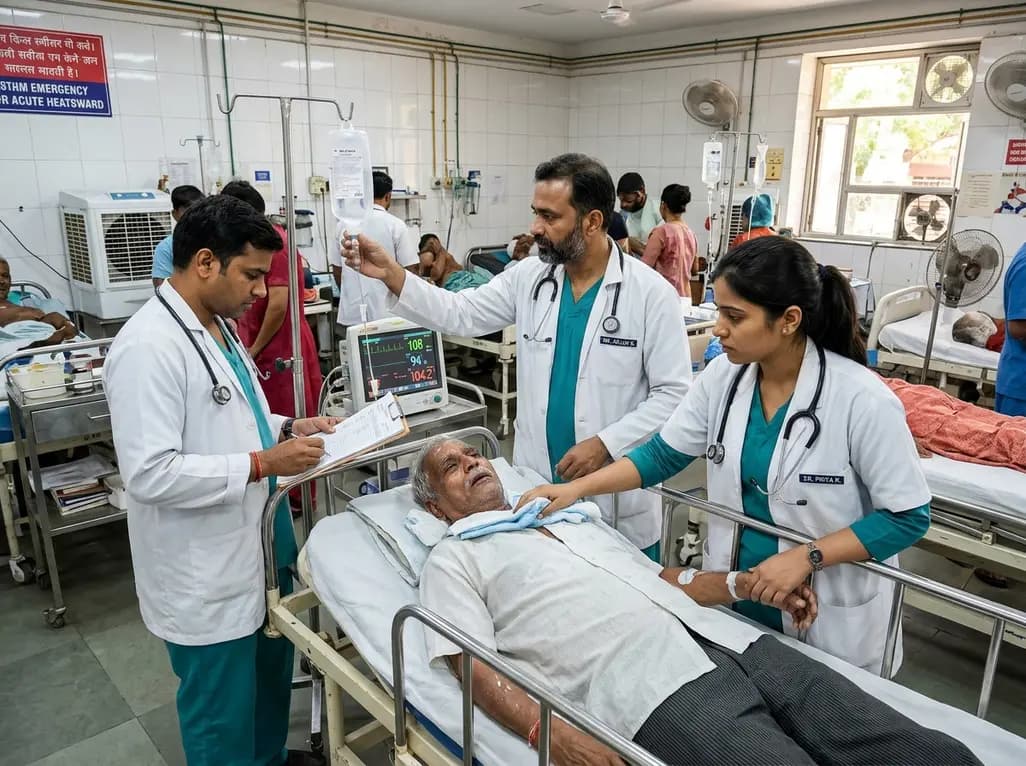
Recent epidemiological data reveals a dramatic surge in summer heat mortality driven by human-induced climate warming. This analysis explores the pathophysiological impacts on cardiac and renal systems, diagnostic dilemmas in death certification, and essential emergency cooling protocols for acute clinical care.
Today
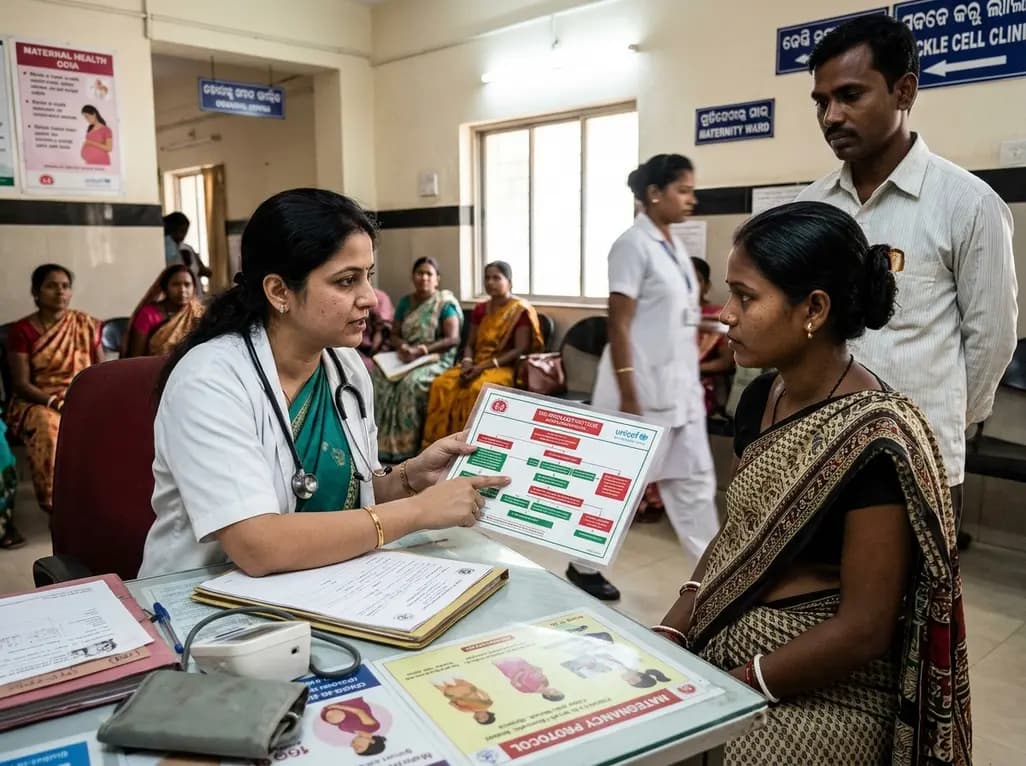
Odisha has established India's first state-level clinical protocol specifically tailored for pregnant women with sickle cell disease. Developed with NHM and UNICEF, the framework provides structured antenatal screening, crisis mitigation, standardized referral pathways, and specialized interdisciplinary care.
Today

India is advancing preventive healthcare by integrating genomics, artificial intelligence, and quantum technologies. With the SANGAM programme sequencing one million Indian genomes, clinicians can unlock personalized therapies, detect cardiometabolic risks early, and curb the burden of diabetes and heart disease.
Today
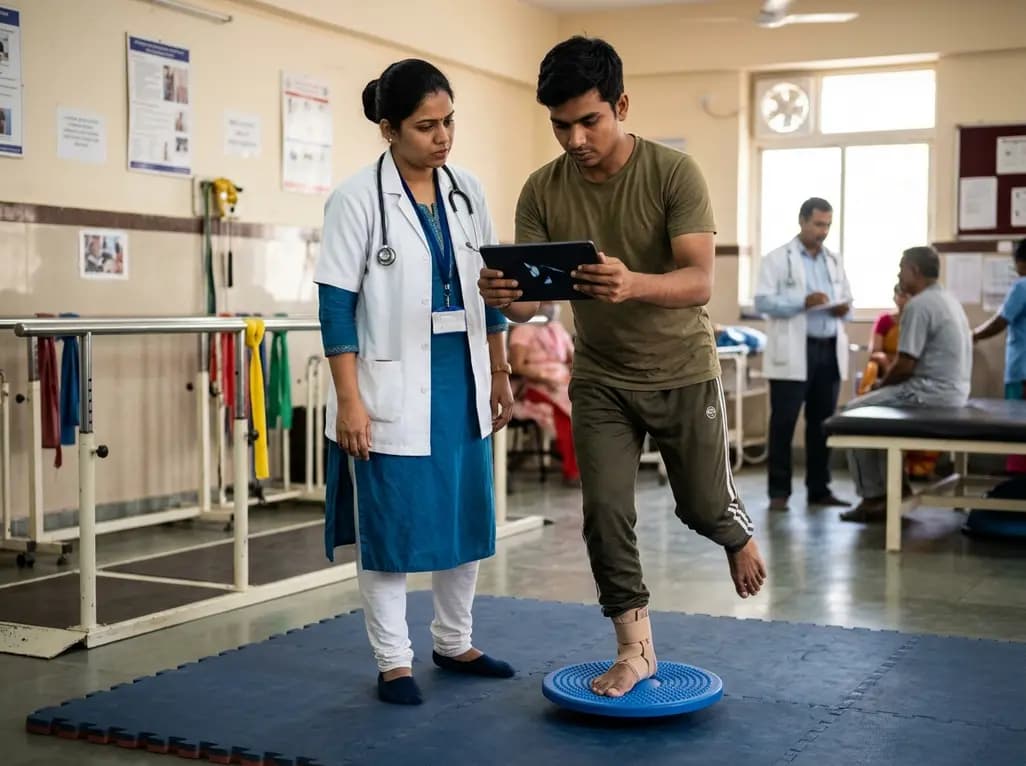
A randomized controlled trial demonstrates that an eight-week dual-task training intervention significantly improves static and dynamic postural control over standard balance exercises in individuals with chronic ankle instability, addressing critical neurocognitive deficits during athletic and daily activities.
Today

A retrospective cohort study of 7,716 ICU patients from the MIMIC-IV database demonstrates that Gradient Boosting Decision Trees significantly outperform traditional SOFA scores in predicting in-hospital mortality among patients with sepsis and diabetes, with SHAP analysis providing clinical interpretability.
Today
