.webp&w=384&q=75)

Loading, please wait...
Loading, please wait...

Drug-resistant epilepsy presents a major clinical challenge worldwide, particularly in patients who cannot undergo surgical resection due to multifocal foci or overlaps with eloquent cortex. While neuromodulation therapies such as deep brain stimulation of the anterior nucleus of the thalamus or centromedian nucleus offer palliative relief, their outcomes often vary widely across individuals. Consequently, neurosurgeons and epileptologists continue to seek novel anatomical targets that can modulate epileptic networks directly. Emerging clinical research highlights extreme capsule stimulation as a transformative, network-guided therapeutic approach for focal epilepsy. By engaging key white matter pathways, this strategy provides precise electrophysiological control over dispersed epileptogenic networks.
The extreme capsule represents a distinct, compact white matter crossroad located between the claustrum and the insular cortex. Structurally, it resembles a butterfly-like conduit that channels critical association tracts, notably the uncinate fasciculus and the inferior fronto-occipital fasciculus. Additionally, it integrates dense short association fibers that connect the insula to adjacent cortical regions. Because these fascicles link the frontal, temporal, and occipital lobes, the extreme capsule acts as a strategic structural nexus. Pathological epileptic activity frequently hijacks these pathways to propagate across distant cortical domains. Therefore, targeting this anatomical bottleneck provides clinicians with a unique opportunity to interrupt pathological synchronization without resecting critical functional tissue.
To evaluate this novel target, investigators conducted stereotactic electroencephalography monitoring in eleven patients with drug-resistant focal epilepsy. The cohort had a mean age of twenty-eight years and underwent comprehensive presurgical evaluations. In each patient, clinicians extended one intracranial electrode contact into the extreme capsule ipsilateral to the presumed seizure onset zone. Furthermore, researchers compared individual effective connectivity against large-scale structural tractography derived from over one thousand human connectomes. By administering single-pulse electrical stimulation at one hertz during the resting state, investigators mapped evoked potentials across distributed recording sites. Consequently, this rigorous methodology validated that effective connectivity reliably mirrored the underlying structural connectome of the extreme capsule.
During the interictal phase, researchers evaluated neural modulation using stepwise incremental stimulation frequencies ranging from 5 to 145 hertz. Interestingly, neural synchronization and desynchronization across recording channels responded in a strictly frequency-dependent manner. High-frequency extreme capsule stimulation produced the most robust clinical suppression of interictal epileptiform discharges and pathological ripples. Specifically, this suppressive effect concentrated within cortical areas situated directly inside the extreme capsule structural network. Regions benefiting from marked discharge attenuation included the orbitofrontal cortex, inferior frontal gyrus, temporal pole, insular cortex, and occipital gyrus. Conversely, areas outside this structural network exhibited negligible change, confirming that anatomical wiring strictly constrains therapeutic neuromodulation.
Beyond continuous high-frequency stimulation, investigators explored patterned burst stimulation protocols to optimize power efficiency and neurophysiological response. Specifically, delivering one-hertz burst stimulation trains elicited pronounced cortical resetting while attenuating persistent epileptic discharges across target zones. Because continuous high-frequency stimulation risks battery depletion and adverse tissue heating, burst patterns offer an attractive alternative for chronic clinical application. Furthermore, the burst paradigms revealed how temporal patterning interacts with white matter architecture to disrupt hypersynchronous rhythms. Consequently, these findings indicate that clinicians can calibrate stimulation paradigms according to individualized structural tractography profiles. This computational personalization establishes a foundation for responsive neurostimulation platforms adapted to specific white matter pathways.
For neurologists and neurosurgeons evaluating refractory focal epilepsy, these findings provide compelling mechanistic proof-of-concept. Conventional deep brain stimulation primarily targets subcortical nuclear gray matter, which often disperses electrical currents unpredictably. In contrast, neuromodulating compact white matter fascicles such as the extreme capsule allows clinicians to engage widespread cortical networks simultaneously. Therefore, extreme capsule stimulation could benefit individuals with complex fronto-temporal or insular epilepsies deemed unsuitable for standard resective surgery. Additionally, integrating high-resolution diffusion tractography into surgical planning workflows ensures patient-specific target verification. As closed-loop neurostimulation technology continues to advance, identifying structural network hubs will remain essential for maximizing clinical seizure freedom.
Although these initial findings offer tremendous therapeutic promise, several clinical hurdles warrant careful investigation before widespread adoption. First, long-term clinical trials must evaluate whether suppressing interictal epileptiform discharges translates directly into sustained seizure reduction and improved quality of life. Second, investigators must assess potential neuropsychological impacts, given the extreme capsule's proximity to language and cognitive networks. Future studies will likely incorporate adaptive, closed-loop systems capable of delivering on-demand stimulation upon early seizure detection. Ultimately, network-targeted white matter modulation could redefine neuromodulation paradigms, offering renewed hope to patients living with intractable focal epilepsy across global healthcare systems.
Extreme capsule stimulation is an emerging neurostimulation technique targeting the extreme capsule, a compact white matter tract between the claustrum and insula. By delivering electrical pulses to this anatomical pathway, clinicians can modulate connected cortical networks and suppress abnormal interictal epileptiform discharges in drug-resistant focal epilepsy.
The therapeutic modulation of extreme capsule stimulation relies strictly on anatomical structural connectivity. High-frequency electrical pulses suppress epileptiform discharges only within connected regions, such as the insula, temporal pole, and orbitofrontal cortex, while sparing unconnected brain regions outside the extreme capsule network.
Many patients with drug-resistant epilepsy cannot undergo surgical resection due to multifocal origins or overlap with eloquent functional cortex. Extreme capsule neuromodulation provides an alternative, circuit-level intervention that disrupts seizure propagation networks without causing irreversible structural deficits or cognitive loss.
Disclaimer: This content is for informational and educational purposes only. It is not intended to provide medical advice or to be used for diagnostic or treatment purposes. Always seek the advice of your physician or other qualified health provider with any questions you may have regarding a medical condition. Refer to the latest local and national guidelines for clinical practice.
References
Cheng Y et al. Structural network-specific effect of extreme capsule stimulation for drug-resistant focal epilepsy. Brain. 2025 Aug 01. doi: 10.1093/brain/awaf097. PMID: 40117381.
Salanova V et al. Long-term efficacy and safety of thalamic stimulation for drug-resistant partial epilepsy. Neurology. 2015 Oct 20;85(16):1417-1424. doi: 10.1212/WNL.0000000000002047.
Kwan P, Brodie MJ. Early identification of refractory epilepsy. New England Journal of Medicine. 2000 Feb 03;342(5):314-319. doi: 10.1056/NEJM200002033420503.

Read summarized clinical updates, watch expert medical content, and earn CME certifications right from your smartphone.
Open your smartphone camera to scan and install.





A pioneering study highlights extreme capsule stimulation as a promising network-specific neuromodulation target for drug-resistant focal epilepsy, demonstrating significant suppression of epileptiform activity within structurally connected hubs.
Today

A multicenter propensity-matched study evaluated DOAC plus single versus dual antiplatelet therapy after carotid artery stenting. Findings revealed comparable intracranial hemorrhage and ischemic stroke rates, supporting DOAC plus SAPT as a viable antithrombotic strategy in high-risk patients.
Today

Meghalaya recorded a historic 55% reduction in maternal deaths, dropping from 244 to 107 over five years. Through the MOTHER app, dedicated transit homes, and expanded infrastructure like the 150-bed Tura Maternity Hospital with its first public NICU, the state demonstrates an effective public health model.
Today

Explore modern perioperative management protocols for clinical xenotransplantation. Learn how costimulation blockade, anti-inflammatory perfusion, and coagulopathy rescue overcome interspecies hurdles.
Yesterday

A cross-sectional study reveals that sarcopenic obesity independently increases functional impairment and severe disc degeneration in patients with degenerative lumbar spinal stenosis, highlighting the need for body composition assessment.
Today
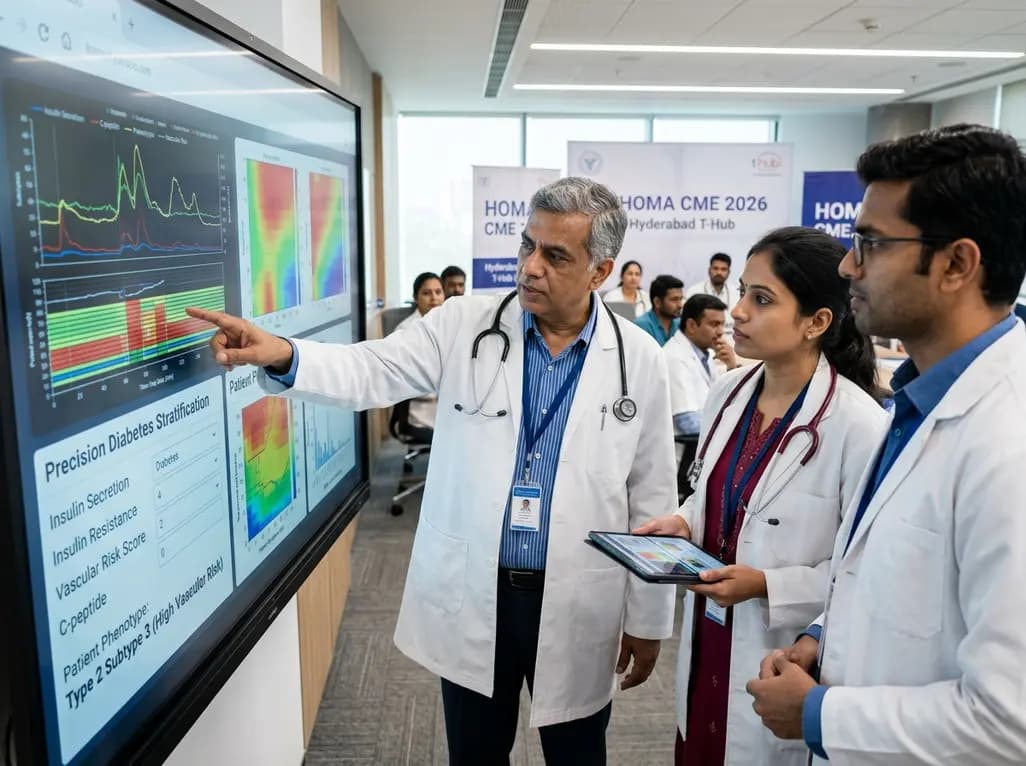
At Homa CME 2026 at Hyderabad's T-Hub, healthcare leaders emphasized moving beyond routine metrics through digital calculators and precision stratification. Discover why characterizing individual insulin secretion, resistance patterns, and vascular risks transforms chronic metabolic care in India.
Yesterday
