.webp&w=384&q=75)

Loading, please wait...
Loading, please wait...
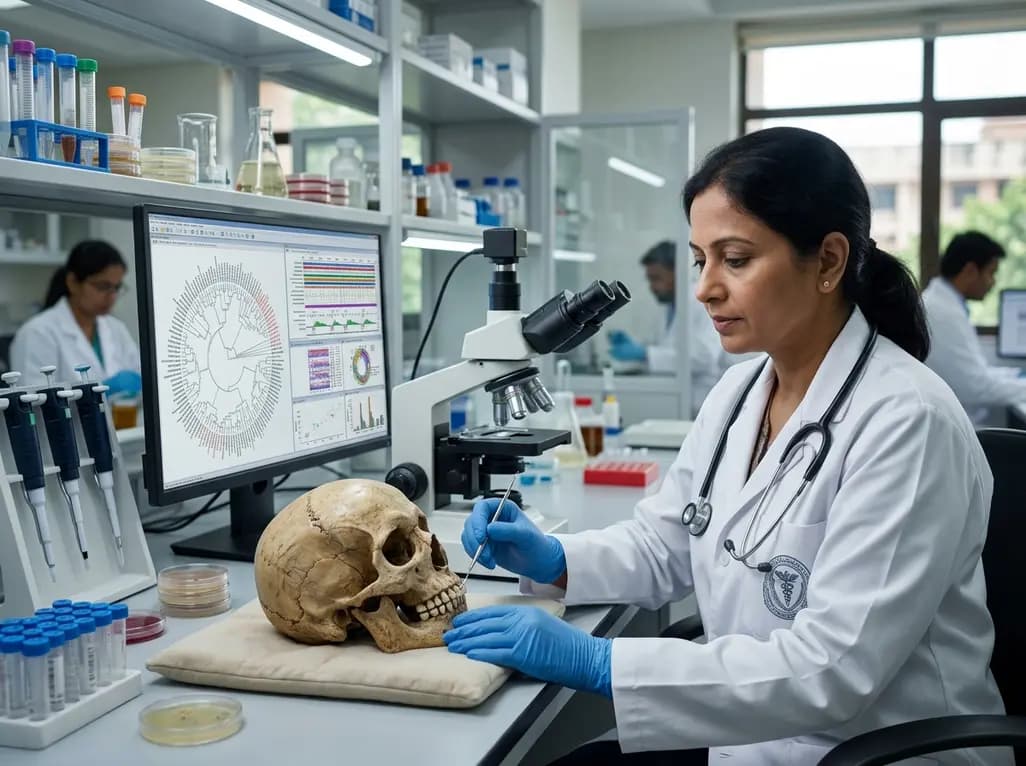
Recent advancements in metagenomic assembly are transforming our understanding of oral health by shedding light on periodontal pathogen evolution. Researchers recently performed an extensive pangenomic analysis on over 1,200 bacterial genomes, including ancient dental calculus samples dating back nearly 15,000 years. This large-scale study focused on the genera Tannerella and Porphyromonas, which are critically linked to the development of periodontal disease. Consequently, the findings provide a high-resolution map of how these bacteria adapted to the human mouth over millennia.
One of the most significant outcomes of the study was the identification of a previously unknown species, Ca. Tannerella abscondita. While this bacterium frequently appears in both ancient and modern human samples, clinicians often mistake it for Tannerella forsythia due to genetic similarities. However, the researchers demonstrated that Ca. Tannerella abscondita possesses a distinct virulence repertoire. This discovery suggests that the diversity of the oral microbiome is far more complex than previously documented in standard reference databases. Furthermore, the study revealed that while Tannerella species show clear niche tropism, Porphyromonas gingivalis maintains a more homogeneous distribution across different oral environments.
The analysis also highlighted how specific bacterial strains adapted to different ecological niches. For instance, strains from Oceania and Asia showed an enrichment of pseudogenes, which are genetic indicators of ecological transitions. Moreover, the study found that virulence genes are distributed relatively evenly across continents. This indicates that the core pathogenic mechanisms of these bacteria have remained stable over time, even as they moved through diverse human populations. By using de novo assembly, the research team improved the representation of these oral genera, enhancing our ability to track their evolutionary trajectories and identify specific genotypes that may drive disease progression in modern patients.
Understanding these evolutionary shifts is vital for clinicians in India, where the prevalence of periodontal disease remains high. Recognizing that pathogens like P. gingivalis have specific genotypes that do not appear in ancient samples could eventually lead to more targeted diagnostic and therapeutic approaches. Additionally, identifying newly discovered species like Ca. Tannerella abscondita helps refine our understanding of the microbial shifts associated with oral health and disease.
It is a newly identified oral species related to T. forsythia but with a different virulence profile. Its discovery suggests that current diagnostic tools may misidentify certain pathogens, potentially impacting our understanding of disease etiology.
Unlike Tannerella species, Porphyromonas gingivalis does not show strong niche tropism, meaning it is more uniformly distributed throughout the oral cavity. This may explain its broad impact as a keystone pathogen in various stages of periodontal disease.
Ancient samples allow researchers to track how bacterial genomes have changed in response to shifts in human diet, environment, and migration, providing a historical context for the virulence of modern periodontal pathogens.
Disclaimer: This content is for informational and educational purposes only. It is not intended to provide any medical advice or substitute for the advice of a qualified healthcare professional. Healthcare professionals are encouraged to exercise their professional judgment and should verify all information provided. Refer to the latest local and national guidelines for clinical practice.
References
1. Galtier A et al. Ancient species diversity and niche adaptation in Tannerella and Porphyromonas revealed through pangenomics. Genome Biol Evol. 2026 Jun 08. doi: undefined. PMID: 42252506.
2. Lv H et al. Lung abscess caused by Tannerella forsythia infection. Infect Drug Resist. 2023 Oct 31;16:6935-6941. doi: 10.2147/IDR.S433912.
3. Jia L et al. The Key Role of Porphyromonas gingivalis in the Pathogenesis of Periodontitis Linked with Systemic Diseases. Microorganisms. 2025 Jun 18;13(6):1345. doi: 10.3390/microorganisms13061345.
"
Read summarized clinical updates, watch expert medical content, and earn CME certifications right from your smartphone.
Open your smartphone camera to scan and install.





A pangenomic study of over 1,200 genomes reveals the evolutionary history and niche adaptation of key periodontal pathogens like Tannerella and Porphyromona...
4 months ago

Novel diimide and hydrazone scaffolds, particularly compound #C4, synergistically reactivate latent HIV-1 when combined with JQ1 or PKC activators. Demonstrating donor-matched proviral transcription ex vivo and non-canonical signaling, these findings advance shock and kill strategies toward reservoir eradication.
Today

A cross-sectional study reveals that maternal RSV vaccination coverage reached only 43.7% in Argentina, with maternal vaccine knowledge being the sole independent predictor of uptake. Clinicians play a crucial role in eliminating informational and structural barriers to optimize infant health.
Today

Review how tailored exercise programs benefit frail older patients with heart failure. Explore pathophysiological mechanisms, individualized training prescriptions, and strategies to overcome adherence barriers in clinical practice.
Yesterday

This comparative study evaluates posterior labral tears with and without glenohumeral instability, highlighting distinct demographic patterns, MRI underestimation in stable shoulders, and successful arthroscopic repair outcomes.
Yesterday

A clinical study demonstrates that early intervention with tocilizumab, either as monotherapy or bridged with corticosteroids, achieves significant proptosis reduction and resolves active inflammation in treatment-naive thyroid eye disease.
Yesterday
