.webp&w=384&q=75)

Loading, please wait...
Loading, please wait...

Alcohol use disorder represents a chronic condition marked by high recurrence rates during early recovery. Clinicians continually explore novel digital biomarkers to identify periods of heightened vulnerability. Recently, mobile digital phenotyping has gained attention as a passive monitoring method. Specifically, researchers have evaluated alcohol lapse risk prediction by analyzing cellular communication patterns and machine learning models. By assessing call logs, text messaging frequencies, and contextualized contact networks, digital platforms aim to deliver timely behavioral interventions. However, verifying whether mobile sensing offers incremental utility over baseline clinical assessments remains essential for addiction medicine.
Alcohol use disorder (AUD) is an enduring neuropsychiatric disorder where sudden psychosocial stressors frequently trigger drinking episodes. Consequently, clinicians recognize that early abstinence presents the highest risk for lapse. Traditional addiction management depends heavily on retrospective self-reports during periodic clinical visits. However, patients often struggle to recall precise daily emotional states, interpersonal conflicts, or craving fluctuations. Therefore, digital phenotyping has emerged as an objective recovery monitoring modality. This approach utilizes smartphone sensors to record naturalistic behavioral patterns without requiring continuous active user input. Passive cellular communication sensing tracks incoming and outgoing calls, message timing, and social connectivity. Because interpersonal relationships strongly influence sobriety, analyzing communication dynamics provides meaningful theoretical value. Furthermore, contextualizing contact lists into supportive versus risk-associated contacts helps algorithms interpret social risk factors. Addiction specialists must therefore determine whether these passive data streams genuinely enhance early lapse forecasting.
The longitudinal observational study evaluated 144 adult participants entering early recovery from moderate-to-severe alcohol use disorder. Each participant maintained a clinical goal of complete abstinence throughout the investigation. Researchers followed the cohort for up to three months using personal sensing technologies alongside ecological momentary assessment (EMA). Specifically, participants completed brief smartphone EMA surveys four times daily to record craving, affect, and alcohol use. Concurrently, mobile software passively gathered cellular communication metrics, including call frequencies, call durations, and SMS exchange patterns. In addition, investigators categorized contacts based on participant-reported risk associations, distinguishing recovery-supportive individuals from drinking peers. The research team also collected detailed baseline measures covering demographic characteristics, drinking history, psychiatric comorbidities, and personality traits. Finally, researchers implemented repeated k-fold cross-validation to train machine learning algorithms. Using elastic net regression, the investigators systematically evaluated model accuracy for predicting next-day alcohol lapses.
The machine learning analysis revealed critical distinctions across different feature sets. The comprehensive model combining contextualized cellular communication data and baseline clinical characteristics achieved a median posterior auROC of 0.67 (95% Bayesian credible interval [0.64, 0.71]). In comparison, a parsimonious model using only baseline clinical, demographic, and psychological variables achieved a median auROC of 0.69 (95% CI [0.65, 0.72]). Conversely, cellular communication features evaluated on their own demonstrated modest predictive power, yielding a median auROC of 0.59 (95% CI [0.55, 0.62]). Although standalone communication sensing performed above chance, it provided no incremental predictive advantage beyond baseline metrics. Furthermore, the elastic net algorithm in the full model retained 10 features, including specific communication variables with moderate coefficient weights. Thus, while passive phone logs capture relevant behavioural signals, they do not meaningfully improve next-day lapse prediction when baseline psychiatric data are available.
Although passive mobile sensing failed to surpass baseline clinical models, the retained communication features offer valuable behavioral insights. Specifically, alterations in call duration and frequent exchanges with high-risk contacts correlated with increased next-day lapse likelihood. Consequently, these findings reaffirm that interpersonal dynamics heavily dictate sobriety outcomes. Addiction specialists should therefore examine patient social circles during routine consultations. Moreover, clinicians can recognize that communication changes often reflect emerging psychosocial distress before an overt lapse occurs. Nevertheless, exclusive reliance on cellular telecom logs poses practical clinical limitations. Many modern individuals communicate primarily through third-party encrypted messaging apps, social platforms, and VoIP services. As a result, standard cellular monitoring captures only a fragmented portion of modern interpersonal interactions. Healthcare providers must therefore view mobile communication data as a supplementary perspective rather than an independent diagnostic solution.
Deploying continuous smartphone sensing in addiction care involves substantial technical, ethical, and operational challenges. Firstly, passive data collection requires background processing permissions and battery usage, which may cause technical difficulties. Secondly, tracking communication logs raises legitimate patient privacy concerns regarding personal relationships. Clinicians must maintain clear transparency regarding data security to preserve therapeutic alliance. Furthermore, digital predictive systems require high specificity to avoid alert fatigue. If an algorithm generates frequent false alarms, patients and clinicians may quickly abandon the digital tool. Therefore, future digital phenotyping research must examine multimodal sensing combinations. For instance, integrating communication metrics with passive geolocation data, physiological wearables, and targeted micro-surveys could enhance predictive accuracy. In addition, developing personalized machine learning algorithms tailored to individual baseline behaviors may improve risk detection across diverse clinical populations.
For addiction psychiatrists and primary care practitioners, these research findings provide practical guidance for optimizing relapse prevention strategies. While automated sensing represents an innovative field, baseline clinical assessments remain the foundation of relapse risk stratification. Clinicians should thoroughly evaluate substance history, psychiatric comorbidities, stress tolerance, and social support during early recovery planning. Additionally, healthcare teams should deploy digital health tools primarily as supportive therapeutic extenders. Smartphone applications can deliver just-in-time coping exercises and craving management modules during high-stress periods. Furthermore, encouraging patients to actively identify and manage high-risk social contacts yields significant clinical benefits. As digital psychiatry advances, physicians must balance technical complexity against proven clinical evaluations. By integrating comprehensive baseline profiling with targeted digital interventions, medical teams can significantly improve recovery outcomes and prevent long-term relapse.
Cellular communication sensing is a passive digital phenotyping technique that automatically records phone call and text messaging logs. In addiction research, algorithms analyze communication frequency, timing, and contact types without reading private message text. This tracking helps clinicians evaluate how social interaction changes correlate with alcohol relapse vulnerability during recovery.
No, contextualized cellular communication data did not provide incremental predictive value beyond baseline clinical measures. While communication features yielded an auROC of 0.59 alone and were retained in full models, a baseline-only model performed comparably with an auROC of 0.69, demonstrating that baseline clinical profiles remain highly informative.
Healthcare providers should utilize digital tools as supportive recovery extenders rather than autonomous diagnostic devices. Clinicians can integrate smartphone-delivered coping modules, craving assessments, and social support monitoring alongside evidence-based psychotherapy and pharmacotherapy. This combined strategy reinforces patient engagement while addressing dynamic psychosocial triggers throughout early addiction recovery.
Disclaimer: This content is for informational and educational purposes only. It is not intended to substitute for professional medical advice, diagnosis, or treatment. Always consult a qualified healthcare provider with questions regarding a medical condition. Never disregard professional medical advice or delay seeking it because of something you read here. The views and findings expressed in this article are those of the original researchers and do not necessarily reflect the official policies or positions of any academic institution, healthcare organization, or regulatory authority. Medical knowledge evolves rapidly; while we strive to provide accurate, up-to-date summaries, readers should verify information independently. Refer to the latest local and national guidelines for clinical practice.
References

Read summarized clinical updates, watch expert medical content, and earn CME certifications right from your smartphone.
Open your smartphone camera to scan and install.





A longitudinal observational study shows that while smartphone communication sensing captures lapse risk signals in early alcohol recovery, it does not improve prediction beyond baseline clinical measures.
last month

With post-monsoon dengue surges threatening South Asian health systems, physicians must refine triage and management. This guide covers vital warning signs, plasma leakage detection, crystalloid titration, and vector containment strategies to prevent mortality during seasonal arboviral epidemics.
Today

Findings from Project Viva indicate that sustained postpartum weight retention, rather than excessive gestational weight gain alone, directly worsens women's mid-life cardiovascular health, degrading blood pressure and glycemic parameters decades after delivery.
Today
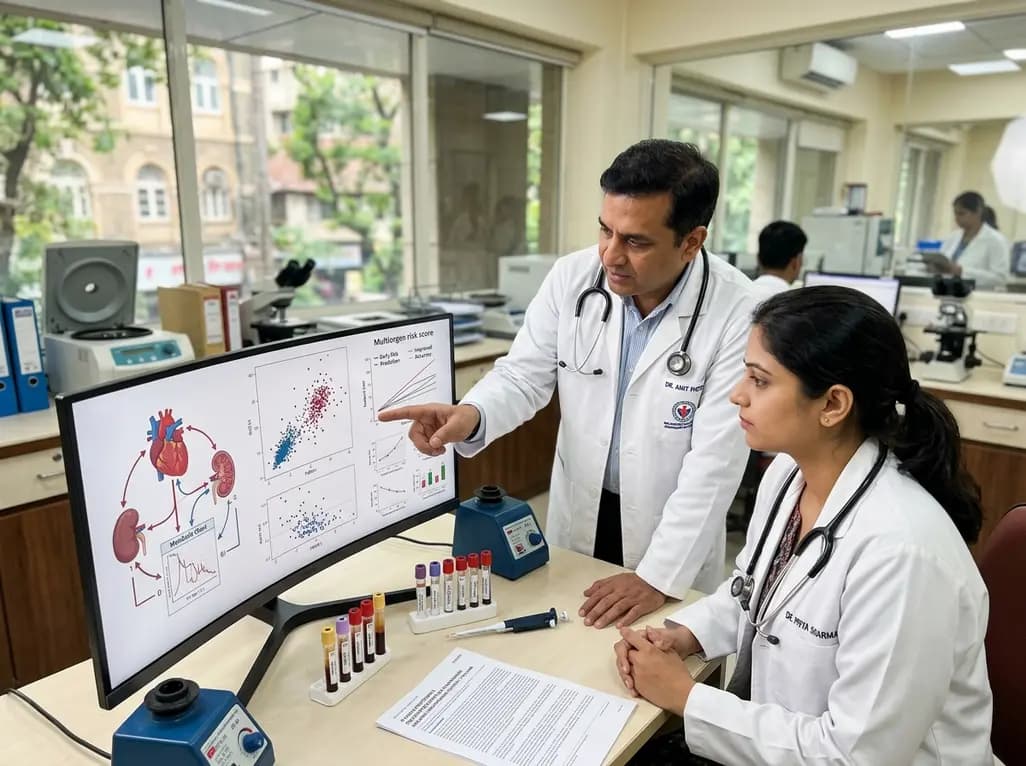
A large UK Biobank study reveals that plasma proteomic signatures capture preclinical organ damage and improve multiorgan risk prediction across early CKM syndrome stages 0 to 2 beyond traditional PREVENT clinical models.
Today
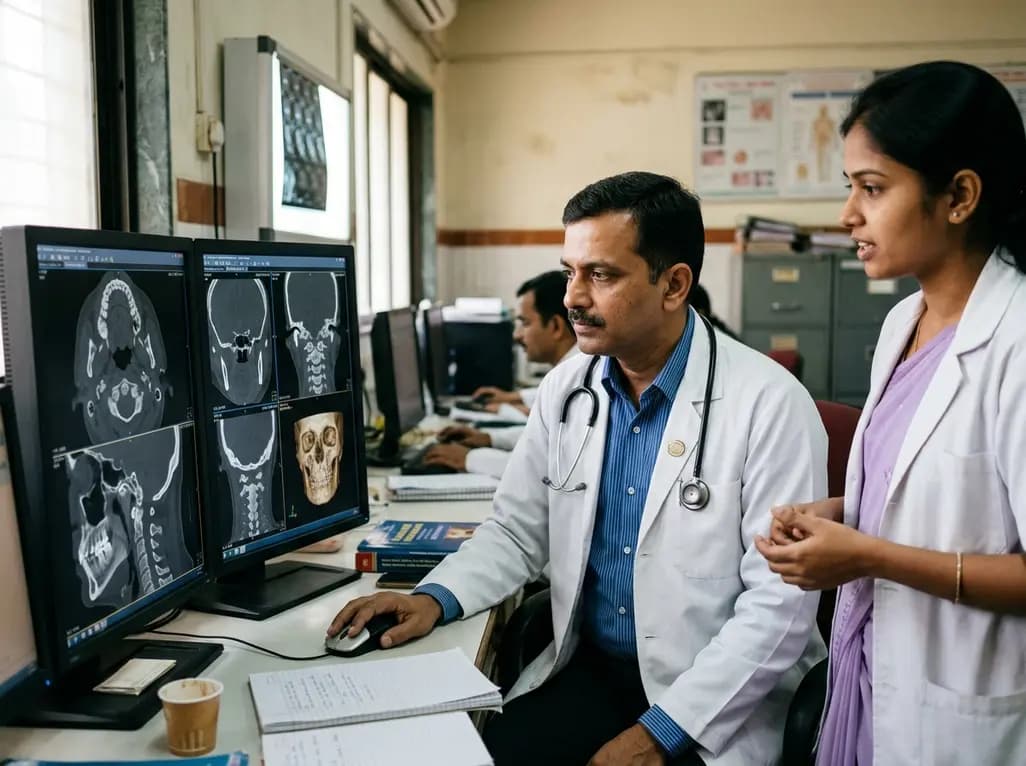
A retrospective CBCT study reveals that superior TMJ space asymmetry correlates moderately with occipital condyle-atlas-axis asymmetry in unilateral TMJ osteoarthritis, highlighting an imaging correlate between jaw biomechanics and upper cervical alignment rather than a standalone diagnostic marker.
Today

A Bayesian multilevel meta-analysis reveals that aerobic training combined with moderate carbohydrate restriction modestly lowers HbA1c in type 2 diabetes. However, sparse data and very low certainty leave incremental benefits over exercise or diet alone unproven, highlighting the need for individualized care.
Today
