.webp&w=384&q=75)

Loading, please wait...
Loading, please wait...

The implementation of the European Union Medical Device Regulation (MDR 2017/745) significantly reshapes the landscape for EU MDR orthopaedic implants. While the primary goal of the regulation is to enhance patient safety, the transition from the old Medical Device Directive (MDD) has created substantial hurdles. Orthopaedic surgeons and manufacturers now face more rigorous certification timelines and increased costs. Consequently, many well-established devices risk being withdrawn from the market despite their proven clinical track records.
One major challenge involves the stricter requirements for clinical evidence. Unlike the previous system, the MDR limits the ability of manufacturers to rely on data from equivalent devices. Therefore, even long-established implants must often undergo new, costly clinical evaluations. Furthermore, the capacity of notified bodies remains limited, which causes significant delays in product certification. These factors especially impact lower-volume or orphan devices used in complex reconstructions.
Orthopaedic societies suggest that high-quality registry data could provide a solution. Since orthopaedic surgery has a long history of utilizing national joint registries, this data offers robust real-world evidence. Using this information for EU MDR orthopaedic implants certification could ensure patient safety without stifling innovation. Regulators may need to adopt more proportional, risk-based pathways to prevent the loss of essential surgical tools.
Proportionality remains the central regulatory challenge. While novel devices certainly require prospective evidence, existing implants with decades of success warrant a different approach. Moving forward, orthopaedic societies must collaborate with regulators to develop specialty-specific guidance. This partnership will help maintain a balance between rigorous safety standards and the availability of diverse surgical options.
The MDR requires legacy devices to meet new, stricter clinical evidence standards. This often leads to increased costs or the withdrawal of devices with low profit margins but high clinical value.
Most orthopaedic and traumatology implants are classified as Class III (high-risk) devices. This classification necessitates the highest level of regulatory scrutiny and detailed clinical documentation.
Disclaimer: This content is for informational and educational purposes only. It does not constitute medical advice or a substitute for professional consultation. Refer to the latest local and national guidelines for clinical practice.
References

Read summarized clinical updates, watch expert medical content, and earn CME certifications right from your smartphone.
Open your smartphone camera to scan and install.





The EU MDR 2017/745 introduces strict clinical evidence rules for orthopaedic implants, impacting innovation and the availability of established devices....
5 months ago

Explore why official drug package inserts fail to reflect modern evidence for clozapine prescribing. Learn how legal standards of care, case law, slow titration, and vital adverse event monitoring empower clinicians to prioritize evidence-based medical practice over outdated manufacturer labeling.
Today
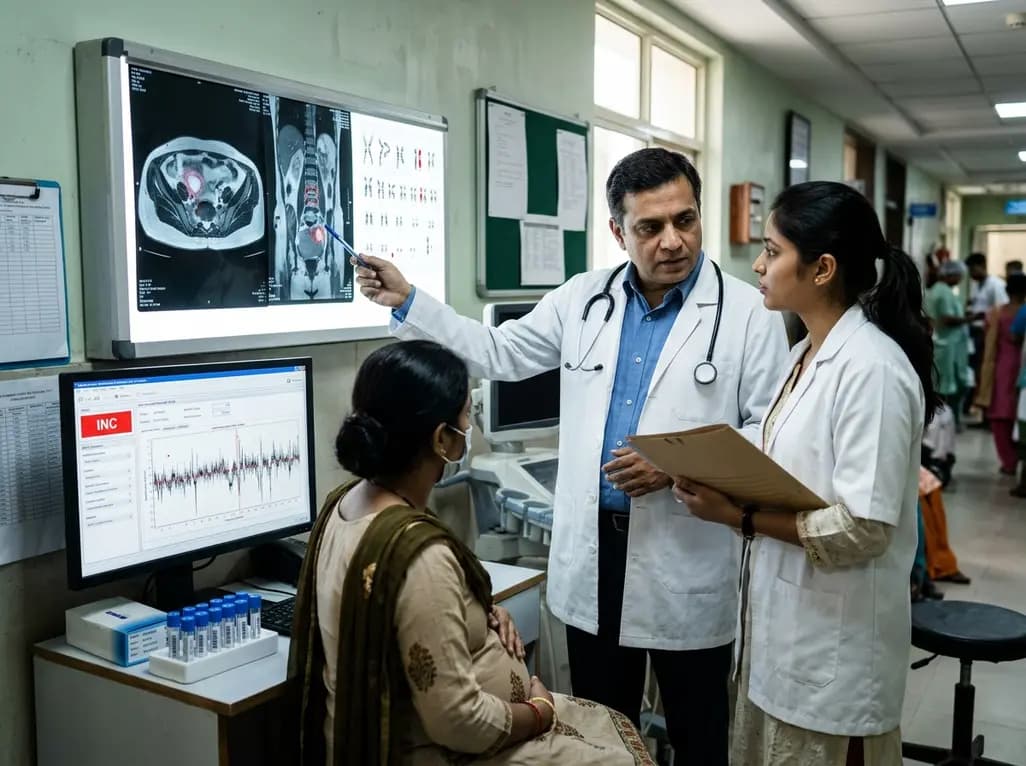
Occult maternal malignancy accounts for 3.82% of persistent unreportable NIPT results with genomic noise. Multiple chromosomal aberrations, notably on chromosome 18, warrant thorough oncological evaluation and whole-body MRI to ensure timely maternal diagnosis while preserving fetal care.
Today

This article reviews the forensic and clinical complexities of acute myocarditis arising on left ventricular hypertrophy in children, highlighting early diagnostic red flags and multidisciplinary postmortem autopsy protocols.
Today
A randomized controlled trial demonstrates that an eight-week dual-task training intervention significantly improves static and dynamic postural control over standard balance exercises in individuals with chronic ankle instability, addressing critical neurocognitive deficits during athletic and daily activities.
Today

A retrospective cohort study of 7,716 ICU patients from the MIMIC-IV database demonstrates that Gradient Boosting Decision Trees significantly outperform traditional SOFA scores in predicting in-hospital mortality among patients with sepsis and diabetes, with SHAP analysis providing clinical interpretability.
Today
