.webp&w=384&q=75)

Loading, please wait...
Loading, please wait...
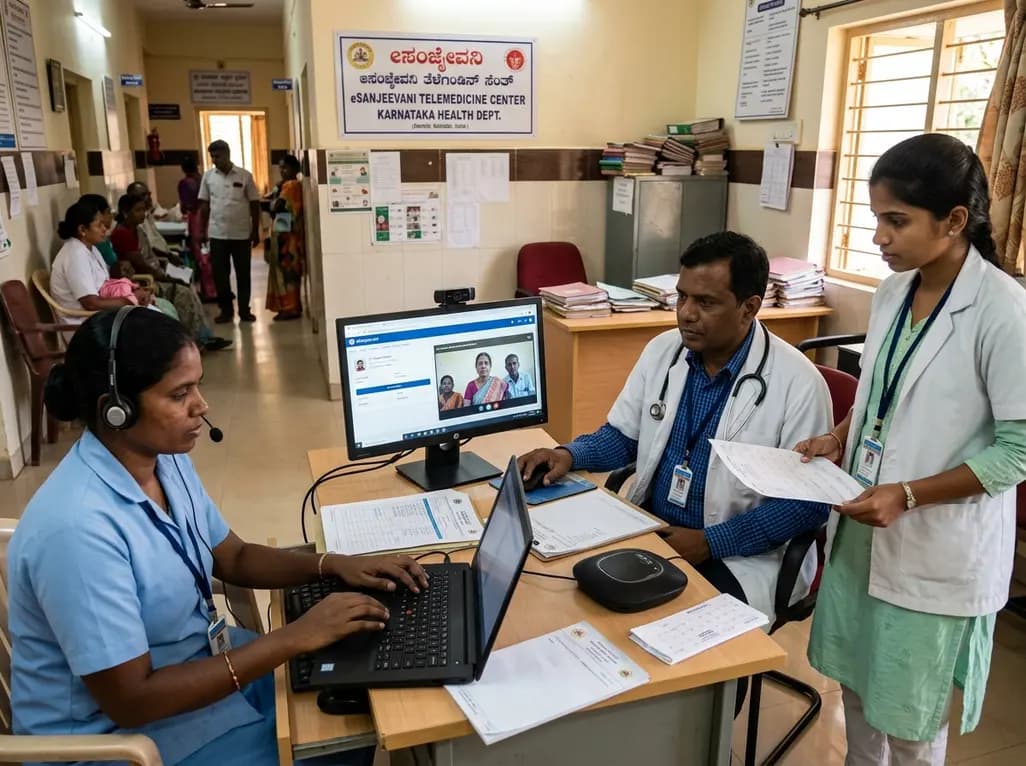
The continuous expansion of digital healthcare across India has transformed primary care access in rural and semi-urban communities. Karnataka has established itself as a leading contributor to this transition, logging over 3.09 crore teleconsultations through eSanjeevani telemedicine infrastructure. According to data presented in the Lok Sabha by the Union Health Ministry, more than 2.55 crore consultations occurred at Ayushman Arogya Mandirs, alongside 54.12 lakh sessions on the direct outpatient portal. Consequently, virtual healthcare delivery has shifted from an emergency alternative to an established primary entry point for medical care.
Statewide adoption metrics highlight how telehealth integration addresses regional shortages of medical specialists. As of July 2026, Karnataka maintains 2,087 operational specialist hubs and 6,409 peripheral spokes spanning primary health centres, community health centres, and sub-district hospitals. Across India, the national network has completed over 48.95 crore consultations through 19,257 hubs and 141,341 spokes. Karnataka ranks among the leading contributors alongside West Bengal, Andhra Pradesh, Tamil Nadu, and Uttar Pradesh. Consequently, registered medical practitioners routinely utilize this digital network to deliver equitable primary and secondary medical care.
Furthermore, post-pandemic healthcare trends demonstrate that patients increasingly choose virtual consultations as their first point of clinical contact. This approach overcomes substantial travel expenses, lost daily wages, and geographic barriers for rural populations. Therefore, primary health centres no longer operate in isolation. Instead, local healthcare workers swiftly connect patients directly with urban medical specialists. This comprehensive digital ecosystem enhances health equity while reducing unnecessary overcrowding at tertiary referral centres across the state.
The operational framework of eSanjeevani relies on a well-coordinated hub-and-spoke architecture that connects decentralized primary centres with tertiary expertise. Peripheral spokes, including Ayushman Arogya Mandirs and sub-district facilities, gather baseline clinical metrics through community health officers and medical officers. Subsequently, when complex presentations arise, primary caregivers initiate provider-to-provider virtual consultations with hub specialists located at teaching hospitals or district headquarters. Consequently, patients receive timely specialized inputs without enduring grueling commutes.
Furthermore, this operational design establishes clear referral pathways and enhances diagnostic accuracy across peripheral facilities. Hub specialists review uploaded investigations, evaluate real-time symptoms, and co-manage challenging clinical scenarios collaboratively with local practitioners. In addition, the platform integrates seamless digital records and electronic prescriptions to ensure complete diagnostic transparency. This continuous clinical coordination strengthens primary healthcare delivery rather than replacing local healthcare infrastructure. Accordingly, the model fosters professional skill transfers between experienced specialists and peripheral medical officers during everyday clinical interactions.
Non-communicable diseases represent an escalating public health challenge across India, requiring consistent long-term monitoring and regular medication adjustments. Through digital interfaces, clinicians manage hypertension, type 2 diabetes, chronic kidney conditions, and stable cardiovascular disorders with exceptional continuity. Local health workers at rural spokes capture blood pressure measurements, capillary blood glucose levels, and anthropometric metrics. Subsequently, specialists review these longitudinal data trends to optimize pharmacological regimens and reinforce lifestyle interventions.
Additionally, this continuous monitoring paradigm drastically reduces treatment default rates among rural hypertensive and diabetic cohorts. Patients avoid missing work shifts and incurring travel expenses for routine prescription refills. Furthermore, early detection of biochemical anomalies allows practitioners to prevent microvascular and macrovascular complications before irreversible organ damage occurs. Telemedicine also provides structured platforms for specialized paediatric monitoring, mental health follow-ups, and dermatology screenings. Thus, virtual care models transform episodic medical encounters into proactive, continuous chronic disease management programs that substantially reduce catastrophic health expenditures for vulnerable households.
Although digital platforms provide tremendous clinical accessibility, practitioners must recognize the strict physical boundaries inherent to virtual examinations. Effective clinical diagnosis frequently demands direct tactile assessment, including palpating abdominal masses, auscultating breath sounds, and evaluating neurological deficits. Consequently, virtual consultations cannot replace physical diagnostic maneuvers during acute, undifferentiated, or high-risk medical presentations. Clinicians must maintain a low threshold for converting virtual visits into urgent in-person evaluations.
Specifically, patients presenting with acute retrosternal chest pain, severe dyspnoea, altered sensorium, sudden neurological deficits, or severe abdominal pain require immediate physical stabilization. In addition, suspected sepsis, major trauma, active haemorrhage, and acute ophthalmic emergencies warrant urgent transfer to fully equipped emergency departments. While teleconsultation assists with preliminary triage and transport coordination, it must never delay lifesaving interventions. Therefore, registered medical practitioners must clearly communicate these clinical limitations to patients and caregivers at the earliest sign of clinical deterioration.
To maintain clinical excellence and legal compliance, registered medical practitioners must adhere strictly to established national telemedicine guidelines. First, clinicians should verify patient identification and document explicit informed consent before commencing virtual consultations. Second, doctors must thoroughly document clinical history, provisional diagnoses, rationales for pharmacological prescriptions, and mandatory red-flag warnings in the digital record. Maintaining comprehensive documentation protects both the clinician and the patient throughout the continuum of care.
Furthermore, practitioners must only prescribe permitted categories of medications under prevailing telemedicine regulations, avoiding habit-forming substances. When diagnostic uncertainty arises due to image artifacts, poor connectivity, or ambiguous history, practitioners should promptly direct patients toward physical clinics. In addition, doctors should actively educate patients on medication adherence, home monitoring techniques, and explicit emergency indicators. By combining diagnostic diligence with empathetic digital communication, healthcare professionals can maximize clinical efficacy while upholding the highest standards of medical safety.
Q1: What are the primary consultation models available on the eSanjeevani platform?
The platform provides two primary consultation variants: eSanjeevani Ayushman Arogya Mandir (AAM) and eSanjeevani OPD. The AAM model functions as an assisted provider-to-provider network connecting rural patients to hub specialists via community healthcare workers. In contrast, the eSanjeevani OPD service allows citizens to consult general practitioners and specialists directly from home using personal mobile devices or computers.
Q2: Which clinical conditions are best suited for routine teleconsultation management?
Routine teleconsultation is ideal for managing chronic non-communicable diseases, including essential hypertension, stable type 2 diabetes, mild respiratory conditions, and established cardiac disorders. Furthermore, clinicians can effectively handle routine paediatric follow-ups, minor dermatological issues, and outpatient psychiatric reviews. The platform allows doctors to adjust medication dosages, evaluate laboratory investigations, and reinforce vital lifestyle modifications efficiently.
Q3: When should a practitioner immediately convert a teleconsultation to an emergency in-person referral?
A teleconsultation must immediately convert into an in-person emergency referral when patients exhibit severe red-flag symptoms. These critical signs include crushing retrosternal chest pain, acute respiratory distress, sudden neurological deficits, severe abdominal pain, high fever with suspected sepsis, or significant active haemorrhage. In such emergencies, virtual care must only guide immediate triage without delaying urgent hospital transfer.
Disclaimer: This content is for informational and educational purposes only. It does not constitute medical advice or replace professional judgment. Refer to the latest local and national guidelines for clinical practice.
References

Read summarized clinical updates, watch expert medical content, and earn CME certifications right from your smartphone.
Open your smartphone camera to scan and install.





Karnataka has recorded over 3.09 crore consultations on eSanjeevani, highlighting the vital role of assisted telemedicine in primary care. This guide examines the hub-and-spoke operational model, chronic disease monitoring workflows, and essential clinical boundaries for registered medical practitioners.
last month
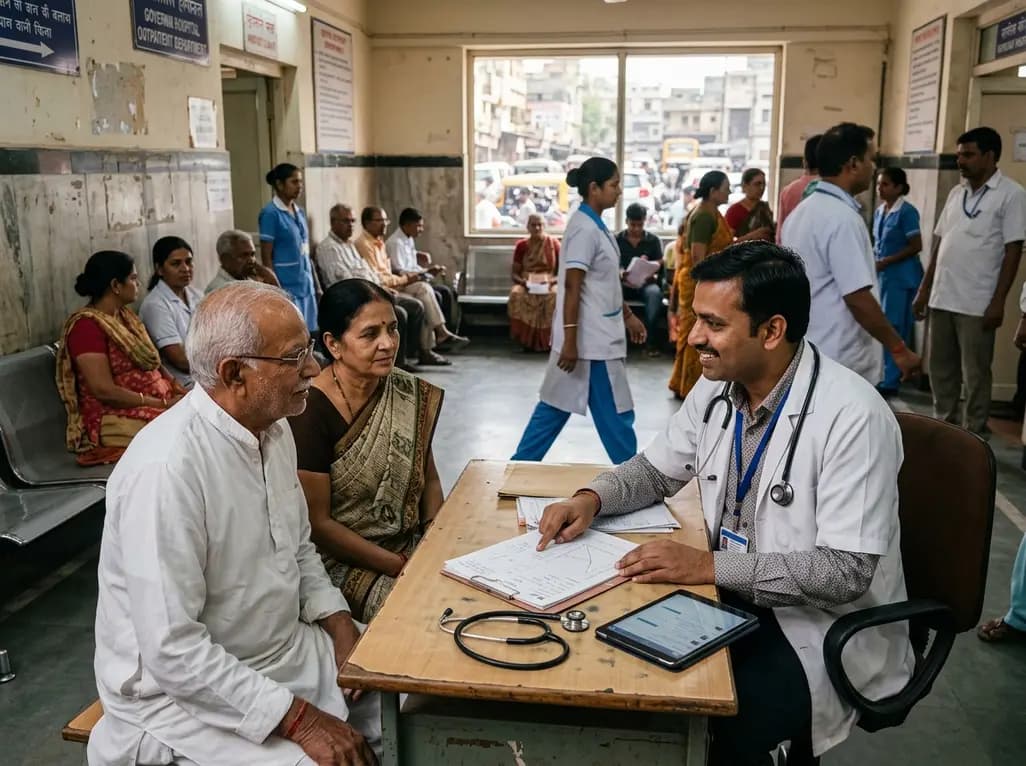
According to WHO data, average lifespan reached 73.3 years in 2023, recovering from pandemic lows. However, healthy life expectancy lags at 62.8 years due to surging noncommunicable conditions like cardiovascular disease and dementia, demanding proactive primary screening and sustained chronic care.
Today
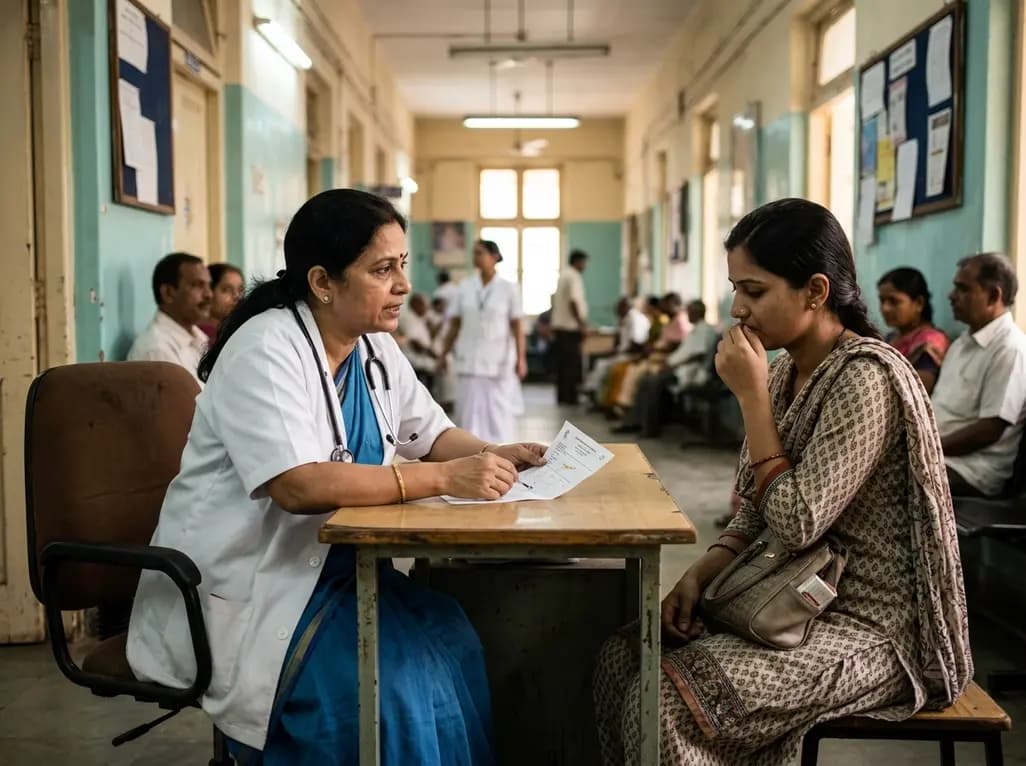
A nationwide South Korean study shows underreporting of smoking among women dropped from 57.4% to 36.4% between 2008 and 2021. However, over one-third of female smokers still conceal their habit, highlighting the critical role of cotinine verification in clinical risk assessment.
Today
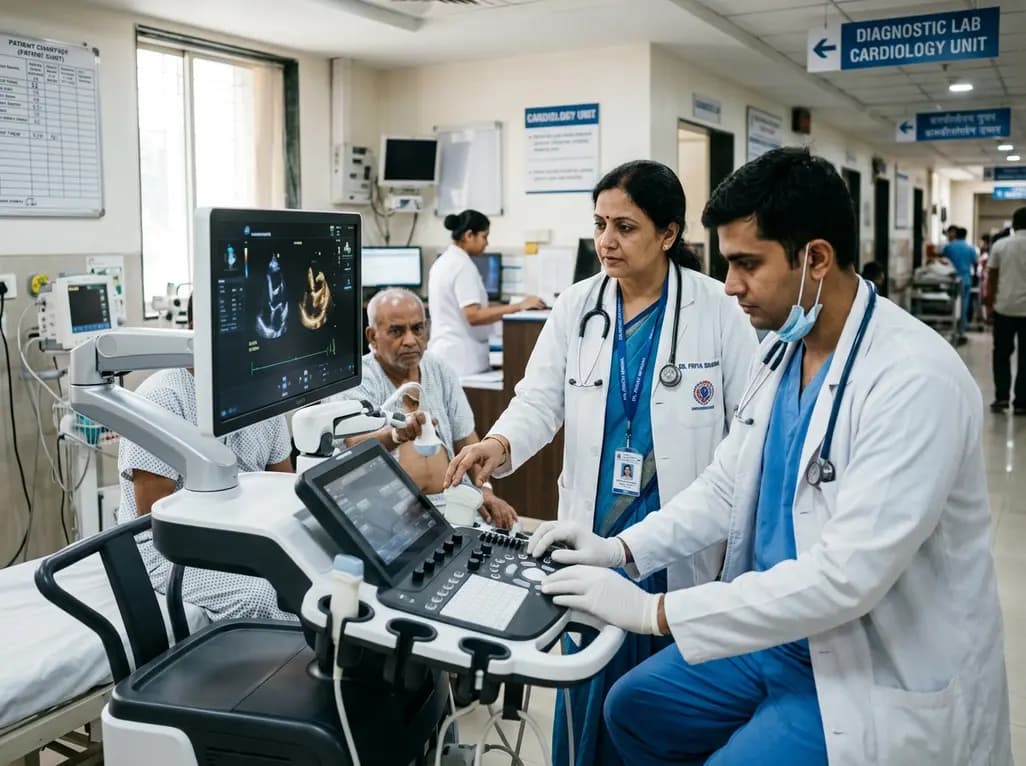
Medical robotics is transitioning beyond operative suites into diagnostics, cardiology, and endocrinology. Explore how innovations in tele-robotics, AI integration, and nanomedicine are overcoming geographical barriers and transforming precision healthcare delivery across India's evolving disease landscape.
Today
A new study evaluates the rheological stability of decellularized peripheral nerve matrix hydrogels under varied storage conditions. Findings show -80°C storage and freeze-drying preserve gelation kinetics and mechanical stiffness, offering key insights for shipping and translational clinical applications.
Today
A qualitative meta-synthesis highlights the complex interplay between gender dysphoria, minority stress, and eating disorders in transgender and gender-diverse individuals. Clinicians must recognize these distinct drivers to offer supportive, gender-affirming, and interdisciplinary eating disorder care.
Today
