.webp&w=384&q=75)

Loading, please wait...
Loading, please wait...

Multiple sclerosis represents a complex demyelinating disease of the central nervous system that alters both physical and cognitive domains. Clinicians have traditionally focused on processing speed and executive function when evaluating cognitive decline. However, emerging neuropsychological evidence highlights significant impairments in social cognition in multiple sclerosis, creating substantial challenges for patients in personal and professional relationships.
Social cognition encompasses complex mental operations that allow individuals to perceive, interpret, and respond appropriately to interpersonal cues. It primarily includes facial emotion recognition and Theory of Mind, which is the capacity to attribute mental states, beliefs, and desires to others. Deficits in these domains frequently compromise daily interpersonal communication and overall quality of life. Consequently, affected individuals may experience interpersonal misunderstandings, social isolation, and occupational strain. Although traditional neurocognitive screening protocols assess domains like processing speed and attention, they often overlook subtle breakdowns in social processing. Neurologists and psychiatrists must recognize that interpersonal difficulties are not merely emotional reactions to a chronic illness. Instead, these challenges frequently stem from structural and functional network alterations within the brain. Therefore, addressing these cognitive deficits directly in clinical practice is essential for comprehensive patient care.
Historically, researchers attributed social cognitive deficits in demyelinating disorders to generalized slowing of information processing or executive dysfunction. Nevertheless, recent investigations demonstrate that episodic memory plays an indispensable role in interpersonal interactions. Episodic memory allows individuals to store, retrieve, and contextualize personal experiences and past social encounters. When patients interact with peers, they constantly draw upon autobiographical memories to decode emotional expressions and infer unspoken intentions. If episodic memory fails, an individual cannot readily access past social templates to interpret novel interactions correctly. As a result, the capacity to empathize and deduce subtle social cues diminishes significantly. Understanding this intricate relationship enables clinicians to look beyond isolated cognitive domains and view social functioning as an integrated neurological process.
A recent cross-sectional clinical study evaluated 58 patients with relapsing-remitting multiple sclerosis and 30 matched healthy controls to delineate these relationships. Investigators administered comprehensive neuropsychological batteries alongside targeted social cognition assessments. The results demonstrated that patients with multiple sclerosis exhibited marked impairments in both emotion recognition and Theory of Mind compared to healthy participants. Furthermore, multivariate analyses revealed that episodic memory performance accounted for a substantial proportion of the variance in social cognitive abilities. Interestingly, correlations with executive function remained weak, while information processing speed showed no significant association with social cognitive deficits. These robust statistical associations underscore that episodic memory represents a primary cognitive correlate of social cognitive integrity in this patient cohort.
These clinical findings carry major practical implications for the routine management of demyelinating diseases. Standard clinical evaluations frequently rely solely on rapid screening tools like the Symbol Digit Modalities Test. While such tests effectively measure processing speed, they may fail to capture memory-dependent social deficits. Therefore, neurologists should consider incorporating dedicated episodic memory and social cognitive screenings into standard longitudinal follow-up visits. Identifying these subtle deficits early allows clinicians to educate patients and their families about the neurobiological basis of behavioral changes. Consequently, families can develop realistic expectations and communication strategies, which mitigates emotional distress and caregiver burden. Clinicians can also adjust supportive counseling to target specific interpersonal difficulties.
Managing cognitive and interpersonal deficits in multiple sclerosis demands a structured, multidisciplinary approach. Neuropsychologists, speech-language therapists, and occupational therapists can collaborate to design tailored cognitive rehabilitation programs. Interventions focusing on episodic memory retrieval techniques, such as spaced retrieval and mnemonic associations, may yield secondary improvements in social processing. Additionally, targeted social cognition training programs that utilize video modeling and computerized facial expression analysis can help patients rebuild mentalizing skills. Pharmacological management of comorbid mood disorders and fatigue also supports cognitive stability. By implementing structured cognitive training alongside holistic psychosocial support, clinicians can significantly enhance social participation and functional independence for patients living with chronic neuroimmunological conditions.
Future research must continue to explore the neuroanatomical correlates connecting memory networks and social cognition hubs. Advanced functional neuroimaging may clarify how white matter tract disruption and cortical lesions impair the retrieval of social information. Longitudinal studies will also determine whether early episodic memory decline reliably predicts subsequent progressive loss of social cognitive capacity. In clinical practice, integrating digital cognitive assessments and remote monitoring tools could improve the detection of subtle deficits before severe disability occurs. Ultimately, establishing refined diagnostic pathways will enable earlier, personalized therapeutic interventions that preserve cognitive functioning and maximize patient well-being across all disease stages.
Episodic memory allows individuals to retrieve past interpersonal experiences and contextual cues. When this function declines, patients struggle to recall social nuances, making it difficult to recognize emotional expressions, interpret conversational context, and respond appropriately during complex social interactions.
Routine screening for social cognitive deficits identifies hidden neurocognitive impairments that standard tests often miss. Early detection helps clinicians, patients, and caregivers understand behavioral changes, thereby reducing interpersonal misunderstandings, family conflict, and emotional distress associated with disease progression.
Cognitive rehabilitation programs that combine memory strategies with targeted social skills training offer substantial benefits. Techniques such as computerized facial recognition training, video interaction analysis, and multidisciplinary psychological support help patients adapt to cognitive changes and maintain social functioning.
Disclaimer: This content is for informational and educational purposes only. It is not intended to be a substitute for professional medical advice, diagnosis, or treatment. Always seek the advice of your physician or another qualified health provider with any questions you may have regarding a medical condition. Refer to the latest local and national guidelines for clinical practice.
References

Read summarized clinical updates, watch expert medical content, and earn CME certifications right from your smartphone.
Open your smartphone camera to scan and install.





A clinical study reveals that episodic memory deficits in relapsing-remitting multiple sclerosis strongly account for impairments in social cognition, including emotion recognition and Theory of Mind, underscoring the necessity of integrated cognitive assessments.
last month

A systematic review of 41 preclinical studies reveals that baicalin dampens systemic inflammation, inhibits NF-κB and NLRP3 pathways, and improves organ preservation in sepsis models. However, substantial study heterogeneity and a complete lack of human clinical trials highlight the need for further translational research.
Today
Discover the crucial distinctions between mesonephric and mesonephric-like proliferations of the female genital tract. Learn the key histomorphologic, immunohistochemical, and molecular differences essential for accurate diagnosis and clinical management.
Today
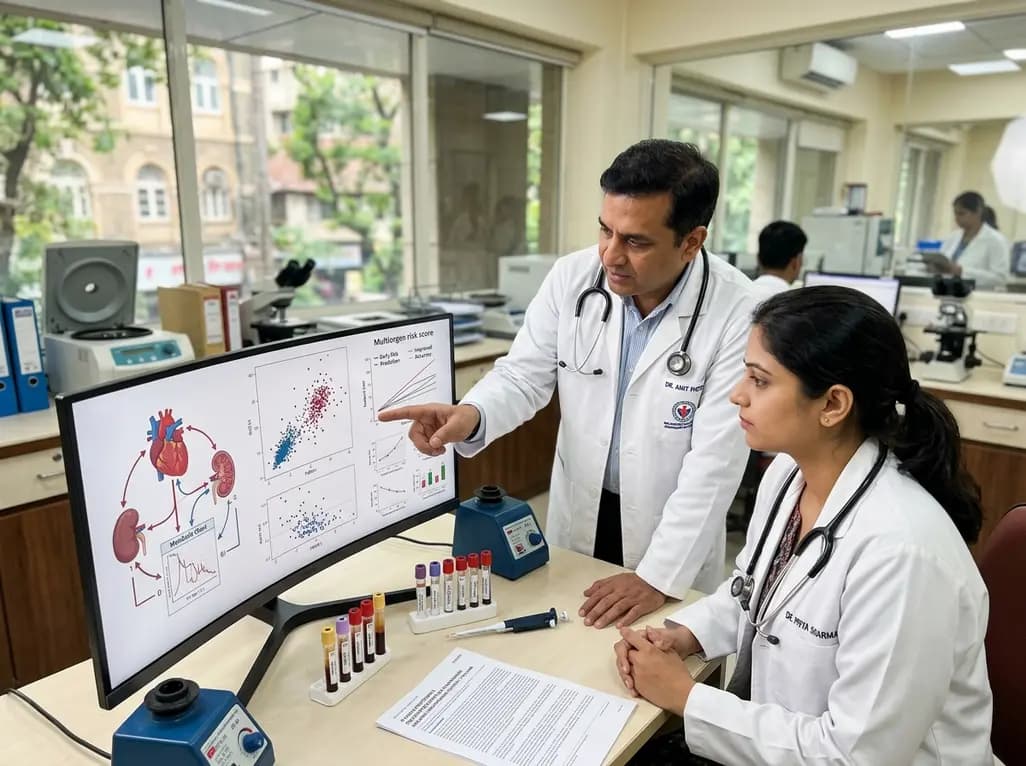
A large UK Biobank study reveals that plasma proteomic signatures capture preclinical organ damage and improve multiorgan risk prediction across early CKM syndrome stages 0 to 2 beyond traditional PREVENT clinical models.
Today
A narrative review investigates whether the articularis genus muscle functions as an independent anatomical entity or blends with the vastus intermedius. We evaluate its morphology, role in retracting the suprapatellar bursa, and direct clinical significance in anterior knee pain and arthroplasty.
Today

A Bayesian multilevel meta-analysis reveals that aerobic training combined with moderate carbohydrate restriction modestly lowers HbA1c in type 2 diabetes. However, sparse data and very low certainty leave incremental benefits over exercise or diet alone unproven, highlighting the need for individualized care.
Today
