.webp&w=384&q=75)

Loading, please wait...
Loading, please wait...

Spontaneous supratentorial intracerebral hemorrhage remains one of the most disabling and lethal forms of stroke. For decades, conventional open craniotomy failed to demonstrate clear functional superiority over conservative medical management. Consequently, neurosurgeons have increasingly adopted minimally invasive techniques to achieve swift clot clearance while preserving surrounding viable brain tissue. Among these innovations, endoscopic intracerebral hemorrhage evacuation and catheter-based drainage have emerged as primary surgical modalities. However, determining which surgical platform confers superior survival and functional recovery has remained a critical clinical challenge.
A landmark 2026 systematic review and meta-analysis analyzed 29 clinical studies encompassing 8,221 patients with supratentorial intracerebral hemorrhage. The investigators compared direct neuro-endoscopic evacuation with catheter-based techniques, including stereotactic aspiration and drainage with or without thrombolytic agents. The findings deliver vital clarity on procedural mortality, functional independence, and hematoma clearance rates. Clinicians managing acute stroke must understand these distinctions to optimize acute interventional protocols.
Spontaneous intracerebral hemorrhage causes immediate mechanical destruction through primary parenchymal tissue disruption. Furthermore, the residual hematoma produces progressive secondary injury through perihematomal edema, neuroinflammation, and toxic degradation products like thrombin and hemoglobin. Therefore, prompt hematoma removal aims to alleviate intracranial hypertension and interrupt the cascade of neurotoxicity.
Traditional open craniotomy often inflicts substantial collateral damage on viable cerebral architecture during surgical access. In contrast, minimally invasive surgery accesses deep-seated hematomas through narrow corridors. Catheter-based strategies typically employ image-guided stereotactic puncture followed by passive drainage or local instillation of recombinant tissue plasminogen activator. Conversely, neuro-endoscopic surgery utilizes rigid or flexible working channels that afford direct intra-cavity visualization. Surgeons can actively aspirate the clot, inspect cavity margins, and achieve targeted electrocoagulation under illuminated optical guidance. Consequently, both techniques aim to minimize parenchymal trauma while expediting neurological decompression.
The comparative analysis between surgical platforms highlighted significant differences in patient outcomes. Most notably, endoscopic intracerebral hemorrhage evacuation demonstrated a statistically significant reduction in all-cause mortality compared with catheter-based approaches. Patients undergoing endoscopic intervention exhibited an approximate 36 percent reduction in relative mortality risk.
This substantial survival advantage reflects fundamental technical distinctions between the two modalities. Endoscopic evacuation permits immediate and comprehensive hematoma debulking during the index procedure. Surgeons directly visualize active bleeders, coagulate bleeding vessels, and confirm tissue decompression in real time. In contrast, catheter-based drainage relies on gradual clot dissolution and sequential evacuation over several days. Consequently, catheter systems prolong the exposure of perihematomal tissue to biochemical toxicities and mass effect. In addition, delayed decompression can hinder microvascular reperfusion in compromised ischemic penumbral zones. Therefore, the immediacy of endoscopic decompression provides a distinct physiological advantage during the critical acute phase.
Hematoma evacuation efficacy directly correlates with long-term functional recovery in intracerebral hemorrhage. The meta-analysis demonstrated that endoscopic surgery achieved significantly higher rates of complete or near-complete hematoma evacuation on postoperative imaging. Higher evacuation efficiency substantially reduced residual clot volumes compared to catheter drainage.
Furthermore, this superior clearance translated into improved functional independence measured by the modified Rankin Scale at three and six months. Patients managed with endoscopy demonstrated higher odds of achieving favorable functional recovery. While catheter drainage combined with thrombolysis improved clot lysis rates compared to aspiration alone, it still failed to match endoscopic clearance metrics. Thrombolytic catheters require repeated irrigations and frequent radiological monitoring to evaluate clearance. Conversely, intraoperative endoscopy ensures rapid parenchymal re-expansion, which diminishes the duration of intracranial pressure elevation and facilitates faster neurorehabilitation initiation.
Safety considerations represent a cornerstone when selecting surgical interventions for hemorrhagic stroke. Catheter-based drainage carrying adjuvant thrombolysis inherently introduces concerns regarding secondary hemorrhage expansion. The meta-analysis specifically stratified catheter cohorts by fibrinolytic administration to assess procedural safety profiles.
Importantly, endoscopic evacuation showed no increase in rebleeding rates relative to catheter-based interventions. Because neuro-endoscopy provides direct high-definition visualization, operators can identify and control fragile intra-cavity vessels before completing the procedure. Furthermore, catheter-based systems carry risks of external ventricular drain-related infections and meningitis due to indwelling hardware maintained over multiple days. Endoscopic surgery, performed as a closed single-session procedure, minimizes continuous external access and significantly reduces post-procedural intracranial infection risks. Consequently, endoscopic clearance provides a favorable safety profile alongside its superior hemodynamic decompression capabilities.
The choice between endoscopic and catheter-based surgery requires nuanced clinical evaluation of patient stability, anatomical location, and institutional infrastructure. Deep subcortical hemorrhages, such as basal ganglia and thalamic hematomas, demand exceptional precision to avoid damaging eloquent white matter tracts. Endoscopic trans-sulcal and parafascicular access sheaths allow atraumatic entry parallel to vital tracts.
Nevertheless, catheter-based drainage remains a valuable, less resource-intensive alternative in emergency settings where specialized neuro-endoscopic instrumentation or operating room availability is limited. Stereotactic craniopuncture can be executed rapidly under bedside local anesthesia in select critically ill patients. However, when advanced endoscopic expertise and equipment are accessible, endoscopy stands as the preferred first-line surgical platform for supratentorial hemorrhage. Moving forward, acute stroke centers should invest in neuro-endoscopic training and dedicated multidisciplinary workflows to ensure timely intervention for qualifying patients.
Endoscopic evacuation provides direct intraoperative visualization, allowing immediate hematoma clearance and active hemostasis. In contrast, catheter-based drainage relies on gradual passive evacuation over several days, leaving brain tissue exposed to prolonged mechanical compression and toxic breakdown products that worsen neurological injury.
Instilling fibrinolytic agents into hematoma cavities requires cautious monitoring because repeated dosing may induce secondary bleeding. However, meta-analytic data show comparable overall rebleeding risks between methods when experienced teams manage catheter protocols and adhere strictly to dose and timing safety guidelines.
Adult patients presenting with spontaneous supratentorial intracerebral hemorrhages larger than 20 to 30 milliliters who show progressive neurological deficit derive substantial benefit. Endoscopic techniques offer optimal decompression for both lobar and deep basal ganglia hematomas while minimizing collateral tract disruption.
Disclaimer: This content is for informational and educational purposes only. It is not intended to provide medical advice or to be used for diagnosing or treating a health problem or disease. Patients should always consult with a qualified healthcare professional for medical advice, diagnosis, or treatment. Clinicians must exercise their independent clinical judgment. Refer to the latest local and national guidelines for clinical practice.
References
Patel S et al. Endoscopic versus catheter-based minimally invasive evacuation of spontaneous supratentorial intracerebral hemorrhage: a systematic review and meta-analysis. Neurosurg Rev. 2026 Aug 05. doi: 10.1007/s10143-026-04426-3. PMID: 42552275.
Pradilla G, Ratcliff JJ, Hall AJ, et al. Minimally invasive surgery for spontaneous supratentorial intracerebral hemorrhage. Stroke. 2024;55(3):812-824.
Kellner CP, Schupper AJ, Mocco J, et al. Trans-sulcal parafascicular surgical approach for intracerebral hemorrhage evacuation: updated multicenter review. J Neurointerv Surg. 2023;15(4):389-395.
Mendelow AD, Gregson BA, Rowan EN, et al. Early surgery versus initial conservative treatment in patients with spontaneous supratentorial intracerebral haematomas in the International Surgical Trial in Intracerebral Haemorrhage (STICH II). Lancet. 2013;382(9890):397-408.

Read summarized clinical updates, watch expert medical content, and earn CME certifications right from your smartphone.
Open your smartphone camera to scan and install.





A meta-analysis of 29 studies demonstrates that endoscopic evacuation offers superior mortality reduction and clot clearance compared to catheter-based techniques for spontaneous supratentorial intracerebral hemorrhage.
last month

Evaluating concordance between patient-reported and clinician-assessed modified Rankin Scale scores reveals how nonmotor symptoms, caregiver reliance, and cultural factors affect functional disability ratings in chronic neurologic disorders.
Today

A scoping review evaluates 116 studies on AI in women's reproductive health, finding that 83.6% carry high risk of bias. While ensemble models show promise, disparities and lack of validation hinder LMIC deployment.
Today
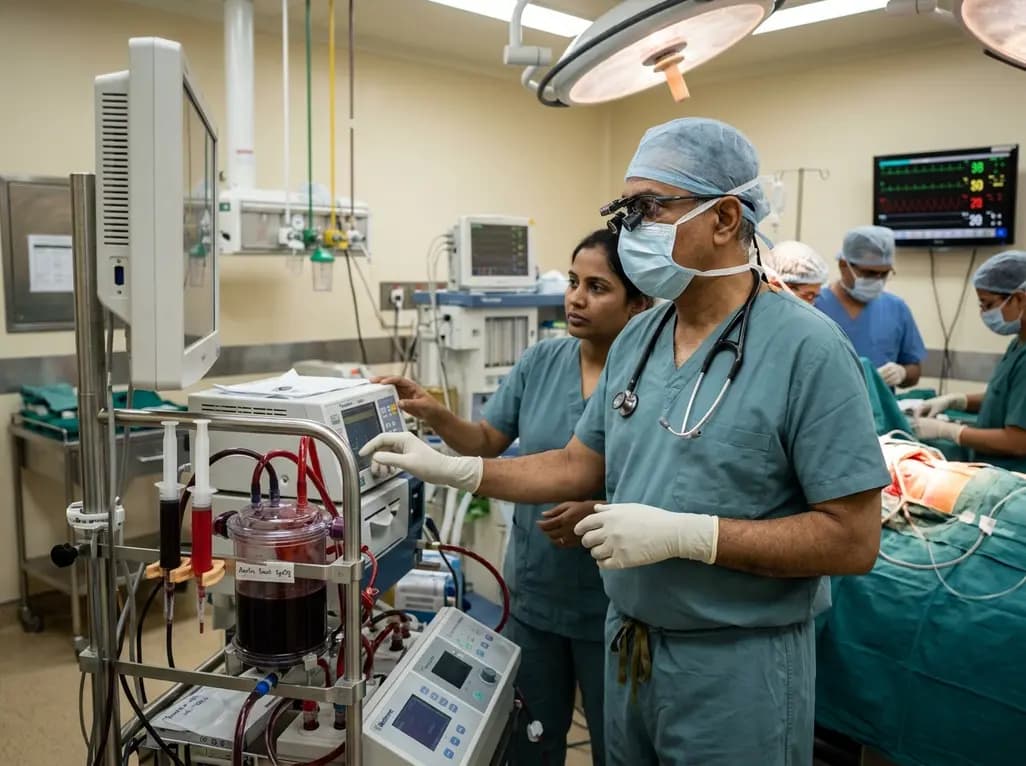
Differential oxygenation during peripheral TA-NRP can cause undetected coronary hypoxemia due to arch vessel clamping. A novel circuit with continuous aortic root monitoring detects desaturation early, facilitating left ventricular unloading and preventing allograft dysfunction and unnecessary heart discard.
Today

A longitudinal study reveals that patients undergoing staged bilateral hip arthroscopy experience progressive contralateral labral deterioration during surgical intervals. However, structural degradation does not compromise 2-year postoperative clinical outcomes or patient-reported satisfaction scores.
Today

A post hoc analysis of the PARM-T2D study shows pemafibrate exerts baseline-dependent effects on LDL-C and particle size in type 2 diabetes and hypertriglyceridemia. It lowers triglycerides and remnants while favorably remodeling atherogenic LDL particles based on initial lipid control status.
Today
