

Loading, please wait...
Loading, please wait...
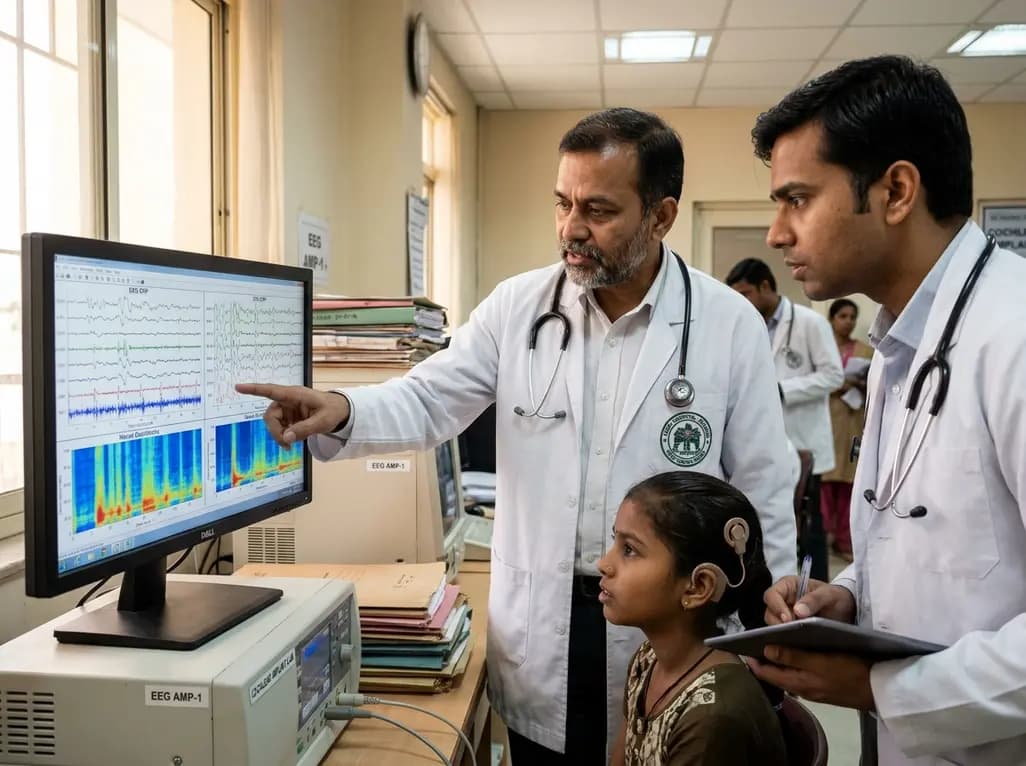
Rapid vocal communication relies heavily on subtle affective signals that indicate intention, mood, and urgency. Specifically, in typical listeners, emotional speech perception occurs rapidly. This early processing allows the central nervous system to decode vocal valence before complete lexical interpretation takes place. However, individuals using cochlear implants face distinct neurobiological challenges due to technical hardware constraints and degraded auditory inputs. Understanding how these auditory prostheses impact affective speech recognition is critical for optimizing rehabilitation strategies.
Human social communication depends on rapid, precise decoding of acoustic parameters, such as pitch contours and vocal timbre. In individuals with intact auditory physiology, the cortex effortlessly extracts emotional meaning from complex speech acoustics. Consequently, listeners swiftly infer whether an utterance conveys positive or negative intention. Cochlear implants successfully restore speech intelligibility for individuals with profound sensorineural hearing loss. However, these electronic auditory devices possess inherent technical constraints in transmitting fine spectro-temporal details.
Because electric pulses struggle to convey fine pitch variations, cochlear implant users often miss subtle prosodic nuances. Therefore, implant recipients must compensate by relying much more heavily on lexical and semantic information rather than vocal inflection. While this strategic shift preserves basic conversational comprehension, it frequently impairs the rapid categorization of affective valence. As a result, users frequently experience substantial communication fatigue during everyday interpersonal exchanges.
To investigate affective auditory processing, neuroscientists examine cortical auditory event-related potentials during passive and active listening tasks. In typical auditory development, negative lexical deviants reliably elicit an early mismatch negativity response. This early electrophysiological marker reflects rapid, pre-attentive categorical perception of emotional valence before semantic analysis occurs. Normal-hearing listeners subsequently generate an N400 component, which denotes deeper semantic processing and contextual integration.
In stark contrast, neurophysiological recordings demonstrate that cochlear implant users lack both the early mismatch negativity and the positive-deviant N400 component. Consequently, their central auditory system fails to execute rapid, pre-conscious affective valence decoding. Instead, implant recipients must expend extra cognitive resources to analyze semantic content through delayed, compensatory cortical pathways. This absence of critical neurophysiological signatures indicates an immature cortical processing framework for emotional language. Thus, clinicians now recognize that restored audibility does not inherently guarantee normal higher-order sensory integration.
Beyond averaged evoked potentials, time-frequency analyses of neural oscillations provide profound insights into cortical network communication. Normal speech processing coordinates oscillatory rhythms across multiple distinct frequency bands to manage sensory binding and cognitive load. Specifically, healthy listeners display robust event-related spectral perturbations and high inter-trial coherence within theta and alpha bands. Theta-band synchronization reflects the early sensory encoding and rapid categorization of emotionally salient spoken syllables.
Conversely, cochlear implant users exhibit significantly weaker theta and alpha power modulations, demonstrating compromised early affective sensory processing. Moreover, implant recipients show elevated beta-band event-related spectral perturbations during semantic evaluation. In typical auditory networks, lower beta activity correlates directly with robust N400 amplitudes and efficient semantic closure. Therefore, excessive beta power in implant recipients indicates heightened cognitive strain and delayed semantic resolution. These altered oscillatory dynamics clearly illustrate how degraded peripheral input permanently reshapes central cortical networks.
Intriguingly, cognitive and affective neuroscience shows that individual personality factors actively modulate sensory processing efficiency. Recent electrophysiological evaluations reveal meaningful correlations between standardized personality dimensions and cortical evoked potential amplitudes. For instance, higher scores in extraversion correlate positively with enhanced mismatch negativity amplitudes, suggesting heightened sensitivity to subtle emotional variations. Similarly, elevated scores in agreeableness correlate with stronger N400 responses, reflecting deeper neural engagement during social and semantic evaluation.
These psychological interactions indicate that affective auditory comprehension is not merely a passive sensory phenomenon. Instead, personality traits appear to shape attentional allocation and cortical plasticity during auditory rehabilitation. Consequently, otolaryngologists and audiologists must consider psychosocial profiles when evaluating post-implantation performance. Recognizing these individual neurobehavioral variations helps clinicians understand why two patients with identical implant configurations often achieve markedly different social communication outcomes.
These neurophysiological findings highlight the urgent necessity to expand clinical rehabilitation protocols beyond basic speech intelligibility metrics. Traditional auditory assessments predominantly measure phoneme identification and sentence comprehension in quiet environments. However, clinicians must now incorporate dedicated assessments for affective vocal recognition and conversational prosody into routine post-implant follow-ups. Furthermore, speech-language therapists should implement targeted perceptual training protocols that emphasize audiovisual integration and facial affective cueing.
Concurrently, cochlear implant manufacturers must innovate sound-coding strategies to preserve fine-structure temporal pitch and spectral resolution. Enhanced frequency transmission will allow implant users to perceive subtle emotional inflections without exhaustive cognitive compensation. Ultimately, integrating objective electroencephalographic monitoring into clinical audiology will help specialists tailor personalized auditory rehabilitation programs. By addressing both acoustic hardware limitations and cortical plasticity, multidisciplinary teams can substantially enhance the emotional and social well-being of implant recipients.
Cochlear implants primarily restore temporal envelope cues rather than fine-structure pitch and harmonic frequencies. Consequently, recipients struggle to detect subtle pitch variations and vocal timbre that convey affective prosody. Because they lack adequate acoustic cues, implant recipients must depend predominantly on delayed lexical interpretation. This mechanical constraint impairs rapid, pre-attentive emotional categorization and increases overall cognitive listening effort during everyday conversations.
The mismatch negativity is an automatic event-related potential that reflects pre-attentive auditory discrimination within the cortex. When listeners encounter an unexpected emotional syllable, this electrical wave signals rapid categorical perception of emotional valence before conscious semantic analysis occurs. In cochlear implant users, the absence of this early component demonstrates that immature central auditory pathways fail to register rapid affective shifts automatically.
Yes, comprehensive auditory rehabilitation can significantly enhance emotional communication skills. Clinicians utilize structured training programs that combine degraded vocal stimuli with facial expressions, promoting beneficial audiovisual integration. Furthermore, targeted cognitive exercises help implant recipients utilize contextual cues more efficiently. Over time, structured auditory training fosters cortical neuroplasticity, which enables patients to process complex affective vocal signals with greater accuracy and reduced mental fatigue.
Disclaimer: This content is for informational and educational purposes only. It is not intended to provide medical advice, diagnosis, or treatment. Always seek the advice of your physician or other qualified health provider with any questions you may have regarding a medical condition. Refer to the latest local and national guidelines for clinical practice.
References

Read summarized clinical updates, watch expert medical content, and earn CME certifications right from your smartphone.
Open your smartphone camera to scan and install.





A breakthrough electrophysiological study demonstrates that cochlear implant users exhibit immature emotional speech perception, lacking typical pre-attentive valence processing and showing altered cortical oscillatory dynamics.
Today

The randomized EARLY-RESYNC trial reveals that early left bundle branch pacing combined with guideline-directed medical therapy significantly improves LVEF and reduces LV end-systolic volume compared to medical therapy alone in patients with complete LBBB and mildly reduced ejection fraction (36%-50%).
Today
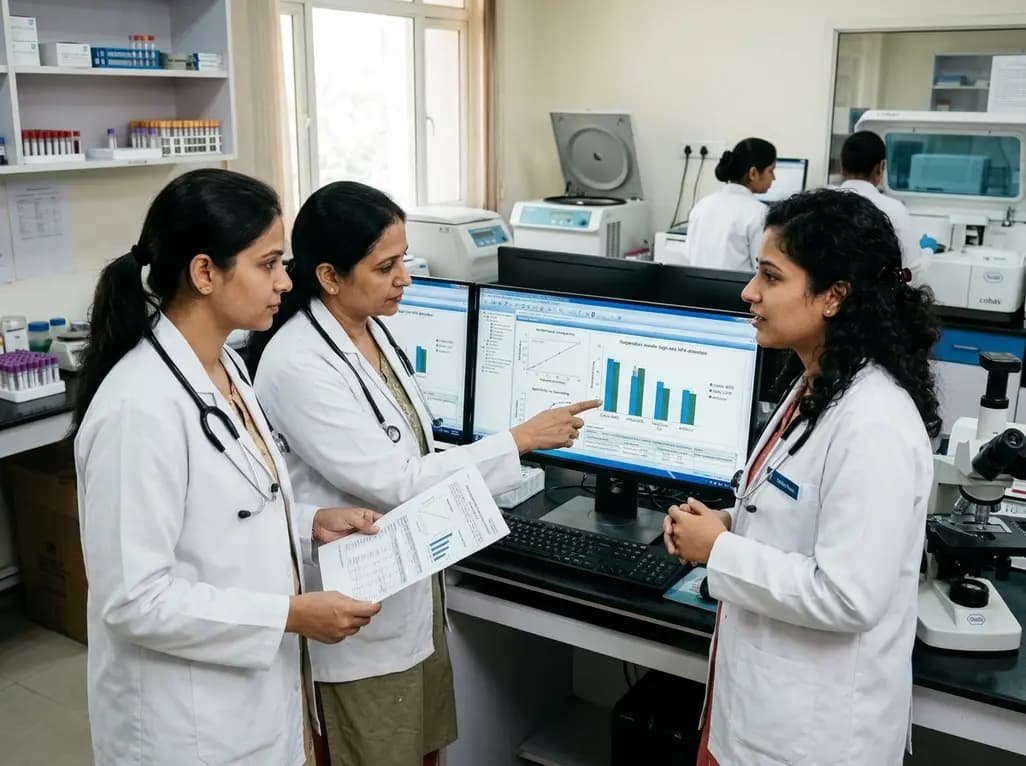
A comparative evaluation of INNO-LiPA, Cobas 4800, and Amplicor highlights significant assay-dependent variation in high-risk HPV detection, emphasizing the clinical distinction between analytical sensitivity and screening specificity.
Today

Recent data from PGIMER reveals that young adults diagnosed with type 2 diabetes face an aggressive disease trajectory. They encounter severe cardiovascular and microvascular damage within five years, occurring at higher rates than in type 1 diabetes despite lower mean blood glucose levels.
Today
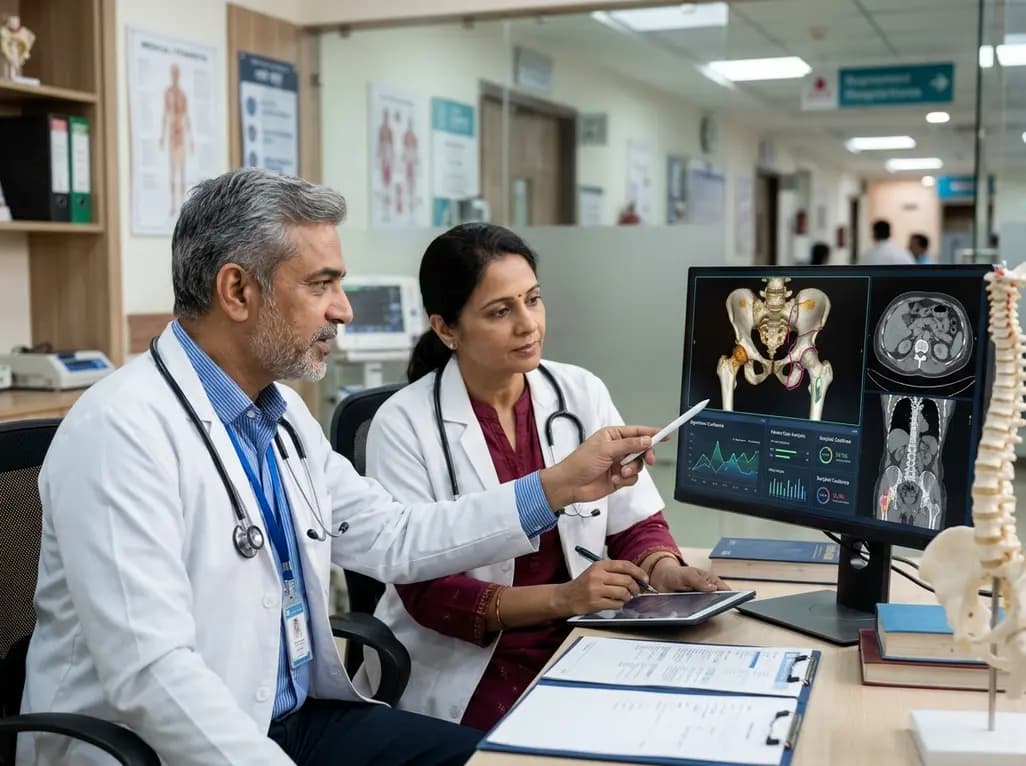
Discover the six core principles of responsible AI in orthopaedics, emphasizing algorithmic fairness, transparency, clinical reliability, and specialist oversight to safeguard patient trust and outcomes.
Today
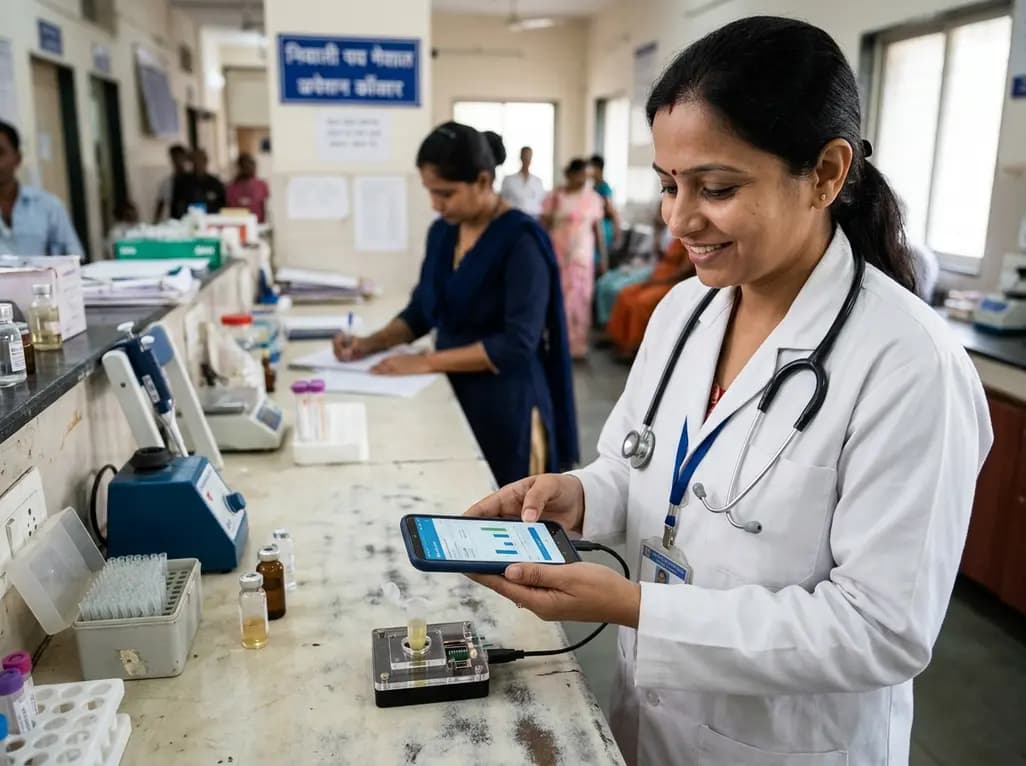
A novel smartphone-assisted biosensor utilizing molecularly imprinted polymers and catalytic nanozymes offers antibody-free, enzyme-free urinary microalbumin testing, enabling rapid, low-cost point-of-care screening for early chronic kidney disease.
Today
