.webp&w=384&q=75)

Loading, please wait...
Loading, please wait...

Maternal and perinatal mortality remains a critical global healthcare challenge, particularly in resource-limited settings. For decades, health systems have invested heavily in traditional safe motherhood programs. These initiatives successfully expanded antenatal visits, contraceptive coverage, and skilled birth attendance. However, maternal mortality figures remain unacceptably elevated across several developing regions. Clinical evidence reveals that preventive measures alone cannot halt sudden intrapartum catastrophes. Consequently, health systems must prioritize functional emergency obstetric care to drive rapid, sustained declines in preventable deaths.
Antenatal care delivers essential health screening, nutritional supplementation, and maternal education throughout gestation. However, routine prenatal visits cannot reliably predict or prevent acute intrapartum complications. For example, conditions such as severe postpartum hemorrhage, amniotic fluid embolism, and placental abruption often occur without prior warning in low-risk pregnancies. Therefore, relying exclusively on risk stratification leaves delivery units vulnerable when unexpected emergencies arise. Furthermore, when health facilities lack emergency resuscitation or surgical capabilities, precious transit time is lost. Primary delivery centers must bridge the gap between routine labor management and rapid acute intervention. When healthcare facilities lack basic emergency preparedness, maternal and perinatal outcomes deteriorate rapidly. Thus, strengthening emergency obstetric care capabilities represents an urgent clinical priority rather than a secondary consideration. Health systems must ensure round-the-clock readiness for acute obstetric collapse across all birthing centers.
The World Health Organization categorizes maternity facilities based on specific life-saving clinical signal functions. Basic emergency obstetric and newborn care facilities must consistently provide seven core medical interventions. Specifically, these signal functions include administering parenteral antibiotics, uterotonics, and parenteral magnesium sulfate for eclampsia. In addition, staff must perform manual removal of placenta, evacuation of retained conception products, assisted vaginal deliveries, and neonatal resuscitation. Comprehensive emergency facilities must execute all basic functions while offering definitive cesarean delivery and safe blood transfusion services. However, many designated centers experience periodic shortages of essential supplies or skilled personnel. Therefore, health administrators must audit facility readiness continuously. Ensuring an uninterrupted supply of misoprostol, oxytocin, and magnesium sulfate directly averts intrapartum deaths. Moreover, regular multidisciplinary simulation drills help clinical teams maintain sharp emergency reflexes during peripartum crises.
Direct obstetric complications account for the majority of maternal mortalities worldwide. Specifically, postpartum hemorrhage, hypertensive emergencies, and puerperal sepsis represent the deadliest clinical triad. In acute postpartum hemorrhage, immediate active management protocols, tranexamic acid, and uterine balloon tamponade rapidly stabilize maternal hemodynamics. Simultaneously, prompt intravenous administration of magnesium sulfate effectively controls eclamptic convulsions and prevents severe cerebral complications. Furthermore, puerperal sepsis demands immediate broad-spectrum intravenous antimicrobial therapy alongside rigorous aseptic labor practices. However, therapeutic success depends entirely on prompt clinical recognition. If bedside providers miss early tachycardia or worsening hypotension, hypovolemic shock progresses rapidly to irreversible organ damage. Therefore, implementing standardized maternal early warning scores in delivery suites ensures timely identification of physiological decompensation. Consequently, structured bedside clinical protocols transform routine maternity units into highly responsive acute care environments.
The classic Three Delays Model identifies systemic obstacles that lead directly to avoidable maternal deaths. The first delay involves deciding to seek care, often driven by cultural or financial barriers. The second delay entails reaching an appropriate healthcare facility due to transport and geographical hurdles. Finally, the third delay occurs within the receiving facility due to delayed triage, inadequate staffing, or unavailable surgical suites. To overcome these barriers, healthcare networks must establish synchronized pre-referral stabilization protocols. For instance, administering a loading dose of magnesium sulfate or initiating fluid resuscitation before transit improves patient survival during transport. Moreover, dedicated maternal transport networks with trained emergency escorts drastically reduce transit times. Consequently, synchronized referral channels ensure that receiving surgical teams prepare operating suites before critically ill patients arrive. Thus, eliminating intra-facility bottlenecks directly preserves maternal and neonatal lives.
Maternal survival and neonatal outcomes remain deeply intertwined throughout the entire peripartum continuum. When acute intrapartum complications occur, the newborn frequently suffers severe asphyxia, meconium aspiration, or premature birth complications. Therefore, every birthing facility must integrate advanced neonatal resuscitation directly into its emergency workflows. Healthcare providers must initiate the golden-minute resuscitation algorithm immediately upon delivering a non-breathing infant. Specifically, drying, warming, clearing obstructed airways, and providing bag-mask ventilation within sixty seconds successfully revives depressed newborns. In addition, immediate Kangaroo Mother Care for low-birth-weight infants stabilizes temperature and reduces infection risks. Furthermore, early continuous positive airway pressure support and timely antibiotics for suspected neonatal sepsis dramatically lower infant mortality. Seamless coordination between obstetricians, pediatricians, and nursing personnel ensures optimal clinical outcomes. Thus, investing in synchronized perinatal care safeguards both mother and newborn during high-risk deliveries.
Basic emergency obstetric care facilities provide seven vital non-surgical signal functions, including parenteral antibiotics, uterotonics, parenteral anticonvulsants, manual placental removal, retained tissue evacuation, assisted vaginal delivery, and basic newborn resuscitation. In contrast, comprehensive emergency obstetric care facilities provide all seven basic signal functions plus two additional critical interventions: safe blood transfusions and operative delivery via cesarean section, ensuring comprehensive management for severe peripartum complications.
Antenatal care effectively screens for chronic health conditions and provides nutritional guidance, but it cannot reliably predict or prevent unpredictable acute obstetric emergencies. Catastrophic intrapartum events, such as acute uterine rupture, massive postpartum hemorrhage, and sudden eclampsia, frequently occur without prior warning signs in low-risk individuals. Therefore, without immediate access to functional emergency obstetric care during labor, high antenatal clinic attendance alone cannot prevent maternal deaths.
Intravenous magnesium sulfate acts as the gold-standard neuroprotective anticonvulsant for severe pre-eclampsia and eclampsia. Specifically, it reduces systemic vascular resistance, preserves cerebral perfusion, and prevents recurrent seizure activity without causing general central nervous system depression. Early bedside administration rapidly stabilizes the mother, halts life-threatening neurological and cardiovascular deterioration, and significantly lowers maternal and perinatal mortality during hypertensive obstetric crises.
Disclaimer: This content is for informational and educational purposes only and does not constitute formal medical advice, diagnosis, or treatment. Healthcare professionals should exercise their independent clinical judgment and refer to the latest local and national guidelines for clinical practice.
References

Read summarized clinical updates, watch expert medical content, and earn CME certifications right from your smartphone.
Open your smartphone camera to scan and install.





Although traditional safe motherhood initiatives expanded healthcare access, high maternal mortality persists. Prioritizing emergency obstetric care, optimizing signal functions, and strengthening referral networks are crucial to saving maternal and newborn lives during acute intrapartum crises.
last month

With post-monsoon dengue surges threatening South Asian health systems, physicians must refine triage and management. This guide covers vital warning signs, plasma leakage detection, crystalloid titration, and vector containment strategies to prevent mortality during seasonal arboviral epidemics.
Today

Findings from Project Viva indicate that sustained postpartum weight retention, rather than excessive gestational weight gain alone, directly worsens women's mid-life cardiovascular health, degrading blood pressure and glycemic parameters decades after delivery.
Today
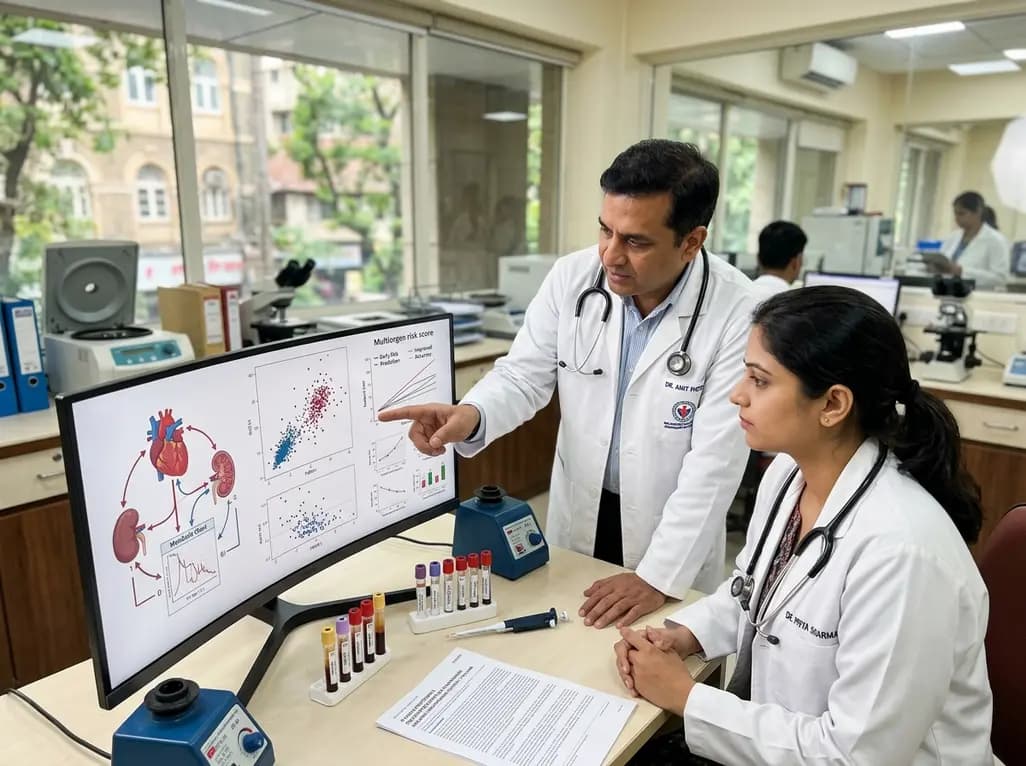
A large UK Biobank study reveals that plasma proteomic signatures capture preclinical organ damage and improve multiorgan risk prediction across early CKM syndrome stages 0 to 2 beyond traditional PREVENT clinical models.
Today

A retrospective CBCT study reveals that superior TMJ space asymmetry correlates moderately with occipital condyle-atlas-axis asymmetry in unilateral TMJ osteoarthritis, highlighting an imaging correlate between jaw biomechanics and upper cervical alignment rather than a standalone diagnostic marker.
Today

A Bayesian multilevel meta-analysis reveals that aerobic training combined with moderate carbohydrate restriction modestly lowers HbA1c in type 2 diabetes. However, sparse data and very low certainty leave incremental benefits over exercise or diet alone unproven, highlighting the need for individualized care.
Today
