.webp&w=384&q=75)

Loading, please wait...
Loading, please wait...
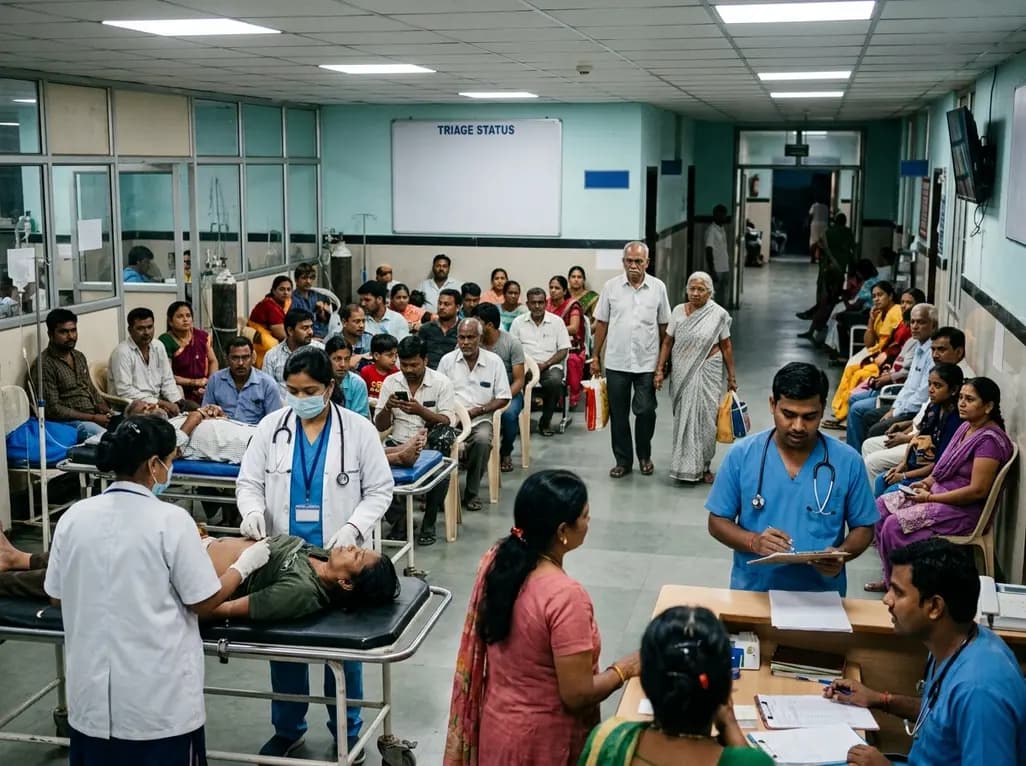
Emergency department LWBS predictors are essential tools for hospital administrators aiming to improve clinical outcomes and operational efficiency. A significant five-year study conducted by Kadioglu E et al. at a high-volume tertiary facility in Türkiye has shed new light on why patients depart before receiving medical care. This phenomenon, known as Leaving Without Being Seen (LWBS), is not merely an administrative nuisance; instead, it represents a major safety concern. In high-pressure environments, such as those found in both Turkish and Indian tertiary centers, understanding the variables that lead to walkouts is crucial. The study, which analyzed over one million visits, found an overall incidence rate of 1.0%. While this may seem small, the volume of individuals involved translates to thousands of potential missed diagnoses. By identifying specific demographic and temporal risk factors, healthcare providers can implement targeted interventions to retain patients who might otherwise face adverse health events at home. Consequently, monitoring these patterns is a vital part of modern emergency medicine.
The challenge of identifying emergency department LWBS predictors is not unique to any single country. In India, where overcrowding is often the norm rather than the exception, the Academic College of Emergency Experts has highlighted similar concerns. Patient flow management is a delicate balance of triage acuity and resource availability. When demand exceeds capacity, wait times inevitably rise. Therefore, patients with perceived low-acuity conditions often feel that their needs are being neglected. This perception is particularly dangerous because triage is only an initial assessment; a patient classified as "green" or "low urgency" may still harbor a condition that worsens over time. Therefore, the ability to predict which patients are most likely to leave is vital for maintaining a robust safety net. International studies indicate that LWBS rates correlate strongly with patient boarding and departmental crowding. In Indian settings, where family members often accompany patients, the social dynamics of the waiting room also play a role. If the environment becomes overwhelmed, the risk of departure increases, leading to potential medico-legal complications and lost revenue for the institution. Ultimately, global data suggests that high-volume centers must adapt their workflows to prevent these risky exits.
Demographic data from the Turkish study reveals that younger male patients are significantly more likely to leave the emergency department prematurely. Specifically, the mean age for LWBS cases was approximately 36 years, with men representing over sixty percent of the cohort. This demographic trend suggests that younger individuals may have a lower tolerance for extended wait times. Furthermore, they may perceive their symptoms as less threatening once the initial anxiety of the event passes. Young adults often have work and family commitments that make waiting for several hours seem impractical. However, this trend poses a specific clinical risk. Men in this age group are sometimes prone to ignoring early warning signs of serious conditions, such as cardiac anomalies or internal injuries, which might be masked by their generally robust health. By recognizing that younger males are a high-risk group for leaving, triage nurses can engage in more frequent communication with these patients. Providing realistic wait time estimates and explaining the importance of the physician’s evaluation can significantly decrease the likelihood of an uncompleted visit. Addressing the psychological and social drivers of this demographic can transform the waiting room experience and ensure that those in need stay for a complete evaluation.
Operational factors, especially temporal ones, serve as powerful emergency department LWBS predictors. The research highlighted that the highest frequency of patient departures occurs during the evening shift, specifically between 16:00 and midnight. During these hours, the odds of a patient leaving without being seen were nearly five times higher than at other times. This peak usually coincides with the period when outpatient clinics are closed and people have finished their workdays, leading to a surge in ED arrivals. Moreover, staffing levels during the evening transition often struggle to keep pace with the influx of patients. Interestingly, the study found that night shifts (00:00 to 08:00) were associated with a reduced risk of LWBS. This might be due to a different patient mix or perhaps a lower overall volume that allows for more personal interaction. Hospital administrators should use this data to rethink their staffing models. Specifically, bolstering the number of residents and nursing staff during the late afternoon and evening hours could mitigate the surge. Additionally, streamlining the registration process during these peak windows can prevent the initial bottlenecks that frustrate patients and lead them to exit the facility before they are even triaged.
A patient's triage level is perhaps one of the most reliable emergency department LWBS predictors. The Turkish study confirmed that "green-triage" patients, who are classified as having non-urgent conditions, have the highest rates of departure. From an operational standpoint, these patients are naturally prioritized lower than "red" or "yellow" cases. Consequently, they experience the longest wait times. While most of these individuals may indeed have minor ailments, the risk of triage drift—where a patient's condition deteriorates while they wait—cannot be ignored. If a patient leaves, the hospital loses the opportunity to ensure they are safe. Notable research suggests that patients who leave without being seen have a higher risk of subsequent hospitalization or even mortality within thirty days compared to those who are treated. This finding underscores the importance of the ED as a primary point of access for vulnerable populations. In India, where many patients lack a regular primary care physician, the ED serves as a critical diagnostic hub. If low-acuity patients are consistently driven away by wait times, the healthcare system fails in its duty to provide preventative and early-stage intervention. Therefore, monitoring LWBS rates among green-triage patients is a non-negotiable quality metric for modern medical practice.
To combat the factors identified by emergency department LWBS predictors, hospitals must adopt innovative operational strategies. One highly effective model is the "Provider in Triage" (PIT) approach. By placing a senior physician or a nurse practitioner at the very beginning of the patient journey, many low-acuity needs can be addressed immediately. This not only reduces the overall wait time but also provides patients with an immediate sense of care. Another strategy involves fast-tracking patients with simple needs, such as prescription refills or minor wound care, into a separate stream. Furthermore, improving hospital-wide patient flow is essential. Often, ED overcrowding is caused by boarding, where patients who need admission remain in the ED because there are no available inpatient beds. By improving discharge efficiency on the wards, the ED can move patients through more quickly. Additionally, utilizing digital wait-time displays can help manage patient expectations. When people understand why there is a delay, they are generally more willing to wait. Ultimately, reducing LWBS requires a multifaceted approach that combines demographic insights, temporal staffing adjustments, and a commitment to communication. These efforts not only improve hospital revenue but, more importantly, they save lives by ensuring that every patient who seeks help actually receives it.
Younger patients and those who are male are the most likely to leave without being seen. Research suggests that younger individuals often have a lower tolerance for long wait times due to external commitments like work or childcare. Additionally, men may sometimes underestimate the severity of their symptoms once they are in a safe hospital environment. Recognizing these patterns allows triage staff to target these groups with better communication and frequent updates to prevent them from leaving.
The evening shift, typically between 16:00 and 00:00, marks a period of peak arrival volume in most emergency departments. This surge often coincides with the closure of primary care clinics and the end of the traditional workday. When the volume of patients exceeds the capacity of the on-duty staff, wait times increase dramatically. Consequently, patients become frustrated with the lack of progress and decide to leave the facility before receiving a full medical evaluation by a physician.
The Provider in Triage model places a clinician at the front of the patient arrival process to perform an early assessment. This allows for immediate diagnostic orders, basic treatment, or even discharge for very low-acuity cases. By providing early clinical contact, the hospital reduces the wait for the doctor period, which is the most common reason for patient departure. It significantly improves patient satisfaction and safety by ensuring early intervention for those with time-sensitive conditions.
Disclaimer: This content is for informational and educational purposes only and does not constitute medical advice or a professional relationship. Always seek the advice of a physician or other qualified health provider with any questions you may have regarding a medical condition. Refer to the latest local and national guidelines for clinical practice.
References
Kadioglu E et al. Operational and demographic predictors of leaving without being seen in a high-volume tertiary emergency department: a five-year case-control study. Postgrad Med. 2026 Jun 27. doi: 10.1080/00325481.2026.2696684. PMID: 42365434.
Odorizzi S et al. Factors Associated with Patients Leaving Without Being Seen in a Canadian Emergency Department. PMC. 2026 Jan; PMID: 41554165.
Academic College of Emergency Experts, India. Strategies to Combat Overcrowding at Emergency Departments across India: A White Paper. WHO Collaborating Centre for Emergency and Trauma. 2025.

Read summarized clinical updates, watch expert medical content, and earn CME certifications right from your smartphone.
Open your smartphone camera to scan and install.





A comprehensive analysis of a five-year study identifies the primary demographic and operational predictors for patients who leave the emergency department without being seen. Learn how age, gender, and shift timing influence patient retention and safety in high-volume tertiary care settings.
3 months ago

Novel diimide and hydrazone scaffolds, particularly compound #C4, synergistically reactivate latent HIV-1 when combined with JQ1 or PKC activators. Demonstrating donor-matched proviral transcription ex vivo and non-canonical signaling, these findings advance shock and kill strategies toward reservoir eradication.
Today

A cross-sectional study reveals that maternal RSV vaccination coverage reached only 43.7% in Argentina, with maternal vaccine knowledge being the sole independent predictor of uptake. Clinicians play a crucial role in eliminating informational and structural barriers to optimize infant health.
Today

Review how tailored exercise programs benefit frail older patients with heart failure. Explore pathophysiological mechanisms, individualized training prescriptions, and strategies to overcome adherence barriers in clinical practice.
Yesterday

This comparative study evaluates posterior labral tears with and without glenohumeral instability, highlighting distinct demographic patterns, MRI underestimation in stable shoulders, and successful arthroscopic repair outcomes.
Yesterday

A clinical study demonstrates that early intervention with tocilizumab, either as monotherapy or bridged with corticosteroids, achieves significant proptosis reduction and resolves active inflammation in treatment-naive thyroid eye disease.
Yesterday
