

Loading, please wait...
Loading, please wait...

Securing the trachea in non-arrested individuals represents one of the most perilous interventions in acute medicine. Executing emergency airway management in patients with preserved circulation demands exceptional precision, rapid decision-making, and coordinated teamwork. Because these patients maintain hemodynamic function, procedural missteps can cause rapid physiological collapse, severe hypoxemia, or secondary brain injury. Consequently, establishing rigorous institutional safeguards remains paramount for acute care services worldwide.
Recent nationwide evaluation data highlight meaningful shifts in how hospitals deliver acute airway interventions. Today, frontline emergency clinicians routinely perform advanced intubation procedures in ninety-six percent of surveyed emergency facilities. This reality demonstrates that emergency specialists have largely assumed primary stewardship over acute resuscitations. However, operational consistency across different hospital centers remains decidedly heterogeneous.
Specifically, only forty-eight percent of acute care departments maintain a formal written airway protocol. Furthermore, a mandatory procedural pathway exists in merely seventeen percent of units. This significant governance gap means that clinical practice often hinges on individual physician preferences rather than standardized safety bundles. Therefore, introducing unified national protocols represents an urgent clinical priority. When teams follow standard operating algorithms, they dramatically reduce first-pass failure and minimize preventable airway trauma. Standardized frameworks also facilitate smoother role allocation among physicians, nurses, and respiratory therapists during sudden clinical deterioration.
Modern emergency airway management relies heavily on advanced pharmacological and visual tools. Fortunately, basic induction resources demonstrate strong institutional penetrance across acute departments. Pharmacological agents such as propofol and depolarizing neuromuscular blockers remain universally accessible. Similarly, intubation aids like tracheal bougies are present in all centers, while non-invasive ventilation equipment is available in ninety-six percent of units.
Nevertheless, substantial disparities persist regarding technological safeguards and their governance. For instance, videolaryngoscopes are accessible in seventy-four percent of units, yet universal adoption remains incomplete. Similarly, continuous waveform capnography is physically present in seventy-eight percent of departments. Alarmingly, only thirty-nine percent of centers formally mandate capnographic confirmation for every intubation. Relying on clinical auscultation rather than continuous capnography introduces catastrophic risk, particularly in noisy resuscitation bays. International clinical standards emphasize that waveform capnography represents an non-negotiable benchmark for patient safety. Consequently, healthcare administrators must establish strict institutional mandates that compel end-tidal monitoring across all acute intubation attempts.
Procedural documentation serves as the cornerstone of continuous quality improvement in critical care. Despite this necessity, more than half of surveyed emergency departments generate no dedicated airway procedure documentation. Instead, practitioners frequently bury brief, unstructured notes within general emergency records. This missing granularity obscures important clinical variables, such as laryngoscopic views, drug dosages, and rescue attempts.
In addition, without structured records, clinical leaders cannot conduct meaningful morbidity and mortality reviews. Establishing a dedicated airway registry bridges this diagnostic void effectively. Registries systematically capture difficult airway predictors, device selections, and immediate physiological complications like peri-intubation hypotension. Furthermore, centralized national databases enable benchmarking across diverse hospital settings. By standardizing documentation templates within electronic medical records, institutions can readily track operator performance, device efficacy, and complication rates. Ultimately, systematic data capture transforms isolated procedural events into actionable insights that elevate departmental safety standards.
Advanced procedural competency deteriorates rapidly without frequent practical exposure and deliberate rehearsal. Research demonstrates that fifty-seven percent of surveyed emergency departments provide no regular, topic-specific airway training. Because physiological emergencies occur unpredictably, relying solely on opportunistic clinical cases creates unacceptable safety vulnerabilities. Junior clinicians require systematic exposure to complex scenarios before encountering them independently in live resuscitation bays.
Therefore, academic centers must prioritize recurring simulation-based curricula. High-fidelity simulation allows multidisciplinary teams to rehearse rapid sequence induction, anatomical challenges, and surgical rescue pathways. Furthermore, simulation reinforces essential non-technical skills, such as closed-loop communication and situational awareness. Incorporating structured debriefings enables team members to recognize cognitive overload and procedural bottlenecks constructively. When healthcare institutions invest in mandatory, longitudinal skill validation programs, they protect both patients and practitioners from avoidable procedural harm.
Closing the divide between existing emergency practices and international recommendations requires decisive organizational commitment. First, hospital leaders must institute universal rapid sequence induction checklists that enforce pre-oxygenation benchmarks and hemodynamic optimization. Preparing vasopressors alongside induction agents prevents cardiovascular collapse following the transition to positive pressure ventilation.
Second, clinical departments must integrate videolaryngoscopy as the preferred first-line intubation modality. Numerous clinical trials demonstrate that video-assisted intubation significantly improves first-attempt success while reducing esophageal intubations. In addition, hospitals must designate clear rescue pathways for cannot-intubate, cannot-oxygenate emergencies, ensuring immediate access to supraglottic devices and scalpel cricothyroidotomy equipment. Finally, leadership must nurture a proactive reporting culture where teams discuss near misses openly. By combining standardized equipment, mandatory capnography, robust documentation, and ongoing simulation, emergency departments can provide exemplary, reproducible airway care for critically ill patients.
Continuous waveform capnography confirms correct endotracheal tube placement and prevents undetected oesophageal intubation. In addition, real-time end-tidal carbon dioxide monitoring provides immediate feedback on chest compression quality, spontaneous circulation return, and ventilatory stability during acute resuscitation. Therefore, international guidelines and national resuscitation societies mandate capnography for all advanced airway interventions. Relying solely on auscultation creates dangerous diagnostic blind spots, especially in noisy emergency departments and physiologically unstable patients.
A centralized national registry captures procedural complications, first-pass success rates, and device utilization across varied clinical settings. Consequently, quality improvement committees can track benchmark data, detect adverse outcomes, and address systemic deficiencies in training or equipment procurement. Furthermore, registry audits encourage clinical accountability and provide clear evidence for institutional protocols. Standardized documentation fundamentally shifts emergency care from isolated individual experiences toward robust, system-wide patient safety initiatives and reproducible best practices.
Regular multidisciplinary simulation training provides the highest retention for high-risk, low-frequency airway emergencies. Therefore, acute care teams must practice crisis resource management, videolaryngoscopy workflows, and surgical front-of-neck access under realistic, timed conditions. In addition, debriefings after simulated encounters allow clinicians to identify cognitive bottlenecks and team communication failures before managing living patients. Combining recurring simulation modules with dedicated skill refresher workshops ensures consistent competency across all emergency healthcare personnel.
Disclaimer: This content is for informational and educational purposes only and should not be taken as professional medical advice. Healthcare professionals should exercise their independent clinical judgment. Refer to the latest local and national guidelines for clinical practice.
References

Read summarized clinical updates, watch expert medical content, and earn CME certifications right from your smartphone.
Open your smartphone camera to scan and install.





A nationwide survey reveals significant practice variations in emergency airway management for hemodynamically stable patients. While basic pharmacology and equipment remain available, systemic gaps persist in mandatory capnography, formal clinical protocols, structured documentation, and ongoing simulation training.
Today
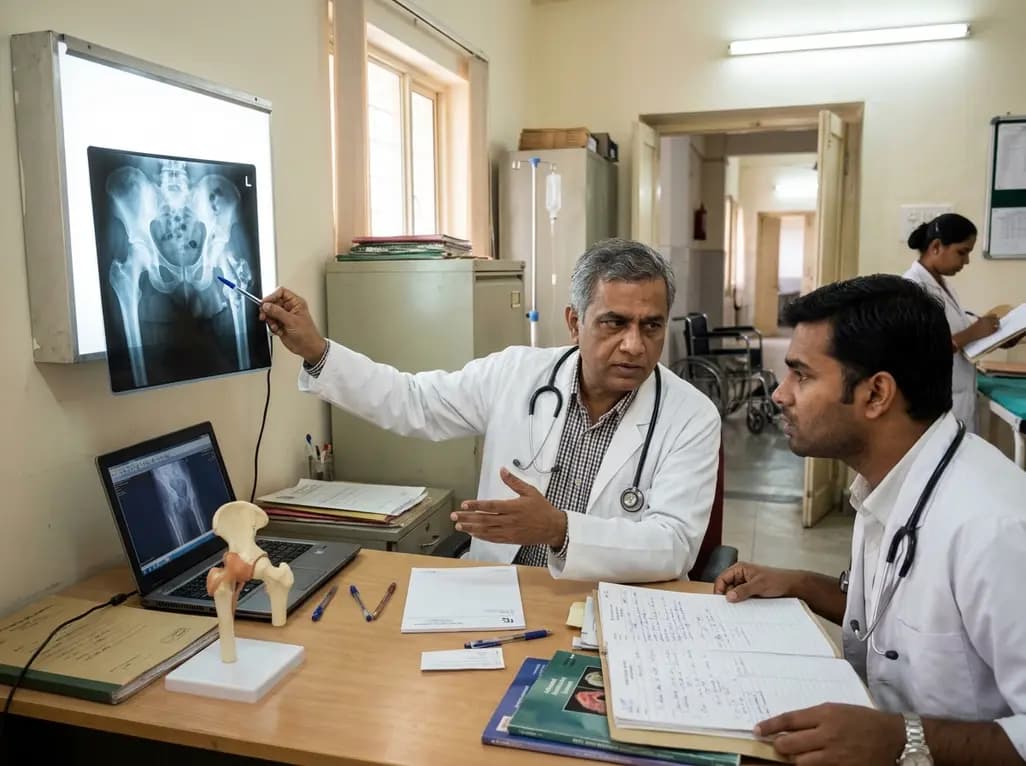
A nationwide real-world cohort study reveals that sequential antiresorptive therapy following teriparatide reduces hip fracture risk by over 50%. Immediate initiation within 90 days and high treatment adherence are critical to preserve skeletal gains in severe osteoporosis.
Today
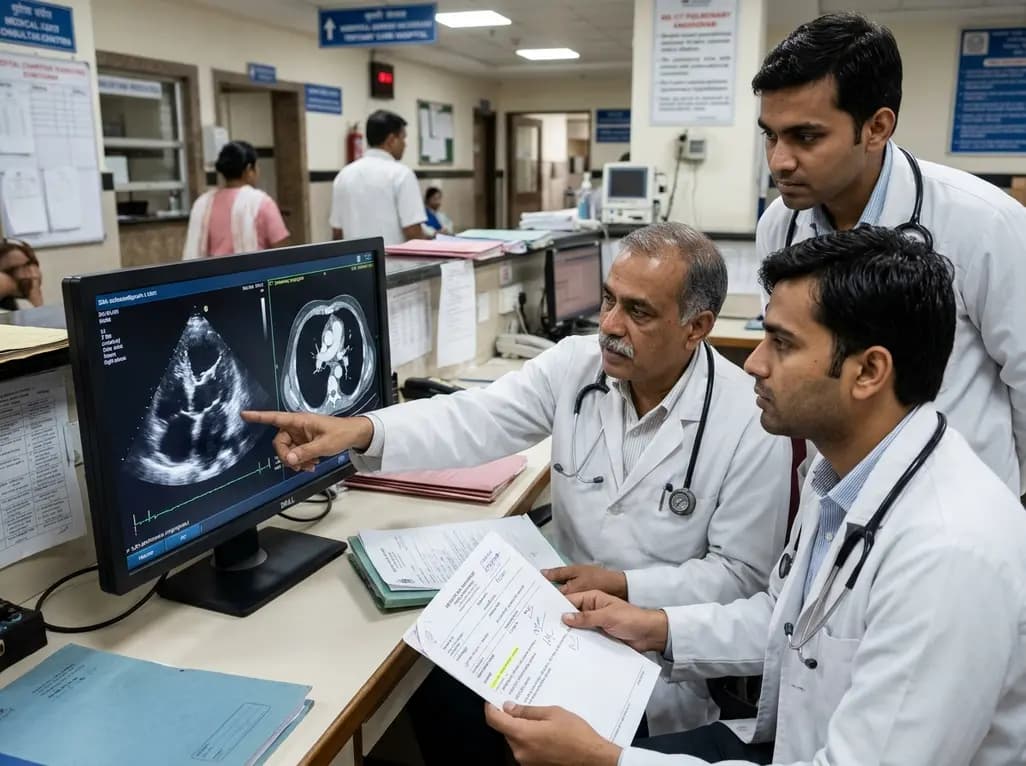
A 21-year-old postpartum female presenting with right heart failure was initially suspected of peripartum cardiomyopathy, but comprehensive imaging and serology confirmed MCTD-associated pulmonary hypertension. Early diuretic and immunosuppressive therapy led to successful clinical stabilization.
Today
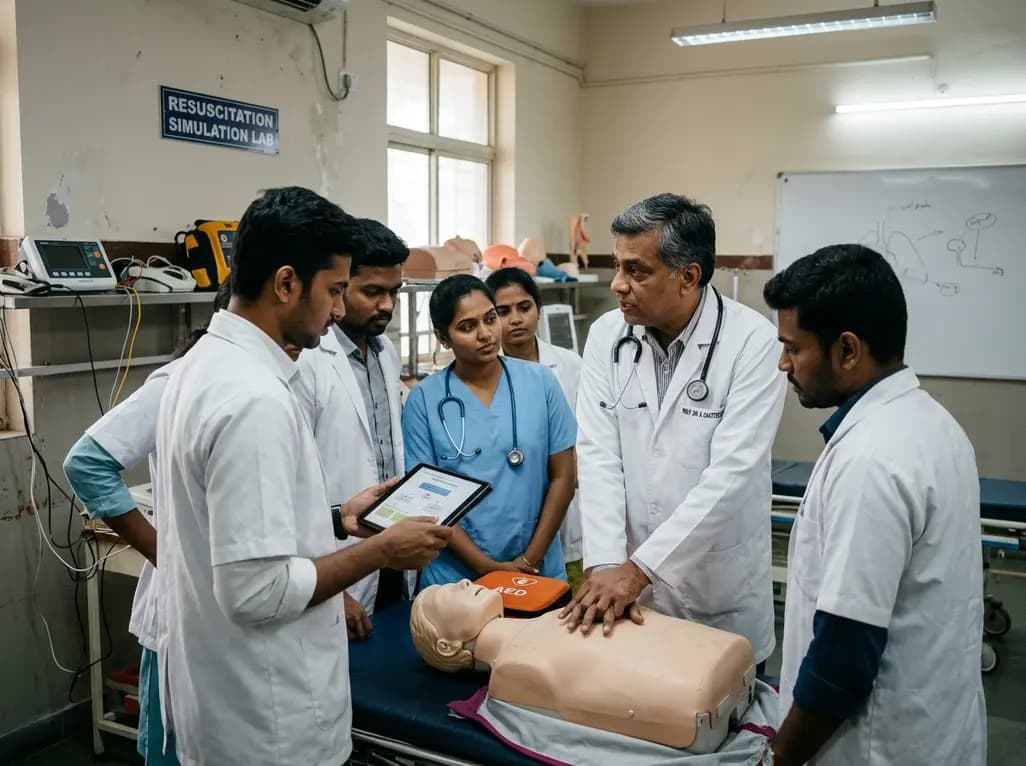
A comprehensive review of the 2025 European Resuscitation Council guidelines on resuscitation education, highlighting blended learning, deliberate simulation, non-technical team skills, and practical implementation across diverse resource environments.
Today
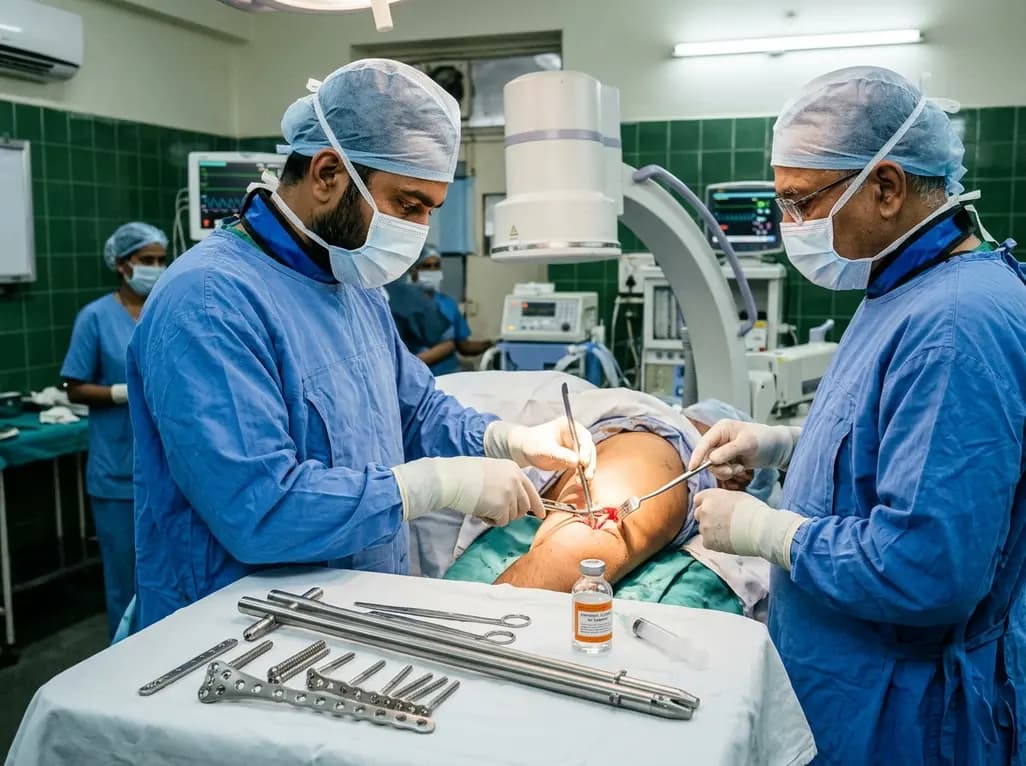
Septic humeral shaft nonunion in patients with obesity presents extreme mechanical and biological challenges. Discover how hybrid nail-plate osteosynthesis paired with targeted antibiotic therapy provides rigid stability, eradicates infection, and restores maximal upper extremity function.
Today
A case report details how reusing single-use insulin cartridges caused device failure and diabetic ketoacidosis in a type 1 diabetes patient using an advanced hybrid closed-loop system. The report highlights technological blindspots, mechanical degradation, and safety protocols during supply shortages.
Today
