.webp&w=384&q=75)

Loading, please wait...
Loading, please wait...
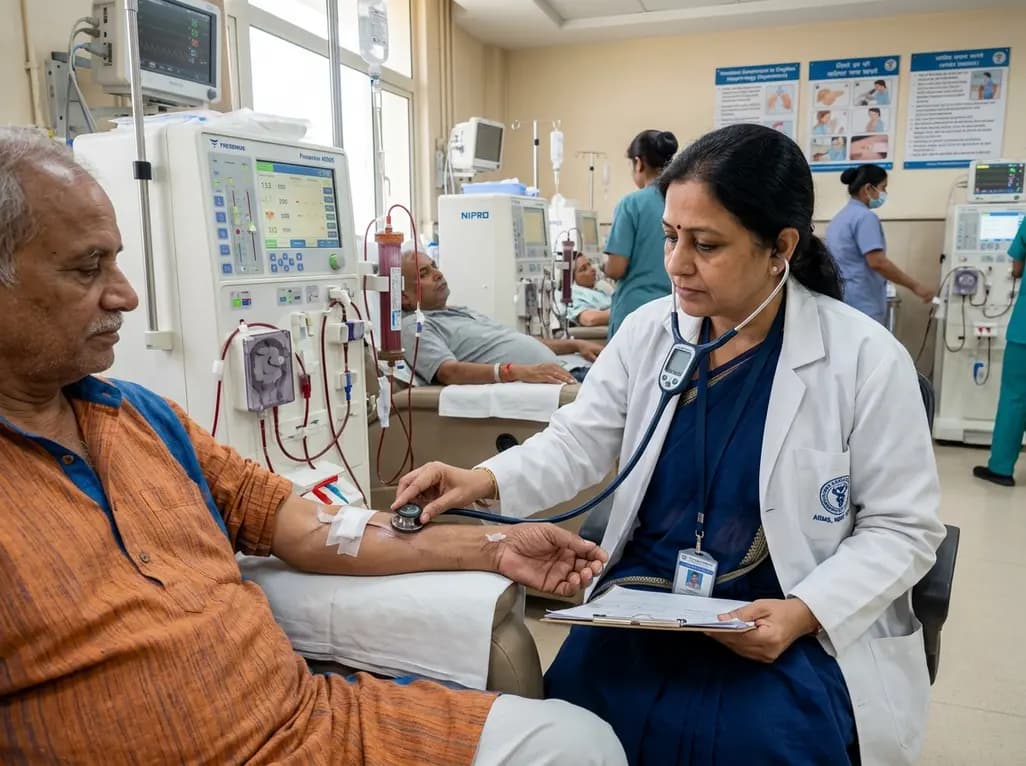
Maintaining long-term vascular access patency remains a fundamental cornerstone of effective maintenance hemodialysis. However, arteriovenous fistula stenosis frequently impairs dialysis adequacy and causes premature vascular access failure. Conventional surveillance strategies depend largely on subjective physical assessment by dialysis nursing personnel. Unfortunately, this manual approach often delays the timely recognition of progressive lumen narrowing. Recent clinical investigations demonstrate that serial electronic stethoscope monitoring provides an objective, non-invasive acoustic surveillance strategy. By identifying high-frequency flow turbulence early, clinicians can intervene promptly and prolong access longevity.
Patients with end-stage renal disease require dependable vascular access to achieve adequate solute clearance. The native arteriovenous fistula represents the gold standard vascular access modality because it provides superior long-term survival and low infection risks. Nevertheless, progressive arteriovenous fistula stenosis remains the primary cause of access thrombosis and loss of function. Intimal hyperplasia and vascular remodeling develop naturally in response to altered shear stress and repetitive cannulation trauma. When stenosis narrows the lumen significantly, blood flow volume declines below therapeutic levels.
Currently, clinical guidelines recommend regular access surveillance using physical examination techniques such as palpation and auscultation. However, traditional manual assessment suffers from significant inter-observer variability among healthcare professionals. Dialysis nurses often detect abnormal bruits or reduced thrills only when severe lumen reduction has already occurred. Consequently, rescue procedures become urgent rather than elective, increasing the risk of procedural complications and access failure. Therefore, modern nephrology practice needs standardized, objective monitoring tools that identify hemodynamic abnormalities long before overt clinical failure manifests.
Digital stethoscopes transform traditional physical assessment into an objective diagnostic method. A healthy, mature arteriovenous fistula typically produces a continuous, low-pitched systolic-diastolic murmur. In contrast, progressive vascular narrowing disrupts laminar flow and creates localized flow turbulence. This hemodynamic disruption produces high-pitched bruits with altered acoustic amplitude and diminished diastolic duration. Electronic sensors record these subtle sound waves across wide frequency bands that the human ear cannot detect.
Furthermore, computational algorithms convert raw acoustic signals into quantitative diagnostic data. Researchers apply short-time Fourier transform techniques to analyze acoustic frequencies over time. By calculating sound power in decibels relative to full scale, digital platforms establish precise acoustic profiles for each patient. Additionally, spectral energy distribution highlights subtle shifts toward high-frequency domains, which indicate progressive luminal narrowing. As a result, digital acoustic surveillance provides reproducible data that eliminates operator subjectivity and establishes reliable baseline metrics for long-term monitoring.
Standardized recording protocols are essential to ensure acoustic data consistency across dialysis sessions. Clinical protocols recommend capturing sound recordings multiple times weekly during regular hemodialysis treatments. Clinicians place digital sensors at two standardized anatomical locations: three centimeters proximal to the surgical anastomosis and directly over the arterial needle insertion site. These specific anatomical regions experience the highest shear stress and exhibit the greatest vulnerability to stenotic lesions.
Moreover, serial acoustic monitoring enables longitudinal comparison of individual vascular access profiles. When developing stenosis alters local blood velocity, high-frequency sound components increase systematically above baseline values. By comparing patient recordings against established candidate thresholds, clinical algorithms can detect abnormal access acoustics before routine nursing evaluations notice changes. Furthermore, patient-level analytical modeling accounts for intra-individual clustering and hemodynamic fluctuations during treatment. Consequently, standardized acoustic sampling provides an accurate foundation for proactive clinical risk stratification.
Identifying high-risk clinical phenotypes allows nephrologists to prioritize intensive vascular monitoring for vulnerable patients. Recent prospective studies classify a history of percutaneous transluminal angioplasty within the preceding three years as a high-risk phenotype. Patients requiring frequent endovascular interventions display accelerated neointimal hyperplasia and aggressive vascular wall remodeling. Penalized logistic regression models confirm significant associations between this high-risk profile and abnormal acoustic spectral parameters.
Additionally, patients with prior angioplasty maintain altered baseline flow acoustics even when their access appears clinically stable. Previous balloon inflations cause microscopic endothelial damage, accelerating recurrent stenosis at treated sites. Therefore, standard physical examination frequently fails to identify impending restenosis in these complex accesses. Combining clinical history with serial acoustic data allows nephrology teams to detect early deterioration. As a result, clinicians can schedule elective duplex ultrasound imaging and timely endovascular re-intervention before acute thrombotic access failure occurs.
The prevalence of chronic kidney disease continues to rise across India, placing substantial strain on dialysis infrastructure. However, access to specialized vascular imaging and dedicated interventional nephrology remains concentrated in metropolitan tertiary centers. In peripheral dialysis units, vascular surveillance relies almost exclusively on basic manual physical examination by dialysis staff. Consequently, subtle vascular narrowing often progresses unnoticed until sudden access thrombosis occurs, requiring emergency temporary central venous catheterization.
Deploying digital stethoscopes within Indian hemodialysis centers offers a highly scalable and cost-effective monitoring solution. Dialysis nurses can record standardized acoustic signals during routine pre-dialysis preparation in under two minutes. Furthermore, digital acoustic files can be transmitted securely to consulting nephrologists via telemedicine platforms for remote evaluation. When acoustic analysis indicates high-risk spectral shifts, clinicians can arrange timely color Doppler ultrasonography and elective salvage. Ultimately, this point-of-care technology protects vascular access longevity, reduces emergency hospitalizations, and improves patient outcomes across resource-limited settings.
Digital stethoscopes capture subtle vascular turbulence and high-frequency acoustic components that emerge during early lumen narrowing. When blood flows through a narrowed segment, it produces higher pitch bruits and altered spectral power. Advanced computational analysis, such as short-time Fourier transform, quantifies these acoustic frequency shifts objectively. Consequently, clinicians can identify impending vascular access compromise well before physical signs like diminished thrill or pulsatile flow become obvious during standard manual physical examination.
Previous endovascular interventions reflect an underlying biological propensity toward aggressive neointimal hyperplasia and vascular wall remodeling. Patients requiring repeated angioplasty experience persistent shear stress and endothelial injury at treated sites. Furthermore, balloon dilation creates microvascular trauma that accelerates recurrent vascular access narrowing. Tracking these patients with regular electronic acoustic monitoring enables timely re-evaluation. Therefore, nephrologists can arrange confirmatory duplex ultrasonography and schedule elective re-interventions before complete thrombotic occlusion occurs.
Clinical protocols prioritize recording acoustic signals at two key anatomical landmarks: approximately three centimeters proximal to the surgical anastomosis and directly over the arterial needle cannulation site. These specific locations experience the highest hemodynamic shear stress and turbulent flow disturbances. Moreover, serial monitoring at these standardized points minimizes anatomical variability between dialysis sessions. As a result, acoustic spectral changes reliably reflect true progression of luminal narrowing rather than placement artifacts.
Disclaimer: This content is for informational and educational purposes only. It is not intended to provide medical advice or to replace the advice of an independent healthcare professional. Refer to the latest local and national guidelines for clinical practice.
References

Read summarized clinical updates, watch expert medical content, and earn CME certifications right from your smartphone.
Open your smartphone camera to scan and install.





A prospective pilot cohort study demonstrates that serial electronic stethoscope acoustic monitoring can identify arteriovenous fistula stenosis and stratify high-risk hemodialysis patients before routine clinical assessments.
last month

With post-monsoon dengue surges threatening South Asian health systems, physicians must refine triage and management. This guide covers vital warning signs, plasma leakage detection, crystalloid titration, and vector containment strategies to prevent mortality during seasonal arboviral epidemics.
Today

Findings from Project Viva indicate that sustained postpartum weight retention, rather than excessive gestational weight gain alone, directly worsens women's mid-life cardiovascular health, degrading blood pressure and glycemic parameters decades after delivery.
Today
A large UK Biobank study reveals that plasma proteomic signatures capture preclinical organ damage and improve multiorgan risk prediction across early CKM syndrome stages 0 to 2 beyond traditional PREVENT clinical models.
Today

A retrospective CBCT study reveals that superior TMJ space asymmetry correlates moderately with occipital condyle-atlas-axis asymmetry in unilateral TMJ osteoarthritis, highlighting an imaging correlate between jaw biomechanics and upper cervical alignment rather than a standalone diagnostic marker.
Today

A Bayesian multilevel meta-analysis reveals that aerobic training combined with moderate carbohydrate restriction modestly lowers HbA1c in type 2 diabetes. However, sparse data and very low certainty leave incremental benefits over exercise or diet alone unproven, highlighting the need for individualized care.
Today
