.webp&w=384&q=75)

Loading, please wait...
Loading, please wait...
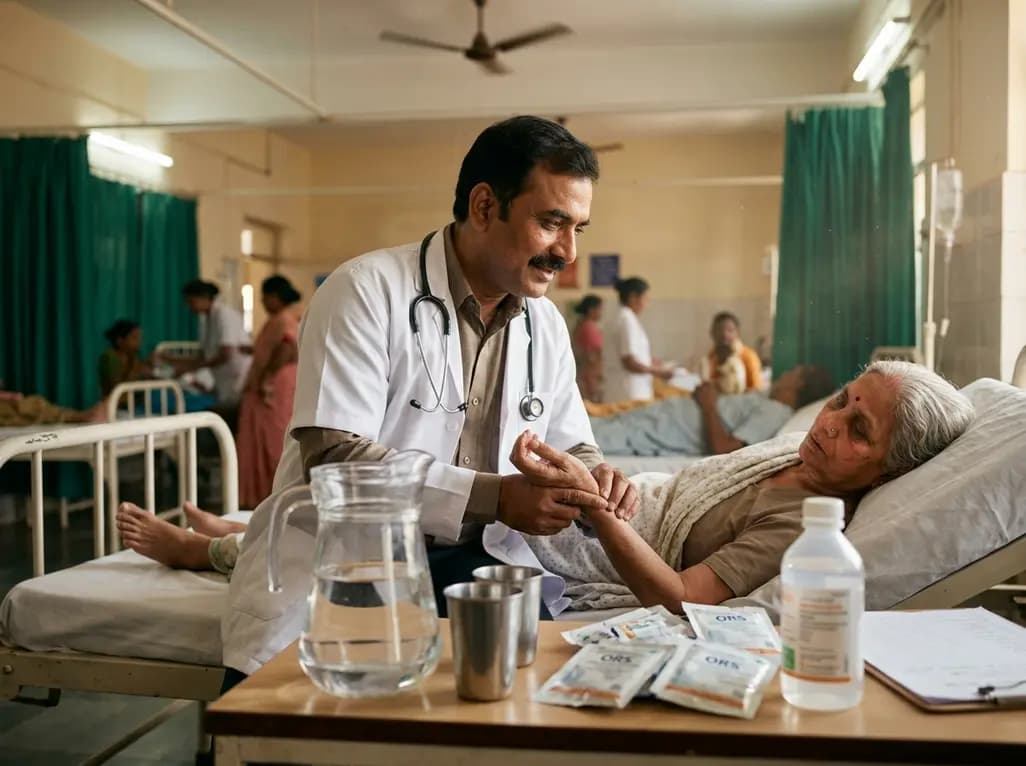
Consequently, maintaining proper electrolyte hydration in summer becomes a critical clinical concern as temperatures soar across India. Doctors often observe that patients drink plenty of water but still suffer from severe dehydration. This occurs because excessive sweating depletes both water and essential minerals like sodium, potassium, calcium, and magnesium. Therefore, replenishing fluids without these key electrolytes can actually dilute the remaining minerals in the extracellular fluid.
When electrolyte dilution occurs, patients frequently present with muscle cramps, severe fatigue, dizziness, and persistent headaches. Indeed, plain water alone cannot restore the osmotic balance required for proper cellular and neuromuscular function. Furthermore, this physiological imbalance can quickly progress to heat exhaustion or life-threatening heat stroke during severe heatwaves. As a result, clinical experts strongly recommend using oral rehydration solutions (ORS) to stabilize patients. Additionally, alternative options like salted lemon water, fresh coconut water, and buttermilk offer excellent natural hydration.
Importantly, certain patient populations face much higher risks of severe complications during extreme heat. Specifically, elderly individuals, young children, and patients with pre-existing metabolic disorders are highly vulnerable. For instance, patients with hypertension and chronic heart disease may experience sudden orthostatic hypotension. Subsequently, this rapid drop in blood pressure can lead to syncope, dangerous falls, and physical trauma. Moreover, inadequate perfusion to vital organs can rapidly trigger acute kidney injury (AKI). Doctors must closely monitor these patients to avoid devastating multi-organ failure.
Specifically, the use of SGLT2 inhibitors introduces a unique clinical hazard during extreme summer heatwaves. Because these medications promote osmotic diuresis, they significantly increase the baseline risk of hypovolemia. Consequently, extreme dehydration in these patients can trigger euglycemic diabetic ketoacidosis (eDKA). This dangerous condition features severe systemic acidity despite relatively normal blood glucose levels. Therefore, physicians should consider temporarily suspending or adjusting SGLT2 inhibitors during prolonged heatwave exposure.
Q1: Why is drinking plain water insufficient during a severe heatwave?
Drinking plain water after excessive sweating dilutes the remaining electrolytes in the body. Consequently, this dilution can lead to symptoms like muscle cramps, headaches, and fatigue rather than restoring hydration.
Q2: What clinical risks do SGLT2 inhibitors present during extreme heat?
SGLT2 inhibitors cause osmotic diuresis, which exacerbates fluid loss. As a result, extreme dehydration in patients taking these drugs can lead to acute kidney injury and euglycemic diabetic ketoacidosis.
Q3: Which natural alternatives can patients use to replenish lost minerals?
In addition to standard oral rehydration solutions, patients can consume coconut water, salted lemon water, buttermilk, and balanced, mineral-rich meals to restore electrolyte balance.
Disclaimer: This content is for informational and educational purposes only. It does not constitute medical advice or replace professional judgment. Refer to the latest local and national guidelines for clinical practice.
References

Read summarized clinical updates, watch expert medical content, and earn CME certifications right from your smartphone.
Open your smartphone camera to scan and install.





Discover why plain water is insufficient during extreme heat waves and how electrolyte replenishment prevents severe clinical complications like AKI and DKA...
4 months ago

Discover the crucial role of glymphatic dysfunction in stroke, where perivascular clearance failure and neuroinflammation exacerbate cerebral edema and post-stroke brain injury.
Today

A prenatal case highlights severe glutaric acidemia type II presenting as bilateral hyperechoic cystic kidneys at 18 weeks. Whole-exome sequencing revealed a novel homozygous ETFDH frameshift variant, demonstrating the power of rapid genetic testing in fetal renal anomalies.
Today

Review how tailored exercise programs benefit frail older patients with heart failure. Explore pathophysiological mechanisms, individualized training prescriptions, and strategies to overcome adherence barriers in clinical practice.
Yesterday

This comparative study evaluates posterior labral tears with and without glenohumeral instability, highlighting distinct demographic patterns, MRI underestimation in stable shoulders, and successful arthroscopic repair outcomes.
Yesterday

A clinical study demonstrates that early intervention with tocilizumab, either as monotherapy or bridged with corticosteroids, achieves significant proptosis reduction and resolves active inflammation in treatment-naive thyroid eye disease.
Yesterday
