.webp&w=384&q=75)

Loading, please wait...
Loading, please wait...
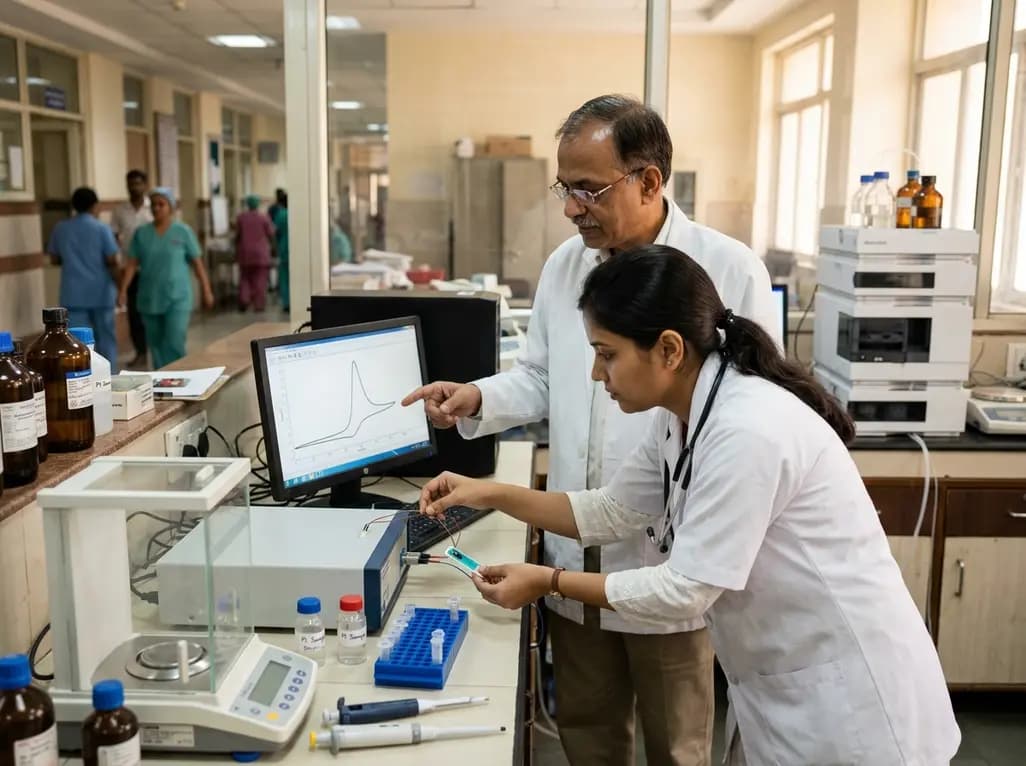
Clinicians frequently prescribe broad-spectrum fluoroquinolones, including levofloxacin and norfloxacin, to manage severe bacterial infections across respiratory, urinary, and gastrointestinal tracts. However, the widespread administration of these agents accelerates antimicrobial resistance when clinicians fail to optimize dosage regimens. Consequently, modern healthcare requires innovative diagnostic tools to support precise therapeutic drug monitoring. Electrochemical antibiotic sensing represents a transformative approach that enables rapid, sensitive, and decentralized quantitation of antimicrobial compounds in complex patient matrices. Furthermore, point-of-care quantification provides timely pharmacokinetic insights that conventional centralized laboratories often cannot deliver within actionable clinical windows. Traditional chromatographic methods demand extensive sample extraction protocols, expensive benchtop instruments, and specialized operators. In contrast, electrochemical platforms offer miniaturized electrode designs that analyze biofluids with remarkable speed and minimal reagent consumption. Therefore, developing reliable sensing interfaces helps clinicians maintain therapeutic serum concentrations while avoiding systemic toxicity or treatment failure. In addition, prompt detection reduces the risk of subtherapeutic drug exposure, which directly drives bacterial mutation and resistance selection. As hospitals implement tighter antimicrobial stewardship protocols, the demand for portable analytical systems continues to grow rapidly. These modern biosensing platforms hold tremendous potential to protect valuable antibiotic classes through prompt, evidence-based bedside adjustments.
Recent material science breakthroughs have catalyzed the fabrication of specialized transducers for levofloxacin and norfloxacin detection. Specifically, researchers utilize advanced carbon nanomaterials, including multi-walled carbon nanotubes and graphene derivatives, to accelerate heterogeneous electron transfer. Moreover, transition metal oxides and two-dimensional MXenes introduce exceptional surface area and distinct electrocatalytic properties that enhance signal generation. Porous coordination frameworks and molecularly imprinted polymers further supply biomimetic recognition cavities tailored to specific quinolone structures. Consequently, these tailored materials distinguish closely related target molecules even in the presence of structurally analogous pharmaceutical metabolites. In addition, functionalized polymeric membranes enhance electrode conductivity while preventing non-specific protein fouling from biological fluids. Direct voltammetric techniques, such as differential pulse voltammetry and square wave voltammetry, effectively capture oxidation peaks characteristic of quinolone rings. Similarly, ion-selective membranes and electrified liquid-liquid interfaces offer alternative detection routes that bypass conventional redox processes. Thus, synthetic chemists continue to blend organic matrices with metallic nanoparticles to maximize analytical sensitivity. Nevertheless, surface modification protocols often demand intricate chemical synthesis steps that introduce substantial batch-to-batch variability. While these nanostructured architectures reliably lower detection limits in pure buffer systems, maintaining identical performance in clinical serum samples remains challenging.
Engineers frequently assume that synthesizing highly complex multi-component electrodes naturally yields superior diagnostic utility. However, comprehensive scientific evaluations demonstrate that increased sensor complexity does not always improve analytical performance. In fact, elaborate composite electrodes often introduce severe operational instability, unpredictable surface degradation, and excessive fabrication costs. Therefore, simpler electrode configurations frequently achieve an optimal balance between sensitivity, fabrication reproducibility, and operational longevity. For example, straightforward carbon-based electrodes modified with standardized metallic catalysts often deliver comparable limits of detection without cumbersome multistep assembly. Furthermore, excessive chemical layers can impede rapid electron transport and create unpredictable kinetic barriers. Consequently, sensor manufacturing requires streamlined protocols to enable reliable mass production of disposable diagnostic test strips. In addition, commercial translation demands that analytical devices function reproducibly across diverse operating environments and ambient temperatures. Medical diagnostic systems achieve true clinical utility only when their manufacturing pipelines remain cost-effective and strictly reproducible. Thus, device developers must prioritize robust analytical reproducibility over hyper-specialized material complexity. Simpler, highly dependable electrode architectures will accelerate the clinical adoption of decentralized antibiotic measurement tools.
Despite encouraging laboratory benchmarks, critical translational barriers still prevent routine clinical deployment of these biosensors. Most notably, researchers evaluate reported sensing systems almost exclusively on detection limits in synthetic buffer solutions. However, real clinical matrices, such as human serum, whole blood, and urine, present intense biological interference. Endogenous albumin, bilirubin, and uric acid frequently foul transducer surfaces and generate significant background electrical noise. Consequently, sensors validated solely in pristine buffers regularly fail when challenged with authentic, incurred clinical specimens. Furthermore, medical regulatory agencies demand rigorous comparative validation against established gold-standard methods, particularly high-performance liquid chromatography and tandem mass spectrometry. Unfortunately, many current electrochemical literature reports lack comprehensive cross-validation against these reference standards. In addition, clinical laboratories require validated calibration stability over extended shelf-life intervals. Operating stability also presents significant hurdles, as ambient storage conditions often degrade sensitive biological recognition elements or polymeric matrices. Therefore, developers must subject emerging sensors to rigorous clinical trial evaluations using heterogeneous patient cohorts. Overcoming these diagnostic obstacles remains essential before clinicians can trust electrochemical platforms for critical therapeutic decisions.
Bridging the divide between academic research and clinical implementation requires a standardized development pathway. Initially, device designers must focus on disposable screen-printed electrode formats that integrate seamlessly with handheld potentiostats. Moreover, engineers should incorporate automated microfluidic sample handling to minimize manual pre-treatment steps at the patient bedside. Such automated microfluidic channels effectively filter macromolecular interferents, thereby protecting sensitive sensor surfaces from matrix-induced fouling. Consequently, nursing staff or medical laboratory technicians can perform real-time drug assays within minutes without specialized training. Furthermore, healthcare institutions in developing regions, including district hospitals across India, desperately need affordable, point-of-care antimicrobial monitoring platforms. In these settings, timely quantification of levofloxacin and norfloxacin levels can optimize empirical therapy and curtail antimicrobial resistance. Therefore, collaborative initiatives connecting clinical pharmacologists, analytical chemists, and regulatory authorities must establish clear analytical verification benchmarks. Standardized testing protocols will confirm that disposable electrochemical devices deliver actionable therapeutic drug monitoring data. Ultimately, advancing pragmatic, robust electrochemical tools will reinforce antimicrobial stewardship programs and safeguard critical antibiotic therapies worldwide.
Prompt quantification of fluoroquinolones enables precise dose titration in critically ill patients and individuals with impaired renal clearance. Because levofloxacin and norfloxacin feature narrow therapeutic windows in specific patient populations, improper dosing causes treatment failure or severe neurotoxicity and tendinopathy. Furthermore, maintaining accurate therapeutic concentrations suppresses the emergence of resistant bacterial pathogens. Rapid bedside sensing equips healthcare teams to individualize pharmacotherapy immediately, thereby improving therapeutic outcomes and bolstering institutional antimicrobial stewardship initiatives.
Conventional chromatography offers gold-standard accuracy and resolution, but it demands complex instrumentation, extensive sample pre-treatment, and high operational expenses. In contrast, electrochemical biosensors deliver rapid analytical readouts using compact, inexpensive, and portable equipment. Furthermore, screen-printed electrochemical electrodes analyze biological fluids with minimal reagent consumption and minimal manual preparation. Consequently, while central clinical laboratories rely on chromatography for definitive confirmation, electrochemical platforms provide practical point-of-care utility for immediate patient management decisions.
Primary hurdles include non-specific surface fouling by human serum proteins, variable electrode fabrication reproducibility, and insufficient validation against clinical chromatography standards. Moreover, many experimental sensors lack rigorous evaluation in genuine patient samples containing complex metabolic byproducts. Consequently, developers must demonstrate dependable batch-to-batch consistency and shelf-life stability under ambient conditions. Overcoming these analytical limitations through robust clinical trials remains mandatory before regulatory bodies will approve these point-of-care devices for routine bedside clinical workflows.
Disclaimer: This content is for informational and educational purposes only... Refer to the latest local and national guidelines for clinical practice.
References

Read summarized clinical updates, watch expert medical content, and earn CME certifications right from your smartphone.
Open your smartphone camera to scan and install.





Electrochemical detection of levofloxacin and norfloxacin offers rapid quantification for therapeutic drug monitoring, yet real-world clinical translation requires simpler sensor designs, robust anti-fouling interfaces, and rigorous validation against gold-standard chromatography.
Today

A nationwide Korean cohort study of 265,610 individuals reveals that the link between benzodiazepine use and dementia attenuates after adjusting for comorbidity, with no accelerated progression to severe dementia.
Today

Integrating adult genetic services into reproductive and pregnancy care substantially alters clinical management. A study reveals that diagnostic genetic evaluations directly inform maternal, fetal, and neonatal care in nearly 57% of tested patients, highlighting the value of preconception and antenatal genomics.
Today

A landmark systematic review and meta-analysis establishes age-specific normative reference values for pediatric pulse wave velocity, revealing a nonlinear trajectory of arterial stiffness from early childhood through adolescence.
Today
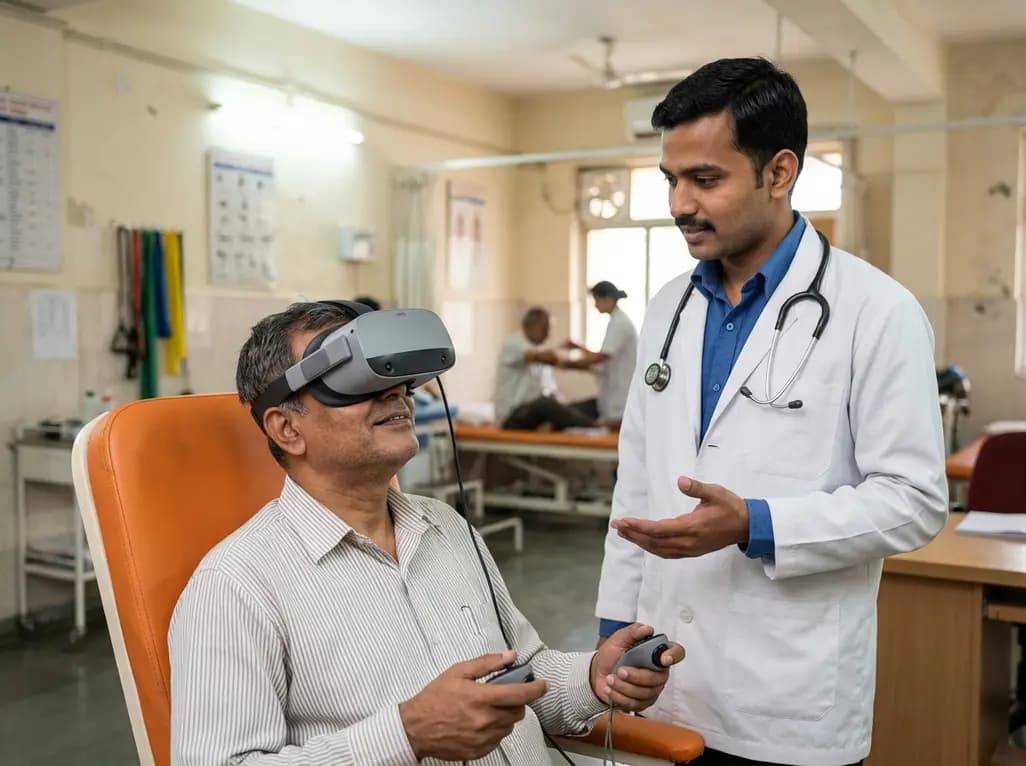
A recent scoping review highlights the efficacy, usability, and patient satisfaction of virtual reality pain management for chronic musculoskeletal pain, emphasizing psychotherapy-based VR protocols.
Today

A landmark cross-sectional study in Asian adults with type 2 diabetes identifies novel urinary metabolites linked to mild cognitive impairment. Elevated urinary sucrose and altered metabolites highlight non-invasive pathways for early cognitive risk stratification and targeted metabolic management.
Today
