.webp&w=384&q=75)

Loading, please wait...
Loading, please wait...
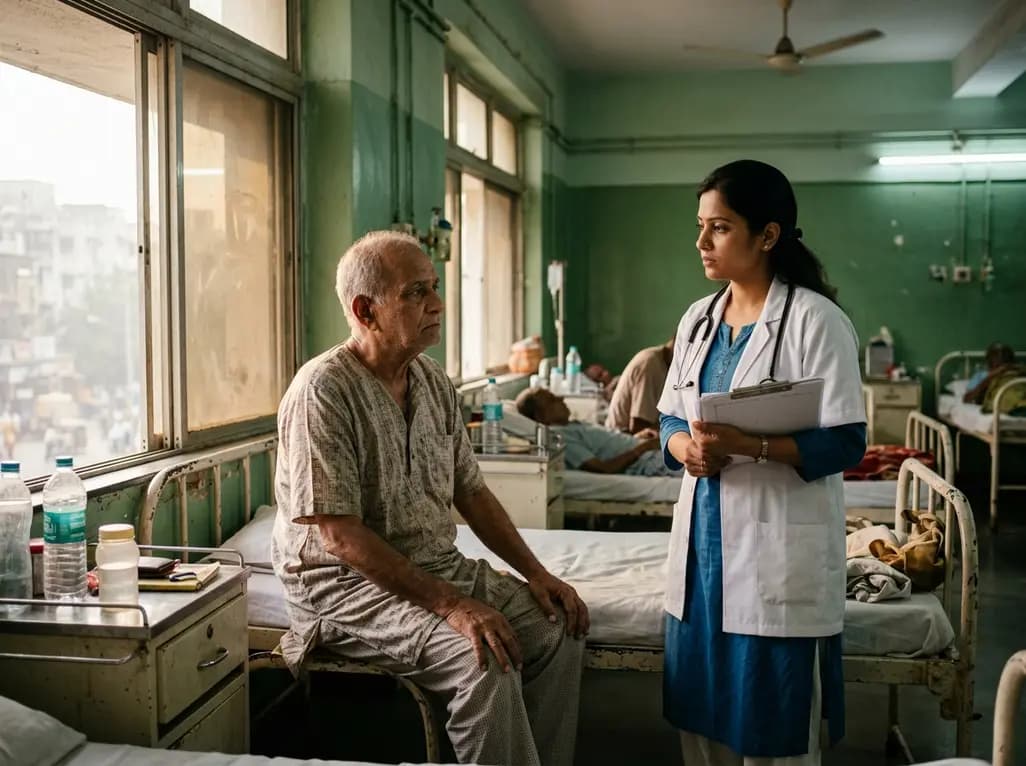
Social isolation and loneliness have emerged as significant global health concerns, especially for the aging population. While people often use these terms interchangeably, they represent distinct dimensions of human experience. Social isolation refers to the objective state of having few social contacts or roles. In contrast, loneliness is the subjective, distressing feeling that arises when there is a perceived gap between desired and actual social connections. Consequently, an individual may be socially isolated without feeling lonely, or they may feel profoundly lonely despite being surrounded by others. Recognizing the elderly social disconnection impact is now more critical than ever as healthcare systems globally grapple with the needs of older adults. Furthermore, the interplay between these two states can lead to complex health outcomes. Therefore, clinicians must distinguish between the lack of external connection and the internal sense of abandonment to provide effective care. This differentiation is particularly relevant in clinical settings where the focus often remains solely on physical symptoms, neglecting the psychological weight of social disconnection. As societies modernize, the structures that once provided organic social support are shifting, leaving many older individuals vulnerable to the silent erosion of their mental and emotional health.
A recent study published in 2026 investigated the longitudinal association between social disconnection and well-being among community-dwelling older adults. Utilizing data from the National Health and Aging Trends Study, researchers followed over 4,500 participants to identify how different sub-types of disconnection co-occur. The results were striking, revealing that approximately one-third of the elderly population experienced some form of disconnection. Specifically, 15% reported subjective loneliness, another 15% faced objective social isolation, and 6% suffered from both simultaneously. However, the majority—about 64%—reported being completely connected. These findings highlight that social disconnection is not a monolithic experience but a multifaceted issue. Additionally, the study emphasizes that a significant portion of the elderly population lives in a state of objective isolation without reporting loneliness. This suggests that some individuals may possess high resilience or preferred solitude. Nevertheless, for those who do feel disconnected, the longitudinal data indicates a clear decline in well-being. By categorizing these experiences, the study provides a roadmap for healthcare providers to identify high-risk individuals. Consequently, understanding these sub-types allows for more personalized and effective interventions that address the specific nature of a patient's social deficit.
The core of the research focused on how these states of disconnection influence emotional health over time. Researchers found that older adults who experienced loneliness were at a much greater risk for worsening well-being. Unlike objective isolation alone, the subjective feeling of being lonely served as a stronger predictor of emotional decline. For instance, individuals who felt lonely were more likely to report lower life satisfaction and increased psychological distress during follow-up assessments. This suggests that the internal perception of social lack is particularly damaging to the human psyche. Moreover, the study utilized multivariate linear regression to control for various factors, confirming that the impact of loneliness persists regardless of physical health or socioeconomic status. Therefore, the emotional toll of social disconnection is a primary driver of geriatric morbidity. Clinicians should observe that even when a patient appears socially integrated, their internal sense of loneliness can still undermine their health. Because well-being is a dynamic state, the longitudinal nature of this study proves that social health is just as vital as physical health for long-term stability. Ultimately, addressing the elderly social disconnection impact requires a proactive approach to mental health screening.
In the Indian context, the challenge of social disconnection is growing due to rapid urbanization and the decline of the traditional joint family system. As younger generations migrate for work, many elderly parents are left in "empty nests," often in large urban centers where community ties are weak. Recent data suggests that nearly 48% of the Indian elderly experience some degree of loneliness. Consequently, the cultural shift toward nuclear families has left a significant void in traditional caregiving and social engagement. In rural areas, the problem is often exacerbated by poverty and a lack of transport, which physicalizes social isolation. Furthermore, Indian clinicians face unique hurdles, such as the stigma surrounding mental health, which may prevent seniors from expressing feelings of loneliness. Therefore, integrating social health assessments into primary care is essential. For instance, family physicians in India can use simple, validated tools like the UCLA Loneliness Scale during routine check-ups. Additionally, community-based programs that foster intergenerational interaction could help bridge the gap. By acknowledging the specific socio-cultural dynamics of India, healthcare providers can better mitigate the elderly social disconnection impact and improve the quality of life for millions of aging citizens.
Addressing social disconnection in a clinical setting requires more than just medical advice; it necessitates a holistic strategy. One effective approach is social prescribing, where doctors refer patients to community groups, volunteer opportunities, or social clubs. This method addresses the objective lack of connection while also providing a sense of purpose. Furthermore, technology can play a supportive role, provided that older adults receive the necessary training to use digital platforms for communication. However, the study findings suggest that interventions must be targeted. For those suffering from objective isolation, increasing social opportunities is key. Conversely, for those experiencing subjective loneliness, psychological support or cognitive-behavioral strategies may be more effective in changing maladaptive social cognitions. Additionally, clinicians should involve family members in the care plan to enhance the quality of existing interpersonal relationships. Because loneliness is often linked to other geriatric syndromes like frailty and cognitive decline, managing it can have a protective effect on overall health. Therefore, a multi-sectoral approach involving healthcare, social services, and community organizations is vital. By implementing these diverse strategies, clinicians can provide a robust defense against the negative outcomes of social disconnection.
The growing body of evidence regarding social disconnection underscores the need for policy changes and future research. We must move toward a healthcare model that prioritizes social health as a core component of geriatric care. For example, public health campaigns can raise awareness about the risks of loneliness, much like campaigns for smoking or physical inactivity. Moreover, future studies should focus on the effectiveness of specific interventions within different cultural and economic landscapes. In countries like India, where the elderly population is set to double by 2050, the urgency is clear. Consequently, medical education should incorporate training on how to identify and manage social disconnection in older patients. By fostering a more connected society, we can ensure that aging is a period of continued growth and engagement rather than one of isolation. Therefore, the collective efforts of researchers, clinicians, and policymakers are required to build environments where social connection is accessible to all. Ultimately, the goal is to transform the elderly social disconnection impact from a hidden epidemic into a manageable and preventable health issue.
Social isolation is an objective measure of having few social contacts, while loneliness is a subjective, painful feeling of being alone. An elderly person might live alone but feel satisfied, meaning they are isolated but not lonely. Conversely, a person can live with family and still experience profound loneliness. Clinicians must assess both dimensions to understand the full scope of a patient's social well-being and needs.
Social disconnection significantly increases the risk of mental and physical health issues. Research links persistent loneliness to higher rates of depression, anxiety, and cognitive decline, including dementia. Physically, it is associated with cardiovascular disease, weakened immune systems, and premature mortality. In fact, some studies suggest that the health risks of chronic loneliness are comparable to smoking fifteen cigarettes a day, making it a critical public health priority for aging populations.
Clinicians can start by using brief screening tools to identify patients at risk. Once identified, they can utilize "social prescribing" to connect patients with local community groups, senior centers, or volunteer programs. Encouraging family involvement and teaching basic digital literacy for video calls can also enhance connection. Additionally, addressing physical issues like hearing loss or mobility problems is essential, as these often serve as primary barriers to maintaining meaningful social interactions.
Disclaimer: This content is for informational and educational purposes only. It is not a substitute for professional medical advice, diagnosis, or treatment. Always seek the advice of your physician or other qualified health provider with any questions regarding a medical condition. Refer to the latest local and national guidelines for clinical practice.
References
Choi H et al. Longitudinal association between social isolation, loneliness and well-being among community-dwelling older adults in the United States. Aging Ment Health. 2026 Jul 14. doi: 10.1080/13607863.2026.2698705. PMID: 42449200.
Sharma et al. Prevalence and predictors of loneliness and its association with health-seeking behaviors among the elderly population, Gujarat. PMC. 2024. Available at: https://www.ncbi.nlm.nih.gov/pmc/articles/PMC11213233/.
Canadian Coalition for Seniors' Mental Health (CCSMH). Clinical Guidelines on Social Isolation and Loneliness in Older Adults. 2024. Available at: https://ccsmh.ca/.
"
Read summarized clinical updates, watch expert medical content, and earn CME certifications right from your smartphone.
Open your smartphone camera to scan and install.





A new longitudinal study highlights how social isolation and loneliness significantly impair the emotional well-being of older adults. Understanding these distinct dimensions is vital for Indian clinicians to develop targeted interventions and support systems for an increasingly aging population.
3 months ago

Novel diimide and hydrazone scaffolds, particularly compound #C4, synergistically reactivate latent HIV-1 when combined with JQ1 or PKC activators. Demonstrating donor-matched proviral transcription ex vivo and non-canonical signaling, these findings advance shock and kill strategies toward reservoir eradication.
Today

A cross-sectional study reveals that maternal RSV vaccination coverage reached only 43.7% in Argentina, with maternal vaccine knowledge being the sole independent predictor of uptake. Clinicians play a crucial role in eliminating informational and structural barriers to optimize infant health.
Today

Review how tailored exercise programs benefit frail older patients with heart failure. Explore pathophysiological mechanisms, individualized training prescriptions, and strategies to overcome adherence barriers in clinical practice.
Yesterday

This comparative study evaluates posterior labral tears with and without glenohumeral instability, highlighting distinct demographic patterns, MRI underestimation in stable shoulders, and successful arthroscopic repair outcomes.
Yesterday

A clinical study demonstrates that early intervention with tocilizumab, either as monotherapy or bridged with corticosteroids, achieves significant proptosis reduction and resolves active inflammation in treatment-naive thyroid eye disease.
Yesterday
