.webp&w=384&q=75)

Loading, please wait...
Loading, please wait...

As telemedicine becomes a standard part of modern healthcare, understanding the EHR impact on physicians is essential for maintaining high-quality patient care. Specifically, a recent exploratory mixed-methods study investigated how computer use influences physician performance during simulated virtual encounters. Researchers observed that simultaneous documentation often diverts attention from the patient. Consequently, this shift can potentially reduce the patient-centered nature of the interaction. While both staff and resident physicians participated, those with more clinical experience tended to maintain higher levels of patient-centeredness despite the digital distractions.
Furthermore, the research highlighted the significant cognitive load imposed by electronic health record (EHR) systems. Although self-reported cognitive load did not always correlate directly with computer use, qualitative analysis revealed clear signs of stress. For instance, many physicians exhibited both verbal hesitations and nonverbal cues of frustration when interacting with the software and the patient at the same time. However, seasoned practitioners often developed strategies to mitigate these stressors. Therefore, the findings suggest that clinical maturity helps doctors navigate complex digital workflows more effectively than their junior counterparts.
Additionally, the study identified that documentation styles significantly influence EHR usage patterns. Some physicians prefer documenting during the visit, while others wait until the encounter ends. Because varied interpretations of documentation tasks can lead to increased stress, providing clear instructions for EHR use is critical, particularly in certification settings. Ultimately, improving EHR usability and providing targeted training remains vital for reducing physician burnout and enhancing the virtual care experience for patients and providers alike.
Simultaneous EHR use can reduce eye contact and active listening, which may make the encounter feel less personal for the patient, although experienced physicians often manage this better.
Common signs of high cognitive load include verbal pausing, increased screen fixation, and nonverbal cues like physical tension or sighing during the interaction.
Yes, research suggests that increased clinical experience helps physicians develop better multitasking skills, allowing them to balance documentation and patient engagement more efficiently.
Disclaimer: This content is for informational and educational purposes only. It does not constitute professional medical advice, diagnosis, or treatment. Refer to the latest local and national guidelines for clinical practice.
References

Read summarized clinical updates, watch expert medical content, and earn CME certifications right from your smartphone.
Open your smartphone camera to scan and install.





This exploratory study examines how electronic health records affect physician performance, stress, and patient-centered care during simulated virtual visit...
5 months ago
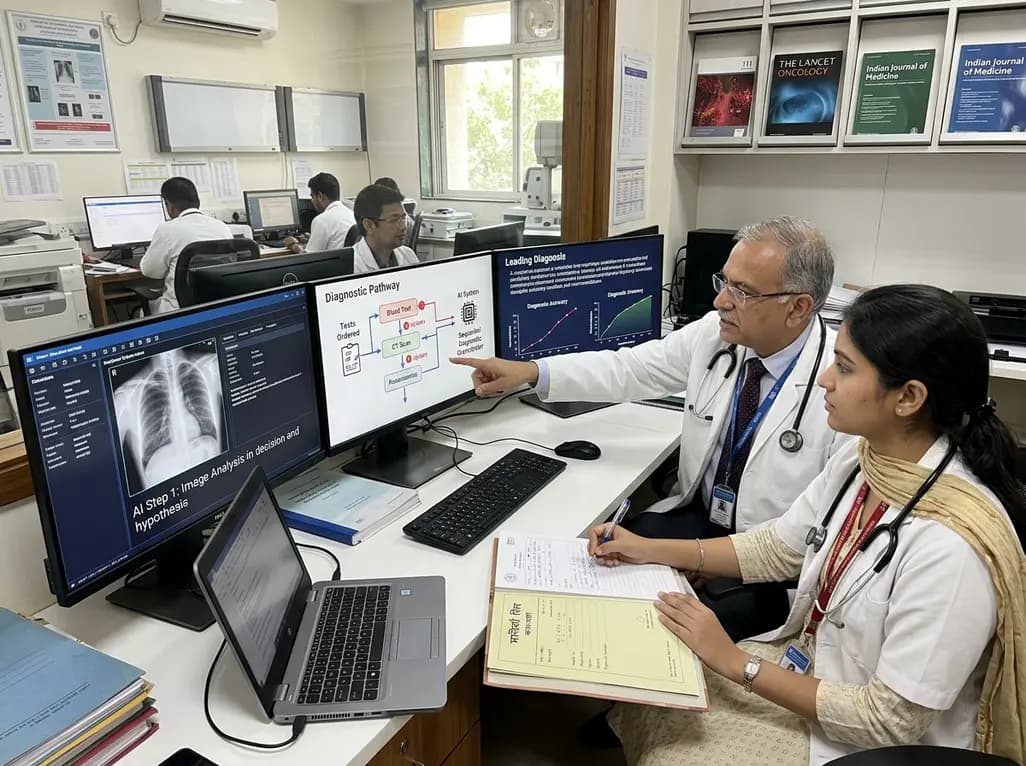
A breakthrough peer-reviewed study demonstrates that a sequential AI diagnosis system can mirror real-world clinical reasoning. By ordering stepwise tests and updating hypotheses dynamically, this multi-agent orchestrator achieved superior diagnostic accuracy while reducing investigative costs.
Today

A prenatal case highlights severe glutaric acidemia type II presenting as bilateral hyperechoic cystic kidneys at 18 weeks. Whole-exome sequencing revealed a novel homozygous ETFDH frameshift variant, demonstrating the power of rapid genetic testing in fetal renal anomalies.
Today

Review how tailored exercise programs benefit frail older patients with heart failure. Explore pathophysiological mechanisms, individualized training prescriptions, and strategies to overcome adherence barriers in clinical practice.
Yesterday

This comparative study evaluates posterior labral tears with and without glenohumeral instability, highlighting distinct demographic patterns, MRI underestimation in stable shoulders, and successful arthroscopic repair outcomes.
Yesterday

A clinical study demonstrates that early intervention with tocilizumab, either as monotherapy or bridged with corticosteroids, achieves significant proptosis reduction and resolves active inflammation in treatment-naive thyroid eye disease.
Yesterday
