.webp&w=384&q=75)

Loading, please wait...
Loading, please wait...

Historically, clinicians linked pulmonary malignancies almost entirely to chronic tobacco inhalation. However, up to twenty percent of lung cancer cases worldwide arise in individuals who have never smoked. Groundbreaking research published in Science demonstrates that the rare inherited EGFR T790M lung cancer mutation confers striking disease susceptibility. By evaluating genomic profiles across 3.3 million individuals, researchers established a major inherited determinant for pulmonary malignancy. Consequently, these findings reshape how clinicians understand familial thoracic neoplasms and non-smoking oncogenesis.
The epidermal growth factor receptor regulates fundamental cellular growth and survival. However, specific oncogenic mutations within this gene trigger unchecked cellular proliferation. Historically, clinicians recognized the somatic EGFR T790M substitution as a secondary gatekeeper mutation causing drug resistance during tyrosine kinase inhibitor therapy. In contrast, this landmark study examined inherited germline carriage across a massive unselected population cohort. The investigators evaluated genotypic data from more than 3.3 million participants within the 23andMe research database. Consequently, they identified germline EGFR T790M in roughly one out of every 15,850 individuals. This frequency proved substantially higher than earlier clinical estimates had indicated. Furthermore, carriers demonstrated an overall 25-fold higher risk of developing pulmonary neoplasms compared to non-carriers. Geneticists initially identified this inherited variant in 2005 within a European family experiencing excessive lung cancer incidence. Nevertheless, earlier investigative cohorts lacked statistical power to calculate true population risk. Therefore, this comprehensive multi-million-person study resolves a long-standing clinical question. It definitively establishes germline EGFR T790M as one of the strongest inherited cancer predispositions documented in respiratory oncology. Clinicians must now appreciate this mutation as both a germline driver and a somatic resistance mechanism.
The study revealed an astounding disparity between smoking and non-smoking carriers. Among never-smokers, individuals carrying the germline EGFR T790M mutation were more than 60 times as likely to develop lung cancer. Specifically, regression models demonstrated a 62-fold odds increase compared to non-smoking non-carriers. In contrast, mutation-positive smokers experienced roughly eleven times the odds of developing cancer compared to other smokers. Active smoking independently increases baseline cancer odds fourfold across the broader population. Therefore, tobacco exposure acts additively with the mutation, producing immense absolute lifetime oncogenic risk. However, the 60-fold increase among never-smokers highlights how powerfully this variant drives carcinogenesis alone. Historically, physicians attributed lung cancer in never-smokers primarily to passive tobacco smoke, domestic radon, or biomass fuel pollution. While environmental carcinogens remain important, this research confirms that inherited biology can independently drive disease initiation. Furthermore, this genetic effect exceeds the standalone relative risk of moderate tobacco usage. Consequently, clinicians must recognize that lung cancer in non-smokers represents a distinct oncological entity with unique molecular underpinnings. An absence of smoking history should never cause clinicians to dismiss persistent respiratory complaints in patients.
Many well-known hereditary cancer syndromes typically elevate risk across multiple organ systems. For instance, pathogenic BRCA mutations predispose carriers to breast, ovarian, pancreatic, and prostate malignancies. In striking contrast, the EGFR T790M variant exhibits an extraordinary degree of tissue exclusivity. Researchers evaluated associations across seventeen other common primary cancers and multiple non-neoplastic conditions. Crucially, the germline variant demonstrated no significant correlation with extra-pulmonary malignancies. Carriers exhibited no increased susceptibility to gastrointestinal, genitourinary, or dermatological neoplasms. This intense tissue tropism indicates that the oncogenic effects of EGFR T790M remain largely confined to the pulmonary epithelium. Cell biologists believe that alveolar epithelial cells possess unique intracellular wiring that synergizes with EGFR signaling. Furthermore, local respiratory paracrine factors may specifically promote transformation in the presence of this mutated receptor. This isolated organ affinity carries major advantages for clinical surveillance strategies. Clinicians do not need to subject identified carriers to onerous pan-body imaging regimens. Instead, diagnostic monitoring can concentrate exclusively on detecting pulmonary parenchymal changes. Additionally, this tissue selectivity helps investigators design targeted lung-directed preventive strategies without managing collateral organ toxicities. These focused protocols optimize healthcare resource utilization.
Current international lung cancer screening protocols rely almost entirely on chronological age and cumulative smoking pack-years. Consequently, asymptomatic individuals who have never smoked remain ineligible for low-dose computed tomography screening under standard guidelines. Because of these restrictive criteria, non-smoking lung cancer patients usually receive diagnoses at advanced, incurable stages. This landmark Science publication strongly challenges that traditional public health approach. Study authors suggest that future screening guidelines should incorporate validated genetic risk markers alongside smoking exposure. Early radiological detection dramatically improves five-year survival figures for thoracic malignancies. However, offering universal low-dose computed tomography to the entire non-smoking population is not cost-effective. Therefore, clinicians must adopt targeted risk-stratification strategies to identify individuals harboring high-penetrance variants. Testing individuals with a documented family history of thoracic malignancy represents an effective screening gateway. Furthermore, patients presenting with incidental ground-glass opacities or bilateral multifocal lung nodules warrant germline testing. If testing confirms an EGFR T790M mutation, clinicians can initiate personalized periodic chest CT surveillance. Ultimately, expanding screening paradigms based on genetics will enable earlier interventions and improve curative resection rates. This proactive shift will transform preventative pulmonology.
The discovery of inherited lung cancer mutations carries immense clinical relevance for Indian medical practitioners. In India, oncologists observe an exceptionally high burden of lung adenocarcinoma occurring among never-smokers. Specifically, non-smoking women represent a substantial and expanding demographic among Indian pulmonary malignancy cohorts. Furthermore, somatic EGFR mutations appear in roughly forty to fifty percent of Indian non-small cell lung cancer cases. This rate significantly surpasses the ten to fifteen percent prevalence observed in Western populations. Although somatic alterations do not prove germline origin, they highlight an intrinsic biological susceptibility in South Asian lung tissues. Additionally, severe ambient particulate matter and indoor biomass fuel combustion generate substantial background oxidative stress. When Indian physicians encounter non-smokers with familial cancer clusters, they should actively consider underlying germline predisposition. Comprehensive genetic testing panels should evaluate potential germline variants alongside standard somatic driver mutations. Identifying an inherited mutation allows oncologists to offer cascade testing to first-degree family members. Consequently, genetic counselors in Indian tertiary cancer institutes can establish structured surveillance protocols for vulnerable relatives. Implementing tailored genomic surveillance will significantly improve early cancer interception across India.
Q1: What is the difference between a somatic and a germline EGFR T790M mutation?
A somatic mutation develops spontaneously in tumor cells during a patient's lifetime and cannot pass to offspring. In lung oncology, somatic EGFR T790M typically emerges as an acquired resistance mechanism during first-line targeted therapy. In contrast, a germline mutation exists within reproductive cells and appears in every cell from conception. Consequently, germline carriers inherit the mutation from a parent and can transmit it to their biological children, predisposing them to primary oncogenesis.
Q2: Does carrying the inherited EGFR T790M variant guarantee that a person will develop lung cancer?
No, possessing the germline variant substantially elevates risk but does not guarantee cancer development. The mutation confers incomplete penetrance, meaning some lifelong carriers remain entirely disease-free throughout their lifetimes. Secondary somatic genetic alterations, environmental air quality, lifestyle factors, and immune surveillance all modulate individual disease manifestation. Therefore, identifying the mutation indicates heightened statistical probability rather than definitive malignant destiny. Regular radiological surveillance allows clinicians to detect and treat any emerging nodules early.
Q3: Should never-smokers in India undergo routine genetic screening for EGFR mutations?
Routine population-wide genetic testing remains inadvisable due to the overall rarity of germline EGFR mutations. However, clinicians strongly advocate targeted genetic testing for individuals presenting with strong familial histories of early-onset lung adenocarcinoma. Furthermore, patients with bilateral ground-glass pulmonary opacities or multiple primary thoracic lesions represent strong testing candidates. If testing identifies a germline mutation, specialized centers can offer cascade genetic screening to first-degree biological relatives alongside tailored annual low-dose computed tomography protocols.
Disclaimer: This content is for informational and educational purposes only. It does not constitute medical advice or replace professional judgment. Refer to the latest local and national guidelines for clinical practice.
References

Read summarized clinical updates, watch expert medical content, and earn CME certifications right from your smartphone.
Open your smartphone camera to scan and install.





A landmark Science study demonstrates that the rare inherited EGFR T790M germline mutation increases lung cancer risk over 60-fold in never-smokers. This pivotal finding redefines our understanding of non-tobacco oncogenesis and opens pathways for individualized screening beyond traditional smoking pack-year history.
Today

With measles cases surpassing 3,400 across the United States, public health agencies face mounting scrutiny over mortality reporting. The US CDC and CSTE are now formulating a standardized surveillance case definition to address discrepancies between state-level reports and federal vital statistics registers.
Today

A cross-sectional study of 700 college students highlights significant contraceptive knowledge disparities between sexually active and inactive young adults. The findings demonstrate a critical need for proactive, comprehensive sexual health counseling before sexual debut.
Yesterday
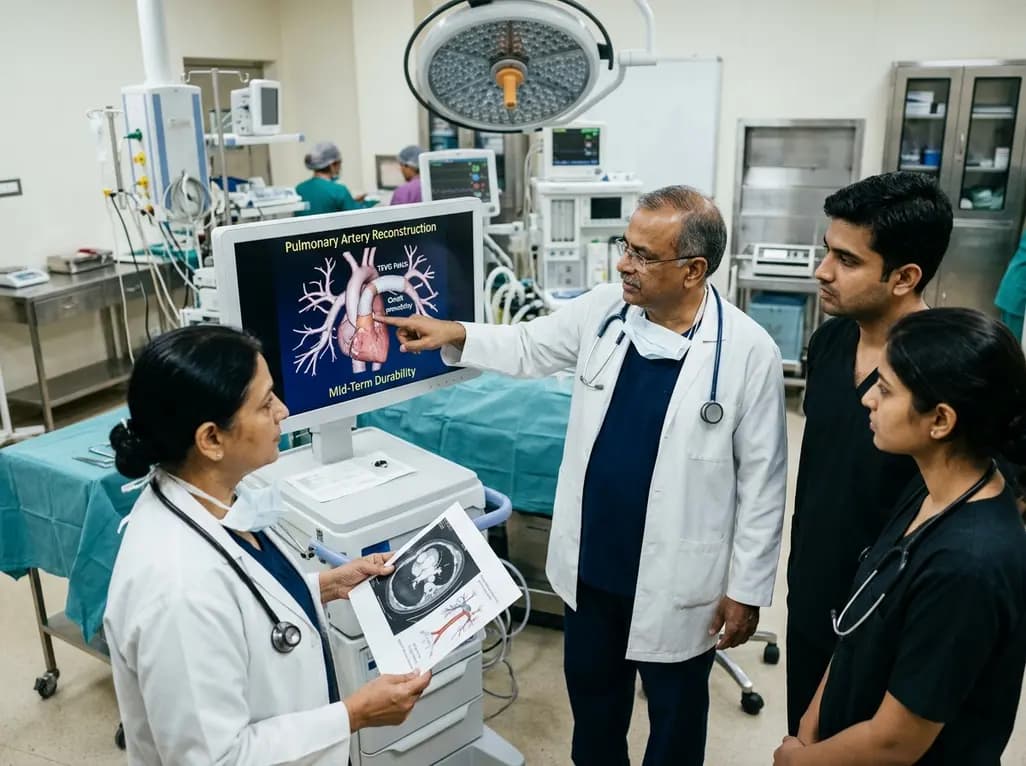
Autologous tissue-engineered vascular graft patches created via in-body tissue architecture show excellent mid-term durability and safety for pulmonary artery reconstruction in congenital heart surgery, particularly for peripheral branch augmentation.
Today

A novel cluster analysis of real-world datasets reveals four distinct CPPD disease phenotypes, validating existing EULAR categories while uncovering previously unrecognized monoarticular and axial presentations to refine patient management.
Today

Recent pharmacokinetic research demonstrates that trace dermal exposure to microgram quantities of trenbolone and metenolone produces detectable urinary metabolites for days to over a week, providing critical objective data for evaluating unintentional contamination claims in sports drug testing.
Today
