.webp&w=384&q=75)

Loading, please wait...
Loading, please wait...

Hepatocellular carcinoma (HCC) remains a significant clinical challenge worldwide. While clinicians frequently utilize sorafenib as a primary treatment, many patients develop acquired resistance. Researchers recently identified that sorafenib resistance in HCC correlates with the upregulation of specific proteins. One such protein, epidermal growth factor-containing fibulin-like extracellular matrix protein 1 (EFEMP1), appears to play a critical role in this survival mechanism. Consequently, understanding how to bypass this resistance is essential for improving patient outcomes.
A new study investigated how EFEMP1 influences the sensitivity of HCC cells to therapy. Researchers observed that EFEMP1 levels rise significantly in liver cancer cells following long-term sorafenib exposure. Specifically, this upregulation helps the cells avoid a specialized form of cell death known as ferroptosis. Moreover, the study demonstrated that EFEMP1 functions by activating the PI3K/AKT signaling pathway. This activation maintains high levels of antioxidant proteins like GPX4 and SLC7A11, which protect cancer cells from oxidative damage. Therefore, the EFEMP1-PI3K-AKT axis acts as a shield against drug-induced stress.
To address this issue, the team performed a knockdown of the EFEMP1 gene in resistant cell lines. Interestingly, silencing EFEMP1 successfully inactivated the PI3K/AKT pathway. This intervention triggered a surge in reactive oxygen species (ROS) and intracellular iron levels. Furthermore, the knockdown significantly reduced the expression of SLC7A11 and GPX4. As a result, the HCC cells became susceptible to ferroptosis once again. These findings suggest that targeting EFEMP1 could be a viable strategy to reverse sorafenib resistance in HCC and enhance the efficacy of existing treatments.
In summary, the study highlights EFEMP1 as a key mediator of drug evasion in liver cancer. By promoting ferroptosis and inhibiting survival pathways, EFEMP1 knockdown offers a promising therapeutic avenue. Future research should focus on developing clinical inhibitors that can replicate these results in human patients. Finally, this discovery provides a deeper understanding of the molecular landscape of advanced hepatocellular carcinoma.
EFEMP1 is an extracellular matrix protein that becomes upregulated in resistant HCC cells. It activates the PI3K/AKT pathway to inhibit ferroptosis, allowing cancer cells to survive drug treatment.
Ferroptosis is an iron-dependent form of regulated cell death. By inducing ferroptosis through the knockdown of EFEMP1, researchers can bypass the survival mechanisms of resistant cells and make them sensitive to sorafenib again.
Inactivating this pathway leads to a decrease in antioxidant defenses like GPX4. Consequently, the cells accumulate lipid peroxides and iron, which eventually triggers ferroptotic cell death.
Disclaimer: This content is for informational and educational purposes only and does not constitute medical advice. Always seek the advice of a physician or other qualified health provider with any questions you may have regarding a medical condition. Refer to the latest local and national guidelines for clinical practice.
References
Zhou T et al. Knockdown of EFEMP1 Promotes Ferroptosis by Inactivating PI3K/AKT to overcome the Resistance of Hepatocellular Carcinoma Cells to Sorafenib. J Gastrointestin Liver Dis. 2026 Mar 27. doi: 10.15403/jgld-6499. PMID: 41894723.
Liu J et al. Roles and Mechanisms of Ferroptosis in Sorafenib Resistance for Hepatocellular Carcinoma. J Hepatocell Carcinoma. 2024;11:2493-2504. doi: 10.2147/JHC.S500084.
Chen KF et al. Activation of phosphatidylinositol 3-kinase/Akt signaling pathway mediates acquired resistance to sorafenib in hepatocellular carcinoma cells. J Pharmacol Exp Ther. 2011;337(1):155-61. doi: 10.1124/jpet.110.175786.
"
Read summarized clinical updates, watch expert medical content, and earn CME certifications right from your smartphone.
Open your smartphone camera to scan and install.





New study shows silencing EFEMP1 promotes ferroptosis and inactivates PI3K/AKT to resensitize hepatocellular carcinoma cells to sorafenib....
6 months ago
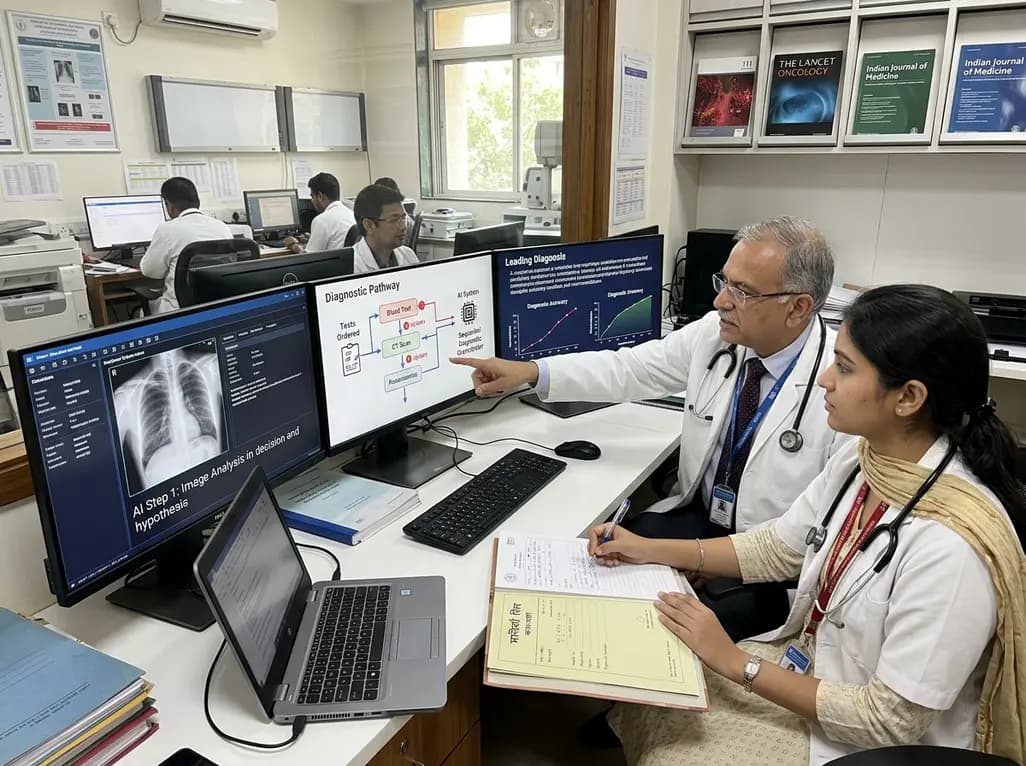
A breakthrough peer-reviewed study demonstrates that a sequential AI diagnosis system can mirror real-world clinical reasoning. By ordering stepwise tests and updating hypotheses dynamically, this multi-agent orchestrator achieved superior diagnostic accuracy while reducing investigative costs.
Today

A prenatal case highlights severe glutaric acidemia type II presenting as bilateral hyperechoic cystic kidneys at 18 weeks. Whole-exome sequencing revealed a novel homozygous ETFDH frameshift variant, demonstrating the power of rapid genetic testing in fetal renal anomalies.
Today

Review how tailored exercise programs benefit frail older patients with heart failure. Explore pathophysiological mechanisms, individualized training prescriptions, and strategies to overcome adherence barriers in clinical practice.
Yesterday

This comparative study evaluates posterior labral tears with and without glenohumeral instability, highlighting distinct demographic patterns, MRI underestimation in stable shoulders, and successful arthroscopic repair outcomes.
Yesterday

A clinical study demonstrates that early intervention with tocilizumab, either as monotherapy or bridged with corticosteroids, achieves significant proptosis reduction and resolves active inflammation in treatment-naive thyroid eye disease.
Yesterday
