.webp&w=384&q=75)

Loading, please wait...
Loading, please wait...
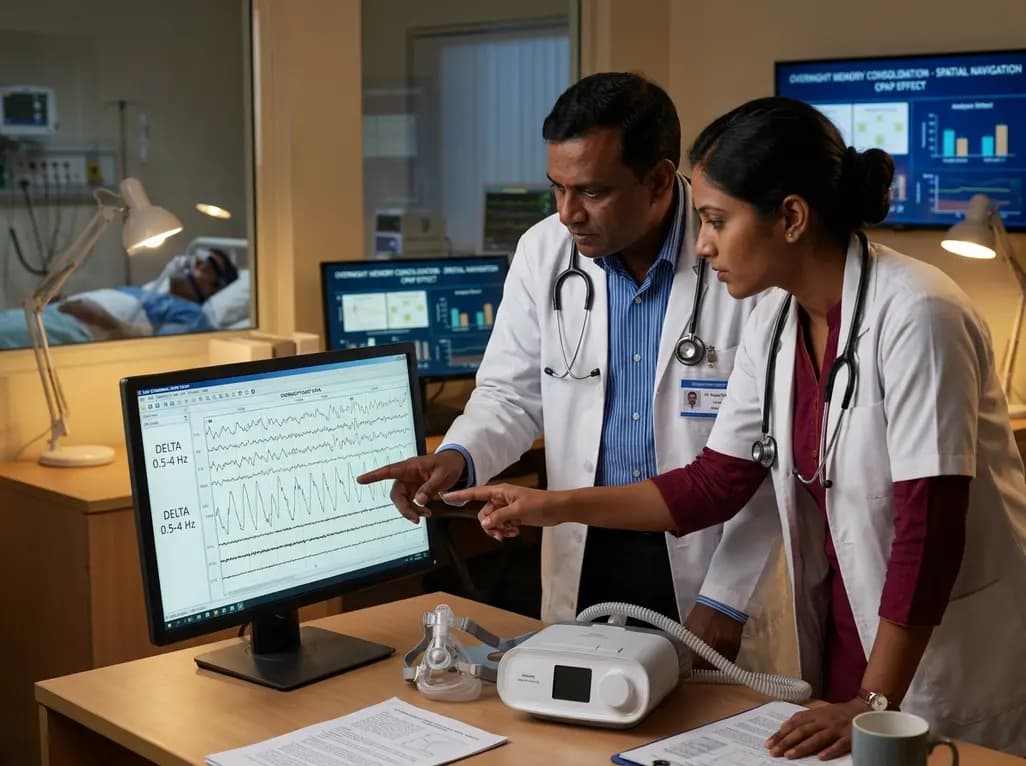
Obstructive sleep apnea disrupts nocturnal rest through repetitive upper airway collapse, which precipitates sleep fragmentation and intermittent hypoxia. Emerging neurophysiological evidence reveals that specific electrophysiological microstructures govern restorative sleep and cognitive consolidation. In particular, cortical EEG slow oscillations coordinate neural replay between the hippocampus and neocortex during non-rapid eye movement slumber. Clinicians frequently observe subtle executive dysfunction and memory lapses in patients suffering from untreated sleep-disordered breathing. However, the exact neurobiological mechanisms that link fragmented sleep architecture to daytime navigational deficits have remained elusive. A seminal clinical trial led by Anna E. Mullins and colleagues evaluated how targeted continuous positive airway pressure withdrawal during deep sleep alters electrophysiological patterns. Their findings shed crucial light on the precise neurodynamic thresholds required to preserve spatial memory in patients with obstructive sleep apnea.
Non-rapid eye movement stage 3 sleep, also known as slow wave sleep, provides a restorative environment for memory consolidation. During this phase, coordinated rhythmic oscillations orchestrate synaptic plasticity across diverse cerebral regions. Specifically, cortical EEG slow oscillations operating below one Hertz represent synchronized fluctuations of neuronal membrane potentials between hyperpolarized down-states and depolarized up-states. Furthermore, these slow rhythms couple with thalamocortical sleep spindles and high-frequency hippocampal sharp-wave ripples. This precise temporal coordination facilitates the systemic transfer of newly encoded information from temporary hippocampal stores to durable neocortical networks. Consequently, individuals consolidate declarative information and complex spatial representations overnight. Spatial navigational memory, which humans utilize to construct internal cognitive maps, heavily depends on intact hippocampal-neocortical communication. However, when obstructive sleep apnea repeatedly interrupts this process, sleep architecture becomes disorganized. Sleep fragmentation and episodic hypoxemia disrupt the synchronized cortical firing patterns necessary for neural replay. Therefore, determining whether acute respiratory interruptions degrade slow rhythms or memory consolidation is essential for optimizing long-term neurocognitive care.
To isolate the individual impacts of sleep disruption, researchers implemented an innovative physiological protocol. Specifically, Mullins and colleagues recruited thirty-three adult participants with moderate-to-severe obstructive sleep apnea who maintained regular therapeutic compliance with continuous positive airway pressure. The investigative team evaluated spatial navigation before and after sleep using a validated three-dimensional virtual maze task. During overnight polysomnography, the investigators carefully controlled respiratory support in real time across three separate experimental conditions. First, participants experienced undisturbed slow wave sleep while receiving optimal continuous positive airway pressure. Second, the team withdrew airway pressure exclusively during slow wave sleep, thereby triggering acute sleep fragmentation alongside intermittent hypoxia. Third, participants experienced slow wave sleep pressure withdrawal with supplemental oxygen, which preserved airway collapse while mitigating arterial desaturation. Importantly, researchers restored full airway pressure whenever patients transitioned out of slow wave sleep into lighter sleep or rapid eye movement stages. As a result, this refined experimental paradigm isolated stage-specific respiratory events without exposing the brain to whole-night systemic stress.
The clinical findings revealed surprising resilience within the sleeping brain during targeted disruptions. Remarkably, transient continuous positive airway pressure withdrawal during slow wave sleep did not significantly decrease EEG slow oscillations. Furthermore, participants maintained their spatial navigational memory performance across all three experimental nights. Even though airway pressure cessation reduced the total percentage and duration of deep sleep bouts, the core oscillatory amplitude remained intact. Moreover, supplemental oxygen effectively eliminated episodic hypoxia but produced no measurable difference in spatial maze performance compared to hypoxic sleep fragmentation. Consequently, the researchers determined that acute, stage-restricted sleep fragmentation does not immediately degrade spatial navigational memory consolidation. However, quantitative spectral analysis revealed a vital electrophysiological correlation during stable airway therapy. Specifically, greater regional slow oscillation activity strongly correlated with significant improvements in overnight maze completion times. In contrast, classic delta power ranging from one to four Hertz exhibited no such correlation with memory gains. Thus, highly organized slow oscillations represent the true functional drivers of overnight spatial information processing.
These physiological discoveries offer meaningful practical lessons for physicians managing obstructive sleep apnea in daily practice. Often, clinicians encounter patients who report persistent cognitive fog despite modest usage of positive airway pressure. The current trial demonstrates that spatial navigation relies heavily on high-amplitude slow rhythms rather than raw sleep duration alone. Therefore, treating sleep apnea requires clinicians to target electrophysiological sleep quality alongside standard clinical metrics. While intermittent respiratory events during deep sleep cause brief arousals, healthy brain networks may compensate temporarily if slow rhythms persist. Nevertheless, chronic untreated sleep fragmentation inevitably erodes slow wave microarchitecture over months and years. In addition, persistent sleep fragmentation elevates neuroinflammatory biomarkers and impairs glymphatic waste clearance from cerebral parenchyma. Consequently, sustained therapeutic adherence remains imperative to shield neural structures from cumulative oxidative injury. Physicians must emphasize nightly compliance to prevent long-term cognitive deterioration and maintain robust synaptic consolidation.
Optimizing neurocognitive outcomes requires a comprehensive clinical approach that extends beyond simple device prescriptions. First, physicians must ensure that continuous positive airway pressure protocols deliver adequate pressure titration throughout the entire night. Suboptimal pressure settings frequently cause subtle flow limitations that degrade slow wave sleep without triggering overt apneas. Second, clinicians should monitor objective mask adherence, encouraging patients to wear their devices for the full duration of rest. Furthermore, integrating routine cognitive evaluations into follow-up visits helps clinicians detect early spatial navigational memory decline. In older patients, sleep fragmentation accelerates neurodegenerative cascades, making aggressive intervention even more vital. Additionally, physicians should address concurrent sleep disturbances such as insomnia or restless legs syndrome, which further disrupt deep slow oscillations. Clinicians may also consider emerging digital tools, including acoustic closed-loop stimulation, to enhance cortical slow rhythms non-invasively. By focusing on comprehensive sleep stabilization, healthcare teams can effectively safeguard patient memory and overall quality of life.
Future scientific investigations must explore how chronic sleep disorders alter cortical microarchitecture over extended timeframes. Although acute slow wave disruption does not immediately impair navigation, persistent sleep-disordered breathing damages vulnerable hippocampi. Moreover, researchers should examine the distinct impact of rapid eye movement sleep fragmentation on emotional and procedural memory domains. High-density electroencephalography will also provide deeper insights into regional cortical topographic variations during CPAP titration. Furthermore, investigators should assess whether targeted neurostimulation techniques can rescue suppressed slow oscillations in severe apnea cases. As sleep medicine moves toward personalized care, electrophysiological biomarkers will play an indispensable role in therapeutic decision-making. Physicians will increasingly tailor treatment parameters to optimize individual brain wave signatures and preserve long-term cognitive longevity. Consequently, bridging electrophysiology with routine clinical management will transform patient care paradigms worldwide.
EEG slow oscillations facilitate memory consolidation by synchronizing neuronal communication between the hippocampus and neocortex during non-REM sleep. This coordinated rhythmic activity drives the reactivation and transfer of newly encoded spatial information into long-term cortical networks, allowing individuals to retain and navigate internal spatial maps effectively upon awakening.
Acute CPAP withdrawal isolated strictly to slow wave sleep reduced deep sleep duration but failed to diminish the amplitude of regional slow oscillations. Consequently, neural replay mechanisms remained functionally sufficient during the brief experimental period, preserving spatial navigational maze performance despite transient respiratory events and fragmented sleep bouts.
Chronic obstructive sleep apnea exerts cumulative neurotoxic effects through repeated nocturnal oxygen desaturations, vascular endothelial injury, neuroinflammation, and prolonged sleep fragmentation. Over extended periods, these pathological insults erode slow wave architecture, impair glymphatic metabolic waste clearance, and damage hippocampal integrity, leading to significant deficits in memory consolidation and daytime executive functioning.
Disclaimer: This content is for informational and educational purposes only and should not be considered medical advice. Always consult a qualified healthcare professional regarding any medical condition or treatment decisions. Refer to the latest local and national guidelines for clinical practice.
References

Read summarized clinical updates, watch expert medical content, and earn CME certifications right from your smartphone.
Open your smartphone camera to scan and install.





A study on CPAP-treated obstructive sleep apnea reveals that regional EEG slow oscillations, rather than total slow wave sleep duration, drive overnight spatial navigational memory consolidation, highlighting the neurocognitive value of stable electrophysiological sleep.
4 weeks back

A laboratory technician's death in Siberia from an unverified respiratory pathogen has renewed global vigilance for pneumonic plague. Clinicians must recognize early presentations of Yersinia pestis, enforce immediate respiratory isolation, and start early bactericidal therapy to prevent severe secondary spread.
Today

A retrospective study of 824 patients undergoing over 2,200 intradetrusor onabotulinumtoxinA injections identifies sex- and etiology-specific predictors of 2-week post-void residual, highlighting the influence of baseline residual volumes, toxin dosage, and distinct urodynamic parameters on urinary retention risk.
Today
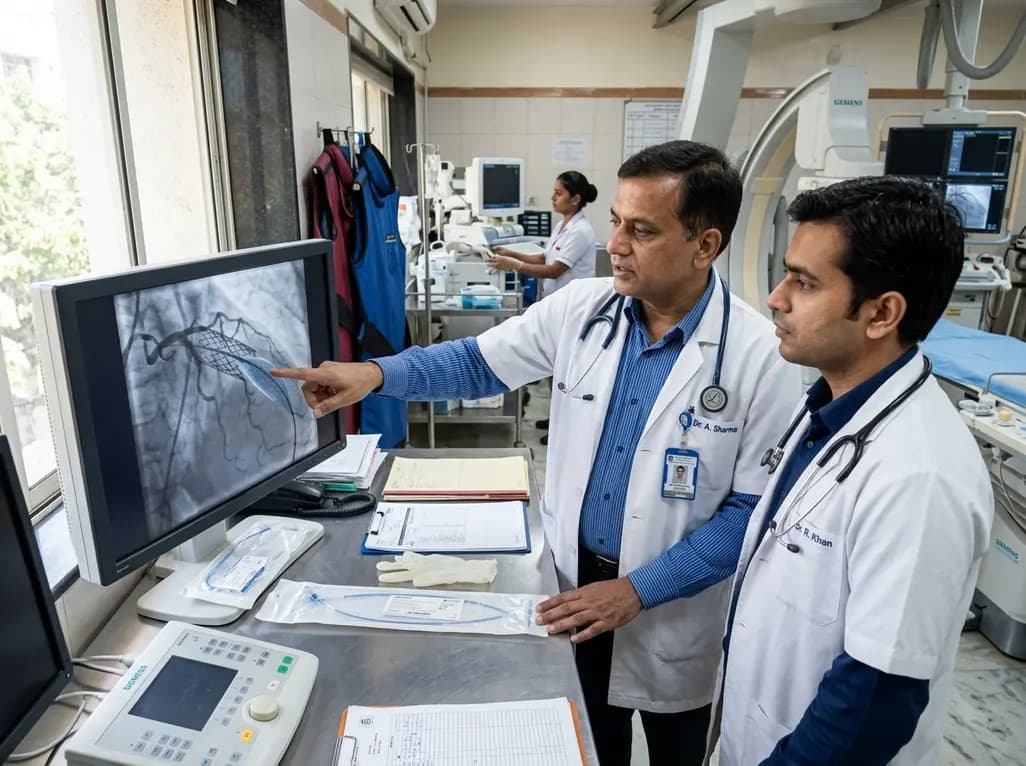
The US FDA has granted approval to the SELUTION SLR drug-eluting balloon for treating coronary in-stent restenosis. This milestone introduces a sustained-release sirolimus platform that eliminates the need for additional permanent metallic stents while maintaining robust vascular healing and luminal patency.
Today

The Thumbs-Out Classification (TOC) is a reliable screening tool for detecting thumb-in-palm deformity in children with cerebral palsy. Utilizing traffic-light tiers for radial abduction, TOC enables clinicians to monitor upper limb function and initiate timely therapeutic or surgical interventions.
Today

A comprehensive review analyzes periconceptional GLP-1 receptor agonist exposure, revealing reassuring data on congenital anomalies and adverse perinatal outcomes while emphasizing the need for cautious patient counseling.
Today
