.webp&w=384&q=75)

Loading, please wait...
Loading, please wait...
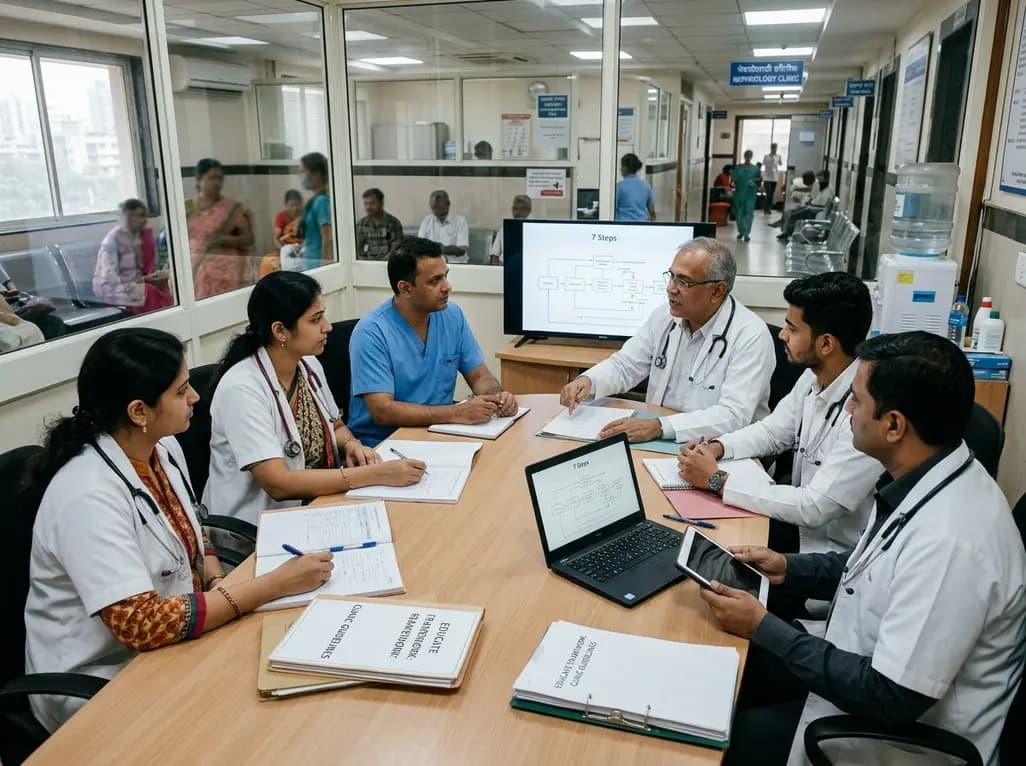
Ambulatory healthcare systems worldwide continuously seek models that streamline outpatient workflows and deliver integrated care for complex conditions. In modern healthcare delivery, multidisciplinary clinics represent a vital strategy to consolidate fragmented specialist visits into unified clinical encounters. Despite widespread clinical guideline endorsements, establishing these specialized centers often presents severe operational hurdles. Healthcare teams frequently encounter administrative friction, uncertain billing models, and scheduling dilemmas when bringing diverse specialists together under one roof. To bridge this critical implementation gap, researchers developed the EDUCATE framework as a practical, seven-step blueprint. This novel model systematically guides healthcare organizations from initial clinic conceptualization to long-term clinical sustainability, significantly improving patient outcomes, operational efficiency, and multidisciplinary collaboration across diverse ambulatory settings.
Managing chronic, multisystem diseases demands seamless communication across diverse medical disciplines. Historically, patients with complex disorders navigated fragmented healthcare journeys, booking isolated consultations with endocrinologists, geneticists, pulmonologists, and dietitians over several months. Consequently, families endured substantial logistical burdens, duplicated diagnostic testing, conflicting therapeutic recommendations, and delayed clinical interventions. Multidisciplinary clinics solve these chronic bottlenecks by synchronizing specialist appointments into cohesive, single-day outpatient encounters. Within this shared care delivery ecosystem, healthcare providers directly communicate, resolve therapeutic conflicts in real time, and co-design tailored management plans for each patient. In addition, integrated clinics foster shared clinical governance and longitudinal monitoring, which significantly minimizes preventable hospital admissions and acute exacerbations. However, clinical teams often struggle to build these integrated models without standardized operational blueprints. Traditional healthcare administration systems typically prioritize department-level productivity over collaborative consultation models. Therefore, establishing multidisciplinary care requires structured operational strategies that align clinical excellence with administrative feasibility. The newly introduced EDUCATE framework successfully addresses these long-standing structural challenges by offering clinicians a clear, step-by-step roadmap to establish, operate, and scale collaborative care delivery models efficiently.
The EDUCATE framework organizes clinic development into seven sequential, actionable phases tailored for modern ambulatory healthcare delivery. First, leaders must "Envision the MDC" by defining target patient populations, clinical scope, and measurable quality goals. Second, clinic directors "Develop the team" by recruiting dedicated physician specialists, nursing leaders, allied health experts, and administrative coordinators. Third, project champions "Undertake the business proposal" to establish financial viability, analyze billing structures, and justify space allocation. Fourth, leadership must "Consolidate support" across departmental heads, executive hospital leadership, and nursing administration to secure ongoing organizational commitment. Fifth, the operational team must "Activate operations" by establishing unified electronic medical record templates, intake workflows, and synchronized scheduling protocols. Sixth, clinic managers foster "Team-building, education, and engagement" through regular interprofessional meetings, continuous staff training, and collaborative case discussions. Finally, mature practices "Expand the mission" by integrating clinical research, fellow education, and community advocacy into daily practice. Consequently, each phase provides clinical leads with tangible milestones to navigate institutional bureaucracy effectively. By standardizing these essential preparatory and operational milestones, the EDUCATE model ensures that healthcare institutions establish stable, high-performing multidisciplinary practices that consistently deliver patient-centered care.
Designing and maintaining collaborative outpatient practices inevitably uncovers significant operational and administrative obstacles. For instance, coordinate scheduling remains a primary bottleneck when aligning calendars across multiple independent clinical departments. To resolve this friction, administrators must establish pre-blocked scheduling templates and dedicated clinic rooms where specialists rotate directly to the patient. Furthermore, billing complexities often generate institutional hesitation, particularly in fee-for-service payment environments. Clinical leaders must work closely with coding specialists to optimize shared facility billing, split-care documentation, and chronic care management coding. In addition, interprofessional communication barriers can disrupt workflow efficiency if teams lack unified charting protocols. Clinicians should implement standardized electronic medical record templates that allow simultaneous documentation and immediate shared access to specialist recommendations. Transitioning to integrated multidisciplinary clinics also demands strong administrative sponsorship to overcome interdepartmental revenue-sharing disputes. When institutions recognize that integrated ambulatory care reduces emergency visits, downstream complications, and overall hospital readmissions, executive leadership readily commits required physical and personnel resources. Thus, proactive operational planning and clear financial justification transform vulnerable clinic initiatives into resilient, sustainable clinical services.
The clinical utility of the EDUCATE framework achieved practical validation through a specialized pediatric multidisciplinary clinic established for Prader-Willi syndrome. Prader-Willi syndrome presents intricate endocrine, genetic, behavioral, nutritional, and orthopedic complexities that severely overwhelm standard single-provider outpatient clinics. By implementing the seven-step EDUCATE methodology, the clinical team successfully assembled pediatric endocrinologists, geneticists, dietitians, psychologists, and social workers into a cohesive ambulatory unit. As a result of this structured rollout, the clinic achieved significant measurable improvements in patient access metrics and reduced time-to-diagnosis delays. Furthermore, coordinated scheduling eliminated redundant hospital trips for vulnerable pediatric patients and their caregivers, noticeably enhancing overall family satisfaction. Shared provider visits allowed immediate multidisciplinary consensus regarding growth hormone therapy, dietary calorie restriction, and behavioral management strategies. Clinicians also observed enhanced therapeutic adherence because families received harmonized guidance rather than conflicting advice from disconnected appointments. This compelling real-world implementation demonstrates that the EDUCATE framework provides a dependable, scalable blueprint for managing rare, multifaceted chronic diseases across diverse pediatric and adult ambulatory healthcare settings.
Sustaining a multidisciplinary clinic requires ongoing performance evaluation, stakeholder engagement, and strategic innovation beyond the initial launch phase. First, clinic administrators must track robust clinical quality indicators, including patient-reported outcome measures, appointment wait times, and clinic show rates. Regularly presenting these data points to institutional leadership solidifies continuous institutional backing and justifies resource allocation. Moreover, fostering an inclusive team culture through structured pre-clinic huddles and post-clinic debriefs prevents provider burnout and maintains interprofessional cohesion. Teams should also actively incorporate trainee education and fellowship rotations into the clinic environment, nurturing the next generation of collaborative healthcare specialists. In addition, embracing digital health innovations, such as hybrid telehealth consultations and remote patient monitoring, broadens clinical reach to geographically underserved populations. Engaging patient advocacy organizations further strengthens referral pathways and integrates valuable patient-family feedback into clinic refinement. By maintaining operational agility and expanding academic missions, healthcare organizations ensure their multidisciplinary clinics remain clinically effective, financially viable, and adaptable to future healthcare demands.
Multidisciplinary clinics significantly enhance clinical efficiency by coordinating specialist consultations into a unified, single-day appointment. This collaborative care model streamlines communication among healthcare providers, eliminates redundant diagnostic testing, and reduces conflicting treatment plans. Consequently, patients experience shorter diagnostic delays, superior treatment adherence, and lower logistical burdens. Furthermore, healthcare institutions benefit from improved patient satisfaction, optimized outpatient capacity, and decreased hospital readmission rates.
The EDUCATE framework resolves scheduling friction by establishing standardized, pre-blocked clinic templates and dedicated shared spaces during the operational activation phase. Instead of requiring patients to navigate multiple separate rooms across departments, rotating specialists visit the patient sequentially in a single dedicated consultation room. Moreover, centralized intake coordinators manage patient triage and synchronize provider availability, ensuring balanced clinical flow and minimal waiting times for families.
Although researchers initially validated the EDUCATE framework within a pediatric rare disease clinic, healthcare organizations can readily adapt its seven core steps to adult chronic conditions. The systematic methodology effectively guides program development for adult heart failure, type 2 diabetes with multisystem complications, rheumatologic disorders, and oncology care. Applying this structured roadmap ensures strong financial proposals, robust administrative alignment, and sustainable operational workflows across any adult ambulatory healthcare setting.
Disclaimer: This content is for informational and educational purposes only. It is not intended to be a substitute for professional medical advice, diagnosis, or treatment. Refer to the latest local and national guidelines for clinical practice.
References

Read summarized clinical updates, watch expert medical content, and earn CME certifications right from your smartphone.
Open your smartphone camera to scan and install.





The EDUCATE framework offers a structured, 7-step model to build sustainable multidisciplinary clinics in ambulatory care, enhancing clinical workflows, patient access, and interdisciplinary collaboration for complex chronic and pediatric disorders.
last month

Pancreatic cancer cachexia affects over 80% of patients, driving severe muscle wasting, systemic inflammation, and treatment intolerance. This review highlights key pathophysiological drivers, exocrine insufficiency, objective CT imaging, and emerging therapies like GDF-15 inhibitors to improve clinical outcomes.
Today

A scoping review reveals how pregnancy affects phonation through laryngeal edema and reduced phonation time rather than major acoustic pitch alterations. Learn how to identify, evaluate, and manage vocal symptoms in expectant mothers.
Today

According to WHO data, average lifespan reached 73.3 years in 2023, recovering from pandemic lows. However, healthy life expectancy lags at 62.8 years due to surging noncommunicable conditions like cardiovascular disease and dementia, demanding proactive primary screening and sustained chronic care.
Today

Researchers have engineered an artificial sensory-pain integrated receptor using a multi-threshold organic synaptic transistor. The system distinguishes benign touch from noxious stimuli, enabling safer, more responsive prosthetic limbs with built-in memory and simplified hardware architecture.
Today

Medical robotics is transitioning beyond operative suites into diagnostics, cardiology, and endocrinology. Explore how innovations in tele-robotics, AI integration, and nanomedicine are overcoming geographical barriers and transforming precision healthcare delivery across India's evolving disease landscape.
Today
