

Loading, please wait...
Loading, please wait...

Severe sepsis and septic shock remain leading causes of avoidable in-hospital mortality across emerging healthcare systems. In many developing regions, delayed diagnosis and fragmented care pathways worsen patient outcomes. Consequently, hospital-wide Sepsis Code implementation has emerged as a critical operational strategy to accelerate life-saving care. Furthermore, standardizing triage protocols, diagnostic workflows, and rapid clinical responses empowers healthcare teams to curb preventable organ failure.
Sepsis represents a time-sensitive medical emergency characterized by life-threatening organ dysfunction resulting from a dysregulated host immune response to severe infection. However, international epidemiological data reveal stark disparities between high-income regions and developing healthcare environments. In resource-constrained settings across Latin America and Asia, sepsis-related hospital mortality frequently exceeds forty percent. This striking mortality gap stems largely from delayed presentation, limited intensive care bed capacity, and intermittent diagnostic capabilities. Furthermore, general medical wards often experience severe nurse-to-patient staffing imbalances that hinder routine vital sign monitoring. Consequently, occult physiological deterioration frequently goes unrecognized until patients progress to refractory septic shock. In contrast, well-resourced centers achieve superior survival curves through automated electronic alert systems and standardized resuscitation pathways. To overcome these deep systemic disparities, hospital administrators must recognize local structural vulnerabilities. In addition, clinical leaders must establish streamlined, low-cost care protocols tailored to available personnel. Ultimately, closing this global survival gap requires treating sepsis with the same operational urgency traditionally reserved for acute myocardial infarction and stroke.
Compelling clinical evidence confirms that rapid, protocol-driven resuscitation significantly curbs hospital mortality. Specifically, effective Sepsis Code implementation relies on completing evidence-based resuscitation bundles within the critical first hour of recognition. These foundational interventions mandate immediate point-of-care serum lactate testing, early blood culture collection, and prompt broad-spectrum antibiotic administration. Furthermore, clinicians must rapidly infuse crystalloid fluids for persistent hypotension or severe hyperlactatemia. When hospital teams execute these steps concurrently, the likelihood of progression to refractory organ failure drops sharply. In addition, activating a dedicated bedside rapid response team transforms sepsis management from an isolated struggle into an organized resuscitation effort. For example, experienced critical care nurses and acute care clinicians collaborate immediately at the bedside to establish vascular access and assess fluid responsiveness. Moreover, designating dedicated sepsis quality coordinators ensures sustained institutional adherence to protocol milestones. Therefore, standardized institutional order sets eliminate dangerous therapeutic delays and foster seamless communication between emergency departments and intensive care units.
Despite clear international guidelines, hospitals routinely encounter significant logistical hurdles during bedside execution. For instance, prolonged blood culture processing and delayed laboratory lactate reporting frequently obstruct time-sensitive decision-making. Consequently, bedside clinicians may miss occult tissue hypoperfusion in seemingly stable ward patients. Furthermore, acute care units often experience prolonged antibiotic delivery intervals due to complex central pharmacy dispensing routines. To bypass these operational delays, healthcare institutions should deploy pre-packaged sepsis emergency kits containing blood culture bottles, laboratory supplies, and broad-spectrum antimicrobials. In addition, acute care protocols must carefully address the escalating danger of antimicrobial resistance. Because clinicians must administer empiric antibiotics urgently, establishing structured forty-eight-hour de-escalation protocols becomes vital once microbiological results return. Similarly, clinicians must recognize that excessive fluid boluses risk volume overload in patients with underlying cardiac or renal dysfunction. Therefore, incorporating bedside ultrasound allows targeted, physiologically guided volume administration that balances adequate tissue perfusion against pulmonary complications.
Achieving sustained clinical improvement requires moving beyond isolated checklists toward a comprehensive multilevel operational strategy. First, at the micro-level, continuous staff education and bedside screening tools empower ward nurses to identify physiological decompensation promptly. For example, implementing validated screening tools like the National Early Warning Score facilitates early bedside alerts. Meanwhile, at the meso-level, hospital administrators must align clinical workflows across emergency triage, inpatient wards, intensive care units, and diagnostic laboratories. Establishing multidisciplinary oversight committees fosters shared accountability and breaks down counterproductive operational silos. Furthermore, regular clinical audits and transparent performance feedback motivate acute care staff to maintain bundle compliance. Finally, at the macro-level, regional health authorities and professional medical societies must define clear quality benchmarks and support institutional accreditation standards. Consequently, linking quality metrics to institutional recognition incentivizes hospital leadership to allocate necessary funding for diagnostic and therapeutic equipment. Ultimately, synchronizing these micro-, meso-, and macro-level initiatives creates a resilient hospital infrastructure that reliably delivers high-quality emergency critical care.
Translating evidence into daily hospital practice requires decisive administrative leadership and practical clinical workflows. First, hospital leadership must invest in reliable diagnostic tools, particularly point-of-care lactate meters and rapid blood culture systems. Without these foundational resources, clinical teams cannot satisfy time-critical resuscitation goals. Second, institutions should introduce streamlined paper or electronic order sets that guide junior staff through evidence-based resuscitation algorithms. Moreover, conducting regular interprofessional simulation drills trains doctors, nurses, and pharmacists to function as high-performing resuscitation teams. As a result, acute care personnel communicate more efficiently during high-stress clinical emergencies. In addition, hospital administrators must pair rapid antibiotic delivery pathways with robust antimicrobial stewardship programs to optimize patient outcomes. Furthermore, clinical quality teams should monitor transparent performance dashboards displaying bundle compliance rates, ICU lengths of stay, and overall sepsis mortality. Therefore, continuous performance tracking drives accountability, sustains clinical enthusiasm, and ensures long-term survival gains across all acute care environments.
Activating a Sepsis Code accelerates the delivery of time-critical interventions by mobilizing a designated multidisciplinary team directly to the patient bedside. Consequently, this rapid alert system drastically shortens door-to-antibiotic intervals, ensures prompt blood culture collection, and facilitates early intravenous fluid resuscitation. Furthermore, protocolized workflows eliminate operational bottlenecks between triage, central laboratories, and intensive care units. As a result, early resuscitation prevents irreversible tissue hypoperfusion, progressive multiorgan failure, and avoidable in-hospital mortality.
Clinicians must prioritize immediate point-of-care serum lactate measurement and obtain at least two sets of blood cultures before administering broad-spectrum antimicrobials. Furthermore, measuring baseline lactate rapidly identifies occult cellular hypoxia, guiding appropriate crystalloid fluid administration and vasopressor initiation. Meanwhile, securing sterile pre-antibiotic microbiological cultures ensures accurate pathogen identification and enables targeted antimicrobial de-escalation. Therefore, completing these essential diagnostic milestones within the first hour directly enhances therapeutic precision and supports hospital-wide antimicrobial stewardship.
Resource-constrained facilities can successfully establish sepsis protocols by leveraging low-cost paper order sets, standardized nursing triage checklists, and bedside physiological scoring tools. For example, utilizing the quick SOFA score or National Early Warning Score enables front-line nurses to trigger bedside reviews without complex software. In addition, pre-assembled sepsis supply kits and designated rapid response personnel streamline clinical delivery. Consequently, structured interprofessional collaboration and sustained staff education achieve excellent protocol compliance without expensive technology.
Disclaimer: This content is for informational and educational purposes only. It is not intended to substitute for professional medical advice, diagnosis, or treatment. Always seek the advice of your physician or other qualified health provider with any questions you may have regarding a medical condition or clinical protocols. Refer to the latest local and national guidelines for clinical practice.
References

Read summarized clinical updates, watch expert medical content, and earn CME certifications right from your smartphone.
Open your smartphone camera to scan and install.





A comprehensive review highlights how systematic Sepsis Code implementation, multidisciplinary response teams, and standardized care bundles reduce mortality in emerging healthcare systems, offering practical lessons for resource-constrained clinical settings.
Today

Ascertainment bias in cancer case-control studies inflates odds ratios and penetrance estimates when cases are drawn from high-risk clinics. A landmark modeling study demonstrates substantial bias ranging up to 23.72, highlighting the critical need for ascertainment adjustment in genetic risk counseling.
Today
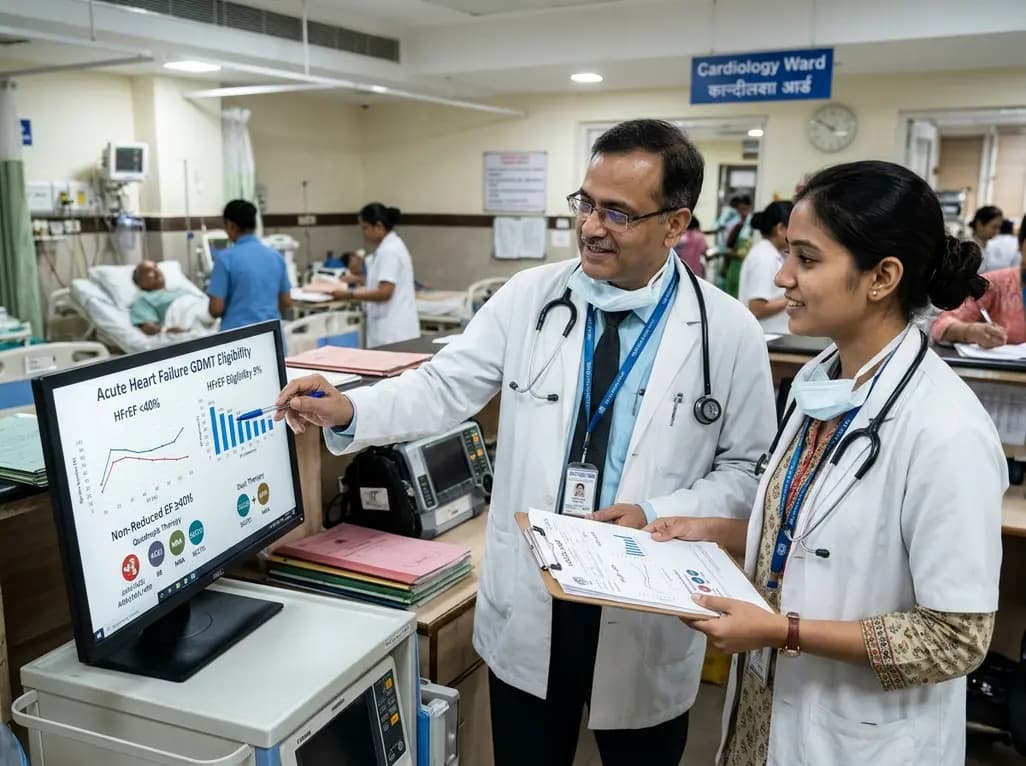
The VOCAL-AHF study reveals that most acute heart failure patients across reduced and non-reduced ejection fraction categories are eligible for in-hospital GDMT initiation. Notably, nearly two-thirds of HFrEF patients qualify for quadruple therapy, while non-reduced EF patients show high eligibility for dual therapy.
Today
A comprehensive scoping review synthesizes conservative and postsurgical carpal instability rehabilitation strategies, highlighting immobilization, targeted muscle recruitment, and proprioception to restore wrist stability.
Today

A novel fluorine-functionalized near-infrared copper fluorescent probe selectively illuminates lung tissue, revealing critical links between hyperglycemia, ER stress, and pulmonary malignancy for improved early diagnosis.
Today
