.webp&w=384&q=75)

Loading, please wait...
Loading, please wait...

Early prosthetic valve endocarditis is a devastating and life-threatening complication that occurs within the first year of heart valve surgery. Specifically, prosthetic valve endocarditis complications can present in deceptive ways, sometimes mimicking acute coronary syndromes. While systemic embolization is a known risk of infective endocarditis, coronary artery occlusion remains exceptionally rare and poses significant diagnostic challenges for the clinical team.
A recent case involving a 73-year-old man highlights these complexities. One month after a successful bioprosthetic aortic valve replacement, the patient developed exertional dyspnea and intermittent chest pain. His condition rapidly progressed to cardiogenic shock and severe bradycardia. Emergent coronary angiography revealed an acute occlusion of the right coronary artery. This presentation initially led clinicians to treat the event as a standard thrombotic occlusion rather than an infectious complication.
During the intervention, intravascular ultrasound and computed tomography identified a low-echoic lesion at the coronary ostium. Although doctors successfully revascularized the artery, the patient's circulatory instability persisted. This lack of improvement prompted further investigation. Subsequent echocardiography revealed prosthetic valve dehiscence and a large annular abscess, which confirmed early prosthetic valve endocarditis. Notably, the coronary "thrombus" was likely an infected vegetation or a consequence of the adjacent abscess.
Consequently, the patient underwent emergent surgery including aortic root replacement and annular reconstruction. Despite intensive postoperative care and extracorporeal membrane oxygenation support, the patient eventually succumbed to non-occlusive mesenteric ischemia. This outcome underscores the high mortality rate associated with early postoperative endocarditis, which often exceeds 40% in complicated cases.
This case demonstrates that coronary imaging alone frequently fails to differentiate infected vegetations from simple thrombi. Therefore, clinicians must maintain a high index of suspicion for infection in any patient with recent valve surgery presenting with new cardiac symptoms. Early, valve-focused echocardiographic evaluation is essential. Furthermore, a multidisciplinary "Endocarditis Team" approach is critical for optimizing the timing of surgical intervention and improving patient survival.
While micro-emboli are found in many patients at autopsy, clinically significant coronary embolization causing myocardial infarction is rare, occurring in less than 1% of cases. It is most commonly associated with aortic valve vegetations.
Risk factors include male sex, advanced age, diabetes, and intraoperative contamination. Staphylococcus aureus and coagulase-negative staphylococci are the most common pathogens involved in early-onset cases.
Echocardiography, particularly the transesophageal approach, can visualize paravalvular complications like abscesses, dehiscence, and mobile vegetations that coronary angiography or intravascular ultrasound might miss or misinterpret as simple thrombi.
Disclaimer: This content is for informational and educational purposes only and does not constitute medical advice. It is not intended to be a substitute for professional medical advice, diagnosis, or treatment. Always seek the advice of your physician or other qualified health provider with any questions you may have regarding a medical condition. Refer to the latest local and national guidelines for clinical practice.
References
Yokawa K et al. Early prosthetic valve endocarditis presenting as acute right coronary artery occlusion 1 month after aortic valve replacement: a case report. Gen Thorac Cardiovasc Surg Cases. 2026 May 07. doi: 10.1186/s44215-026-00257-2. PMID: 42098887.
StatPearls. Prosthetic Valve Endocarditis. NCBI Bookshelf. Updated December 2022.
2023 ESC Guidelines for the management of endocarditis. European Heart Journal. 2023.
"
Read summarized clinical updates, watch expert medical content, and earn CME certifications right from your smartphone.
Open your smartphone camera to scan and install.





A case report of early prosthetic valve endocarditis presenting as acute right coronary artery occlusion one month after aortic valve replacement surgery....
5 months ago

Review how tailored exercise programs benefit frail older patients with heart failure. Explore pathophysiological mechanisms, individualized training prescriptions, and strategies to overcome adherence barriers in clinical practice.
Today

Leucine Rich Bio has introduced South Asia's first comprehensive vaginal microbiome test, BugSpeaks. By profiling microbial dysbiosis, pathogens, and antimicrobial resistance, this next-generation diagnostic platform provides clinicians with deeper insights into recurrent infections, fertility, and reproductive health.
Today
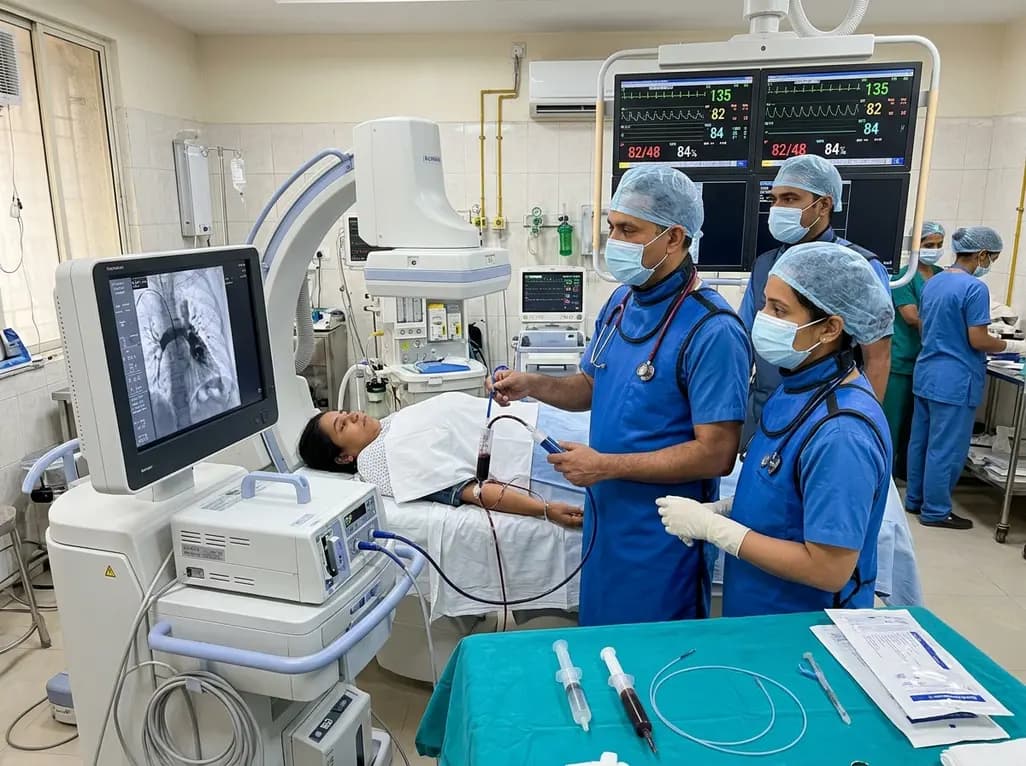
In high-risk pulmonary embolism complicated by severe anemia and active uterine bleeding, systemic thrombolysis is contraindicated. Large-bore aspiration thrombectomy provides rapid hemodynamic rescue without fibrinolysis, supported by inferior vena cava filter placement and multidisciplinary critical care.
Today

This comparative study evaluates posterior labral tears with and without glenohumeral instability, highlighting distinct demographic patterns, MRI underestimation in stable shoulders, and successful arthroscopic repair outcomes.
Today

A clinical study demonstrates that early intervention with tocilizumab, either as monotherapy or bridged with corticosteroids, achieves significant proptosis reduction and resolves active inflammation in treatment-naive thyroid eye disease.
Today
