.webp&w=384&q=75)

Loading, please wait...
Loading, please wait...
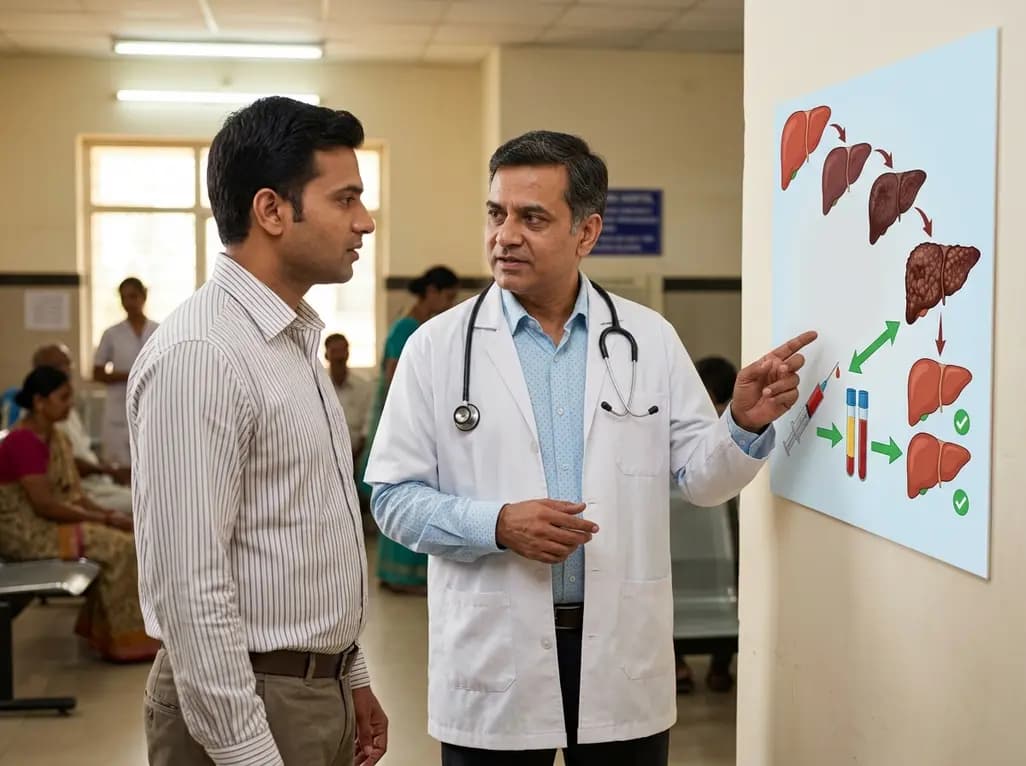
Liver diseases often progress silently without obvious clinical symptoms. Consequently, many patients remain entirely asymptomatic until irreversible liver damage occurs. For this reason, experts from AIIMS Delhi emphasize that early hepatitis screening is imperative to detect chronic infections before severe liver injury occurs. Globally, chronic viral hepatitis presents a major public health challenge. Notably, India bears nearly 12 percent of the global burden of viral hepatitis. An estimated 40 million individuals live with chronic hepatitis B infection across the country. Additionally, six to twelve million people suffer from chronic hepatitis C. Together, these two blood-borne viruses cause the vast majority of virus-related cirrhosis and hepatocellular carcinoma cases. While acute viral infections such as hepatitis A and E present with acute icteric illness, chronic hepatitis B and C persist silently for decades. Consequently, primary care physicians must maintain high clinical vigilance. Early identification remains the single most effective tool to halt progression toward end-stage liver failure. By screening asymptomatic patients, clinicians can intervene before complications like portal hypertension or hepatic encephalopathy develop. Therefore, routinely integrating liver enzyme panels and viral marker testing into primary care protocols is vital for early disease detection.
Early detection directly transforms patient prognosis and clinical management. Currently, chronic hepatitis C can be completely cured in over 95 percent of patients using a simple twelve-week regimen of direct-acting antivirals. Similarly, chronic hepatitis B can be effectively suppressed using long-term oral nucleos(t)ide analogues. These oral medications prevent disease progression, lower cirrhosis risk, and reduce hepatocellular carcinoma incidence. However, treatment efficacy depends heavily on timely diagnosis before severe fibrosis occurs. Delayed diagnosis often leads to presentation with jaundice, ascites, or variceal bleeding, making medical management far more challenging. Consequently, AIIMS specialists recommend targeted screening for all high-risk populations. Priority groups include pregnant women, healthcare personnel, recipients of unscreened blood products, and individuals undergoing chronic hemodialysis. Furthermore, people who inject drugs, individuals with multiple sexual partners, and household contacts of hepatitis B patients require mandatory screening. Implementing routine screening across these vulnerable cohorts can prevent thousands of premature deaths annually across India. In addition, universal antenatal screening enables timely administration of immunoprophylaxis to newborns. Consequently, mother-to-child transmission rates decrease significantly, protecting future generations from lifelong chronic infection.
In addition to viral etiologies, non-viral chronic liver diseases are increasing rapidly across India. Specifically, metabolic dysfunction-associated steatotic liver disease, previously termed non-alcoholic fatty liver disease, has emerged as a major public health concern. Recent epidemiological data indicates that nearly 38 percent of Indian adults suffer from fatty liver disease. Alarmingly, the condition also affects approximately 35 percent of children. This rapid surge is primarily driven by sedentary lifestyles, high consumption of ultra-processed foods, rising childhood obesity, and type 2 diabetes mellitus. AIIMS clinicians note that metabolic liver injury acts synergistically with other etiologies to accelerate hepatic fibrosis. Currently, alcohol consumption, viral hepatitis, and metabolic dysfunction account for 43 percent, 18 percent, and 14 percent of liver cirrhosis cases in India, respectively. Furthermore, alcohol-related liver damage and metabolic dysfunction are showing steep upward trends. Therefore, comprehensive hepatic evaluation must address metabolic risk factors alongside viral screening. Clinicians should encourage lifestyle modifications, weight management, balanced nutrition, and structured physical activity to mitigate liver disease progression. Moreover, routine ultrasonography and non-invasive fibrosis assessment should be integrated into routine clinical monitoring for diabetic and obese patients.
Enteric viral hepatitis remains another critical component of India's hepatology burden. Hepatitis A virus and hepatitis E virus are transmitted primarily through the fecal-oral route via contaminated food and drinking water. Although these infections typically manifest as acute self-limiting illnesses, they can cause severe complications. According to data from AIIMS Delhi, hepatitis A and E together cause nearly 30 percent of acute liver failure cases in India. Acute liver failure is a medical emergency associated with short-term mortality rates exceeding 50 percent. Pregnant women infected with hepatitis E face an exceptionally high risk of fulminant hepatic failure and obstetric complications. Because specific antiviral therapies are lacking for acute enterically transmitted hepatitis, management relies primarily on supportive care and monitoring. Therefore, preventive public health measures are paramount. Ensuring access to clean drinking water, improving municipal sanitation, enforcing food hygiene standards, and promoting proper handwashing can prevent a massive proportion of these acute infections. Additionally, hepatitis A vaccination should be considered for non-immune individuals at risk. Furthermore, early recognition of acute liver injury allows timely referral to specialized tertiary centers equipped for intensive liver care and liver transplantation.
To combat the growing liver disease crisis, institutional framework expansion is essential. The Government of India established the National Viral Hepatitis Control Program to provide free screening, laboratory diagnostics, and antiviral medications across public healthcare facilities. A cornerstone of prevention is the Universal Immunization Program, which mandates a hepatitis B birth dose vaccine within 24 hours of delivery. This birth dose, followed by routine childhood doses, provides robust long-term immunity against viral transmission. AIIMS experts emphasize that bridging the gap between screening and treatment requires breaking down social stigma, clinical inertia, and access barriers. Healthcare providers should actively engage in opportunistic screening during routine patient visits. Furthermore, clinicians must educate patients regarding liver protection strategies. These measures include avoiding alcohol, maintaining optimal metabolic health, refraining from self-medication with hepatotoxic drugs, and receiving timely diagnostic testing. By combining nationwide public health programs with proactive clinical practice, India can make substantial progress toward eliminating viral hepatitis by 2030. Additionally, strengthening local health infrastructure and training primary healthcare workers ensures seamless patient linkage to specialized care, thereby improving overall health outcomes.
Q1: Which high-risk population groups in India should undergo routine early hepatitis screening?
Routine screening is strongly recommended for healthcare workers, pregnant women, individuals receiving frequent blood transfusions, and patients on chronic hemodialysis. Additionally, injectable drug users, persons with multiple sexual partners, and household contacts of known hepatitis B or C patients should be screened. Opportunistic screening in primary care helps detect silent infections early, preventing severe complications like cirrhosis and hepatocellular carcinoma.
Q2: How does the clinical management of Hepatitis B differ from Hepatitis C?
Hepatitis C is curable in over 95 percent of cases using a twelve-week course of oral direct-acting antiviral medications. In contrast, Hepatitis B treatment focuses on long-term viral suppression using nucleos(t)ide analogues such as tenofovir or entecavir. While Hepatitis B is not typically cured, effective viral suppression prevents cirrhosis progression and reduces liver cancer risk significantly.
Q3: What role does metabolic dysfunction play in accelerating chronic liver disease in India?
Metabolic dysfunction-associated steatotic liver disease, driven by obesity, type 2 diabetes, and sedentary habits, affects approximately 38 percent of Indian adults and 35 percent of children. Metabolic liver injury acts synergistically with viral hepatitis and alcohol consumption, accelerating hepatic fibrosis. Managing weight, adopting balanced nutrition, and controlling blood glucose are essential strategies to prevent disease progression.
Disclaimer: This content is for informational and educational purposes only. It does not constitute medical advice or replace professional judgment. Refer to the latest local and national guidelines for clinical practice.
References

Read summarized clinical updates, watch expert medical content, and earn CME certifications right from your smartphone.
Open your smartphone camera to scan and install.





AIIMS experts highlight that early hepatitis screening is vital to curb India's heavy burden of chronic viral liver disease. With chronic infections progressing silently, timely testing, NVHCP initiatives, birth dose vaccination, and addressing metabolic risk factors can prevent severe cirrhosis and liver cancer.
2 months ago

Discover the crucial role of glymphatic dysfunction in stroke, where perivascular clearance failure and neuroinflammation exacerbate cerebral edema and post-stroke brain injury.
Today

A prenatal case highlights severe glutaric acidemia type II presenting as bilateral hyperechoic cystic kidneys at 18 weeks. Whole-exome sequencing revealed a novel homozygous ETFDH frameshift variant, demonstrating the power of rapid genetic testing in fetal renal anomalies.
Today

Review how tailored exercise programs benefit frail older patients with heart failure. Explore pathophysiological mechanisms, individualized training prescriptions, and strategies to overcome adherence barriers in clinical practice.
Yesterday

This comparative study evaluates posterior labral tears with and without glenohumeral instability, highlighting distinct demographic patterns, MRI underestimation in stable shoulders, and successful arthroscopic repair outcomes.
Yesterday

A clinical study demonstrates that early intervention with tocilizumab, either as monotherapy or bridged with corticosteroids, achieves significant proptosis reduction and resolves active inflammation in treatment-naive thyroid eye disease.
Yesterday
