.webp&w=384&q=75)

Loading, please wait...
Loading, please wait...
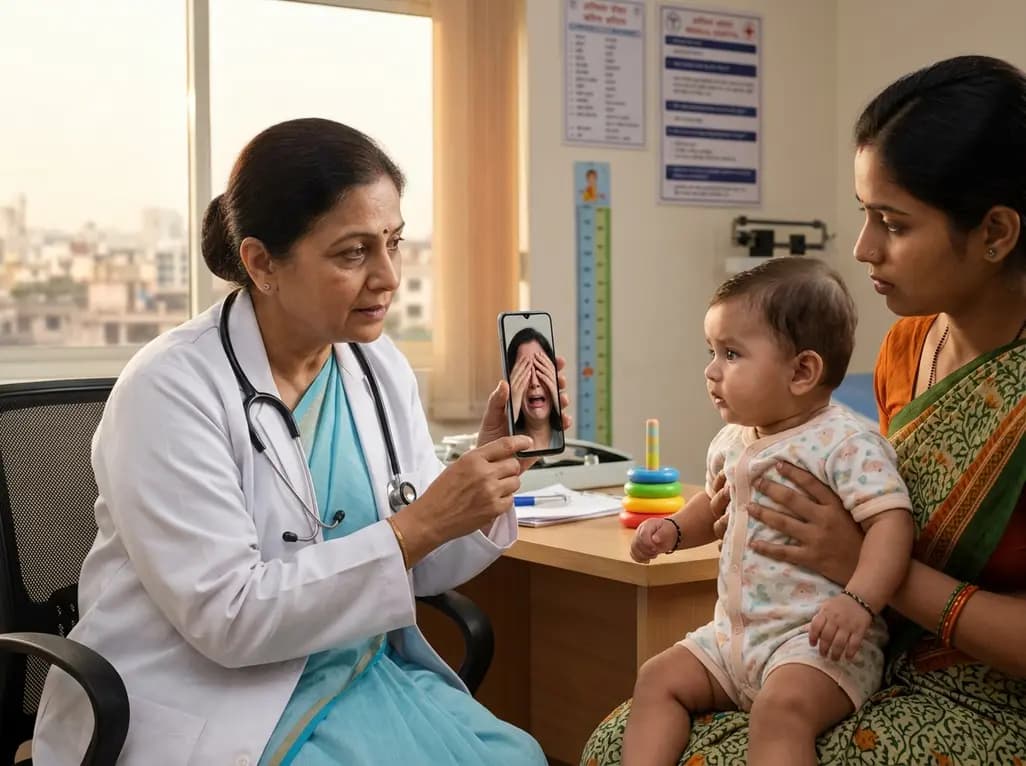
Identifying early autism markers has become a paramount goal for pediatricians and developmental specialists worldwide. Historically, clinicians diagnosed autism spectrum disorder (ASD) based on behaviors emerging in the second or third year of life. However, recent research indicates that the foundations of social communication begin much earlier. Specifically, the development of empathy represents a vital milestone in neurotypical growth. A landmark study by Paz Y and colleagues has now extended this investigation into the first year of life. This research suggests that subtle differences in how infants respond to the emotions of others can serve as significant predictors. Consequently, understanding these early indicators allows for a more proactive approach to developmental monitoring. By focusing on the first twelve months, researchers are uncovering a window of opportunity for early identification that was previously overlooked. Furthermore, these findings emphasize that ASD is not a sudden onset condition but rather a developmental trajectory that manifests through early socio-emotional shifts. Therefore, clinicians must look beyond traditional milestones to observe the nuanced emotional exchanges between infants and their caregivers.
To pinpoint these early autism markers, researchers utilized a rigorous prospective longitudinal design. The study followed 60 infants, a cohort that included 39 children at high genetic risk for ASD. These high-risk infants were siblings of children already diagnosed with the condition. Notably, researchers compared this group to a matching control group to ensure statistical validity. The team assessed empathic responses at three critical time points: 6, 9, and 12 months of age. During these sessions, infants encountered various stimuli designed to elicit emotional reactions. For instance, the mother or an experimenter would simulate feelings of distress or happiness. Additionally, the infants viewed videos of other babies crying or laughing. This multifaceted approach allowed researchers to distinguish between responses to live social interactions and responses to recorded media. As a result, the study provided a comprehensive view of how infants process the emotional states of those around them. Following these early assessments, clinicians determined the final diagnoses when the children reached between 18 and 36 months. This longitudinal tracking is essential for validating the predictive power of early behavioral observations.
The core findings of the research highlight a fascinating specificity in early autism markers. Specifically, infants who later received an ASD diagnosis exhibited a significantly reduced empathic response toward a person simulating distress. This reduction was evident as early as the first year of life. Interestingly, this deficit was specific to live interactions rather than video stimuli. When infants viewed a video of a crying peer, the differences between the groups were less pronounced. Consequently, this suggests that the social-contingent nature of a live interaction is what triggers the specific empathic challenge in infants at risk for ASD. Moreover, the study found that the infants did not show similar deficits when responding to others' joy. Whether in live simulations or video clips, the response to happiness did not reliably differentiate the groups. This finding is particularly important because it clarifies that the issue is not a global inability to perceive emotion. Instead, the challenge lies specifically in the processing of and responding to negative emotional states in a social context. Therefore, early screening should focus on responses to distress as a more sensitive indicator than responses to positive emotions.
One of the most revealing aspects of the study involved the comparison between different types of emotional stimuli. Researchers observed that the live simulation of distress provided the most robust data for identifying early autism markers. In these scenarios, the infant must not only recognize the emotion but also navigate the social pressure of a present, suffering individual. In contrast, video-based stimuli lack this social demand. For infants developing along a neurotypical path, both stimuli often elicit concern or attention. However, for those on the autism spectrum, the live social encounter appears to reveal a specific breakdown in the empathic loop. Consequently, the experimenter's simulated pain acted as a more effective "stress test" for the infant's emerging social brain. Furthermore, this distinction highlights the importance of the "social brain" theory in autism research. It suggests that the primary deficit may relate to the interpersonal nature of empathy rather than the cognitive recognition of a facial expression. Additionally, these results suggest that digital screening tools using only video might miss these crucial, live-action nuances. As a result, clinical assessments should prioritize observing real-time interactions between the infant and the caregiver or clinician.
For practitioners in India and globally, these findings offer a new lens for early screening. Recognizing reduced empathic concern as an early autism marker during the first year of life could revolutionize pediatric care. Currently, many screening tools rely on motor or language milestones that may not flag a child until later. By incorporating simple empathy-related observations into well-baby checkups at 6, 9, and 12 months, clinicians can identify at-risk infants sooner. For example, a pediatrician might observe an infant's reaction to a parent's simulated stubbed toe or mild cry. Moreover, these early behavioral signs allow for the implementation of parent-mediated interventions long before a formal diagnosis is possible. Such early support can help bridge the social communication gap and potentially improve long-term outcomes. Furthermore, this research supports the transition from a "wait and see" approach to a "monitor and act" strategy. Consequently, pediatricians should be encouraged to discuss these socio-emotional milestones with parents, particularly those who already have a child with ASD. Therefore, fostering an environment where empathy is observed and valued as a clinical indicator is essential for modern developmental pediatrics.
Ultimately, the identification of these early autism markers paves the way for a paradigm shift in neurodevelopmental care. The study demonstrates that the prodromal phase of autism is marked by identifiable behavioral shifts well before the second year. Notably, the specific focus on empathic concern provides a clear target for both screening and potential therapy. As we move forward, researchers must explore how these early empathy deficits relate to later challenges in theory of mind and social integration. Additionally, future studies should investigate whether early interventions targeting empathic responding can alter the developmental trajectory of ASD. In the meantime, the current evidence provides a strong foundation for updating clinical guidelines. Practitioners should be aware that a lack of distress response in a social setting is a significant red flag. Furthermore, this knowledge empowers parents to become active observers of their child's emotional development. By working together, clinicians and families can ensure that children receive the support they need during the most critical periods of brain plasticity. Consequently, the study of infant empathy stands as a beacon for the future of early autism detection and intervention strategies.
Research suggests that empathic responding can serve as an indicator as early as six months of age. Specifically, infants who later receive an ASD diagnosis may show reduced concern when witnessing a person in distress. These subtle behavioral differences during the first year are considered significant prodromal markers for the condition.
Current studies indicate that responses to others' joy or happiness do not reliably predict a later autism diagnosis in infants. The deficit appears specifically linked to empathic concern for others' distress. Therefore, observing an infant's reaction to a person's pain is a more sensitive screening tool than observing their reaction to laughter.
While video-based tests provide some insight, they are generally less effective than live social simulations. Infants at risk for ASD often show more pronounced differences in their reactions to a physically present person compared to a recorded peer. Consequently, clinicians should prioritize observing real-time, face-to-face emotional interactions for more accurate screening.
Disclaimer: This content is for informational and educational purposes only and does not constitute medical advice or a professional relationship. The information provided should not be used for diagnosing or treating a health problem or disease. Always seek the advice of your physician or another qualified health provider regarding any medical condition. Refer to the latest local and national guidelines for clinical practice.
References
Paz Y et al. Predicting autism from young Infants' empathic responding: A prospective study. Dev Psychopathol. 2025 Aug. doi: 10.1017/S0954579424001226. PMID: 39350535.
McDonald NM, Messinger DS. The development of empathy: How, when, and why. Moral Behavior and Free Will. 2011;341-359.
Zwaigenbaum L, et al. Early identification of autism spectrum disorder: recommendations for practice and research. Pediatrics. 2015;136(Supplement 1):S10-S40.

Read summarized clinical updates, watch expert medical content, and earn CME certifications right from your smartphone.
Open your smartphone camera to scan and install.





A recent prospective study reveals that reduced empathic concern in infants as young as six months may serve as a critical prodromal marker for later ASD diagnosis. Learn how simulated distress responses differentiate at-risk infants from their neurotypical peers.
3 months ago

Discover the crucial role of glymphatic dysfunction in stroke, where perivascular clearance failure and neuroinflammation exacerbate cerebral edema and post-stroke brain injury.
Today

A prenatal case highlights severe glutaric acidemia type II presenting as bilateral hyperechoic cystic kidneys at 18 weeks. Whole-exome sequencing revealed a novel homozygous ETFDH frameshift variant, demonstrating the power of rapid genetic testing in fetal renal anomalies.
Today

Review how tailored exercise programs benefit frail older patients with heart failure. Explore pathophysiological mechanisms, individualized training prescriptions, and strategies to overcome adherence barriers in clinical practice.
Yesterday

This comparative study evaluates posterior labral tears with and without glenohumeral instability, highlighting distinct demographic patterns, MRI underestimation in stable shoulders, and successful arthroscopic repair outcomes.
Yesterday

A clinical study demonstrates that early intervention with tocilizumab, either as monotherapy or bridged with corticosteroids, achieves significant proptosis reduction and resolves active inflammation in treatment-naive thyroid eye disease.
Yesterday
