.webp&w=384&q=75)

Loading, please wait...
Loading, please wait...
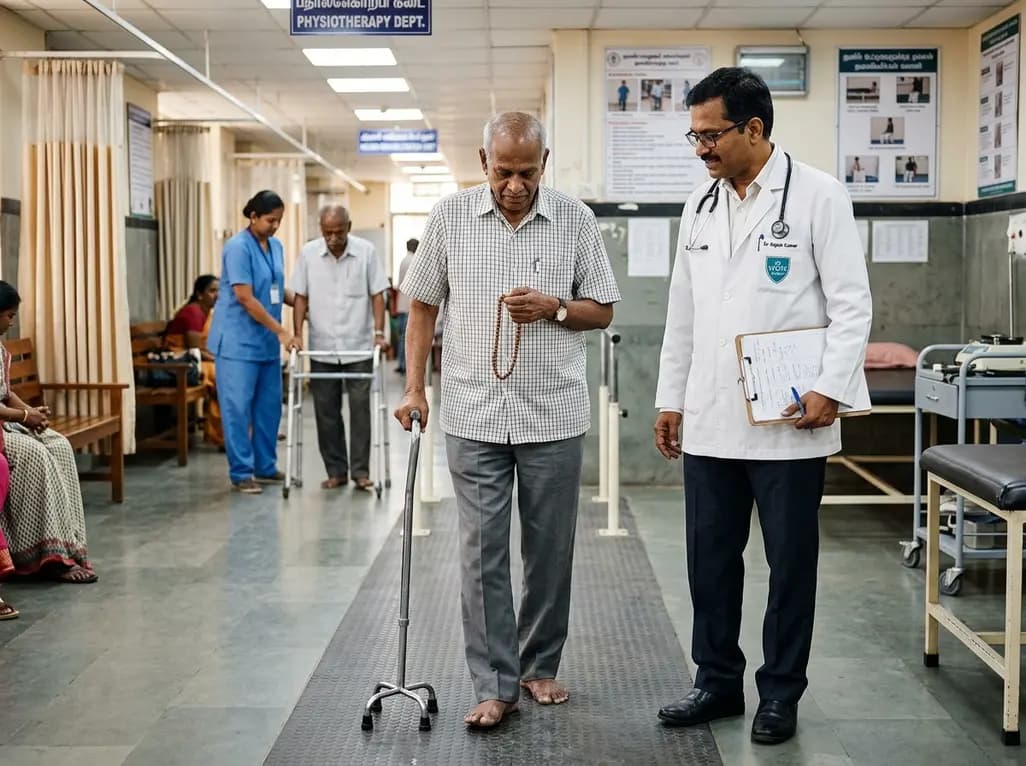
Walking requires continuous integration of motor control, sensory feedback, and cognitive planning. In healthy individuals, walking remains largely automatic, allowing secondary cognitive or motor tasks to occur simultaneously without compromising safety or gait speed. However, in people living with Parkinson's disease, degeneration of basal ganglia dopaminergic circuitry severely impairs movement automaticity. Consequently, patients rely heavily on conscious cortical attention to maintain gait parameters. When forced to perform a simultaneous task, such as holding a conversation or calculating numbers, individuals experience a significant rise in the dual-task cost of walking. This dual-task interference leads to reduced walking speed, shortened stride length, heightened gait variability, and an increased risk of falls. Understanding the underlying factors that contribute to this heightened dual-task cost of walking is critical for neurophysiotherapists, geriatricians, and neurologists aiming to optimize clinical outcomes and preserve functional mobility.
Assessing motor performance under dual-task conditions provides essential insight into functional mobility in Parkinson's disease. Standard clinical tools, such as the 10-Meter Walking Test, allow clinicians to compare single-task walking speed with dual-task walking speed. When patients execute a concurrent cognitive task during locomotion, such as word list generation or backward counting, gait parameters consistently deteriorate. This performance drop, known as the dual-task cost of walking, reflects the competition for executive cognitive resources within the brain. Moreover, clinical assessments like the Unified Parkinson's Disease Rating Scale help quantify overall motor severity, which correlates directly with gait decline. As motor control becomes less automatic, patients must allocate additional cognitive bandwidth simply to execute basic steps. Consequently, secondary tasks overload their limited attentional capacity, leading to dramatic reductions in velocity and dynamic balance. Standardized dual-task testing therefore offers valuable diagnostic precision, helping clinicians identify subtle deficits that standard single-task gait assessments often miss.
Cognitive impairment plays a pivotal role in exacerbating dual-task walking deficits in Parkinson's disease. Specifically, specific cognitive domains, including executive function, processing speed, and attention, directly modulate how well a patient manages simultaneous activities. Clinical evaluations using tests such as the Trail Making Test and the Symbol Digit Modalities Test demonstrate that processing speed and cognitive flexibility heavily influence dual-task tolerance. Furthermore, verbal fluency assessments like the Word List Generation Test reveal that verbal executive tasks impose severe cognitive loads on walking dynamics. When cortical resources are divided between language generation and motor execution, the fronto-striatal pathways experience structural and functional strain. Consequently, patients with lower baseline cognitive performance exhibit significantly higher dual-task costs. Neurologists and therapists must recognize that cognitive decline is not merely a non-motor symptom, but a primary determinant of motor degradation during daily functional activities. Addressing cognitive deficits alongside physical rehabilitation is therefore essential for comprehensive patient care.
Postural control and balance maintenance are fundamental components of safe locomotion, especially during multi-tasking scenarios. Studies evaluating static balance via the Single Leg Stance Test and dynamic balance using the Four-Square Step Test show a direct relationship between balance impairments and dual-task cost. In individuals with Parkinson's disease, impaired postural responses prevent swift compensations when attentional focus shifts away from walking. Additionally, dynamic balance tasks demand real-time cognitive planning and rapid foot repositioning, abilities that are compromised in advanced parkinsonian stages. As a result, when a cognitive challenge is added, individuals experience greater trunk instability, irregular cadence, and asymmetrical step lengths. Furthermore, compromised dynamic stability significantly escalates the risk of sudden trips and fall incidents. Rehabilitation protocols must therefore prioritize dynamic balance retraining alongside dual-task exercises. Strengthening balance mechanisms helps cushion the motor system against cognitive distractions, thereby preserving walking efficiency and enhancing overall functional independence.
Psychological and motor complexity further complicate dual-task performance in Parkinson's disease. Freezing of gait, a paroxysmal and distressing motor symptom assessed via specialized questionnaires, strongly correlates with severe dual-task costs. During dual-task conditions, cognitive load can trigger or exacerbate freezing episodes, leading to motor blockages and sudden loss of forward momentum. Similarly, emotional factors such as fear of falling, evaluated using the Falls Efficacy Scale-International, create additional cognitive burden. Patients with high fall anxiety often employ compensatory stiffening strategies, which paradoxically impair natural gait automaticity. Additionally, psychological distress evaluated through the Hospital Anxiety and Depression Scale can further deplete executive control mechanisms. Depression and anxiety impair working memory and sustained attention, making it harder to divide focus effectively. Consequently, psychological distress indirectly worsens gait deficits during daily multi-tasking. Clinicians must adopt a holistic approach that integrates psychological support, anxiety management, and targeted motor training to mitigate these combined risks.
Measuring physical activity levels using tools such as the International Physical Activity Questionnaire provides important background context regarding a patient's functional reserve. Sedentary individuals with Parkinson's disease typically exhibit greater motor degradation under dual-task conditions compared to physically active peers. Regular exercise and structured physical activity help maintain neural plasticity, executive function, and muscle strength. Consequently, physical neurorehabilitation programs are increasingly incorporating dual-task training methodologies rather than advising patients to avoid multi-tasking. Modern clinical guidelines emphasize progressive dual-task training, where patients practice walking while engaging in tailored cognitive or motor challenges in a safe environment. This structured approach helps re-establish functional automaticity and improves attentional allocation strategies. By tailoring rehabilitation based on specific motor and cognitive profiles, physical therapists can effectively reduce dual-task costs, decrease fall incidence, and enhance the overall quality of life for individuals navigating Parkinson's disease.
The dual-task cost of walking measures the percentage decline in walking speed, stride length, or balance when a person performs a simultaneous secondary task compared to walking alone. In Parkinson's disease, lost movement automaticity forces patients to rely heavily on conscious attention. Consequently, adding a cognitive task depletes available mental resources, leading to significantly worse gait mechanics, slowed walking speed, and an elevated risk of falling during daily activities.
Executive function, attention, processing speed, and verbal fluency are the primary cognitive domains impacting dual-task walking performance. Assessments such as the Trail Making Test and Symbol Digit Modalities Test demonstrate that slower processing speed and reduced cognitive flexibility directly increase dual-task gait interference. When executive control is impaired, the brain struggles to allocate attentional resources effectively between speech or memory tasks and the motor control required for walking.
Yes, contemporary physical therapy guidelines strongly advocate for structured dual-task training in Parkinson's disease under professional supervision. Rather than avoiding multi-tasking, targeted rehabilitation helps patients develop compensatory attentional strategies and promotes neural plasticity. Exercises combining walking with cognitive challenges improve functional mobility, enhance gait automaticity, and lower fall risk. Rehabilitation strategies should be tailored to individual cognitive capacities and motor severity to ensure safe and effective clinical progression.
Disclaimer: This content is for informational and educational purposes only and does not substitute professional medical advice, diagnosis, or treatment. Always seek the advice of a qualified healthcare provider regarding medical conditions or clinical management decisions. Refer to the latest local and national guidelines for clinical practice.
References

Read summarized clinical updates, watch expert medical content, and earn CME certifications right from your smartphone.
Open your smartphone camera to scan and install.





A comprehensive examination of motor, cognitive, and balance factors influencing the dual-task cost of walking in Parkinson's disease patients, providing actionable clinical insights for targeted neurorehabilitation.
last month

Hantaviruses are emerging zoonotic pathogens causing hemorrhagic fever with renal syndrome and hantavirus pulmonary syndrome. Characterized by severe capillary leakage and thrombocytopenia, these infections require prompt diagnosis, vigilant hemodynamic monitoring, and specialized critical care support.
Today

The ClinGen Prenatal Gene Curation Expert Panel evaluated 63 disease relationships across 61 genes, establishing clinical validity for severe fetal phenotypes like hydrops and stillbirth to enhance prenatal genomic interpretation and clinical care.
Yesterday

Managing refractory hypoxemia after cardiothoracic surgery becomes perilous when prolonged air leak limits positive-pressure ventilation. This case-based review details how high-flow nasal cannula, paired with awake rehabilitation, enabled successful extubation and avoided invasive re-intubation.
Today

Idiopathic axillary web syndrome (IAWS) is a rare cause of shoulder pain and mobility restriction characterized by palpable axillary cording without prior surgery or trauma. Early diagnosis, nonsteroidal anti-inflammatory therapy, and physical rehabilitation lead to complete resolution of symptoms.
Today
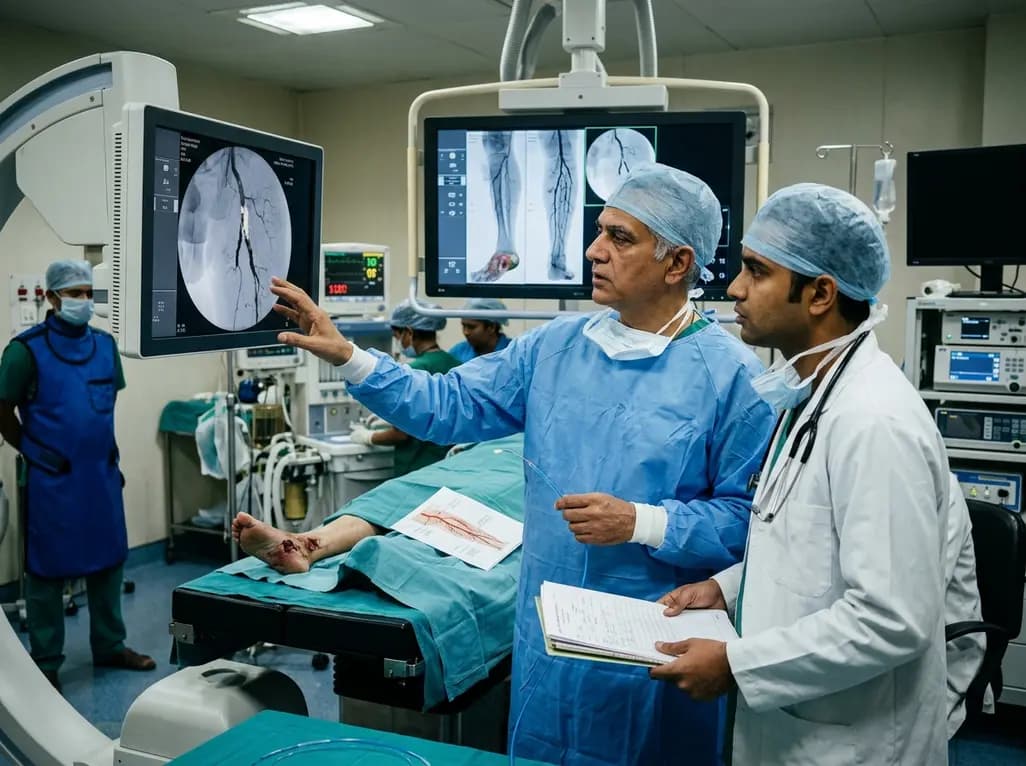
SWEDEPAD-1 trial insights show paclitaxel-coated devices do not improve long-term limb salvage in patients with chronic limb-threatening ischemia and tissue loss. While one-year reinterventions decreased, the devices were linked to a higher risk of major amputation at three months.
Today
