

Loading, please wait...
Loading, please wait...
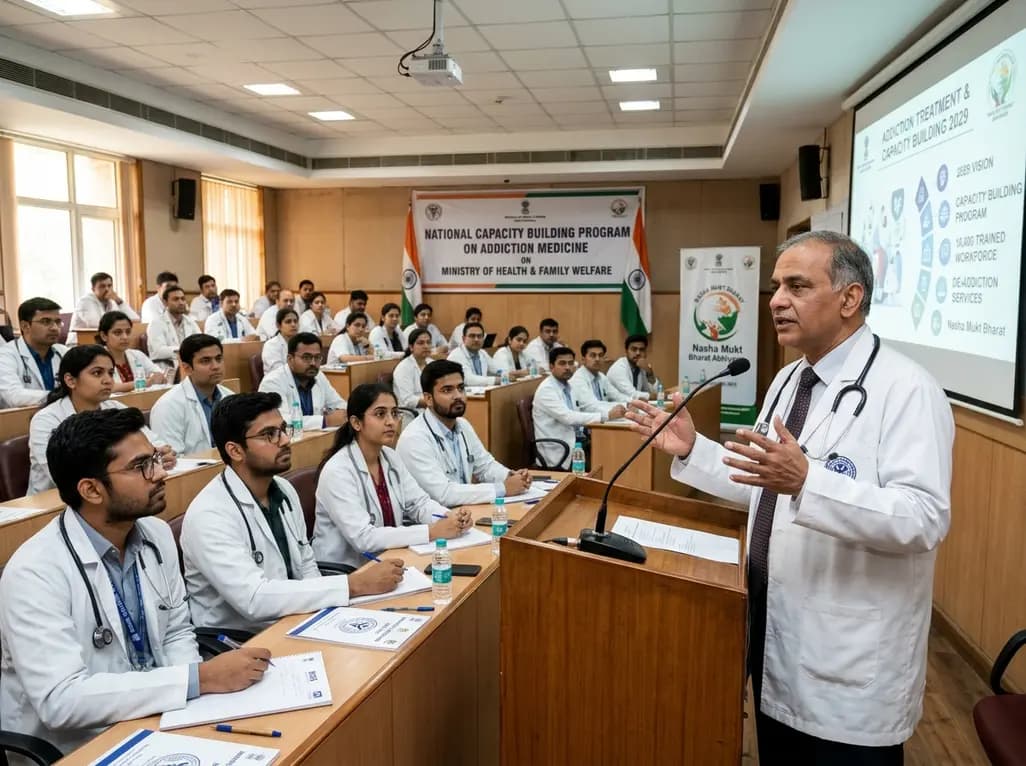
Substance use disorders represent a growing public health challenge across India, demanding urgent, systematic clinical intervention. To confront this escalating crisis, the Union Ministry of Health and Family Welfare launched a comprehensive capacity-building initiative. Specifically, this landmark initiative aims to upgrade drug de-addiction services across primary, secondary, and tertiary healthcare networks nationwide. Furthermore, government authorities highlighted that clinical treatment must integrate seamlessly with prevention and law enforcement strategies. Therefore, healthcare providers must familiarize themselves with these evolving policy directives to deliver standardized, compassionate, and evidence-based patient care.
Historically, public health initiatives and law enforcement operations functioned in isolated departmental silos. Consequently, this fragmentation produced substantial gaps in patient identification, referral workflows, and long-term rehabilitation pathways. Union Health Minister J. P. Nadda recently emphasized that isolated departmental responses can no longer suffice. Instead, India is deploying a unified, whole-of-government approach to dismantle administrative bottlenecks.
This integrated strategy unites the Ministry of Health, the Ministry of Social Justice, and the Ministry of Home Affairs. In addition, administrative leadership connects national apex institutes directly with grassroots community facilities. Together, these bodies are aligning their institutional mandates toward clearly defined public health targets. Importantly, inter-ministerial coordination ensures that social welfare centers receive adequate clinical oversight and specialized medical staff.
At the same time, regional addiction treatment facilities receive sustained budgetary and infrastructural backing. Consequently, medical officers can now collaborate directly with social workers, community counselors, and law enforcement agencies. This robust coordination ensures that vulnerable individuals receive medical detoxification rather than punitive criminalization. Ultimately, synergistic governance creates a continuous continuum of care that spans from initial screening to complete social reintegration.
The operational framework for this transformative policy originates from the Vision Document on Narcotic Control: 2026–2029. Spearheaded by the central government, this roadmap establishes ambitious, measurable benchmarks for clinical capacity development. Specifically, the initiative intends to train 10,000 medical and allied healthcare professionals by 2029.
To achieve this goal, the health ministry outlined a structured, multi-year rollout across the country. During the current financial year, training programs will upskill approximately 2,000 healthcare providers. Subsequently, administrators will train 3,000 personnel in the 2027–2028 cycle, followed by an additional 5,000 providers in 2028–2029.
Moreover, this scaled curriculum delivers hybrid instruction, combining interactive digital modules with hands-on clinical rotations. Physicians, staff nurses, and psychiatric social workers will receive rigorous, evidence-based instruction in modern addiction medicine. As a result, participating clinicians will gain essential competencies in early identification, acute withdrawal management, and relapse prevention. Furthermore, the curriculum standardizes pharmacological protocols nationwide, reducing hazardous clinical variations across states. In addition, regular clinical audits will reinforce these high professional benchmarks across all participating tertiary hospitals.
Effective addiction treatment requires a decisive shift away from moral stigma toward validated neurobiological care. In line with this scientific principle, policymakers released updated clinical guidance for medical officers. Specifically, the updated physician manual equips frontline practitioners with structured diagnostic algorithms and evidence-based pharmacotherapies.
Consequently, clinicians can implement standardized opioid agonist therapy, medically supervised alcohol detoxification, and tailored behavioral counseling. In addition, the training underscores the clinical necessity of treating common psychiatric comorbidities. Because conditions like depression, trauma, and anxiety frequently co-occur with chemical dependence, dual diagnosis care remains critical for long-term recovery. Thus, holistic assessment tools significantly enhance clinical outcomes across diverse patient populations.
Furthermore, medical teams must master rapid emergency interventions for acute drug toxicities. For instance, expanding naloxone access and training emergency staff on synthetic opioid overdose reversal can save countless lives. Healthcare professionals must also address medical sequelae such as hepatitis C, human immunodeficiency virus, and infective endocarditis. Therefore, comprehensive protocols incorporate infectious disease screenings alongside routine de-addiction therapy. Ultimately, by adopting these evidence-based standards, doctors can deliver compassionate, dignified, and scientifically robust care to individuals battling severe dependency.
Centralized tertiary psychiatric facilities cannot shoulder the burden of substance use disorders alone. Therefore, national health authorities are decentralizing de-addiction infrastructure into primary and secondary healthcare centers. District hospitals and Ayushman Arogya Mandirs are evolving into primary hubs for addiction screening and early clinical intervention.
Through this phased regional rollout, premier institutions like AIIMS and NIMHANS mentor district medical teams. Consequently, rural and semi-urban clinicians receive continuous case consultation and clinical support. In addition, decentralized treatment mitigates significant logistical and financial hurdles for economically disadvantaged households. Patients can now access essential medications and psychological counseling near their homes.
However, clinical intervention represents only one facet of long-term patient recovery. Sustainable sobriety requires ongoing community rehabilitation, vocational opportunities, and social re-entry support. Accordingly, healthcare facilities must establish seamless linkages with rehabilitation centers overseen by the Ministry of Social Justice. Counselors must actively engage family members to build supportive domestic environments that prevent relapse. Moreover, healthcare centers must provide peer support groups and accessible psychological therapy. By weaving medical management together with community resources, decentralized healthcare systems establish a formidable shield against chronic addiction.
India stands at an extraordinary demographic juncture today, with millions of young citizens driving social and industrial progress. Nevertheless, the growing prevalence of synthetic narcotics and prescription drug misuse threatens this demographic dividend. Health Secretary Punya Salila Srivastava emphasized that a thriving Viksit Bharat requires physically healthy and mentally resilient youth.
Therefore, the national government set a clear, uncompromising deadline to realize a Nasha Mukt Bharat by 2029. Achieving this bold milestone necessitates rigorous vigilance across educational institutions and community spaces. Furthermore, clinicians must lead proactive public health dialogues that demystify substance abuse and eliminate harmful societal stigmas. When young or adolescent patients seek clinical consultations, physicians must consistently perform routine, non-judgmental substance screenings.
Simultaneously, law enforcement agencies are intensifying enforcement actions against digital trafficking rings and darknet drug distribution channels. Because cross-border trafficking fuels local drug epidemics, coordinated inter-agency cooperation remains paramount. In addition, healthcare providers can offer critical epidemiological feedback, alerting regulatory authorities to emerging synthetic substances detected in emergency rooms. Ultimately, shielding young people from illicit drugs protects national productivity, preserves public health, and secures the future of coming generations.
Q1: What is the main objective of the new capacity-building training program?
The program aims to establish a qualified workforce of 10,000 healthcare professionals by 2029. By using hybrid modules and clinical rotations, it enhances the skills of doctors, nurses, and counselors in evidence-based substance abuse identification, acute detoxification, and relapse prevention. Consequently, this initiative elevates addiction medicine standards across primary and secondary healthcare centers nationwide. Furthermore, these trained providers ensure consistent patient care across diverse regions.
Q2: How does the whole-of-government approach improve substance abuse management?
The whole-of-government framework dissolves administrative silos between the Ministries of Health, Social Justice, and Home Affairs. Consequently, this approach unites medical treatment with community rehabilitation and law enforcement against trafficking. Healthcare centers receive dedicated funding, standardized protocols, and direct referral linkages to state-supported de-addiction centers. Therefore, this strategic integration ensures continuous, compassionate patient care from medical detoxification to full social recovery.
Q3: What specific role do primary care doctors play under the narcotic control vision?
Primary care physicians serve as the initial clinical defense for early substance abuse detection and intervention. Under this national roadmap, general practitioners receive specialized training to implement diagnostic algorithms, prescribe approved pharmacotherapies, deliver behavioral interventions, and manage dual psychiatric diagnoses. Additionally, they facilitate timely referrals to district hospitals and tertiary centers whenever complex medical interventions become clinically necessary for patients requiring inpatient care.
Disclaimer: This content is for informational and educational purposes only. It does not constitute medical advice or replace professional judgment. Refer to the latest local and national guidelines for clinical practice.
References

Read summarized clinical updates, watch expert medical content, and earn CME certifications right from your smartphone.
Open your smartphone camera to scan and install.





Union Health Minister J P Nadda launched a national capacity-building program to reinforce drug de-addiction services across primary and tertiary care. Uniting health, social justice, and home affairs, this inter-ministerial initiative aims to build a 10,000-strong trained workforce to realize a Nasha Mukt Bharat by 2029.
Today

A multicenter study introduces BAT-AKI, a biomarker-aware transformer that achieves superior acute kidney injury prediction and post-onset prognostic modeling across diverse hospital electronic health record systems.
Today
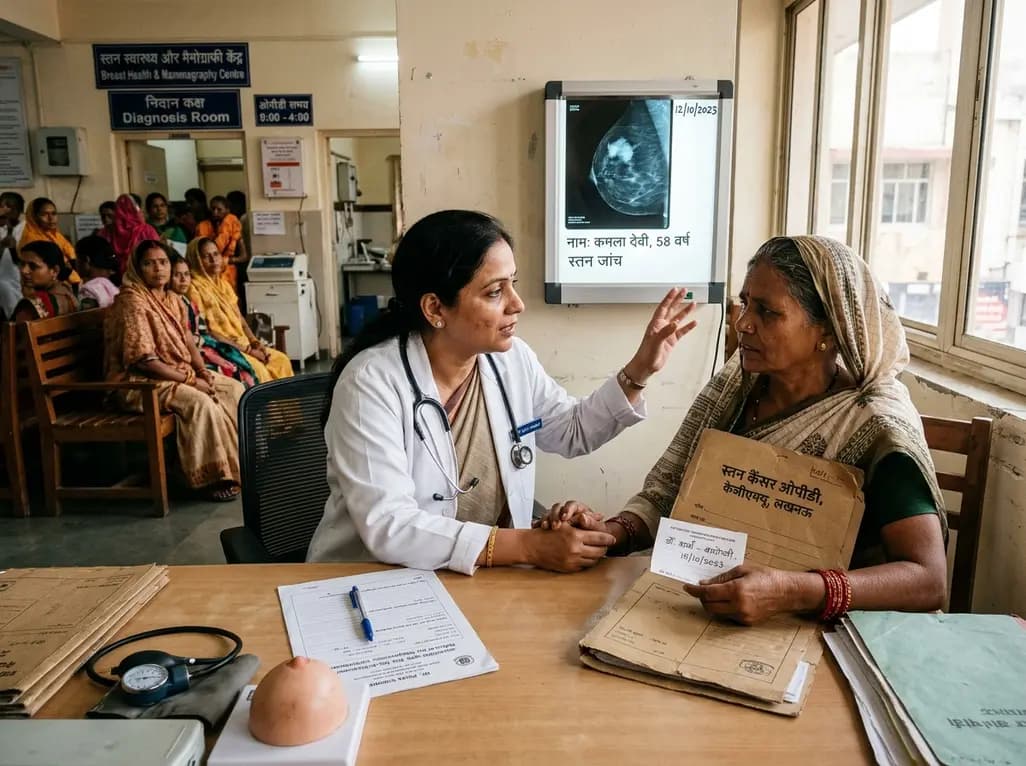
A KGMU study reveals over half of women with breast abnormalities fail to undergo diagnostic confirmation, leading to advanced-stage detection. Discover the socio-cultural barriers, clinical risks of incomplete resection, and community-level solutions needed to bridge the critical screening-to-diagnosis gap in India.
Yesterday
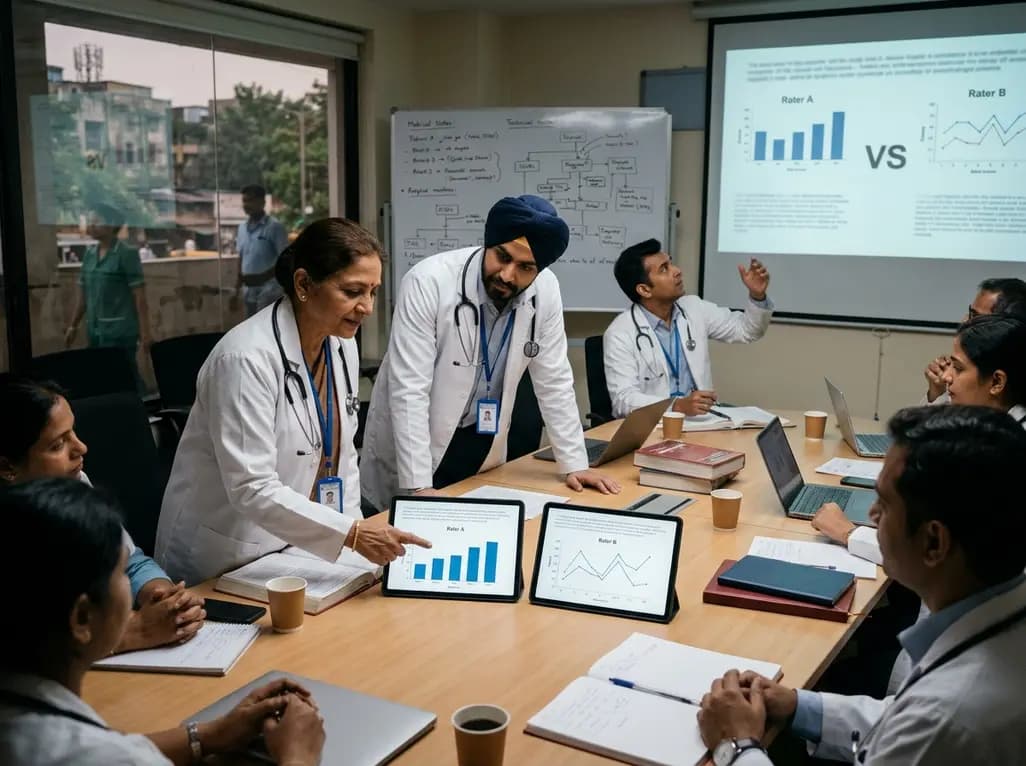
A controlled evaluation reveals that AI raters in clinical LLM benchmarking disagree significantly due to divergent scoring models, challenging automated healthcare AI validation.
Today
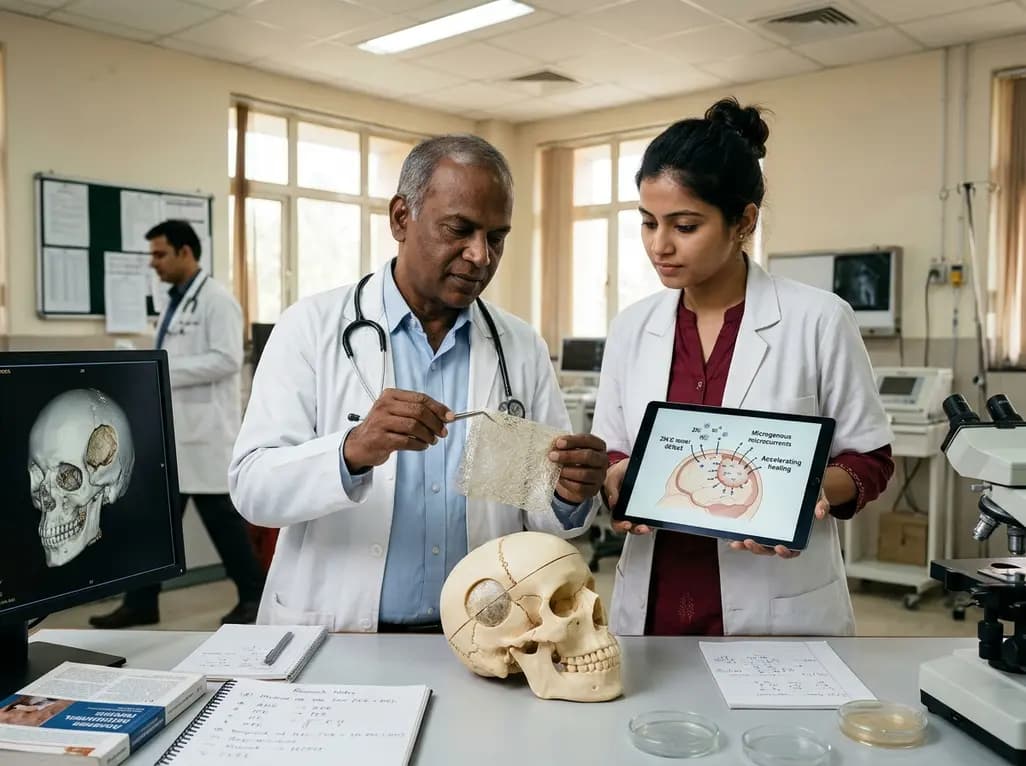
Researchers have engineered a self-powered Zn/C micro-galvanic electrospun membrane that couples sustained zinc release with endogenous microcurrents. This bioelectric scaffold stimulates M2 macrophage polarization and accelerates bone deposition to achieve robust cranial defect regeneration.
Today

A meta-analysis of 18 studies reveals that bariatric surgery does not significantly alter circulating homocysteine levels, regardless of follow-up duration. Clinicians must maintain vigilance over post-surgical micronutrient supplementation to prevent hyperhomocysteinemia.
Today
