.webp&w=384&q=75)

Loading, please wait...
Loading, please wait...

Navigating complex spiral tunnels requires intense focus. This makes studying driver visual load essential for public safety and occupational health. Recent research highlights how specific tunnel layouts impact ocular behavior. Specifically, the study explores how length and radius influence saccadic eye movements. This provides critical insights for clinicians interested in oculomotor health and ergonomics.
Investigators used wearable eye trackers to record the behavior of 30 licensed drivers. They measured four key metrics: amplitude, duration, frequency, and velocity. Consequently, the team found that certain geometric features heighten the cognitive burden. For instance, longer tunnels force the eyes to scan more broadly. This significantly increases the driver visual load during traversal.
The research demonstrated that smaller radii lead to increased saccade amplitude. Furthermore, these conditions prolong saccade duration while reducing velocity. This pattern indicates that drivers struggle to process information efficiently in tight curves. Interestingly, the study also revealed a directional asymmetry. Uphill traversal consistently produced higher visual demands than downhill driving across all tested tunnels. These findings suggest that designs must prioritize visual ergonomics. By understanding this link, engineers can improve design guidelines. Therefore, optimized dimensions could mitigate the risk of fatigue. Ultimately, this research informs safer infrastructure development in mountainous terrains.
A smaller tunnel radius increases the visual search breadth, which manifests as higher saccade amplitude and frequency. These changes signal that the driver is experiencing a more intense cognitive and visual workload.
Uphill travel requires more complex motor control and visual scanning than downhill travel. Research shows that driving uphill in spiral tunnels results in slower saccade velocities, indicating a higher driver visual load.
Disclaimer: This content is for informational and educational purposes only. It does not constitute professional medical advice, diagnosis, or treatment. Always seek the advice of your physician or other qualified health provider with any questions you may have regarding a medical condition. Refer to the latest local and national guidelines for clinical practice.
References
1. Liu B et al. Saccade dynamics in different spiral tunnels: An investigation of length and radius effects on driver visual load. Traffic Inj Prev. 2026 May 05. doi: 10.1080/15389588.2026.2653672. PMID: 42085709.
2. Han L et al. Spiral tunnel driving and cognitive load: An eye-tracking investigation into tunnel geometry and traversal effects. Traffic Inj Prev. 2025 Oct 17. doi: 10.1080/15389588.2025.2561772.
3. Fang S, Ma J. Experimental Analysis of Driver Visual Characteristics in Urban Tunnels. Appl Sci. 2021;11(9):4274. doi: 10.3390/app11094274.

Read summarized clinical updates, watch expert medical content, and earn CME certifications right from your smartphone.
Open your smartphone camera to scan and install.





Research indicates that spiral tunnel length, radius, and uphill travel significantly increase driver visual load and affect saccadic eye movements....
5 months ago
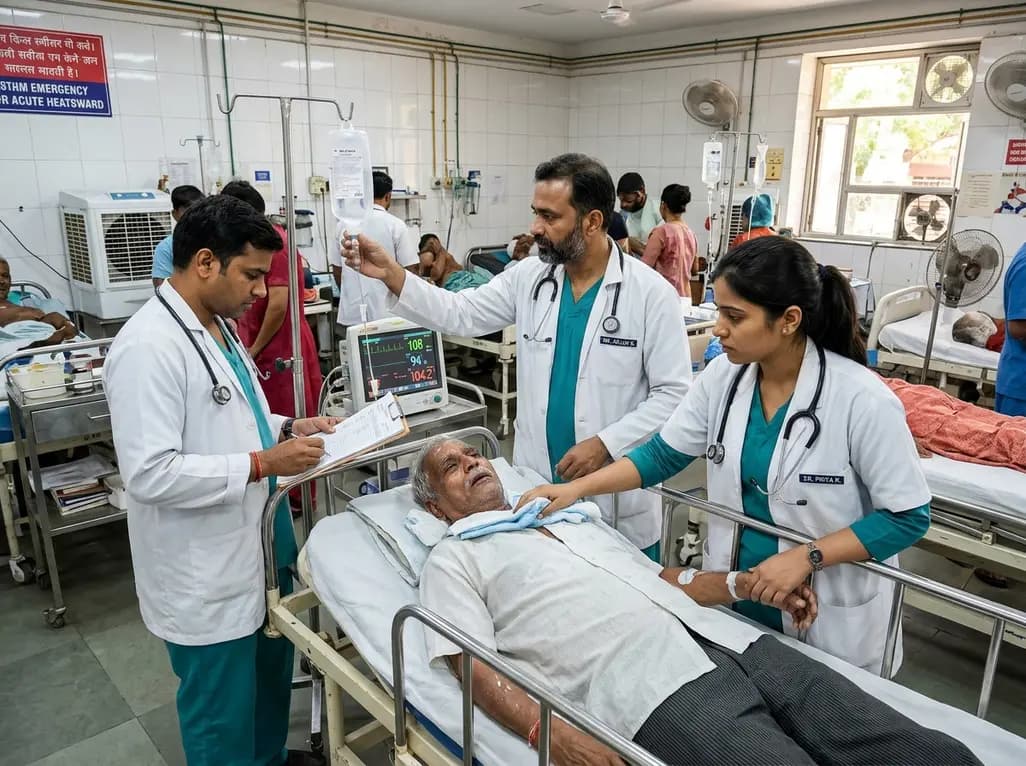
Recent epidemiological data reveals a dramatic surge in summer heat mortality driven by human-induced climate warming. This analysis explores the pathophysiological impacts on cardiac and renal systems, diagnostic dilemmas in death certification, and essential emergency cooling protocols for acute clinical care.
Today
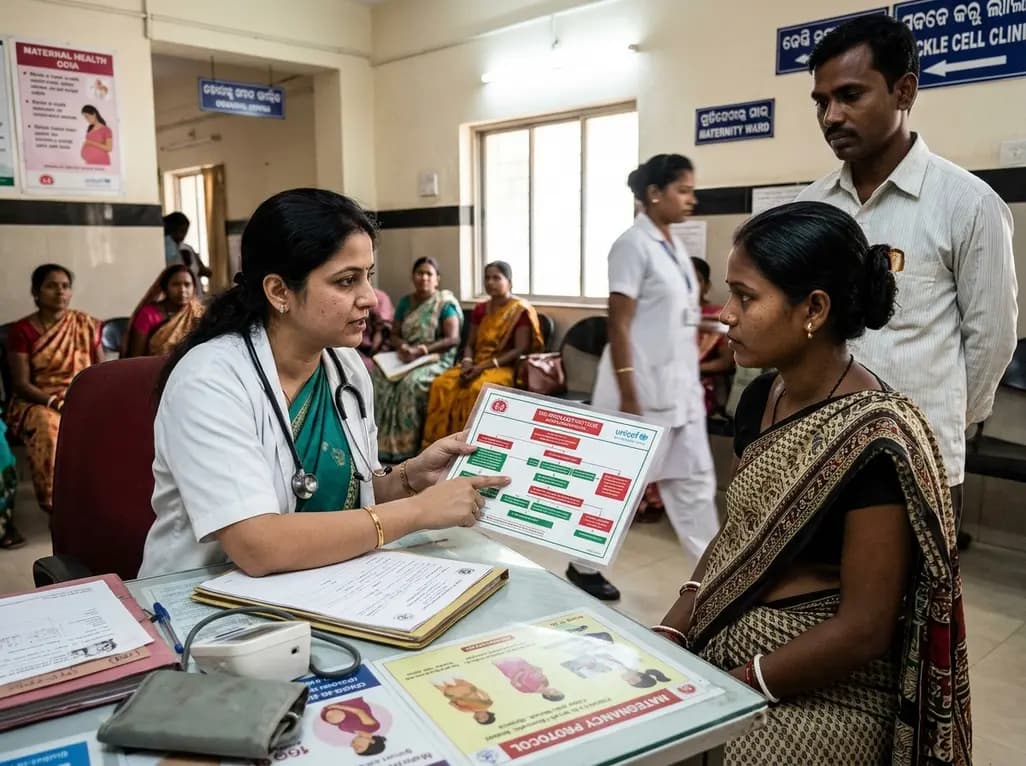
Odisha has established India's first state-level clinical protocol specifically tailored for pregnant women with sickle cell disease. Developed with NHM and UNICEF, the framework provides structured antenatal screening, crisis mitigation, standardized referral pathways, and specialized interdisciplinary care.
Today

India is advancing preventive healthcare by integrating genomics, artificial intelligence, and quantum technologies. With the SANGAM programme sequencing one million Indian genomes, clinicians can unlock personalized therapies, detect cardiometabolic risks early, and curb the burden of diabetes and heart disease.
Today
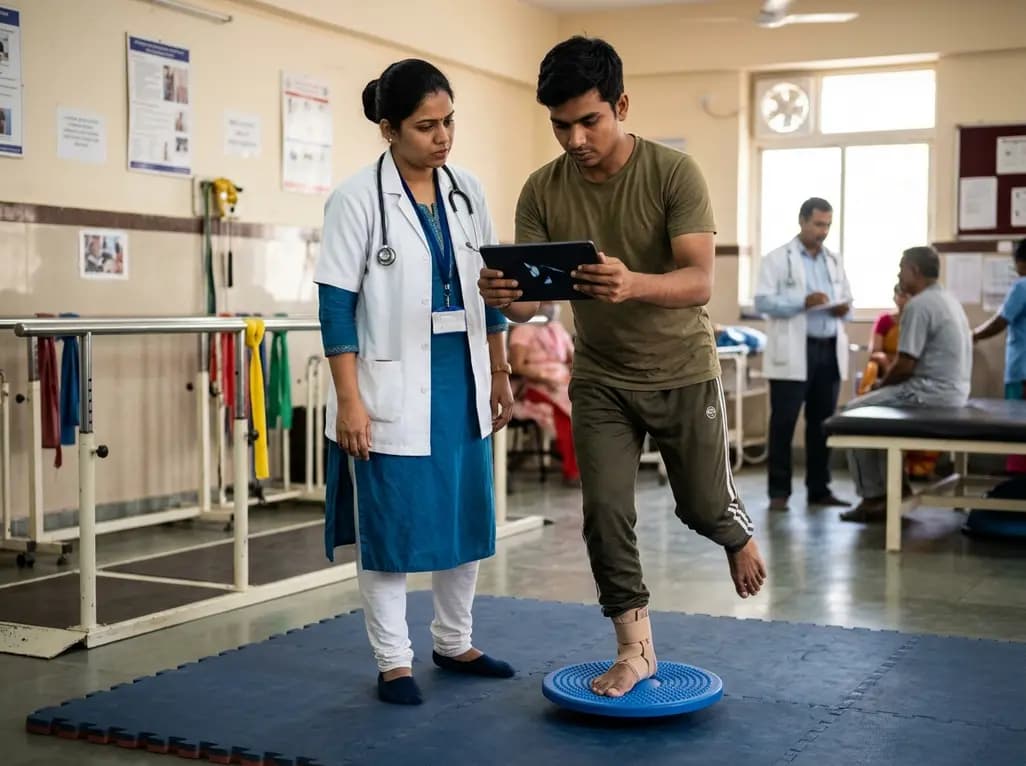
A randomized controlled trial demonstrates that an eight-week dual-task training intervention significantly improves static and dynamic postural control over standard balance exercises in individuals with chronic ankle instability, addressing critical neurocognitive deficits during athletic and daily activities.
Today

A retrospective cohort study of 7,716 ICU patients from the MIMIC-IV database demonstrates that Gradient Boosting Decision Trees significantly outperform traditional SOFA scores in predicting in-hospital mortality among patients with sepsis and diabetes, with SHAP analysis providing clinical interpretability.
Today
