

Loading, please wait...
Loading, please wait...

Allogeneic hematopoietic stem cell transplantation remains a curative therapy for high-risk hematological malignancies and marrow failure syndromes. However, delayed immune reconstitution poses substantial threats, particularly invasive opportunistic infections. Recent translational evidence highlights how inherited donor immunogenetics modulate post-engraftment host defense mechanisms. Specifically, emerging data emphasize the relevance of FCGR3A polymorphisms in allo-HSCT outcomes. Understanding these inherited immunogenetic variations allows clinicians to appreciate distinct immune reconstitution trajectories and tailor infectious risk stratification.
Fc gamma receptors mediate vital links between humoral recognition and innate cellular effector responses. Among these, FcγRIIIa, encoded by the FCGR3A gene and designated as CD16, is abundantly expressed on natural killer cells and macrophages. Furthermore, this receptor orchestrates antibody-dependent cellular cytotoxicity, enabling innate immune effectors to destroy opsonized pathogens and malignant targets. The FCGR3A gene exhibits a well-characterized functional single nucleotide polymorphism at position 158, replacing valine (V) with phenylalanine (F). Consequently, this amino acid substitution directly alters receptor binding affinity for human IgG subclasses, especially IgG1 and IgG3. The high-affinity 158V variant binds immunoglobulin complexes more avidly than the lower-affinity 158F variant. Because donor hematopoietic stem cells fully replace recipient myeloid and lymphoid compartments, donor-derived genetic architecture dictates post-transplant receptor functionality. Therefore, any functional deficiency or altered signaling capacity inherited from donor effector cells directly governs recipient immune defenses. In the context of severe post-transplant lymphopenia, intact innate immune mechanisms provide the initial protective barrier against invasive pathogens. Consequently, investigating donor Fc receptor genetics clarifies why certain transplant recipients experience recurrent opportunistic complications despite identical conditioning protocols and human leukocyte antigen compatibility.
In a recent clinical investigation of 97 adult transplant recipients, investigators assessed donor single nucleotide polymorphisms in FCGR2A, FCGR3A, FOXP3, and IL10 using chimerism-verified donor specimens. Notably, recipients receiving grafts from donors with the FCGR3A-158 non-F/F genotype exhibited a significantly higher cumulative incidence of invasive fungal infections compared with recipients whose donors possessed the homozygous F/F genotype. In contrast, researchers detected no consistent associations between FCGR2A or FOXP3 polymorphisms and post-transplant infection rates. This finding holds meaningful pathophysiological relevance for clinical transplantation teams. Invasive fungal infections, particularly invasive aspergillosis and candidiasis, remain notorious causes of transplant-related mortality. Natural killer cells and monocytes participate actively in antifungal surveillance by interacting with opsonizing antibodies and triggering antifungal cytokine release. Therefore, altered FcγRIIIa receptor signaling may impair fungal pathogen recognition, phagocytosis, and subsequent intracellular killing. In addition, defective natural killer cell activation reduces early interferon-gamma secretion, which blunts neutrophil and macrophage recruitment. Consequently, recipients carrying non-F/F donor grafts may fail to eradicate microscopic fungal colonization efficiently. Although preliminary, these observations suggest that donor immunogenetics contribute significantly to post-engraftment invasive fungal susceptibility.
The study also evaluated immunoregulatory cytokine gene variations, specifically focusing on the functional IL10 promoter polymorphism at position -819. Interestingly, recipients receiving grafts from donors with the IL10-819 non-T/T genotype demonstrated accelerated neutrophil engraftment. However, this same donor genotype correlated with significantly impaired early lymphoid recovery. Specifically, these patients exhibited reduced reconstitution of total lymphocytes, CD4⁺ T cells, CD8⁺ T cells, and CD19⁺ B cells during the critical early post-transplant window. Interleukin-10 functions as a potent anti-inflammatory cytokine that modulates hematopoiesis and restrains excessive alloreactivity. Thus, genetic variations altering IL-10 expression dynamically influence the delicate balance between marrow reconstitution and lymphoid proliferation. Nevertheless, despite marked delays in lymphocyte recovery, the non-T/T cohort showed no corresponding surge in bacterial, viral, or fungal infections. This disconnect illustrates the profound redundancy inherent in human antimicrobial defense systems. Furthermore, it suggests that early neutrophil recovery and preserved innate effector mechanisms may provide sufficient protection against opportunistic pathogens during acute lymphopenia. Clinicians must recognize that cellular counts alone do not always reflect functional pathogen susceptibility.
Managing post-transplant infectious risk requires precise balancing between proactive antimicrobial protection and toxic drug exposure. In contemporary transplant units, clinicians routinely prescribe mold-active prophylaxis, such as posaconazole or voriconazole, for high-risk recipients. However, antifungal agents carry recognized risks, including hepatotoxicity, prolonged QTc intervals, and significant cytochrome P450 drug interactions with calcineurin inhibitors. Therefore, identifying non-HLA biomarkers like donor FCGR3A variants could enhance post-transplant risk stratification. For example, patients identified with high-risk donor genotypes might benefit from extended mold-active prophylaxis rather than early de-escalation. Moreover, these patients warrant rigorous serial surveillance utilizing serum galactomannan testing, beta-D-glucan assays, and early high-resolution computed tomography for unexplained fever. Conversely, patients receiving low-risk donor grafts might safely transition to targeted fluconazole prophylaxis or shorter preventative regimens, minimizing toxicity and pharmacological costs. Furthermore, targeted risk stratification supports institutional antimicrobial stewardship programs by curbing unnecessary broad-spectrum antifungal exposure. Ultimately, integrating donor immunogenetic data allows transplant clinicians to move beyond empirical protocols toward personalized infectious disease prevention.
While current donor selection algorithms prioritize human leukocyte antigen matching, cytomegalovirus serostatus, and donor age, non-HLA immunogenetics warrant closer attention. The study authors emphasize that their observations represent hypothesis-generating evidence derived from a modest cohort of 97 patients. Consequently, multicenter prospective trials are essential to validate whether donor FCGR3A polymorphisms independently predict invasive fungal infections across diverse transplant platforms. In addition, future research should explore how donor FCGR3A variants interact with conditioning intensity, graft-versus-host disease prophylaxis, and recipient single nucleotide polymorphisms. Modern high-throughput sequencing now makes comprehensive pre-transplant donor immunogenetic profiling feasible and cost-effective. Thus, incorporating non-HLA immune response genes into predictive risk models could refine donor selection when multiple matched donors exist. Furthermore, deciphering these pathways may uncover novel immunomodulatory strategies, such as monoclonal antibody therapeutics or natural killer cell adoptive therapies engineered for optimal Fc receptor interactions. As transplant medicine advances toward precision hematology, donor genetic characterization offers promising opportunities to reduce transplant-related mortality and enhance long-term patient outcomes.
The FCGR3A gene encodes FcγRIIIa, a key activating receptor on natural killer cells and macrophages. The functional 158V/F single nucleotide polymorphism alters receptor binding affinity for opsonizing immunoglobulins. Consequently, recipients receiving non-F/F donor grafts may experience altered antibody-dependent cellular cytotoxicity and impaired natural killer cell activation. This receptor dysfunction blunts early proinflammatory cytokine cascades, reducing fungal pathogen clearance and predisposing vulnerable allogeneic stem cell recipients to opportunistic fungal diseases.
In the study, the donor IL10-819 non-T/T genotype promoted earlier neutrophil engraftment while simultaneously delaying lymphoid reconstitution across T and B cell subsets. Although prolonged lymphopenia typically elevates infectious risk, earlier neutrophil recovery preserved essential phagocytic host defenses. In addition, redundancy within human innate immunity and standard prophylactic antimicrobial regimens likely protected recipients against clinically overt infections. Thus, temporary laboratory lymphoid delays did not automatically translate into documented infectious episodes.
Currently, routine clinical guidelines do not mandate donor FCGR3A genotyping before allogeneic hematopoietic cell transplantation. Because existing findings originate from exploratory, single-center cohorts with modest sample sizes, investigators consider them strictly hypothesis-generating. Clinicians must await validation in large prospective multi-institutional cohorts before modifying donor selection or prophylaxis algorithms. Nevertheless, these insights encourage closer clinical vigilance and rigorous diagnostic monitoring for invasive fungal infections in high-risk post-transplant patient populations.
Disclaimer: This content is for informational and educational purposes only... Refer to the latest local and national guidelines for clinical practice.
References

Read summarized clinical updates, watch expert medical content, and earn CME certifications right from your smartphone.
Open your smartphone camera to scan and install.





New findings demonstrate that donor FCGR3A polymorphisms significantly increase fungal infection risks after allogeneic stem cell transplantation, while IL10 variants alter early lymphocyte reconstitution without raising infection rates.
Today
A multicenter study introduces BAT-AKI, a biomarker-aware transformer that achieves superior acute kidney injury prediction and post-onset prognostic modeling across diverse hospital electronic health record systems.
Today
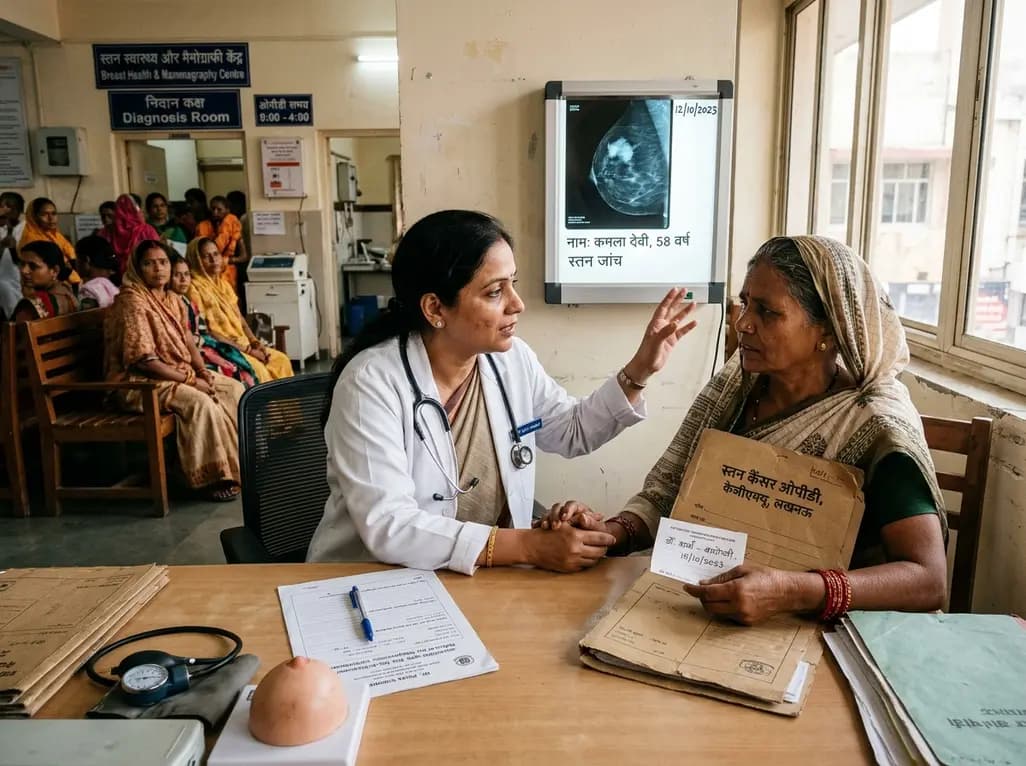
A KGMU study reveals over half of women with breast abnormalities fail to undergo diagnostic confirmation, leading to advanced-stage detection. Discover the socio-cultural barriers, clinical risks of incomplete resection, and community-level solutions needed to bridge the critical screening-to-diagnosis gap in India.
Yesterday

A controlled evaluation reveals that AI raters in clinical LLM benchmarking disagree significantly due to divergent scoring models, challenging automated healthcare AI validation.
Today
A phase I/II trial evaluated E. coli-derived rhBMP-2 combined with beta-tricalcium phosphate for long-bone nonunion. The combination demonstrated high radiographic union, functional limb recovery, undetectable systemic absorption, and transient antibody formation without clinical adverse events.
Today

A meta-analysis of 18 studies reveals that bariatric surgery does not significantly alter circulating homocysteine levels, regardless of follow-up duration. Clinicians must maintain vigilance over post-surgical micronutrient supplementation to prevent hyperhomocysteinemia.
Today
