

Loading, please wait...
Loading, please wait...

Orthopedic surgeons frequently face severe technical challenges when treating persistent long-bone nonunion. Traditional reconstruction usually relies on autologous bone grafting, but this harvest carries significant donor site morbidity and pain. Consequently, biological substitutes such as recombinant human bone morphogenetic protein-2 provide an attractive regenerative pathway. Furthermore, recent phase I/II clinical data explore an innovative microbial platform designed to stimulate reliable osteogenesis in recalcitrant diaphyseal and metaphyseal skeletal defects.
Orthopedic trauma surgeons recognize that failed fracture consolidation creates major physical disability and economic strain for patients. Autologous iliac crest bone graft historically represents the gold standard for bridging structural gaps. However, autograft harvesting causes significant donor site pain, sensory nerve injury, hematoma formation, and extended operating room time. In addition, harvest volume remains strictly limited in patients with previous interventions or extensive defects. Therefore, researchers continuously search for reliable osteoinductive bone graft substitutes. Synthetic biomaterials alone frequently fail to provide sufficient bioactivity across hostile, sclerotic fracture ends. Consequently, combining an osteoconductive scaffold with a potent osteoinductive growth factor offers a compelling alternative for skeletal reconstruction. Recombinant human bone morphogenetic protein-2 stimulates undifferentiated mesenchymal stem cells to differentiate into active osteoblasts. This molecular cascade initiates rapid osteogenesis and accelerates structural bridging. However, standard mammalian cell expression systems produce expensive biologics that limit widespread global access. Thus, novel manufacturing techniques that utilize bacterial expression systems have garnered substantial clinical interest among reconstructive trauma specialists worldwide.
To overcome the high production costs of traditional mammalian cell lines, scientists successfully established an Escherichia coli expression system for recombinant human BMP-2. Bacterial platforms provide high yields and scalable synthesis, thereby significantly reducing drug manufacturing expenses. Furthermore, non-glycosylated microbial rhBMP-2 retains equivalent biological osteoinductive potency compared to conventional eukaryotic counterparts. However, delivering this powerful osteogenic factor demands a specialized biomaterial matrix. Without a suitable delivery vehicle, rapid enzymatic washout causes local soft-tissue inflammation or ectopic ossification. In this innovative Japanese clinical trial, investigators utilized porous beta-tricalcium phosphate granules as an osteoconductive delivery scaffold. Beta-tricalcium phosphate mimics native trabecular mineral architecture and gradually resorbs as host osteoclasts replace it with living lamellar bone. Additionally, soaking these porous ceramic granules in the bacterial rhBMP-2 solution facilitates localized, sustained growth factor retention. This controlled release profile ensures continuous osteoblast recruitment directly at the fracture margins. Consequently, the combination scaffold provides both immediate structural osteoconduction and prolonged molecular signaling without generating systemic growth factor spikes.
The prospective exploratory study evaluated adults presenting with aseptic recalcitrant nonunions of the femur, humerus, or tibia. Eligible candidates demonstrated persistent fracture nonunion that had failed previous conservative or operative interventions. During the index reconstruction, surgeons thoroughly debrided avascular scar tissue, opened sclerotic medullary canals, and ensured rigid mechanical stabilization. Instead of harvesting autologous iliac crest bone, the surgical team implanted beta-tricalcium phosphate granules soaked with bacterial rhBMP-2 directly into the skeletal gap. The investigative team monitored each patient closely over a nine-month follow-up window. Specifically, primary safety assessments analyzed systemic growth factor absorption through serial postoperative serum rhBMP-2 assays. In addition, laboratory protocols quantified anti-rhBMP-2 antibody formation across regular intervals to evaluate immunogenicity. Meanwhile, clinical investigators determined therapeutic efficacy through standardized orthogonal radiographs and comprehensive physical functional recovery metrics. These assessments specifically tracked limb weight-bearing capacity, active range of motion, and pain resolution. Ultimately, the meticulous protocol design allowed precise characterization of both local tissue biocompatibility and broader systemic safety parameters.
Eight adult patients completed the full nine-month surveillance protocol, comprising six femoral and two humeral cases. Notably, the surgical team documented zero adverse reactions attributable to the implanted rhBMP-2 or beta-tricalcium phosphate construct. Postoperative serological tests confirmed that serum rhBMP-2 levels remained entirely below detection limits in five patients. This critical finding indicates that the ceramic granules retained the osteoinductive protein locally, successfully preventing unwanted systemic circulation. Furthermore, two patients transiently developed circulating anti-rhBMP-2 antibodies that reached peak titers between three and six months. However, these specific antibody levels declined spontaneously thereafter without producing any clinical allergic symptoms, systemic toxicity, or impaired bone healing. In contrast to historical high-dose BMP complications, no patients developed severe seroma formation, osteolysis, or heterotopic ossification in adjacent musculature. The biomaterial degraded predictably without provoking destructive foreign-body reactions. Therefore, these clinical observations confirm that microbial rhBMP-2 combined with ceramic scaffolds provides an excellent safety margin for complex extremity reconstructive surgery.
The primary efficacy endpoints demonstrated compelling regenerative outcomes across the trial cohort. Specifically, seven of the eight patients achieved complete radiographic bridging union within nine months post-implantation. In the single remaining case, extensive double-plate fixation obscured definitive cortical union on plain radiographs, although robust bridging callus surrounded the nonunion gap. In addition to clear structural healing, every enrolled individual achieved meaningful limb functional rehabilitation. Lower-extremity patients successfully progressed to independent, pain-free full weight-bearing without external ambulatory aids. Similarly, patients treated for humeral nonunions regained full active overhead shoulder and elbow mobility. These functional gains directly reflect sound mechanical consolidation and restored skeletal integrity. Moreover, patients avoided the typical persistent donor-site morbidity associated with traditional autologous grafting. Consequently, the clinical findings highlight that bacterial-derived rhBMP-2 promotes durable osseous union while preserving functional independence. These encouraging preliminary results establish a solid foundation for larger confirmatory phase III trials aimed at formal regulatory approval.
Bacterial platforms utilize Escherichia coli cultures to synthesize non-glycosylated recombinant human bone morphogenetic protein-2 at higher yields and lower manufacturing costs than traditional mammalian lines. Although lacking mammalian carbohydrate side chains, microbial rhBMP-2 demonstrates identical receptor binding affinity and equivalent osteoinductive potency. Consequently, this biological technology provides an economical, scalable alternative that broadens patient access to advanced regenerative therapies while maintaining consistent surgical safety and clinical efficacy profiles.
Beta-tricalcium phosphate functions as an outstanding osteoconductive ceramic carrier with interconnected microporosity resembling human cancellous architecture. When surgeons soak these granules in growth factor solutions, the ceramic matrix absorbs the protein and prevents rapid systemic washout. Furthermore, beta-tricalcium phosphate gradually biodegrades at a rate synchronised with new trabecular bone formation. As host osteoblasts deposit fresh mineralized matrix, osteoclasts steadily resorb the synthetic scaffold, eliminating long-term foreign material remnants.
The phase I/II clinical trial demonstrated reassuring immunological safety. While two out of eight patients developed detectable circulating anti-rhBMP-2 antibodies, their titers peaked transiently between three and six months and spontaneously declined. Importantly, these neutralizing antibodies provoked no clinical hypersensitivity, local wound breakdown, or graft rejection. Patients maintained normal systemic inflammatory markers and achieved excellent radiographic union, confirming that the bacterial protein construct does not stimulate destructive immune-mediated pathology.
Disclaimer: This content is for informational and educational purposes only... Refer to the latest local and national guidelines for clinical practice.
References

Read summarized clinical updates, watch expert medical content, and earn CME certifications right from your smartphone.
Open your smartphone camera to scan and install.





A phase I/II trial evaluated E. coli-derived rhBMP-2 combined with beta-tricalcium phosphate for long-bone nonunion. The combination demonstrated high radiographic union, functional limb recovery, undetectable systemic absorption, and transient antibody formation without clinical adverse events.
Today
A multicenter study introduces BAT-AKI, a biomarker-aware transformer that achieves superior acute kidney injury prediction and post-onset prognostic modeling across diverse hospital electronic health record systems.
Today
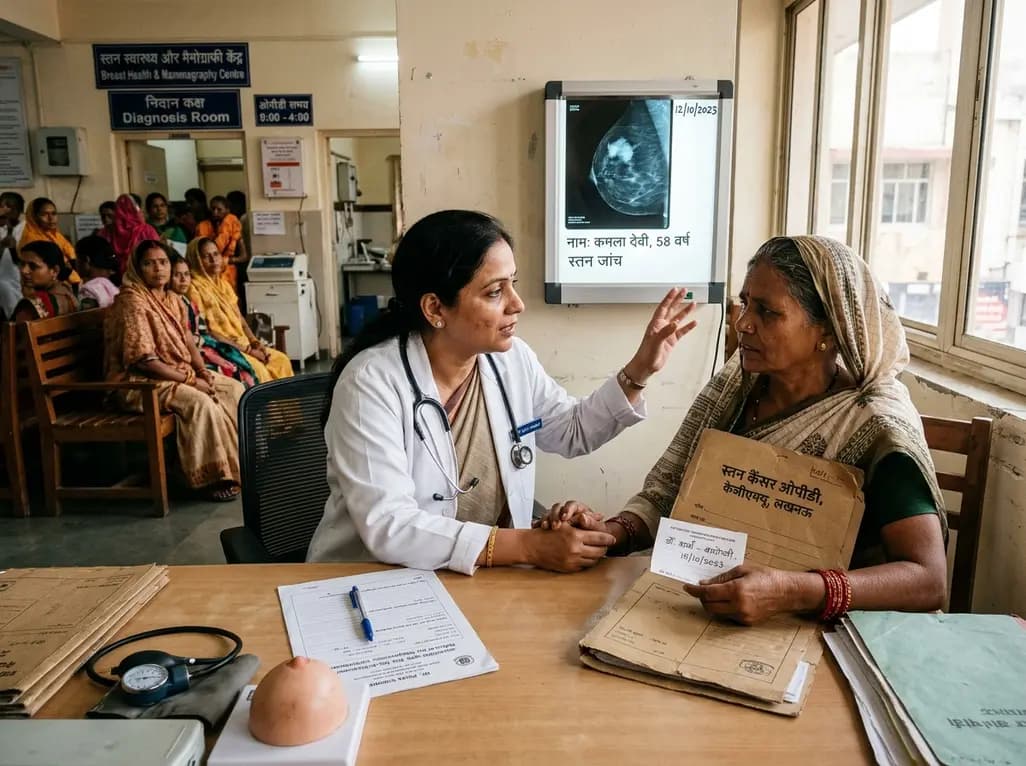
A KGMU study reveals over half of women with breast abnormalities fail to undergo diagnostic confirmation, leading to advanced-stage detection. Discover the socio-cultural barriers, clinical risks of incomplete resection, and community-level solutions needed to bridge the critical screening-to-diagnosis gap in India.
Yesterday

A controlled evaluation reveals that AI raters in clinical LLM benchmarking disagree significantly due to divergent scoring models, challenging automated healthcare AI validation.
Today

A meta-analysis of 18 studies reveals that bariatric surgery does not significantly alter circulating homocysteine levels, regardless of follow-up duration. Clinicians must maintain vigilance over post-surgical micronutrient supplementation to prevent hyperhomocysteinemia.
Today
