

Loading, please wait...
Loading, please wait...

Maintaining adequate oral health poses persistent challenges for children and adolescents living with physical or developmental disabilities. Dental anxiety frequently triggers severe behavioral resistance, which impairs professional prophylaxis and compromises daily domestic plaque removal. Consequently, clinicians continuously explore novel behavioral guidance modalities to support vulnerable pediatric populations. Recent clinical evidence demonstrates that structured dog-assisted oral hygiene interventions can effectively transform dental visits into reassuring encounters. By pairing trained canine companions with preventive sessions, practitioners foster comfort, improve compliance, and enhance patient adherence both in the clinic and at home.
Children with intellectual and developmental impairments experience significantly higher rates of dental caries and periodontal disease compared to their peers. Furthermore, these pediatric patients often exhibit sensory processing differences that make oral examinations intensely overwhelming. Dental operatory lights, suction noises, and intraoral sensations frequently trigger severe distress and uncooperative behaviors. Consequently, routine appointments often escalate into traumatic experiences for both children and their caregivers. In many clinical settings, practitioners must resort to physical restraint or general anesthesia even for basic prophylaxis. However, pharmacological solutions carry inherent medical risks and fail to foster long-term behavioral adaptation. Moreover, caregiver-assisted brushing at home routinely becomes an exhausting battle characterized by defensive maneuvers and poor plaque removal. Therefore, chronic plaque accumulation leads to extensive enamel demineralization and gingival inflammation. Dental teams must recognize that emotional aversion represents the primary obstacle to successful preventive care. Establishing a predictable operatory environment remains essential for promoting cooperation. When healthcare teams address the root psychological causes of treatment refusal, they enable disabled individuals to acquire sustainable preventive behaviors that safeguard their overall health.
To evaluate non-pharmacological behavioral support, a recent randomized clinical trial evaluated eighty disabled pediatric participants aged 5 to 16 years. All enrolled subjects exhibited limited cooperation and poor baseline oral hygiene. Researchers randomly allocated the participants into two equal experimental cohorts to ensure methodological balance. In Group A, dental hygienists conducted standard oral hygiene sessions alongside a certified, thoroughly trained therapy dog and its professional handler. In contrast, clinicians treated participants in Group B within a conventional pediatric dental operatory without animal presence. The protocol standardized the educational instructions, cleaning tools, and intraoral maneuvers across both groups. Furthermore, examiners assessed plaque levels using the standardized Plaque Control Record at baseline before any procedural intervention. Following the clinical sessions, examiners repeated plaque measurements and recorded patient emotional responses using validated behavioral scales. Additionally, investigators guided caregivers on implementing domestic brushing protocols based on the clinical demonstrations. Consequently, the research design isolated the motivational influence of canine interaction, providing robust comparative data regarding procedural tolerance, plaque elimination, and domestic adherence.
The trial generated compelling quantitative findings favoring the animal-assisted protocol. Specifically, participants in the therapy dog cohort achieved a statistically significant reduction in their Plaque Control Record scores following the hygiene intervention. In contrast, subjects in the conventional dental group exhibited minimal improvement in plaque clearance. The physical presence of the canine companion distracted patients from unpleasant stimuli, enabling the dental team to perform thorough cleaning without eliciting resistance. Furthermore, clinicians successfully demonstrated proper brushing angles and sulcular cleaning techniques to caregivers while the child remained relaxed. This heightened cooperation directly translated into superior plaque removal efficacy during the appointment. Additionally, post-procedure evaluations revealed substantial improvements in emotional valence among children who interacted with the therapy dog. Participants reported reduced fear, fewer distress episodes, and noticeably positive attitudes toward oral care instruments. Caregivers also reported marked decreases in distress during daily toothbrushing routines at home. Therefore, animal-assisted protocols provide acute operatory benefits and sustained domestic oral health improvements for vulnerable pediatric patients.
The therapeutic impact of animal-assisted interventions stems from well-documented neurobiological and psychological mechanisms. Interacting with gentle therapy dogs stimulates oxytocin release while reducing serum cortisol concentrations and sympathetic nervous system arousal. Therefore, children who experience acute sensory overload find immediate comfort in stroking or observing a calm canine companion. The therapy dog acts as an unconditional social anchor, neutralizing the intimidating atmosphere of dental operatories. Furthermore, the presence of the animal diverts attentional focus away from clinical handpieces, mirrors, and dental lighting. As a result, pediatric patients perceive the treatment room as a safe environment rather than a threatening medical chamber. This profound emotional shift facilitates greater trust between the child, the caregiver, and the dental practitioner. Additionally, observing the therapy dog receive mock dental examinations models cooperative behavior for hesitant children. By watching the dog calmly sit through toothbrush demonstrations, pediatric patients often mirror that acceptance voluntarily. Consequently, canine assistance transforms terrifying appointments into empowering learning experiences that permanently dismantle procedural phobias.
Integrating therapy animals into special needs dental clinics requires comprehensive planning and strict procedural governance. First, clinical directors must partner with certified animal-assisted therapy organizations to source thoroughly screened, highly trained dogs. These canine teams must demonstrate calm temperaments and complete indifference to clinical odors, unpredictable sounds, and sudden patient movements. Furthermore, dental practices must implement rigorous sanitation protocols to maintain impeccable infection control standards. Clinics must groom therapy animals prior to appointments and inspect them regularly for zoonotic pathogens. In addition, dental staff must designate dedicated entry pathways and treatment suites to prevent cross-contamination across sterile operating fields. Clinicians should also verify patient medical records beforehand to screen for animal allergies or severe phobias. Moreover, dental hygienists and assistants must undergo basic training in canine-assisted behavioral management strategies. When dental teams collaborate seamlessly with professional animal handlers, they establish a secure framework that guarantees patient safety while maximizing therapeutic engagement. Structured implementation protocols ensure that animal-assisted services deliver consistent clinical benefits.
The positive evidence from randomized controlled research underscores the potential of animal-assisted therapy to reshape pediatric special needs dentistry. Dental curricula should incorporate training on innovative behavioral guidance modalities to prepare future practitioners for neurodivergent populations. Furthermore, health policymakers and insurance providers should recognize certified animal-assisted interventions as legitimate adjunctive therapies. Providing reimbursement for structured canine sessions would substantially broaden access for families caring for disabled children. Additionally, academic institutions must conduct larger multicenter trials to evaluate long-term periodontal endpoints, caries arrest rates, and economic cost-effectiveness. Researchers should also investigate how animal-assisted modalities influence home brushing consistency over multi-year follow-up intervals. As healthcare paradigms shift toward holistic, patient-centered care, dentistry must embrace evidence-based non-pharmacological innovations. Ultimately, integrating therapy dogs into specialized dental clinics humanizes treatment, alleviates profound anxieties, and protects vulnerable smiles. By adopting compassionate behavioral strategies, dental professionals ensure that every child receives high-quality preventive healthcare without fear or trauma.
Interacting with trained therapy dogs triggers neurochemical changes, including elevated oxytocin and reduced cortisol concentrations. Consequently, physiological stress markers and sympathetic nervous system arousal drop significantly during dental encounters. The gentle presence of the animal offers comfort, diverts attention from intimidating equipment, and transforms the operatory into a reassuring environment. As a result, children exhibit noticeably less distress, improved emotional regulation, and enhanced willingness to cooperate with preventive dental procedures.
Clinical trials primarily assess efficacy by measuring the Plaque Control Record before and after hygiene sessions. Furthermore, investigators record patient behavioral compliance, procedural duration, and distress indices using standardized observational scales. The documented data reveal that patients receiving animal-assisted support achieve statistically significant reductions in plaque accumulation. In addition, caregivers report sustained improvements in domestic toothbrushing adherence and reduced behavioral resistance during daily oral hygiene routines at home.
Dental clinics must enforce strict infection control and veterinary health protocols when introducing therapy animals. Certified dogs undergo rigorous health evaluations, parasite screening, and regular grooming to prevent zoonotic transmission. Furthermore, facilities maintain separate sterile operatory zones and confirm that patients have no animal allergies. Professional handlers manage the animal at all times, ensuring patient safety while maintaining the clinical integrity and hygiene standards of the dental setting.
Disclaimer: This content is for informational and educational purposes only and does not constitute medical advice, diagnosis, or treatment. It is not intended to replace clinical judgment or direct patient assessment by qualified healthcare professionals. Always consult appropriate specialty-specific guidelines and protocols. Refer to the latest local and national guidelines for clinical practice.
References

Read summarized clinical updates, watch expert medical content, and earn CME certifications right from your smartphone.
Open your smartphone camera to scan and install.





A randomized clinical trial demonstrates that dog-assisted oral hygiene significantly reduces dental anxiety, enhances patient compliance, and improves plaque control records among pediatric patients with physical and developmental disabilities.
Today
A multicenter evaluation reveals moderate and heterogeneous implementation of safety practices for high-risk medications across hospitals. While oncology drugs achieved high compliance, critical vulnerabilities persist in concentrated potassium, opioids, barcode verification, and clinical decision support.
Today

An intracranial EWSR1::CREM fusion sarcoma in a 31-year-old female manifested as a paraneoplastic inflammatory syndrome with anemia and secondary infertility. The dural mass mimicked meningioma, but gross-total resection resolved her systemic inflammation and restored natural fertility within one month.
Today

The DOMINO study protocol presents a multidisciplinary implementation mapping approach to overcome provider, patient, and payer barriers to antiobesity medications, offering vital insights for Indian clinicians managing the growing diabesity burden.
Today
An age-matched cross-sectional study reveals that lower muscle quality and impaired lower-extremity function strongly correlate with an increased fear of falling in older women, highlighting the necessity of targeted resistance training and balance interventions in geriatric care.
Today
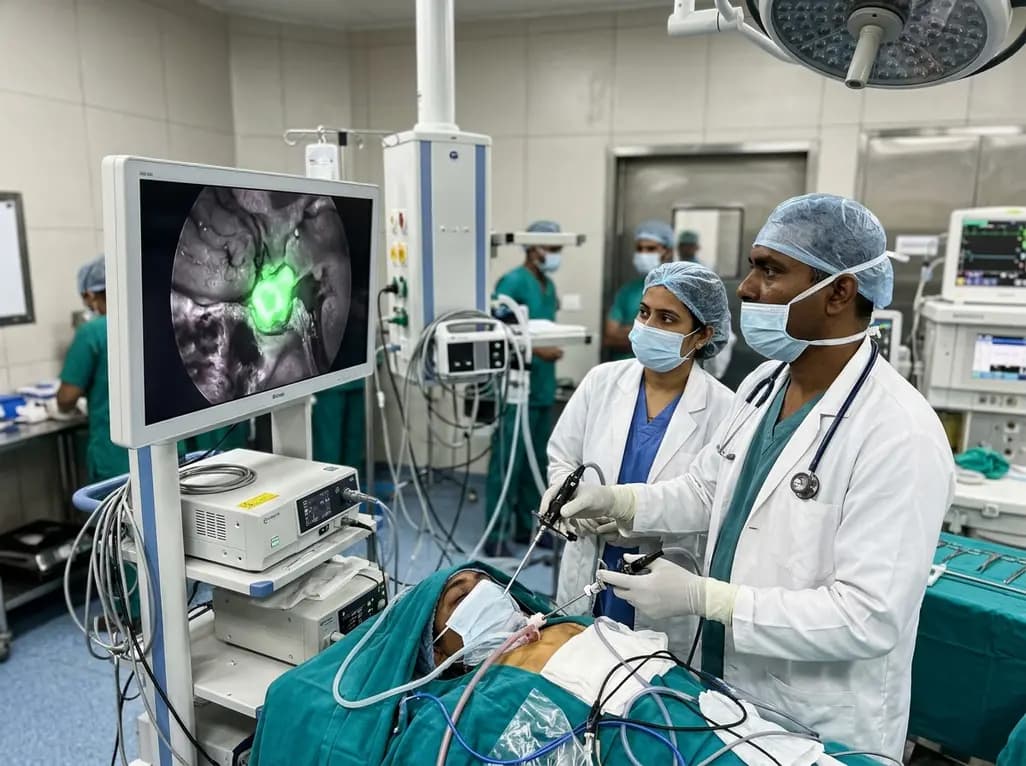
Near-infrared autofluorescence provides real-time label-free optical guidance during endoscopic transsphenoidal pituitary surgery. By highlighting stark signal contrasts between normal pituitary gland and adenomas, this technique aids gross-total tumor resection while safeguarding critical endocrine function.
Today
