

Loading, please wait...
Loading, please wait...

Administering high-risk medications safely remains a paramount clinical goal across inpatient settings. These pharmacological agents carry a heightened danger of causing catastrophic patient harm when clinical teams administer or prescribe them improperly. A multicenter descriptive study evaluated the nationwide adoption of recommended safety protocols across eighty-two public, general, and teaching hospitals. Consequently, the researchers identified crucial strengths alongside severe systemic deficits across daily hospital workflows.
The overall implementation rate reached only 52.7%, illustrating substantial institutional variability ranging from 29.7% to 81.1%. Furthermore, general baseline medication practices demonstrated an alarming compliance score of only 41.9%. These figures reveal that hospital environments often lack universal baseline defenses. Therefore, acute care facilities must urgently examine their current medication practices to prevent devastating adverse drug events.
Clinical leaders must recognize that organizational variability creates unpredictable care environments for vulnerable patients. While some tertiary centers show excellent compliance, neighboring regional facilities frequently lag behind in baseline safety protocols. Because of these systemic disparities, clinicians cannot assume that standard safeguards protect every patient consistently. Healthcare institutions must standardize critical safety baselines across every hospital department.
Hospital compliance differed dramatically across distinct pharmacological classes. For instance, antineoplastic medications achieved the highest implementation score at 80.5%. Oncology teams have long recognized chemotherapy hazards and developed robust compounding, labeling, and verification routines. Similarly, neuromuscular blocking agents reached 64.7%, while anticoagulants achieved 61.3% compliance. Insulin handling also surpassed the median threshold with a 54.8% adoption rate.
In sharp contrast, other lethal agents exhibited severe safety deficits. Specifically, hospital implementation for opioids dropped to 49.8%. More alarming, intravenous concentrated potassium chloride achieved an implementation score of only 35.6%. In addition, non-oncological methotrexate scored lowest at 33.8%. These concerning gaps create perilous hazards on general medical wards.
Accidental rapid infusions of concentrated potassium reliably cause fatal cardiac arrest within minutes. Therefore, clinical guidelines demand the complete removal of undiluted potassium ampoules from general floor stocks. However, many acute care units still store concentrated electrolytes insecurely without direct pharmacy oversight. Consequently, clinicians must demand standardized premixed intravenous infusions to prevent catastrophic dilution errors. Removing concentrated ampoules from nursing units represents an essential, life-saving structural reform.
The investigation highlighted striking disparities between basic physical controls and advanced electronic interventions. Most participating institutions successfully adopted safe storage rules, standardized dose expressions, and clinical monitoring guidelines. However, hospitals lagged substantially in adopting high-effectiveness technologies designed to eliminate human error at the bedside.
Specifically, clinical decision support alerts within electronic health records showed very low implementation levels. Furthermore, hospitals rarely deployed barcode medication administration across dispensing, preparation, and nursing administration stages. Point-of-care barcode scanning serves as an indispensable digital barrier that prevents wrong-patient and wrong-dose errors. Without automated scanning, busy bedside teams rely entirely on manual checks, which fail under heavy clinical workloads.
Additionally, hospitals rarely utilized automated smart infusion pumps with active dose error reduction systems for high-alert infusions. As a result, programming errors continue to reach patients undetected. Implementing closed-loop electronic medication management demands substantial capital investment and comprehensive institutional commitment. Nevertheless, health systems must prioritize these technological upgrades because human vigilance alone cannot eliminate preventable bedside mishaps. Hospital boards must allocate dedicated funding to modernize electronic prescribing and point-of-care verification.
Beyond technological hurdles, the study exposed significant vulnerabilities in clinical personnel deployment. First, hospitals demonstrated minimal integration of clinical pharmacists directly into inpatient acute wards. Clinical pharmacists intercept prescribing errors, calculate complex dosing regimens, and guide antimicrobial or anticoagulant therapies. When health systems isolate pharmacists inside central dispensaries, clinical teams lose real-time pharmacotherapy oversight at the patient bedside.
Similarly, pharmacy departments rarely prepared standardized intravenous admixtures under sterile, centralized environments. Consequently, ward nurses continue to reconstitute complex, concentrated medications on active floor units. This practice substantially increases contamination and calculation mistakes. Therefore, centralized intravenous preparation services provide an essential safety layer that shields both nurses and patients.
Furthermore, medication reconciliation during discharge showed remarkably poor execution across surveyed facilities. Care transitions create extreme risks for accidental medication omissions or lethal duplications. For example, patients frequently experience accidental daily dosing of weekly oral methotrexate during hospital discharge. Hospital leaders must systematically embed clinical pharmacists into ward rounds and discharge planning workflows. This structural transition guarantees seamless communication and protects vulnerable patients during fragile handoffs.
Closing the gap in medication safety requires comprehensive, multidisciplinary intervention across every clinical tier. First, hospital administrators must institutionalize continuous, mandatory training programs covering high-alert medication protocols. Notably, the study revealed that staff education remains one of the weakest links in current hospital operations. Because junior clinicians and rotating nursing staff frequently manage complex infusions, institutions must provide structured, competency-based simulation training.
Second, healthcare organizations should form specialized medication safety committees comprising physicians, clinical pharmacologists, quality officers, and bedside nurses. These multidisciplinary teams must review internal incident reports without assigning individual blame. By analyzing near misses, committees can identify fragile processes before fatal errors occur. Furthermore, hospitals must implement independent double-check procedures for high-risk subcutaneous insulin, concentrated electrolytes, and parenteral opioids.
Finally, health leaders must advocate for unified national benchmarks that enforce high-alert safety mandates across all health sectors. Standardizing colored auxiliary warning labels, restricting ward access to lethal agents, and mandating automated dispensing cabinets yield immediate safety gains. Ultimately, cultivating an open safety culture where clinicians report system hazards without fear of punitive retribution will drive sustainable, enduring clinical excellence.
High-risk medications possess an exceptionally narrow therapeutic window, meaning minor dosing or administration errors can trigger life-threatening clinical harm. While clinicians may not make errors with these drugs more frequently than other agents, the physiological consequences of a mistake are uniquely devastating. For instance, accidental overdoses of concentrated electrolytes, insulin, or opioids cause rapid cardiac arrest, irreversible brain injury, or sudden respiratory depression, leaving bedside providers minimal time to deliver rescue interventions.
Barcode medication administration electronically verifies the five core medication rights directly at the bedside before drug delivery occurs. The system matches the scanned barcode on the patient wristband against the scanned medication vial and the prescriber order. Consequently, this technology intercepts wrong-patient, wrong-route, and incorrect-dosage errors that human checks easily miss during stressful shifts. Automated scanning provides an essential objective barrier that protects both clinicians and patients from devastating administration mistakes.
Integrating clinical pharmacists into ward rounds substantially decreases preventable adverse drug events across hospital departments. Pharmacists evaluate patient-specific factors such as organ function, potential drug interactions, and proper dilution parameters in real time. Furthermore, they perform critical medication reconciliation during admission and discharge handoffs, preventing dangerous therapy duplications. Their direct clinical collaboration relieves nursing cognitive burdens, clarifies confusing orders immediately, and ensures health systems handle hazardous therapeutics strictly according to evidence-based institutional guidelines.
Disclaimer: This content is for informational and educational purposes only... Refer to the latest local and national guidelines for clinical practice.
References

Read summarized clinical updates, watch expert medical content, and earn CME certifications right from your smartphone.
Open your smartphone camera to scan and install.





A multicenter evaluation reveals moderate and heterogeneous implementation of safety practices for high-risk medications across hospitals. While oncology drugs achieved high compliance, critical vulnerabilities persist in concentrated potassium, opioids, barcode verification, and clinical decision support.
Today

An intracranial EWSR1::CREM fusion sarcoma in a 31-year-old female manifested as a paraneoplastic inflammatory syndrome with anemia and secondary infertility. The dural mass mimicked meningioma, but gross-total resection resolved her systemic inflammation and restored natural fertility within one month.
Today
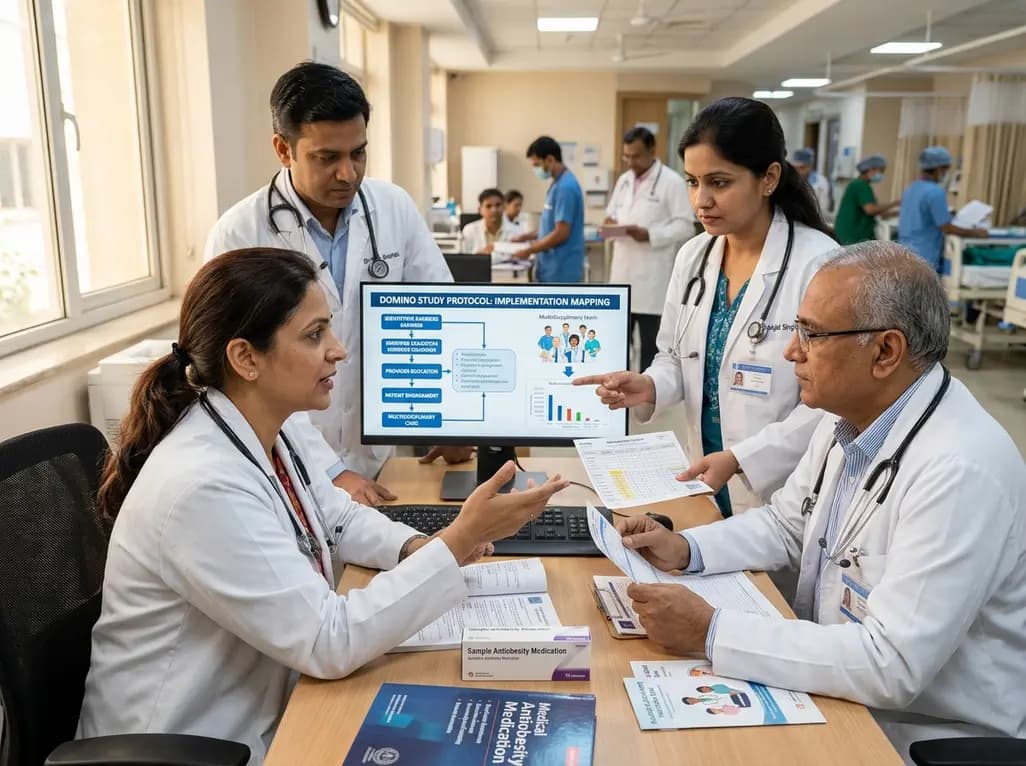
The DOMINO study protocol presents a multidisciplinary implementation mapping approach to overcome provider, patient, and payer barriers to antiobesity medications, offering vital insights for Indian clinicians managing the growing diabesity burden.
Today
An age-matched cross-sectional study reveals that lower muscle quality and impaired lower-extremity function strongly correlate with an increased fear of falling in older women, highlighting the necessity of targeted resistance training and balance interventions in geriatric care.
Today
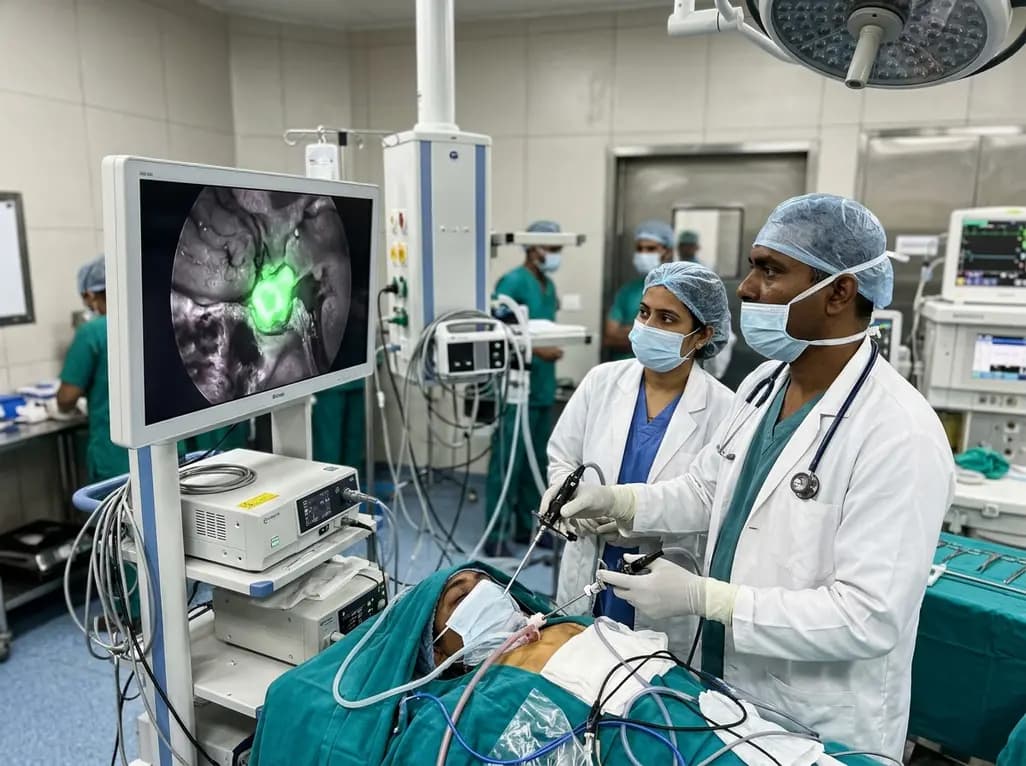
Near-infrared autofluorescence provides real-time label-free optical guidance during endoscopic transsphenoidal pituitary surgery. By highlighting stark signal contrasts between normal pituitary gland and adenomas, this technique aids gross-total tumor resection while safeguarding critical endocrine function.
Today
