

Loading, please wait...
Loading, please wait...
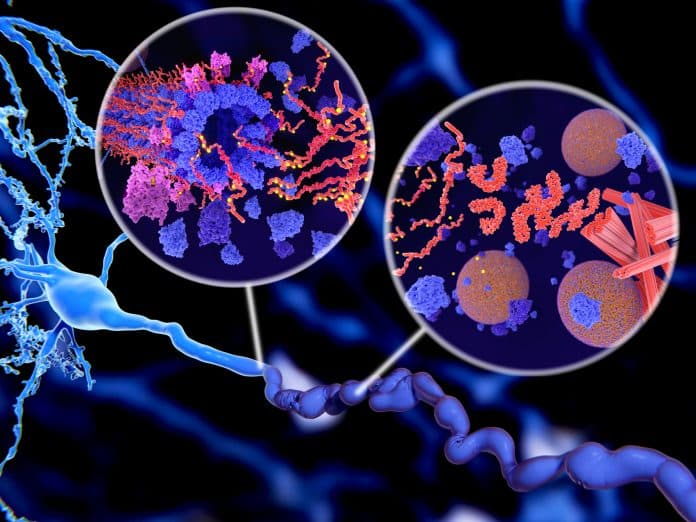
This secondary analysis of the TRAILBLAZER-ALZ 2 trial examined whether lower amyloid plaque levels after treatment were associated with slower clinical progression in early symptomatic Alzheimer disease. The analysis included 1,582 participants: 766 treated with donanemab and 816 receiving placebo. Lower post-treatment amyloid levels were strongly correlated with slower clinical worsening, measured using the integrated Alzheimer’s Disease Rating Scale (iADRS; \(R^2=0.73\); 95% CI, 0.37–0.97) and Clinical Dementia Rating–Sum of Boxes (CDR-SB; \(R^2=0.87\); 95% CI, 0.70–0.97). Lower amyloid levels were also correlated with reductions in plasma phosphorylated tau and glial fibrillary acidic protein, but not neurofilament light chain. These findings support a relationship between amyloid clearance and clinical outcomes. However, because this was a secondary, exploratory analysis, the correlations do not independently establish amyloid levels as a validated surrogate endpoint for clinical benefit.

Read summarized clinical updates, watch expert medical content, and earn CME certifications right from your smartphone.
Open your smartphone camera to scan and install.





This secondary analysis of the TRAILBLAZER-ALZ 2 trial examined whether lower amyloid plaque levels after treatment were associated with slower clinical progression in early symptomatic Alzheimer disease. The analysis included 1,582 participants: 766 treated with donanemab and 816 receiving placebo. Lower post-treatment amyloid levels were strongly correlated with slower clinical worsening, measured using the integrated Alzheimer’s Disease Rating Scale (iADRS; \(R^2=0.73\); 95% CI, 0.37–0.97) and Clinical Dementia Rating–Sum of Boxes (CDR-SB; \(R^2=0.87\); 95% CI, 0.70–0.97). Lower amyloid levels were also correlated with reductions in plasma phosphorylated tau and glial fibrillary acidic protein, but not neurofilament light chain. These findings support a relationship between amyloid clearance and clinical outcomes. However, because this was a secondary, exploratory analysis, the correlations do not independently establish amyloid levels as a validated surrogate endpoint for clinical benefit.
Today

Overexpression of glycoprotein nonmetastatic melanoma protein B (GPNMB) mediates resistance to CDK4/6 inhibitors like abemaciclib and palbociclib in ER+ breast cancer through integrin-driven AKT/ERK signaling. Targeting GPNMB with antibody-drug conjugates like glembatumumab vedotin may overcome this resistance.
Today

A secondary analysis of the MOMS clinical trial reveals that infant sex does not influence neonatal opioid withdrawal syndrome severity in buprenorphine-exposed newborns. Maternal co-exposures and clinical factors drive outcomes, highlighting the need for objective assessment and supportive breastfeeding.
Today

A comparative study reveals magnetic resonance elastography outperforms ultrasound elastography in assessing liver fibrosis in Fontan-associated liver disease, demonstrating stronger histological agreement and superior discrimination.
Today

A systematic review and meta-analysis highlights the substantial impact of plyometric jump training on jump performance, reactive strength, and landing kinematics in female team-sport athletes, providing evidence-based programming guidelines for sports medicine and orthopedics.
Today

A comprehensive review of the role of growth hormone in diabetic kidney disease and podocytopathy. Learn how elevated GH activates ZEB2, Notch, and TGF-beta1, driving podocyte loss and glomerulosclerosis, and explore novel targeted therapeutic approaches.
Today
