

Loading, please wait...
Loading, please wait...
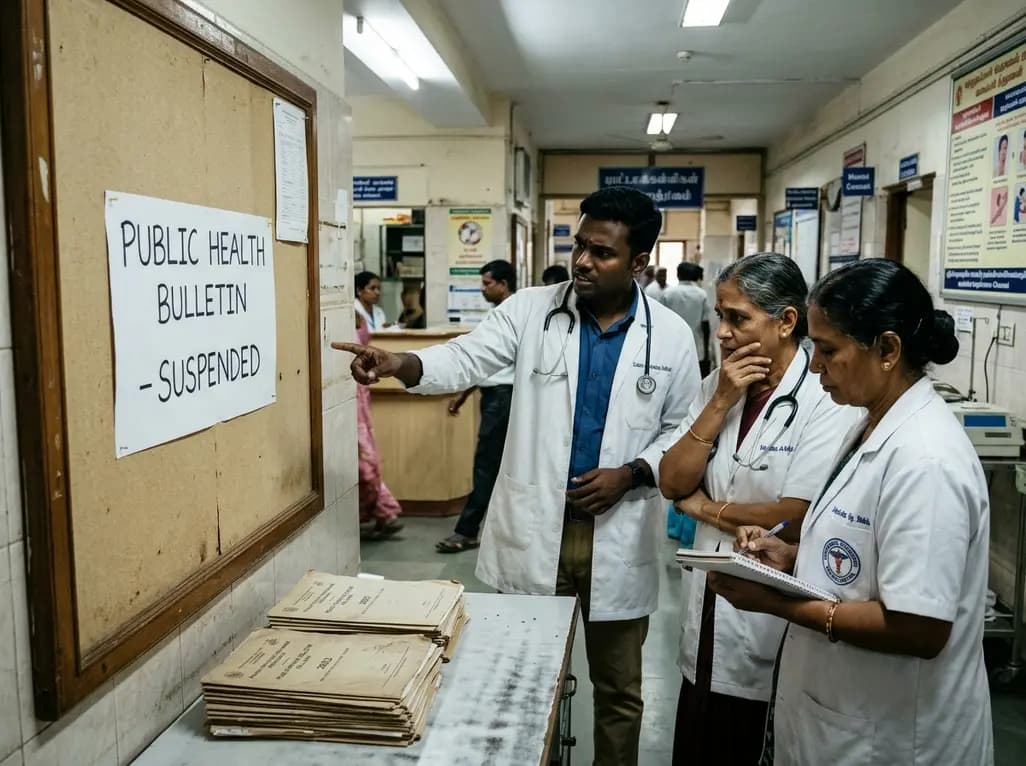
Access to reliable disease surveillance data forms the cornerstone of effective preventive medicine and clinical decision-making. When healthcare providers monitor circulating pathogen trends, they deliver accurate diagnoses and timely treatments. Recently, the Tamil Nadu Directorate of Public Health and Preventive Medicine suspended its monthly morbidity reports and departmental scientific journal. Consequently, this development has sparked serious concerns among medical practitioners and epidemiologists across India. Front-line clinicians require continuous information flow to maintain situational awareness regarding localized disease burdens and community wellness.
State health officials withdrew the monthly bulletins following growing administrative concerns regarding external data misinterpretation. Specifically, leadership noted that media outlets frequently highlighted raw positive cases without adjusting for diagnostic testing volumes. For example, viral fevers and vector-borne conditions routinely escalate during monsoon and summer months across south Indian districts. Health administrators argued that crude numbers created unwarranted panic when journalists presented them without historical epidemiological baselines. Furthermore, the state removed the dedicated monthly bulletin module from its official online portal. The department also stopped publishing the Tamil Nadu Journal of Public Health and Medical Research. That periodical previously documented important outcome studies regarding government schemes such as Makkalai Thedi Maruthuvam, rabies tracking, and non-communicable disease interventions. Therefore, administrative authorities justified the suspension as a measure to protect data integrity and avoid sensationalist coverage. Nevertheless, independent clinicians and public health experts view this drastic step as an unnecessary setback. They emphasize that withholding public data fails to address analytical inaccuracies in reporting. Instead, official silence creates a dangerous information vacuum that fuels public skepticism and erodes institutional credibility across the healthcare landscape.
Routine disease surveillance data provides medical doctors with indispensable epidemiological context for daily differential diagnoses. When a general practitioner evaluates acute febrile illness, local prevalence data dictates whether to test immediately for dengue, malaria, scrub typhus, or leptospirosis. In addition, knowing seasonal incidence thresholds helps doctors select appropriate empirical therapies without unnecessary diagnostic delays. Furthermore, routine bulletins inform primary care clinics about localized clusters before massive outbreaks overwhelm tertiary facilities. For instance, municipal pediatricians rely heavily on regional reporting to anticipate surges in hand, foot, and mouth disease or respiratory syncytial virus. Without open access to state-level statistics, medical practitioners must rely solely on isolated hospital admissions. Consequently, isolated institutional observations fail to capture broader community transmission patterns. Moreover, decentralized clinics in semi-urban pockets lose the capacity to identify emerging disease clusters early. Timely publication of monthly numbers directly protects community health and reinforces informed clinical decision-making. Front-line physicians can educate patients accurately when they possess verified figures regarding circulating community pathogens. In contrast, operating without transparent epidemiological reports forces practitioners to navigate diagnostic uncertainties blindly during volatile seasonal changes.
Public health administrators correctly highlight that untrained observers often misinterpret raw positive test counts. For example, expanded testing campaigns inevitably detect higher numbers of infections even when actual transmission rates remain perfectly stable. However, suppressing data access altogether creates severe secondary disadvantages for the entire healthcare ecosystem. Instead of removing bulletins, health authorities should provide contextualized interpretive summaries alongside raw figures. Specifically, state agencies can publish test positivity rates, rolling averages, and demographic breakdowns to guide correct interpretation. Furthermore, organizing regular press briefings led by trained epidemiologists can educate journalists on statistical nuances and seasonal baselines. Such collaborative communication bridges the knowledge gap between technical researchers, media professionals, and the wider public. Similarly, interactive epidemiological dashboards allow users to explore trends across time and geographic boundaries accurately without confusion. Thus, improving scientific communication represents a far more durable solution than halting publication entirely. Transparency builds long-term public trust, especially when communities face recurring seasonal infectious threats. Openness empowers both clinicians and citizens to respond rationally during public health emergencies.
The sudden withdrawal of regular public health updates significantly affects maternal and infant health surveillance across districts. Tamil Nadu has long maintained an exemplary national reputation for steadily reducing maternal and infant mortality rates through comprehensive primary care. However, routine bulletins provided the empirical foundation that validated these achievements and highlighted localized performance gaps. Independent researchers and obstetrical specialists regularly examined district-level mortality indicators to optimize clinical resource allocation. Furthermore, open reporting allowed clinicians to pinpoint specific taluks requiring enhanced obstetric intensive care infrastructure and trained personnel. In addition, academic researchers tracked neonatal mortality trends to evaluate the real-world impact of field-level interventions and nutritional schemes. When public health departments halt these publications, independent verification becomes virtually impossible for the scientific community. Consequently, program managers struggle to recognize emerging deficits in antenatal screening, institutional delivery protocols, or postnatal monitoring. Restoring regular publication therefore remains vital to sustain the state’s commendable record in reproductive and child healthcare outcomes. Transparent monitoring ensures that vulnerable populations continue to receive timely clinical attention and institutional support.
Rapid outbreak identification depends directly on seamless communication between surveillance units and treating physicians. During transitions between dry and wet seasons, vector-borne infections such as dengue and chikungunya can surge rapidly across urban areas. Similarly, acute respiratory infections and influenza strains require continuous monitoring to guide antiviral deployment and supportive bed allocation. Furthermore, public health bulletins offer valuable insight into regional pathogen resistance profiles and rabies exposures. When clinicians track local infection trends, they avoid indiscriminate broad-spectrum antibiotic prescriptions in outpatient care. For instance, knowing that circulating respiratory illnesses are predominantly viral discourages empirical antibacterial therapy in primary clinics. Therefore, transparent surveillance reinforces ongoing antimicrobial stewardship campaigns across public and private hospitals alike. In contrast, the absence of timely community data often induces defensive prescribing habits among front-line clinicians. Doctors may prescribe unnecessary antibiotics when they lack confirmed data regarding local viral surges. Thus, open epidemiological reporting directly bolsters infection control, curbs drug resistance, and promotes rational therapeutic practices throughout the health system.
Q1: Why did the health department halt the release of monthly disease bulletins?
The Directorate of Public Health paused the monthly bulletins because news media allegedly misquoted case numbers and sensationalized routine seasonal trends. Health authorities noted that reporters frequently publicized crude positive cases without considering total tests performed or expected baseline variations. Consequently, state officials withdrew the bulletins and the departmental journal to prevent public panic and misrepresentation, although health experts argue that withholding data damages credibility.
Q2: How does halting disease surveillance data affect clinical practice and outbreak response?
Halting surveillance data deprives clinicians of critical epidemiological intelligence needed to differentiate circulating infections during seasonal surges. Without district-level morbidity statistics, physicians cannot easily anticipate outbreaks of dengue, influenza, or scrub typhus. In addition, researchers lose the ability to verify disease patterns or evaluate government health interventions, which ultimately compromises timely patient care, diagnostic precision, and rational antimicrobial prescribing across healthcare facilities.
Q3: What constructive measures can health authorities implement instead of suspending bulletins?
Instead of suspending publications, health authorities can release contextualized epidemiological reports featuring test positivity rates, moving averages, and demographic breakdowns alongside raw totals. Furthermore, state departments can conduct regular media briefings led by public health specialists to explain statistical nuances accurately. Implementing interactive digital dashboards also allows clinicians and journalists to evaluate trends within proper context while preserving vital public health transparency.
Disclaimer: This content is for informational and educational purposes only. It does not constitute medical advice or replace professional judgment. Refer to the latest local and national guidelines for clinical practice.
References

Read summarized clinical updates, watch expert medical content, and earn CME certifications right from your smartphone.
Open your smartphone camera to scan and install.





Tamil Nadu's decision to suspend its monthly public health reports and departmental research journal has prompted serious concerns across the medical community. Front-line physicians, epidemiologists, and researchers highlight the vital role of open epidemiological metrics in tracking seasonal infections and policy impact.
Today
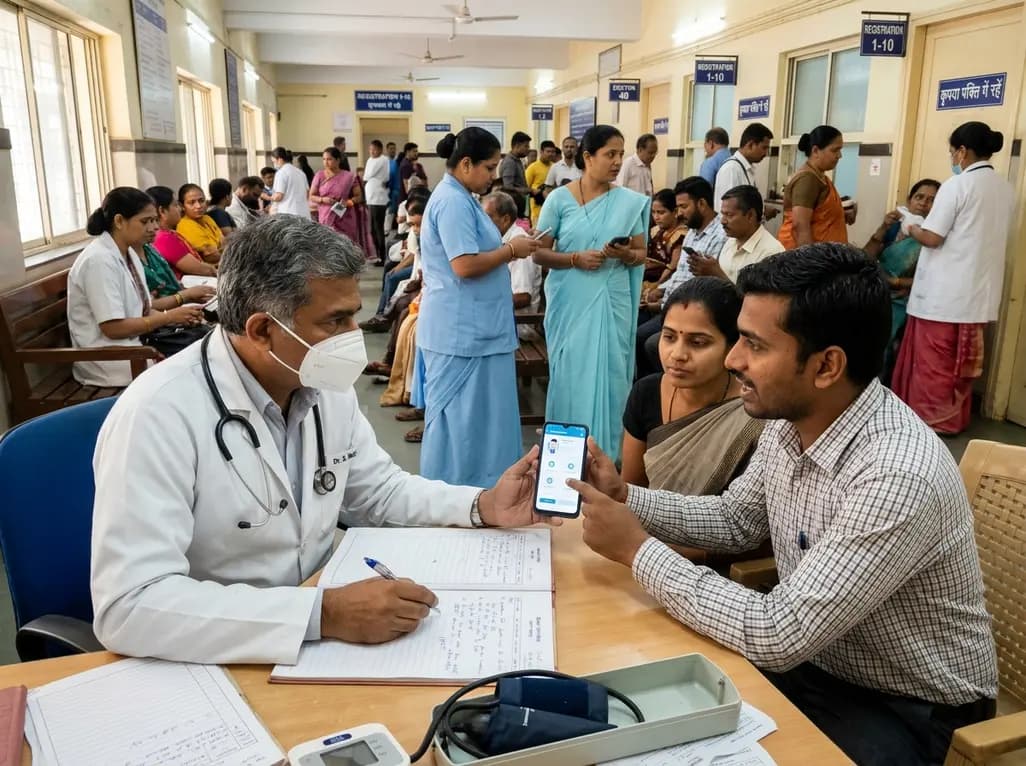
A recent Boston Consulting Group report shows 60 percent of Indian patients view digital sources as equivalent to doctor consultations. Clinicians must adapt to changing patient expectations regarding diagnostic clarity, price transparency, and rapid digital communication across clinical care pathways.
Today

Perimenopause brings erratic hormonal surges and metabolic shifts that significantly affect breast tissue. This comprehensive clinical review examines benign breast conditions, cancer risk stratification, mammographic density challenges, and endocrine therapy transitions in midlife women.
Today
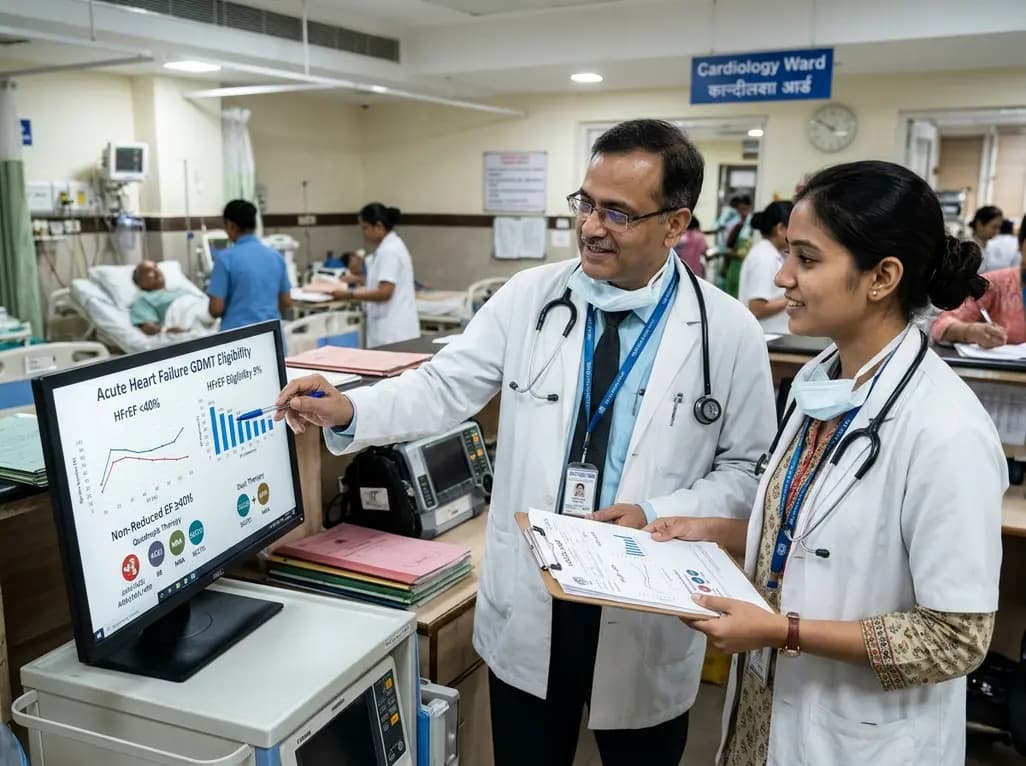
The VOCAL-AHF study reveals that most acute heart failure patients across reduced and non-reduced ejection fraction categories are eligible for in-hospital GDMT initiation. Notably, nearly two-thirds of HFrEF patients qualify for quadruple therapy, while non-reduced EF patients show high eligibility for dual therapy.
Today

A comprehensive scoping review synthesizes conservative and postsurgical carpal instability rehabilitation strategies, highlighting immobilization, targeted muscle recruitment, and proprioception to restore wrist stability.
Today

A novel fluorine-functionalized near-infrared copper fluorescent probe selectively illuminates lung tissue, revealing critical links between hyperglycemia, ER stress, and pulmonary malignancy for improved early diagnosis.
Today
