.webp&w=384&q=75)

Loading, please wait...
Loading, please wait...
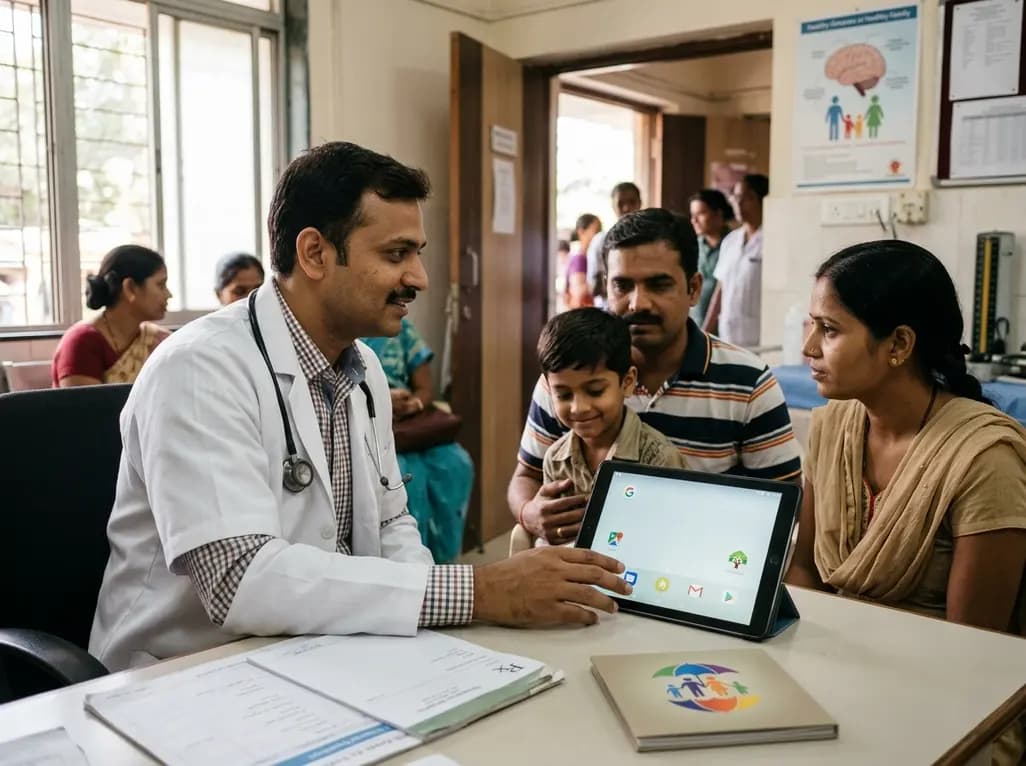
In today's highly interconnected world, children and adolescents in India spend an unprecedented amount of time on screens. To address rising parental concerns, Google India and YouTube partnered with top medical experts. Together, they have launched the Digital Wellbeing Guidebook to help families establish healthy digital habits. Consequently, this resource helps households build balanced digital routines through collaboration.
Establishing healthy digital habits requires a deep understanding of unique household dynamics across the Indian subcontinent. Unlike Western households where individual device ownership is common, millions of families in India share a single smartphone or tablet. Therefore, the Digital Wellbeing Guidebook focuses heavily on practical solutions tailored specifically for multi-generational, shared-device environments. For example, it highlights features such as profile switchers to separate adult accounts from child-friendly content. This practical feature protects child safety while maintaining adult privacy and recommendations on shared screens. Furthermore, the guide emphasizes the importance of moving away from abrupt, non-collaborative restrictions. When parents suddenly confiscate devices, they often trigger emotional outbursts and resentment. Instead, the guidebook encourages parents to co-create structured media agreements with their children. Consequently, children are more likely to respect boundaries when they are actively involved in designing them. Ultimately, setting these collaborative rules lays the groundwork for a lifetime of responsible technology use. In addition, this joint responsibility reduces daily power struggles and builds a foundation of mutual trust within the household.
To ensure advice is clinically sound, Google India partnered with top-tier mental health and pediatric specialists. Specifically, experts from NIMHANS and Fortis Healthcare contributed their extensive clinical experience. Clinical psychologists at NIMHANS explain that sudden, arbitrary restrictions can deeply isolate young children. Indeed, abrupt device snatching or sudden Wi-Fi shutdowns often foster severe rebellion rather than healthy behavior. Therefore, clinical experts advocate for a transition from monitoring technology to actively participating in it alongside children. In addition, healthcare providers emphasize that healthy digital routines must start with parents setting a positive example. If parents remain glued to their screens during meals, children naturally mimic this behavior. Consequently, the guidebook suggests designating specific areas, such as the dining table, as permanent tech-free zones. This structural change encourages face-to-face interactions and strengthens familial bonds. Ultimately, this cooperative model shifts the parenting dynamic from strict policing to supportive digital mentorship. Furthermore, this positive shift helps children view parents as allies rather than adversaries in their digital lives.
A core strength of this guidebook is its focus on the unique socio-cultural realities of Indian households. In many families, multiple generations live together, meaning a single smartphone is shared by grandparents, parents, and children. Obviously, this shared access poses unique challenges regarding child safety, adult privacy, and exposure to inappropriate content. To tackle this, the guidebook provides instructions on utilizing platform settings, including YouTube's 'Who's Watching' profile switcher. Consequently, children can explore age-appropriate educational videos while adults maintain private profiles on the same device. Furthermore, the guidebook addresses the crucial balance between academic technology use and leisure activities. In India, students heavily rely on online resources to prepare for school exams. However, parents often struggle to distinguish between productive study screen time and passive entertainment. Therefore, the guidebook recommends creating open, honest dialogue rather than implementing rigid time limits. Ultimately, this cooperative approach teaches children self-regulation, a vital skill in our digital society. In addition, encouraging regular physical activities and offline hobbies ensures a balanced lifestyle for growing children.
As digital transactions become mainstream across India, children are increasingly exposed to online financial environments. Indeed, many young people play mobile games or use educational apps featuring integrated purchasing systems. Consequently, parents face the growing risk of unauthorized digital spending and sophisticated online financial scams. To safeguard families, the guidebook offers vital advice on enhancing digital financial literacy among both parents and children. Specifically, it recommends utilizing robust parental control tools to prevent unauthorized downloads or in-app purchases. Furthermore, the guide suggests having open family discussions regarding the value of money in the digital realm. Parents should explain how virtual currencies and online payments work in the real world. In addition, teaching children never to share financial information online is a critical safety measure. Ultimately, fostering digital literacy across all generations ensures a safer online environment for every member of the household. Moreover, establishing these secure financial practices protects families from unexpected monetary losses while teaching valuable fiscal responsibility from an early age.
Many traditional parenting styles rely heavily on monitoring apps and restricting access to digital devices. However, modern child psychology experts suggest that this policing approach can often damage the parent-child relationship. Instead, the guidebook encourages parents to transition from passive monitoring to active participation in their children's digital lives. For example, playing video games together or exploring creative digital tools can build strong emotional connections. Consequently, children are more likely to seek parental guidance when they encounter uncomfortable situations online. Furthermore, active participation allows parents to model appropriate digital etiquette and responsible communication strategies. In addition, the guide suggests co-creating a family media agreement that applies equally to parents and children. Therefore, children do not feel unfairly targeted by household rules when they see parents cooperating too. Ultimately, active participation builds digital resilience and equips young people with the critical thinking skills needed to navigate the internet safely. In addition, this collaborative environment encourages children to express their concerns openly without fear of immediate punishment.
Q1: What is the main objective of the newly launched Digital Wellbeing Guidebook?
The guidebook helps Indian families develop healthier, more balanced digital habits together. Instead of promoting rigid screen-time bans, it offers evidence-based strategies developed alongside child development experts. Consequently, this resource assists Indian families in transitioning from policing technology to actively participating in safe online activities together, fostering strong trust and mutual respect between parents and children.
Q2: How does the guidebook address the challenge of shared devices in Indian households?
To address shared device challenges in India, the guidebook offers practical advice on utilizing platform security features. For example, it explains how to set up profile switchers like YouTube's 'Who's Watching' feature. This helpful tool safeguards children from inappropriate content while preserving adult privacy, ensuring a safe, personalized digital experience for every family member.
Q3: Why do clinical experts from NIMHANS advise against sudden screen-time restrictions?
Clinical experts explain that sudden, abrupt rules, like shutting off the Wi-Fi, often trigger severe behavioral conflicts. Indeed, such arbitrary restrictions make children feel isolated, defensive, and misunderstood. Therefore, experts recommend a collaborative approach where parents and children co-create mutually agreed boundaries, establishing sustainable technology habits without damaging the delicate parent-child relationship at home.
Disclaimer: This content is for informational and educational purposes only. It does not constitute medical advice or replace professional judgment. Refer to the latest local and national guidelines for clinical practice.
References

Read summarized clinical updates, watch expert medical content, and earn CME certifications right from your smartphone.
Open your smartphone camera to scan and install.





Google India and YouTube, in partnership with NIMHANS and Fortis Healthcare, have launched a new Digital Wellbeing Guidebook. This resource provides Indian families with practical, evidence-based strategies to manage screen time, share devices safely, and co-create healthy digital habits together.
3 months ago

Explore vital recurrent stroke predictors in lacunar stroke patients managed with intensive blood pressure lowering. This analysis examines trial findings from SPS3 to uncover residual vascular risks, metabolic factors, and targeted secondary prevention strategies for high-risk neurological patients.
Today
A comprehensive scoping review synthesises evidence linking prenatal maternal mental health to long-term offspring neurodevelopment, evaluating neuroendocrine, inflammatory, and epigenetic pathways while highlighting clinical screening and future research priorities.
Today

The Directorate General of Health Services directs Indian states to halt the hazardous reuse and reprocessing of single-use medical devices. Discover regulatory implications under the Drugs and Cosmetics Act, critical infection risks, legal liabilities, and operational changes required across clinical specialties.
Today

Mitochondria-targeted nanoparticles self-assembled from EGCG and L-glutamic acid effectively restore mitochondrial homeostasis, suppress synovial inflammation, and attenuate chondrocyte senescence in osteoarthritis, offering a promising disease-modifying nanotherapy.
Today

India is advancing preventive healthcare by integrating genomics, artificial intelligence, and quantum technologies. With the SANGAM programme sequencing one million Indian genomes, clinicians can unlock personalized therapies, detect cardiometabolic risks early, and curb the burden of diabetes and heart disease.
Today
