

Loading, please wait...
Loading, please wait...
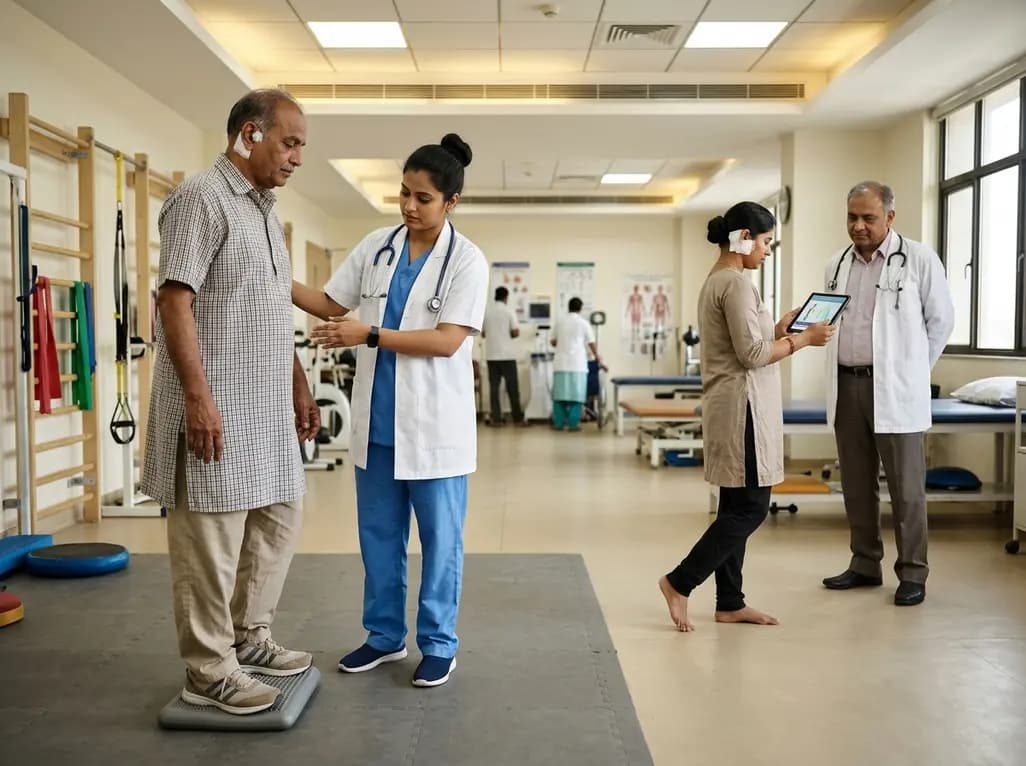
Resection of vestibular schwannoma often precipitates acute peripheral vestibulopathy, leaving patients with distressing vertigo, oscillopsia, and chronic imbalance. Consequently, clinicians routinely prescribe structured vestibular rehabilitation to accelerate central neuroplastic adaptation. A newly published randomized controlled trial evaluates whether digital mobile health applications can deliver this critical physical therapy as effectively as conventional hospital-based sessions.
Surgical excision of cerebellopontine angle tumors frequently injures or sacrifices vestibular nerve fibers. As a result, patients experience an immediate loss of resting tonic input from the operative inner ear. This abrupt unilateral sensory deafferentation drives distressing vertigo, spontaneous jerk nystagmus, postural instability, and oscillopsia during head rotation. Although central compensation initiates promptly within the brainstem and vestibulocerebellum, many surgical patients experience protracted functional limitations that severely disrupt daily life and delay vocational return.
Furthermore, traditional recovery pathways rely on frequent outpatient visits to tertiary physical therapy departments. In routine clinical practice, however, long travel distances, transportation costs, post-craniotomy fatigue, and scheduling conflicts impede consistent attendance. Clinicians therefore require accessible, reliable strategies to sustain patient compliance in the home environment. Smartphone technology offers an appealing solution through customized digital applications. These mobile platforms deliver standardized balance demonstrations, track symptom fluctuations, and monitor exercise adherence in real time. Nevertheless, rigorous clinical trials must verify whether remote software matches the efficacy of supervised hospital rehabilitation before surgeons adopt digital protocols broadly.
To evaluate mobile solutions rigorously, researchers conducted a prospective randomized controlled trial at the Eye and ENT Hospital of Fudan University. Specifically, investigators enrolled 60 adult patients undergoing unilateral vestibular schwannoma surgery between October 2023 and May 2025. The study team randomly allocated participants into two equal cohorts of 30 patients. Both cohorts engaged in an intensive 90-day vestibular rehabilitation regimen following microsurgical tumor resection.
However, the intervention delivery modality differed markedly between the two trial arms. Patients in the intervention group utilized a customized mobile application that guided daily gaze-stabilizing maneuvers, tracked symptom recovery, and logged exercise completion. Conversely, patients in the control cohort received standard face-to-face clinical instruction and periodic outpatient follow-up visits from experienced physical therapists. The primary study endpoint was the between-group difference in the Dizziness Handicap Inventory score change from baseline to postoperative day 90. In addition, secondary measures captured visual analog scale scores for subjective symptoms alongside the documented incidence of vertigo, dizziness, oscillopsia, and acute postural disequilibrium.
Overall, participant retention remained remarkably high across both study arms throughout the 90-day observation window. The research team gathered final Dizziness Handicap Inventory assessments for 52 of the 60 participants, and 49 patients completed paired baseline and day-90 scores. When investigators analyzed the primary endpoint, the adjusted between-group difference in score reduction was not statistically significant. Specifically, the adjusted mean difference showed -0.83 points with a 95% confidence interval spanning from -8.79 to 7.13.
Moreover, secondary endpoints demonstrated similar clinical equivalence between the two cohorts. Subjective symptom severity ratings on visual analog scales revealed no statistically significant differences between mobile application users and clinic attendees on postoperative days 7, 30, and 90. Both patient cohorts achieved substantial symptomatic relief and balance improvements over the three-month period, reflecting successful central neuroplastic adaptation. Therefore, mobile health delivery did not demonstrate superiority over conventional face-to-face care. Nevertheless, the trial confirmed that app-based instruction safely maintained patient progress, achieving comparable functional recovery without requiring frequent hospital travel.
Although 90-day functional scores demonstrated parity, investigators documented an intriguing secondary observation during the immediate postoperative period. On postoperative day 7, only 53.3% of patients in the mobile health arm reported acute postural symptoms, compared to 83.3% in the face-to-face control group. Initially, unadjusted statistical analysis suggested a significant reduction in acute postural instability favoring the digital application cohort.
However, this difference lost statistical significance after researchers applied the Holm adjustment for multiple comparisons. Consequently, the study authors appropriately designated this early disparity as an exploratory observation that requires formal confirmation in future trials. Why might digital tools alter early postural recovery? Interactive mobile applications provide visual exercise prompts, structured checklists, and automated reminders directly at the patient bedside. As a result, hospitalized patients using digital software may initiate early mobilizing routines more independently than patients awaiting scheduled physical therapy rounds. Thus, future studies should investigate whether structured digital coaching accelerates early mobilization and safely shortens inpatient hospital length of stay.
These clinical trial findings provide actionable insights for neurosurgeons, otolaryngologists, and allied rehabilitation clinicians managing skull base pathology. Because digital rehabilitation yielded functional outcomes comparable to traditional care, mobile platforms offer an effective alternative for overcoming geographical barriers. In developing healthcare ecosystems where patients travel vast distances to reach tertiary neurosurgical centers, mobile technology ensures uninterrupted therapeutic continuity after hospital discharge.
Furthermore, smartphone apps enable automated adherence tracking, allowing clinical teams to monitor recovery remotely. Clinicians can review uploaded symptom trajectories to identify patients struggling with vestibular decompensation, escalating them to personalized physical therapy promptly. However, digital health solutions cannot replace hands-on medical evaluations. Clinicians must still perform comprehensive pre-discharge examinations to rule out cerebellar deficits, cerebrospinal fluid leaks, or cranial neuropathies before prescribing home exercise programs. Ultimately, establishing a hybrid care framework that pairs initial inpatient instruction with app-guided home rehabilitation provides a practical pathway to optimize patient autonomy, lower costs, and enhance long-term balance recovery.
Vestibular rehabilitation accelerates central neuroplastic compensation after surgical resection disrupts vestibular nerve signaling. Because the sudden unilateral loss causes asymmetric vestibular input, patients suffer vertigo, oscillopsia, and balance disturbance. Structured rehabilitation exercises stimulate the brainstem and cerebellum through repetitive gaze stabilization, habituation, and gait retraining. Consequently, these targeted movements retrain the central nervous system to substitute visual and somatosensory inputs, restoring functional equilibrium and reducing persistent dizziness.
No, the randomized trial demonstrated that mobile health guidance did not produce superior outcomes compared to conventional face-to-face therapy. After 90 days of rehabilitation, changes in Dizziness Handicap Inventory scores and visual analog scale symptom ratings showed no statistically significant differences between cohorts. However, the mobile app achieved equivalent therapeutic benefit. Therefore, digital applications serve as an effective, accessible alternative when geographic barriers or scheduling conflicts prevent regular hospital clinic visits.
Clinical guidelines recommend initiating gentle vestibular rehabilitation exercises early during the acute postoperative recovery phase once the patient is hemodynamically stable. Beginning eye tracking, head turns, and supported upright sitting within the first postoperative week fosters rapid central compensation. In the trial, early app engagement correlated with fewer reported postural symptoms on postoperative day 7. However, clinicians must supervise initial mobilization to prevent accidental falls and rule out surgical complications.
Disclaimer: This content is for informational and educational purposes only... Refer to the latest local and national guidelines for clinical practice.
References

Read summarized clinical updates, watch expert medical content, and earn CME certifications right from your smartphone.
Open your smartphone camera to scan and install.





A randomized controlled trial assessed whether a mobile app improves vestibular rehabilitation outcomes following vestibular schwannoma surgery compared to standard in-person physical therapy, finding comparable 90-day recovery between groups.
Today

A Bayesian component network meta-analysis of 130 RCTs reveals that self-monitoring and gamification provide the clearest positive effects in mHealth physical activity interventions, while social comparison may have adverse psychological trade-offs.
Today

The GESS-AEEM consensus establishes a clear clinical implementation framework for testosterone therapy in postmenopausal women with hypoactive sexual desire disorder, focusing on transdermal dosing, precise laboratory monitoring, and safety communication.
Today

A multicenter observational study evaluated an 8-week digital health monitoring platform using wearable sensors in ambulatory heart failure. While participants achieved high daily wear-time of 11.7 hours and 80% completion, initial recruitment revealed significant technology-related onboarding barriers.
Today

A paired cadaveric study compared triple and quintuple percutaneous Achilles tendon lengthening. While quintuple hemisection showed numerically greater elongation, differences were not statistically significant.
Yesterday

A clinical decision-support framework using health checkup data from 231,683 adults predicts incident obesity with high discrimination (AUROC 0.918). The system integrates temporal survival analysis and risk-factor explanations to prioritize individualized preventive interventions.
Today
