.webp&w=384&q=75)

Loading, please wait...
Loading, please wait...
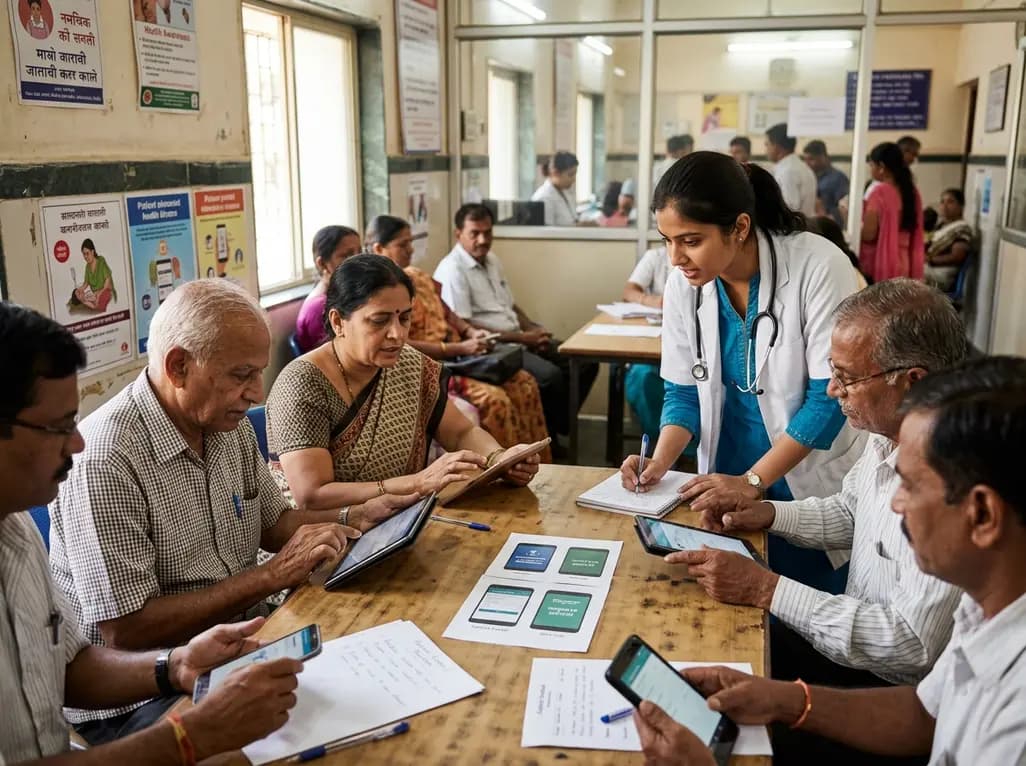
Digital health innovations continue to transform outpatient medical care across primary healthcare environments. However, clinicians often discover that varying levels of digital health literacy create noticeable barriers to care delivery. Patient-facing portals, smartphone applications, and remote monitoring software offer substantial clinical advantages only when diverse patients can easily navigate them. Consequently, healthcare organizations must actively evaluate usability barriers to achieve true digital health equity across all demographic groups.
Modern outpatient practices increasingly rely on patient portals, telehealth platforms, and automated messaging systems. While these tools aim to streamline consultations, they often assume a baseline technical proficiency that many patients lack. Therefore, assessing baseline digital health literacy within adult primary care cohorts has become a pressing clinical priority. When healthcare systems overlook user capability, they risk widening existing socioeconomic disparities in clinical outcomes.
Primary care teams frequently encounter patients who struggle with dual-factor authentication, portal registration, or laboratory result interpretation. Furthermore, language preferences and age strongly influence how readily an individual navigates electronic healthcare interfaces. A cross-sectional investigation evaluating a dedicated patient tech testing panel demonstrated that technical familiarity varies widely across patient populations. Consequently, routine screening for digital literacy allows clinicians to identify patients who require guided onboarding or alternative communication pathways.
By treating digital literacy as an actionable vital sign, clinics can proactively address navigation hurdles. Clinicians can then deploy targeted educational resources before communication breakdowns occur. Ultimately, structured literacy assessments help healthcare organizations design inclusive clinical workflows that serve vulnerable populations effectively.
To bridge usability gaps, medical centers are establishing patient tech testing panels to evaluate digital tools prior to widespread implementation. These testing panels recruit individuals directly from adult primary care practices to test software interfaces, interactive forms, and patient educational portals. Because developers often design interfaces in isolated technical environments, real-world patient evaluations reveal friction points that standard software testing misses.
Furthermore, an effective tech testing panel must deliberately mirror the community's cultural, linguistic, and generational diversity. When panels include non-English speakers, older adults, and individuals with lower educational attainment, clinicians obtain realistic feedback regarding accessibility. Participants engage in structured usability testing, completing standard tasks such as booking appointments or viewing electronic prescriptions. As a result, software developers and clinical leadership receive granular observations on confusing terminology, font sizes, and counterintuitive layouts.
Moreover, active patient engagement fosters mutual trust between communities and health systems. Patients feel valued when healthcare administrators actively seek their perspectives. Tech testing panels therefore serve as vital collaborative instruments, ensuring that digital health solutions fulfill genuine patient needs rather than imposing unnecessary cognitive burdens on vulnerable users.
Digital exclusion disproportionately affects patients from historically marginalized backgrounds and individuals with limited language proficiency. Consequently, health systems must pay strict attention to cultural adaptation and translation quality in all patient-facing applications. Research demonstrates that non-native language speakers encounter severe obstacles when navigating digital health interfaces that offer incomplete or poorly translated prompts.
In addition, device accessibility remains an uneven playing field. Many vulnerable patients rely solely on prepaid smartphones with constrained data plans, rather than high-speed broadband connections. Therefore, digital health platforms must function seamlessly on basic mobile web browsers without consuming excessive mobile bandwidth. If digital platforms demand high-speed connections or complex operating systems, they inadvertently isolate the patients who require ongoing chronic disease surveillance most urgently.
Primary care physicians witness these operational barriers firsthand during routine clinical consultations. When automated appointment reminders fail to reach patients or telemedicine portals freeze, clinical continuity suffers significantly. Health systems must therefore prioritize multilingual design, simplified navigation paths, and offline capabilities. By deliberately addressing linguistic diversity and device limitations, healthcare institutions ensure that modern primary care innovations benefit every demographic stratum.
Gathering feedback through testing panels represents only the first step; clinical leaders must translate these critical findings into operational practice. When panels identify persistent navigation bottlenecks, clinical informatics teams should rapidly revise portal layouts to eliminate clinical jargon and clarify action items. In addition, ambulatory clinics can introduce designated digital navigators or medical assistants to support patients during check-in.
Furthermore, medical teams can integrate brief digital readiness screening questions into routine nursing intakes. For instance, staff can ask patients if they feel comfortable navigating smartphone applications or if they prefer telephonic communication. When physicians understand a patient's technical comfort level, they can tailor their discharge instructions and follow-up strategies accordingly. A patient with limited tech literacy may benefit more from printed summaries or direct phone outreach rather than electronic portal notifications.
Moreover, ambulatory practices can organize community digital workshops to train patients on accessing their electronic health records. These initiatives enhance self-efficacy and chronic disease self-management. Ultimately, integrating patient-driven usability findings transforms health technology from an alienating barrier into an empowering clinical instrument that supports long-term primary care relationships.
As artificial intelligence and automated algorithms enter outpatient medicine, ensuring inclusive design becomes even more essential. Future digital health interventions must incorporate co-design methodologies that engage patients throughout the entire lifecycle of software development. Developers, healthcare administrators, and general practitioners must collaborate closely to ensure that novel tools remain intuitive and accessible.
Additionally, policymakers and healthcare leaders must recognize digital access as a fundamental social determinant of health. Investing in robust digital infrastructure, community internet access, and institutional digital navigators will yield measurable dividends in population health management. When patients effortlessly access their laboratory results and communicate with primary care teams, chronic disease outcomes improve and preventable hospital admissions decline.
Therefore, patient tech testing panels should become a permanent quality improvement mechanism across primary care networks worldwide. By continuously assessing user literacy and gathering feedback from diverse populations, healthcare providers can build inclusive healthcare ecosystems. Technology must ultimately serve the patient, bridging divides rather than reinforcing existing inequities in clinical care delivery.
A patient tech testing panel is an advisory group comprising diverse clinic patients who systematically evaluate digital health tools. These individuals test patient portals, mobile applications, and remote monitoring systems before widespread clinical deployment. By providing constructive feedback on usability, navigation, and language comprehension, the panel helps healthcare organizations identify operational barriers. Consequently, developers can optimize digital interfaces to ensure accessibility for individuals with varied technical backgrounds and literacy levels.
Assessing digital literacy allows healthcare teams to identify patients who struggle with modern communication technologies. When clinics assume universal tech competency, vulnerable patients often miss vital appointments, misunderstand laboratory notifications, or abandon digital portals entirely. Therefore, routine literacy evaluations enable clinicians to provide tailored technical onboarding, deploy digital navigators, or offer traditional communication channels. This proactive approach prevents widening disparities and ensures that all patients receive safe, high-quality, and equitable medical care.
Primary care practices can support patients by embedding dedicated digital health navigators within ambulatory clinics. These staff members guide patients through portal registration, password creation, and mobile app navigation during clinical visits. Furthermore, clinics should simplify digital interfaces by eliminating technical jargon and offering intuitive multilingual options. Providing clear printed instructional guides alongside automated telephone alternatives also ensures that patients who lack digital confidence remain connected to their clinical teams.
Disclaimer: This content is for informational and educational purposes only. It is not intended to be a substitute for professional medical advice, diagnosis, or treatment. Always seek the advice of your physician or other qualified health provider with any questions you may have regarding a medical condition. Never disregard professional medical advice or delay in seeking it because of something you have read here. Clinical procedures and guidelines may vary based on institutional policies and regional regulations. Healthcare professionals should make independent clinical decisions based on their expertise and the specific circumstances of each patient. The authors, contributors, and publishers are not responsible for any adverse effects or consequences resulting from the use of the information contained in this material. Refer to the latest local and national guidelines for clinical practice.
References

Read summarized clinical updates, watch expert medical content, and earn CME certifications right from your smartphone.
Open your smartphone camera to scan and install.





Patient tech testing panels offer an effective framework to assess digital health literacy in primary care. By engaging diverse patient cohorts across language preferences and technical skill levels, healthcare organizations can co-design equitable, accessible patient portals and mobile health interventions.
last month

Explore vital recurrent stroke predictors in lacunar stroke patients managed with intensive blood pressure lowering. This analysis examines trial findings from SPS3 to uncover residual vascular risks, metabolic factors, and targeted secondary prevention strategies for high-risk neurological patients.
Today

A comprehensive scoping review synthesises evidence linking prenatal maternal mental health to long-term offspring neurodevelopment, evaluating neuroendocrine, inflammatory, and epigenetic pathways while highlighting clinical screening and future research priorities.
Today

The Directorate General of Health Services directs Indian states to halt the hazardous reuse and reprocessing of single-use medical devices. Discover regulatory implications under the Drugs and Cosmetics Act, critical infection risks, legal liabilities, and operational changes required across clinical specialties.
Today
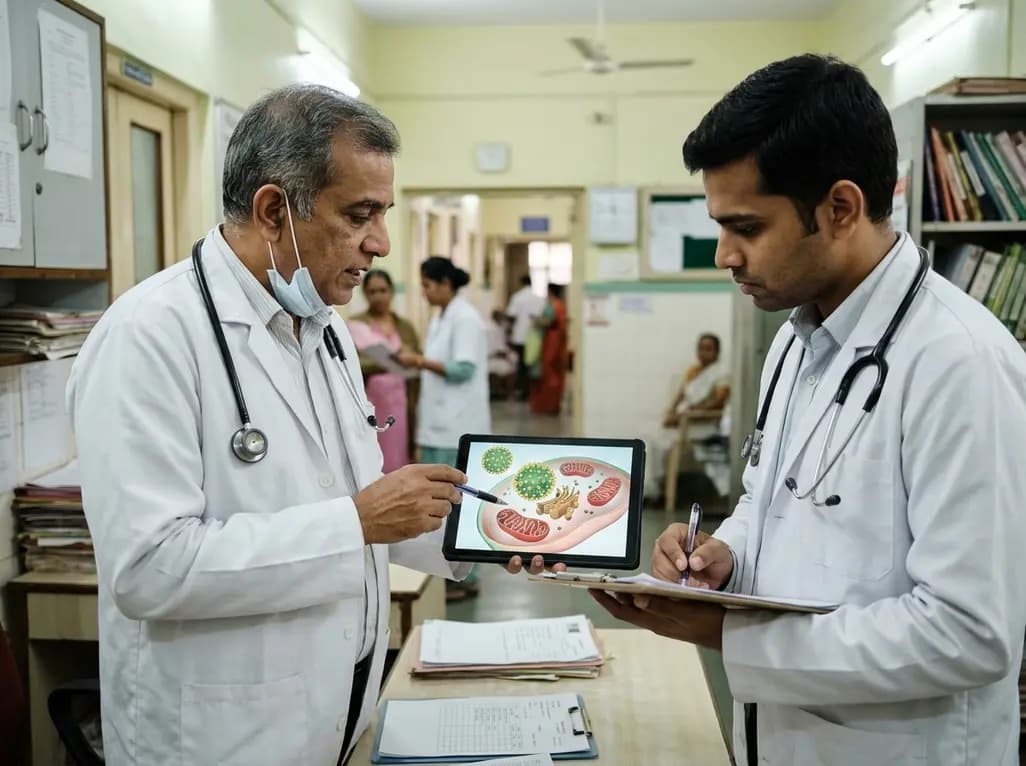
Mitochondria-targeted nanoparticles self-assembled from EGCG and L-glutamic acid effectively restore mitochondrial homeostasis, suppress synovial inflammation, and attenuate chondrocyte senescence in osteoarthritis, offering a promising disease-modifying nanotherapy.
Today

India is advancing preventive healthcare by integrating genomics, artificial intelligence, and quantum technologies. With the SANGAM programme sequencing one million Indian genomes, clinicians can unlock personalized therapies, detect cardiometabolic risks early, and curb the burden of diabetes and heart disease.
Today
