

Loading, please wait...
Loading, please wait...

As healthcare systems transition toward digital platforms, telemedicine and remote patient monitoring offer unprecedented opportunities for chronic disease management. However, digital device use remains a formidable hurdle for many older individuals facing physical and cognitive declines. When healthcare delivery depends on mobile applications, e-prescriptions, and virtual consultations, older adults often experience severe friction. A nationwide cross-sectional study recently evaluated how seniors interact with modern technology. By identifying patterns of engagement, clinicians can develop targeted strategies to ensure equitable care as medicine digitizes.
Latent class analysis of 7,470 community-dwelling seniors revealed four distinct behavioral clusters. Moderately active users formed the largest group at 33.4%, regularly using basic smartphone functions while struggling with complex health applications. Meanwhile, text-only users comprised 27.9% of the cohort, restricting their device interaction exclusively to basic short messaging. Digitally inactive seniors represented 23.9% of participants, exhibiting complete non-use or severe difficulty operating digital hardware. In contrast, only 14.9% of participants fell into the digitally active category, comfortably navigating diverse mobile software. These findings show that chronological age alone does not determine digital capability. Rather, older adults display significant heterogeneity in their everyday device habits. Primary care doctors and geriatricians must therefore avoid assuming uniform technical capability when prescribing mobile health applications or scheduling virtual clinical visits. Recognizing these four discrete tiers allows clinical teams to tailor communication methods effectively. Assessing baseline device familiarity prevents procedural delays and minimizes patient frustration during routine healthcare delivery.
The investigation demonstrated strong correlations between physiological status and technology proficiency. Compared to active users, seniors in the inactive and text-only subgroups displayed significantly lower cognitive functioning. Furthermore, digitally inactive adults required significantly greater assistance with activities of daily living. These observations confirm that digital exclusion closely mirrors broader physical and functional vulnerability. Physical declines, including hand tremors, diminished manual dexterity, and visual impairment, directly exacerbate adaptation difficulties. When visual contrast is inadequate or touch targets remain small, older adults struggle to navigate clinical software. Similarly, subtle memory deficits hinder their ability to recall complex passwords or multi-step authentication procedures. Demographic factors also compound these functional barriers. Specifically, advanced age, rural residence, lower household income, and lower education strongly correlated with restricted device engagement. Clinicians must therefore recognize digital exclusion as a vital determinant of health. When managing older patients with multiple chronic conditions, practitioners should actively assess digital adaptation hurdles alongside traditional functional evaluations.
Public health programs frequently emphasize digital literacy training through community workshops. However, the study results reveal a significant discrepancy in patient preferences. When asked about preferred support, digital accessibility support ranked highest at 36.6%, followed by digital literacy enhancement at 33.6% and age-friendly solutions at 29.9%. Crucially, regression analyses revealed that seniors with greater digital limitations preferred age-friendly design over standard literacy training. Inactive and text-only users showed nearly twice the odds of favoring simplified designs over educational courses. This finding highlights that usability barriers create greater resistance than skill deficits. Complex interfaces and frequent software updates rapidly overwhelm vulnerable older users. Consequently, expecting seniors with sensory or cognitive deficits to master intricate applications remains largely unrealistic. Healthcare software developers must instead focus on intuitive design architecture. Simplifying interfaces directly reduces cognitive burden, allowing older patients to engage with digital health tools without needing exhaustive training.
These behavioral findings provide actionable guidance for outpatient practices and hospital systems. Clinical practices must avoid relying exclusively on complex patient portals for vital appointment notifications or laboratory results. Instead, healthcare teams should establish flexible, multimodal communication pathways matching individual patient profiles. For instance, text-only users can effectively receive SMS appointment reminders and brief diagnostic updates, whereas inactive users require direct phone calls or caregiver involvement. Furthermore, primary care clinicians should systematically document preferred communication channels in electronic health records. Identifying digitally inactive patients during initial intake allows staff to offer printed educational materials and direct administrative support. Additionally, when prescribing remote monitoring devices, doctors should select hardware featuring large displays, tactile buttons, and automated cellular transmission. Such age-friendly features eliminate complicated Bluetooth pairing and smartphone synchronization. By tailoring operational workflows to patient capabilities, healthcare teams enhance therapy compliance and prevent clinical disengagement.
Health equity must remain central as health systems expand digital offerings. In rapidly developing nations, public programs increasingly digitize appointment booking, remote consultations, and record keeping. However, rural and socioeconomically disadvantaged seniors encounter severe barriers to device ownership and network connectivity. Health authorities must therefore embed age-friendly digital standards into national telemedicine platforms. Portals should support voice-activated navigation, high-contrast visual modes, and intuitive regional language options. Furthermore, healthcare policy must support community health workers who can assist seniors with electronic registrations during physical clinic visits. Hybrid healthcare models that integrate traditional physical consultations with digital services ensure that vulnerable seniors remain connected to necessary clinical care. Addressing both device accessibility and software usability prevents digital exclusion from amplifying existing healthcare disparities. Ultimately, intentional and age-friendly digital design empowers older adults to maintain functional independence and manage chronic diseases successfully.
Clinicians can assess digital capability during intake by asking brief questions about smartphone ownership, independent application use, and family assistance. Identifying whether a patient manages text messages independently or avoids digital devices entirely helps teams select appropriate communication channels. Documenting these specific preferences in electronic health records ensures that staff send critical appointment reminders and medical instructions through accessible, practical modalities.
Older adults favor age-friendly designs because physical limitations and cognitive declines make complex interfaces frustrating to navigate, regardless of educational training. Conventional classes often fail to overcome sensory challenges such as diminished eyesight or reduced manual dexterity. Conversely, simplified interfaces featuring large buttons, clear text, and voice controls eliminate operational hurdles, allowing seniors to interact with health tools independently without ongoing technical instruction.
Healthcare systems can support digitally inactive seniors by implementing hybrid communication models that maintain direct telephone calls and physical paperwork alongside digital portals. Engaging designated family caregivers during discharge planning and digital onboarding also provides vital assistance. Additionally, employing clinic-based digital navigators helps guide older patients through essential electronic tasks, preventing clinical disengagement and ensuring uninterrupted medical care.
Disclaimer: This content is for informational and educational purposes only. It is not intended to provide medical advice, diagnosis, or treatment. Always consult a qualified healthcare professional regarding any medical condition or treatment options. Refer to the latest local and national guidelines for clinical practice.
References

Read summarized clinical updates, watch expert medical content, and earn CME certifications right from your smartphone.
Open your smartphone camera to scan and install.





Latent class analysis of 7,470 older adults identified four distinct digital device use patterns. Findings indicate that usability and age-friendly design are prioritized over literacy training among seniors with adaptation barriers, offering key insights for geriatric clinical practice.
Today
A validation study evaluates the consumer-grade InBody Dial H30 bioelectrical impedance device against a 3-compartment criterion in recreationally active adults, revealing a slight overestimation in body fat percentage and underestimation in fat-free mass alongside notable individual limits of agreement.
Today

A nationwide survey reveals substantial knowledge gaps among general practitioners regarding fetal pathology and autopsy. Enhanced training and interdisciplinary communication are vital to guide stillbirth evaluation, clarify autopsy consent, and improve preconception counseling for bereaved parents.
Today
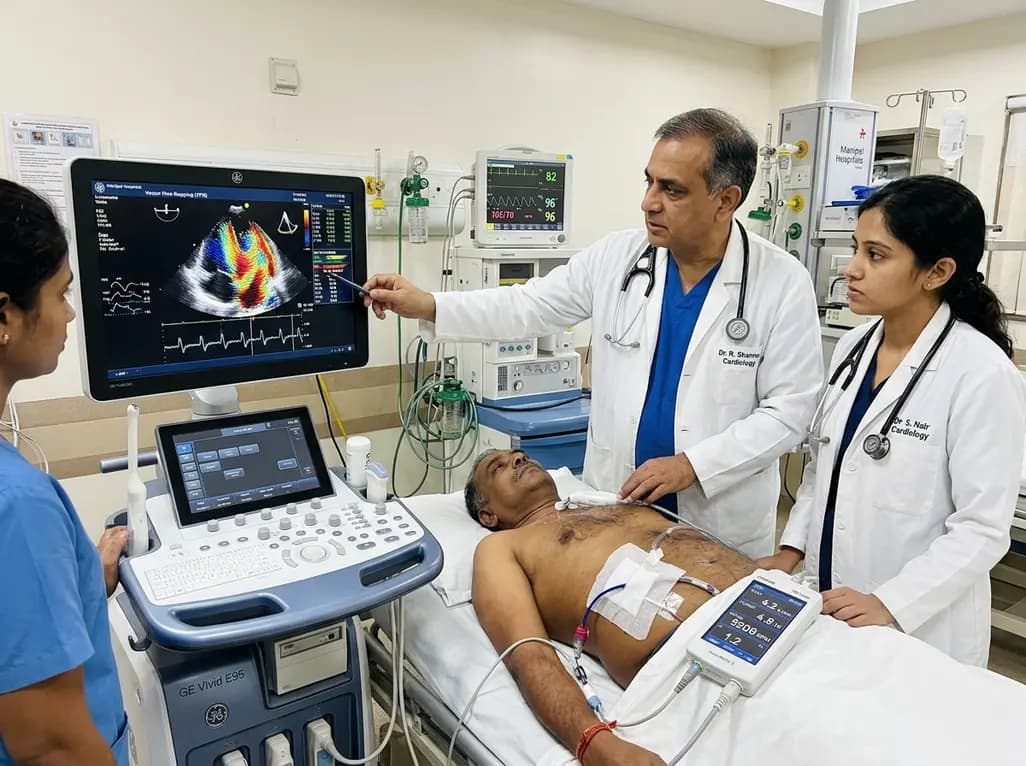
A pilot study shows that transesophageal echocardiography with vector flow mapping measures intraventricular energy loss in HeartMate 3 LVAD recipients. Energy loss significantly correlates with controller-displayed pump flow, offering clinicians deeper insights into ventricular unloading and intracardiac fluid mechanics.
Today

A comparative study demonstrates that simple and complex labral tears achieve comparable functional outcomes and low recurrence rates following arthroscopic stabilization for anterior shoulder instability, despite differing clinical presentations and dislocation histories.
Today

A nationwide analysis shows that inpatient lifestyle counseling for type 2 diabetes remains remarkably underutilized despite modest gains. Clinicians must bridge persistent demographic disparities and integrate structured dietary and exercise counseling into routine hospital discharge workflows.
Today
