.webp&w=384&q=75)

Loading, please wait...
Loading, please wait...

Managing hemodynamics during endovascular therapy remains a crucial challenge in acute ischemic stroke care. Clinicians frequently debate the optimal strategy for managing blood pressure during thrombectomy in patients presenting with emergent large vessel occlusion. While conventional guidelines recommend maintaining systolic parameters below uniform thresholds to prevent reperfusion injury, physiological autoregulation varies greatly across individuals. The landmark DETERMINE randomized clinical trial investigated whether tailoring hemodynamic targets to baseline pre-procedural readings provides superior neurological recovery compared to standard protocolized care.
Acute ischemic stroke caused by anterior large vessel occlusion disrupts cerebral autoregulation, making downstream tissue perfusion critically dependent on systemic perfusion pressure. Historically, international stroke guidelines have advocated for a one-size-fits-all approach to blood pressure management. These standard protocols primarily seek to prevent severe hypertension while avoiding intraprocedural hypotension. However, maintaining adequate collateral flow through the penumbral microvasculature often requires tailored perfusion pressures before recanalization occurs.
Consequently, many neurointerventionalists hypothesized that an individualized approach might safeguard vulnerable brain tissue more effectively. By anchoring periprocedural targets to the patient's presenting physiological state, clinicians hoped to preserve microvascular flow without provoking ischemic collapse or hemorrhagic transformation. Therefore, comparing personalized mean arterial pressure targets against conventional systolic boundaries became a fundamental research objective in modern interventional neurology.
The DETERMINE study was a multicenter, randomized, open-label clinical trial with blinded endpoint evaluation conducted across eight comprehensive stroke centers in France. Investigators enrolled adult patients presenting with acute ischemic stroke secondary to anterior circulation large vessel occlusion eligible for mechanical thrombectomy between March 2021 and September 2023. Participants were randomly assigned in a 1:1 ratio to either an individualized blood pressure management protocol or a standard control regimen during the intervention.
In the individualized arm, clinicians maintained the mean arterial pressure within 10% of the initial baseline measurement obtained immediately before the endovascular procedure. Conversely, the control arm utilized standard blood pressure boundaries, titrating vasoactive medications to maintain systolic blood pressure strictly between 140 and 180 mm Hg. The primary efficacy outcome was favorable functional recovery at 90 days, defined as a modified Rankin Scale score of 0 to 2.
A total of 433 patients were randomized across the participating comprehensive stroke centers. The cohort demonstrated a median age of 69.3 years, and 52.8% of the participants were female. When researchers evaluated primary functional outcomes at the 90-day follow-up mark, 44.2% of patients in the individualized blood pressure group achieved functional independence compared to 48.8% in the standard control group. Statistical analysis confirmed that this difference was not statistically significant, yielding an adjusted odds ratio of 0.82 with a 95% confidence interval ranging from 0.54 to 1.24.
Furthermore, ordinal shifts across the modified Rankin Scale spectrum showed equivalent distributions between both interventional strategies. These findings provide rigorous Class II evidence indicating that actively maintaining mean arterial pressure within narrow individualized limits offers no distinct clinical advantage over traditional systolic thresholds. Thus, standard hemodynamic protocols remain clinically sound for acute revascularization workflows.
Safety parameters represented a critical secondary focus in the DETERMINE trial. Researchers observed no significant discrepancies between the two treatment cohorts regarding periprocedural blood pressure levels or overall hemodynamic variability. Similarly, early neurological safety metrics demonstrated comparable stability across both randomized arms throughout the acute perioperative period.
Symptomatic intracranial hemorrhage rates assessed at 24 hours post-thrombectomy were nearly identical between the individualized and standard control cohorts. In addition, all-cause mortality at 90 days reached 18.8% in the individualized group compared to 16.4% in the control cohort, representing a non-significant difference with an adjusted odds ratio of 1.19. Consequently, personalized arterial pressure targeting did not increase adverse safety events, although it failed to confer measurable neuroprotection.
These findings provide actionable clarity for multidisciplinary stroke teams, neurointerventionalists, and neuroanesthesiologists managing endovascular emergencies. Revascularization speed remains the paramount determinant of functional independence in acute ischemic stroke. Implementing complex individualized hemodynamic monitoring strategies can occasionally divert clinical focus or prolong procedural preparation without conferring tangible clinical benefits.
Moreover, the results reassure practitioners that standard systolic targets between 140 and 180 mm Hg provide safe and effective hemodynamic control during mechanical thrombectomy. Clinicians should prioritize rapid recanalization while avoiding harmful hypotensive dips and extreme hypertensive spikes. Because routine protocolized targets perform comparably to complex individualized titration, stroke teams can maintain streamlined workflows without sacrificing patient safety.
Although the DETERMINE trial demonstrated equivalence between individualized and standard approaches before recanalization, optimal hemodynamic targets may evolve across distinct phases of stroke management. Future investigations must explore post-reperfusion blood pressure targets, particularly after successful arterial recanalization where lower blood pressure thresholds might mitigate reperfusion injury and edema formation.
Additionally, advanced neuroimaging tools that evaluate collateral status and tissue oxygenation may eventually uncover specific patient subgroups who benefit from individualized hemodynamic goals. Until such precision tools become standard, clinicians should follow established guideline parameters. Maintaining steady hemodynamics and executing rapid mechanical reperfusion remain the foundational pillars of acute stroke management.
The DETERMINE trial demonstrated that individualized mean arterial pressure targeting during mechanical thrombectomy did not improve 90-day functional independence compared with standard systolic blood pressure control. Both treatment approaches achieved comparable functional outcomes, safety profiles, symptomatic intracranial hemorrhage rates, and 90-day mortality.
The trial compared an individualized strategy maintaining mean arterial pressure within 10% of pre-thrombectomy baseline readings against a standard protocol maintaining systolic blood pressure between 140 and 180 mm Hg. Both protocols were continued throughout the endovascular procedure until reperfusion was achieved.
Clinicians should continue utilizing standard, guideline-recommended blood pressure targets, typically maintaining systolic levels between 140 and 180 mm Hg during thrombectomy. Streamlining periprocedural care to achieve rapid revascularization while preventing acute hypotension and severe hypertension remains the most effective management strategy.
Disclaimer: This content is for informational and educational purposes only and does not constitute medical advice, diagnosis, or treatment. Always consult a qualified healthcare professional regarding any medical condition or treatment decisions. Refer to the latest local and national guidelines for clinical practice.
References
Maïer B et al. Individualized vs Standard Blood Pressure Control During Thrombectomy for Ischemic Stroke: The DETERMINE Randomized Clinical Trial. Neurology. 2026 Sep 08. doi: 10.1212/WNL.0000000000218420. PMID: 42585603.
Turc G, Bhogal P, Fischer U, et al. European Stroke Organisation (ESO)–European Society for Minimally Invasive Neurological Therapy (ESMINT) Guidelines on Mechanical Thrombectomy in Acute Ischemic Stroke. J Neurointerv Surg. 2019;11(6):535-538.
Powers WJ, Rabinstein AA, Ackerson T, et al. Guidelines for the Early Management of Patients With Acute Ischemic Stroke: 2019 Update to the 2018 Guidelines for the Early Management of Acute Ischemic Stroke. Stroke. 2019;50(12):e344-e418.

Read summarized clinical updates, watch expert medical content, and earn CME certifications right from your smartphone.
Open your smartphone camera to scan and install.





The DETERMINE randomized trial evaluated whether individualized MAP targeting outperforms standard systolic targets during mechanical thrombectomy for anterior large vessel occlusion stroke. Findings show similar 90-day functional recovery and safety profiles between both management strategies.
last month

A feasibility study evaluates remote vital sign monitoring in acute hospital at home patients. Continuous wearable patches captured heart rate and respiratory rate with high adherence (89% and 75%), significantly exceeding manual spot checks for blood pressure, oxygen saturation, and temperature.
Today
A scoping review evaluates 116 studies on AI in women's reproductive health, finding that 83.6% carry high risk of bias. While ensemble models show promise, disparities and lack of validation hinder LMIC deployment.
Today
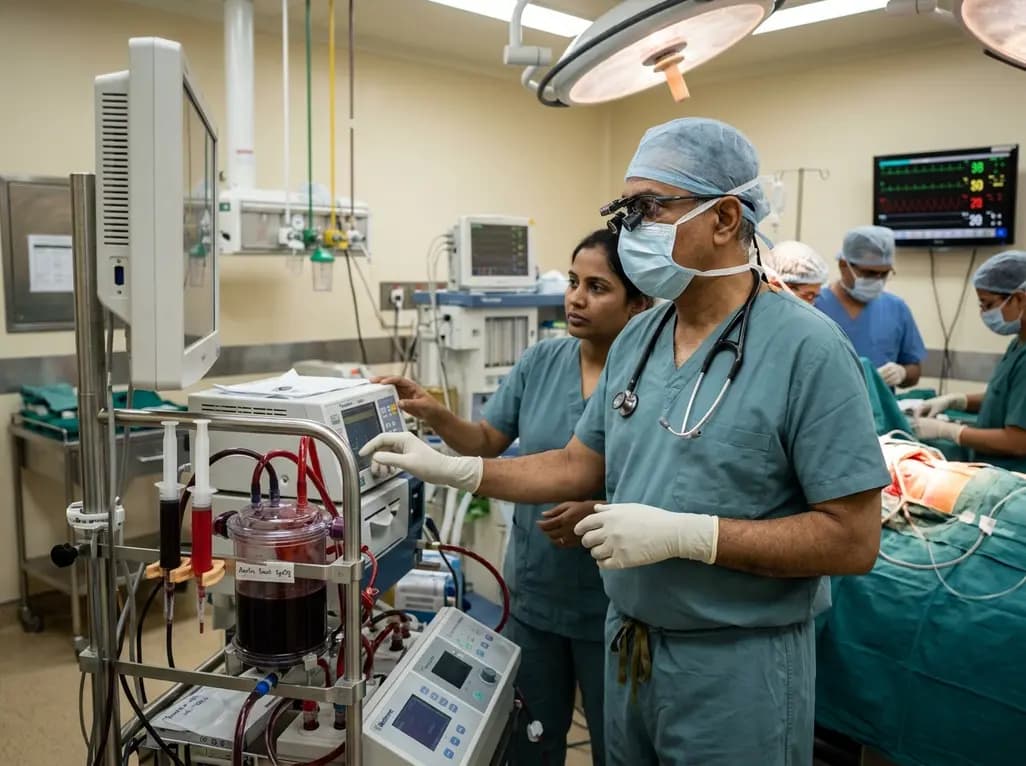
Differential oxygenation during peripheral TA-NRP can cause undetected coronary hypoxemia due to arch vessel clamping. A novel circuit with continuous aortic root monitoring detects desaturation early, facilitating left ventricular unloading and preventing allograft dysfunction and unnecessary heart discard.
Today

A longitudinal study reveals that patients undergoing staged bilateral hip arthroscopy experience progressive contralateral labral deterioration during surgical intervals. However, structural degradation does not compromise 2-year postoperative clinical outcomes or patient-reported satisfaction scores.
Today

A post hoc analysis of the PARM-T2D study shows pemafibrate exerts baseline-dependent effects on LDL-C and particle size in type 2 diabetes and hypertriglyceridemia. It lowers triglycerides and remnants while favorably remodeling atherogenic LDL particles based on initial lipid control status.
Today
