.webp&w=384&q=75)

Loading, please wait...
Loading, please wait...
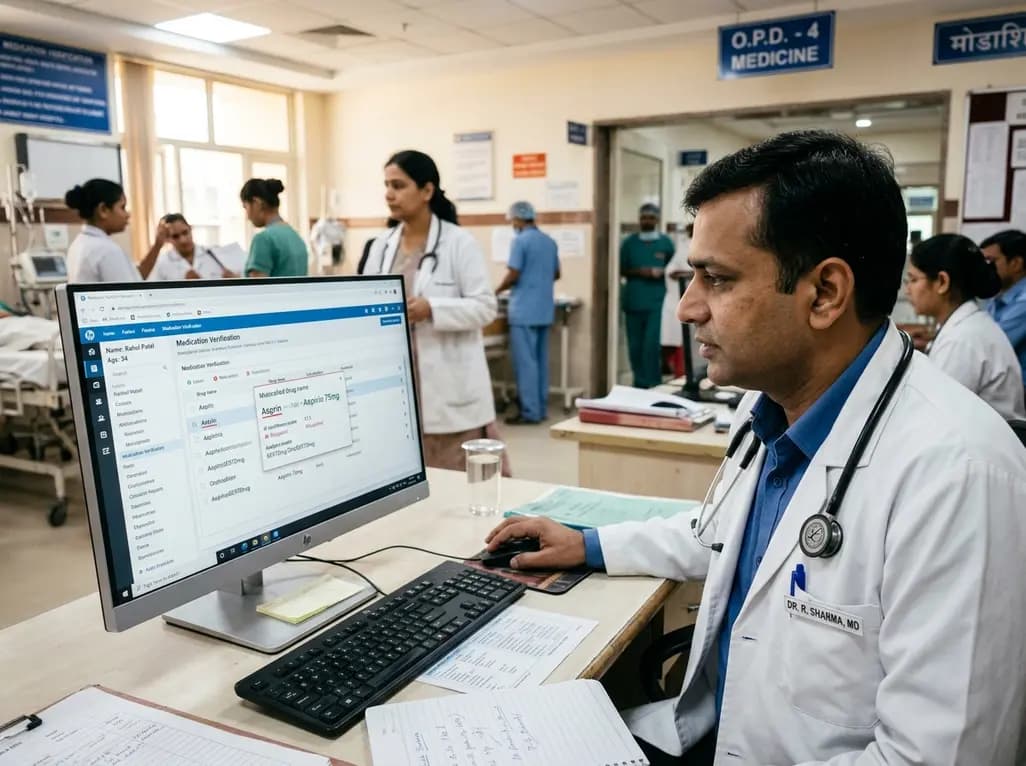
Medication safety remains a vital priority, where accurately identifying misspelled drug names is essential for preventing adverse clinical events. When clinicians inadvertently mistype pharmacological terms during computerized order entry, existing hospital software frequently misinterprets the intended therapy. Consequently, vulnerable patients face severe risks, including wrong-drug administration, adverse drug interactions, and treatment delays. Furthermore, spelling discrepancies distort longitudinal health records, compromising clinical trials and retrospective epidemiological studies. Historically, prescription processing depended on human verification by dispensing pharmacists and nursing staff. However, heavy outpatient volumes and staffing shortages frequently overwhelm these manual safety checks. In addition, sound-alike and look-alike pharmaceutical brand names exacerbate transcription errors in busy intensive care units. Therefore, medical informatics teams require automated verification tools to catch orthographic slips before orders reach the hospital dispensary. By identifying typographical errors promptly, digital health systems protect patients from preventable harm. In doing so, healthcare organizations maintain high data integrity across their electronic documentation platforms while supporting clinical decision-making. Moreover, effective spelling verification supports clinical pharmacy teams during routine prescription audits.
Traditional medical spelling checkers rely primarily on static lexicons and standardized vocabulary lists. These tools match entered characters against fixed reference dictionaries, such as RxNorm or local formularies. However, rule-based systems struggle when prescribers enter legitimate, out-of-vocabulary terms. Rapid pharmaceutical development introduces novel brand names, biosimilars, and generic combinations into medical practice every month. When a standard dictionary encounters an unindexed medication, it routinely generates a false-positive misspelling alert. Consequently, doctors face continuous interruptions during clinical documentation. Over time, this repetitive friction causes severe alert fatigue, leading physicians to dismiss critical safety warnings reflexively. Furthermore, conventional string-distance algorithms, such as Levenshtein distance, evaluate isolated character edits without clinical context. Basic subword embedding models, like fastText and BioWordVec, offer modest improvements but still struggle with rare pharmaceutical terminology. In addition, isolated spell checkers cannot adapt to common clinical abbreviations or rapid pharmaceutical shifts. Therefore, rule-based systems fail to balance high sensitivity with acceptable specificity. Hospital digital health systems urgently require intelligent architectures that can distinguish genuine errors from novel pharmacological compounds.
To solve the challenge of out-of-vocabulary terms, medical informaticians developed domain-specific transformer models. Specifically, investigators extracted 69,824 drug names from the RxNorm database to create an augmented biomedical training corpus. They partitioned these names into training, development, and test sets using a three-to-one-to-one ratio. Next, researchers utilized text-perturbation techniques to generate realistic synthetic misspellings, mirroring common typing slips. Using this corpus, the team engineered two distinct architectures: BERTDrug and CharBERTDrug. BERTDrug processes subword tokens using deep bidirectional transformer representations. In contrast, CharBERTDrug incorporates character-level embeddings, enabling the model to inspect internal word morphology and letter transpositions directly. This character-aware framework recognizes phonetic substitutions and keyboard layout mistakes with high fidelity. Furthermore, bidirectional attention mechanisms allow both models to analyze orthographic patterns simultaneously from left and right. As a result, the models develop an intrinsic understanding of pharmaceutical naming rules. Consequently, they discern whether an unrecognized term represents an authentic misspelling or a valid, unindexed therapeutic agent. Moreover, fine-tuning these models on domain-specific data minimizes computational overhead during live clinical queries.
The experimental results demonstrated that domain-specific transformers significantly outperform traditional baselines in detecting medication errors. On the internal RxNorm test set, BERTDrug achieved the strongest overall performance, recording an F-score of 0.859. Additionally, it delivered an impressive receiver operating characteristic area under the curve of 0.947. CharBERTDrug followed closely, securing an F-score of 0.833 and an area under the curve of 0.906. Both models substantially exceeded standard tools, including SpellChecker, fastText, and BioWordVec. To evaluate real-world generalization, researchers conducted external validation using 3,586 drug names from long-term care records. On 1,922 completely unseen, out-of-vocabulary terms, CharBERTDrug achieved the highest accuracy, attaining an F-score of 0.696. Meanwhile, BERTDrug demonstrated a solid F-score of 0.669. In secondary evaluations against GPT-4o across 2,000 terms, both domain-specific models surpassed the generative system in overall discriminating power. However, on 200 real-world terms, GPT-4o achieved higher recall, whereas domain-specific models maintained superior precision. Furthermore, the external validation confirmed that character-level embeddings significantly enhance robustness against clinical noise. These findings illustrate that targeted transformer architectures detect errors reliably without triggering high false-positive rates.
These research insights hold immediate relevance for the rapidly evolving Indian healthcare infrastructure. Under the Ayushman Bharat Digital Mission, hospitals across India are digitizing paper records and implementing electronic order systems. However, Indian clinicians navigate a unique pharmaceutical environment filled with tens of thousands of branded generics and combination medications. Recent multicenter studies in Indian hospitals indicate that medication errors affect over one-third of hospitalized patients. Frequently, these errors arise from look-alike and sound-alike brand names or hasty typing in crowded outpatient departments. When hospitals deploy basic dictionary-based checkers, unlisted regional brands generate endless false alerts, exacerbating clinician fatigue. In contrast, deploying lightweight models like CharBERTDrug provides real-time prescription validation without disrupting clinical workflows. Furthermore, hospital administrators can fine-tune these models on local generic drug formularies and regional prescribing vernaculars. Consequently, Indian healthcare institutions can intercept transcription errors before prescriptions reach retail pharmacies. Moreover, automated interception prevents catastrophic dispensing errors in busy primary health centers across rural districts. Ultimately, adopting domain-specific natural language processing will strengthen national pharmacovigilance, improve clinical audit accuracy, and elevate patient safety standards nationwide.
Transformer models analyze subword units and character sequences rather than relying on static vocabulary lists. By learning biomedical linguistic patterns and common orthographic mutations, models like CharBERTDrug evaluate the structural plausibility of unfamiliar words. Consequently, the model recognizes whether an unindexed term represents a minor keystroke error or a legitimate pharmaceutical entity. This character-level awareness allows systems to flag authentic mistakes accurately without inundating prescribers with unwarranted false-positive notifications.
Generative models such as GPT-4o train on massive, varied web corpora rather than focused clinical datasets. While general models maintain broad contextual knowledge and demonstrate high sensitivity, they frequently exhibit lower precision when confronting obscure medical nomenclature. In specialized clinical settings, real-world documentation habits, regional abbreviations, and formatting discrepancies trigger domain shift. Consequently, generative tools may misinterpret valid proprietary drug formulations as spelling mistakes, potentially causing confusion during active clinical prescribing.
Healthcare centers in India can embed lightweight transformer models directly into computerized provider order entry modules within existing electronic health record systems. When a practitioner types a medication name, the model validates the spelling against standardized drug compendia in real time. If the clinician mistypes a brand name, the system instantly suggests the appropriate generic equivalent. This automated verification reduces medication administration errors, curtails prescription delays, and improves overall inpatient care delivery.
Disclaimer: This content is for informational and educational purposes only... Refer to the latest local and national guidelines for clinical practice.
References

Read summarized clinical updates, watch expert medical content, and earn CME certifications right from your smartphone.
Open your smartphone camera to scan and install.





Domain-specific transformer models like BERTDrug and CharBERTDrug significantly improve the detection of misspelled drug names in electronic health records, outperforming traditional dictionaries and general LLMs to boost patient safety.
Today

To curb the transmission of dengue and chikungunya following intermittent rains, the Kerala government has mobilized collector-led coordination committees, enhanced fever clinics, and instituted structured Dry Day source reduction campaigns across educational institutions, workplaces, and local communities.
Today

A recent qualitative study evaluates institutional gaps across health, police, and justice sectors in supporting survivors of intimate partner violence. Healthcare providers must bridge procedural fragmentation with empathetic, trauma-informed care and cross-sector coordination to safeguard vulnerable patients.
Today
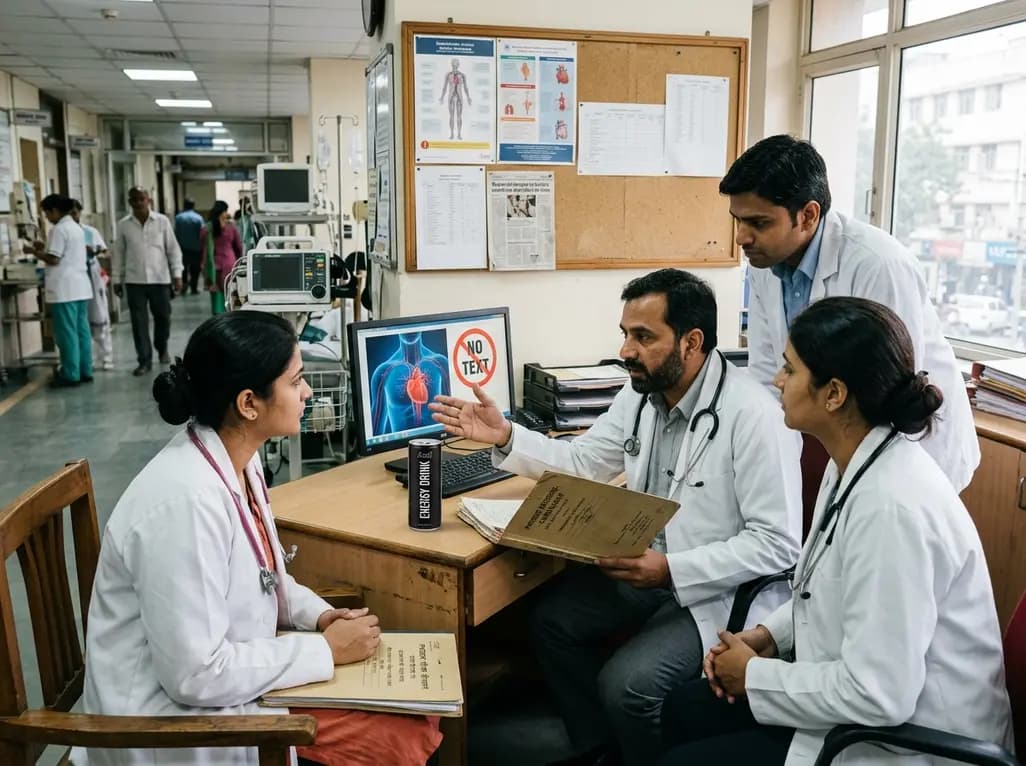
The Delhi High Court recently quashed an FSSAI order requiring beverage manufacturers to remove the term 'energy' from product labels without due process. This development brings renewed clinical focus to beverage terminology, consumer safety limits, cardiovascular strain, and youth dietary habits across India.
Today

A cross-sectional study reveals a strong positive correlation between problematic internet use and kinesiophobia in adults aged 18-45 with non-specific low back pain, highlighting how digital overuse reinforces movement fear and complicates musculoskeletal recovery.
Today
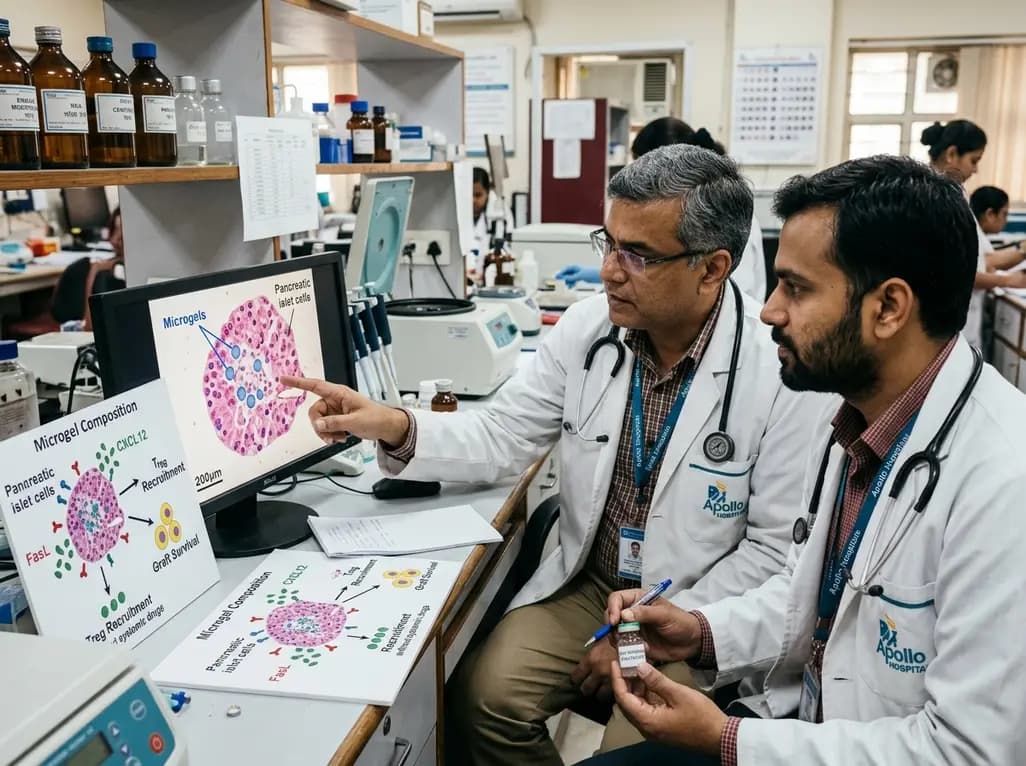
A novel microgel platform presenting FasL and protease-resistant CXCL12 enables sustained allogeneic islet survival and glycemic control without systemic immunosuppression, enhancing local Treg recruitment and graft revascularization.
Today
